.avif)


Choosing the right corporate card is no longer a back-office decision. As teams grow, spending becomes distributed, and compliance expectations increase, the type of card your business uses directly affects control, visibility, and financial discipline.
Yet many businesses still rely on traditional business cards without fully understanding how they differ from modern corporate cards. The result is often fragmented spend data, delayed reconciliations, and policies that are enforced only after money has already been spent.
A clear corporate card comparison helps finance leaders look beyond rewards and limits and focus on what truly matters: accountability, real-time oversight, and scalability. This becomes even more important in markets like the UAE and KSA, where prepaid models, VAT requirements, and regulatory norms shape how business spending should be managed.
This guide breaks down the key differences between small business cards and corporate cards, helping you decide which option supports stronger financial control as your organisation scales.
Key Takeaways
- Corporate cards are control tools: They’re built for visibility, policy enforcement, and predictable cash flow, capabilities that business cards can’t offer.
- Business cards limit scalability: Once spending is shared across teams, shared limits and delayed reviews create risk instead of efficiency.
- Prepaid corporate cards fit UAE and KSA finance needs: Funded models provide better cash management, VAT compliance, and month-end accuracy.
- Connected systems cut finance workload: When cards, spend limits, approvals, and receipts operate in one workflow, finance teams focus on strategy, not chasing data.
- Choosing the right card future-proofs spend control: Modern corporate cards enable real-time visibility and discipline as businesses grow.
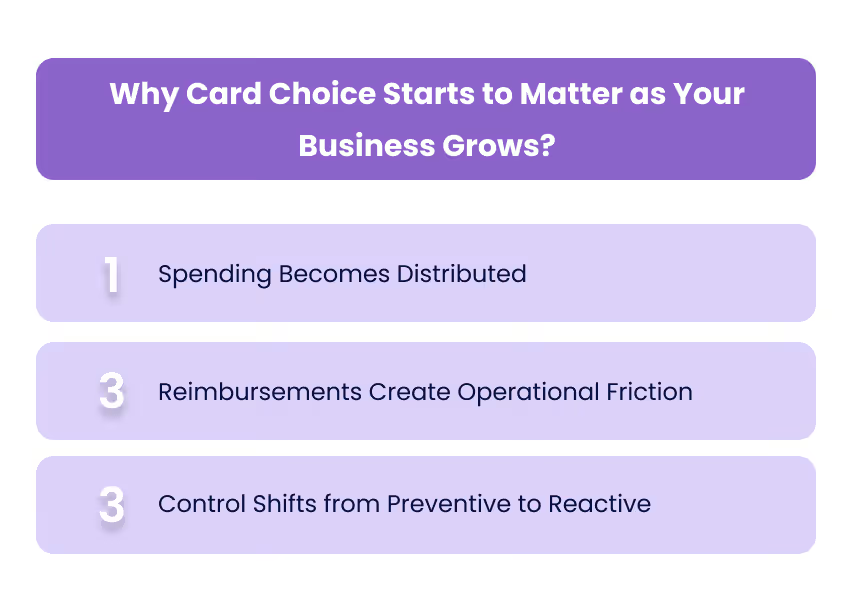
Why Card Choice Starts to Matter as Your Business Grows?
In the early stages, a single business card may feel sufficient. Founders or finance leads manage most spending, teams are small, and reimbursements are manageable. As the business grows, this setup begins to show its limits.
1. Spending Becomes Distributed
More employees start spending on behalf of the company. Travel, subscriptions, marketing tools, and vendor payments increase, often across departments and locations. A single card or loosely managed business cards no longer provide adequate oversight.
2. Reimbursements Create Operational Friction
Manual reimbursements introduce delays, errors, and frustration. Finance teams spend significant time reviewing claims, chasing receipts, and reconciling transactions after the fact. This slows the month-end close and weakens spend visibility.
3. Control Shifts from Preventive to Reactive
Traditional business cards often provide limited controls. Finance teams see expenses only after they occur, making it difficult to enforce policies consistently.
As spend volumes rise, this reactive approach increases the risk of overspending and policy breaches.
At this stage, many finance leaders begin reassessing whether business cards are still fit for purpose, or whether a corporate card model is better suited to support scale, control, and compliance.
Let’s Clear This Up: Business Cards and Corporate Cards Are Not the Same
Business cards and corporate cards are often discussed as if they serve the same purpose. In practice, they are designed for very different stages of a business and levels of financial control.
What Business Cards Are Designed For
Business cards are typically extensions of an individual’s banking relationship. They are commonly used by founders or small teams where:
- Spending is limited to a few people
- Oversight is informal
- Controls are applied after expenses occur
While convenient early on, business cards place most responsibility on the cardholder, not the finance function.
Why Corporate Cards Exist
Corporate cards are built for organisations where spending is shared across teams and departments. They are designed to:
- Centralise ownership and liability at the company level
- Give finance teams visibility into spending as it happens
- Apply controls before money is spent, not after
This structural difference is what makes corporate cards better suited for growing and multi-team organisations.
The Shift from Convenience to Control
As spending scales, finance teams move from prioritising convenience to prioritising control. Corporate cards support this shift by embedding limits, approvals, and visibility into daily workflows, rather than relying on manual checks.
If you want a clearer breakdown of how corporate cards are structured and used, read our guide on what corporate cards are and how they work.
Small Business Card vs Corporate Card: A Practical Comparison
When comparing small business cards and corporate cards, the differences become clearer once you look beyond surface-level features.
If you’re moving beyond business cards, it helps to see how corporate cards work in practice.
At Alaan, we offer prepaid corporate cards with built-in spend controls and real-time visibility designed for UAE and KSA finance teams.

For a deeper look at how corporate cards differ across use cases, you may also find our guide on differences and insights into P-Cards and corporate cards helpful.
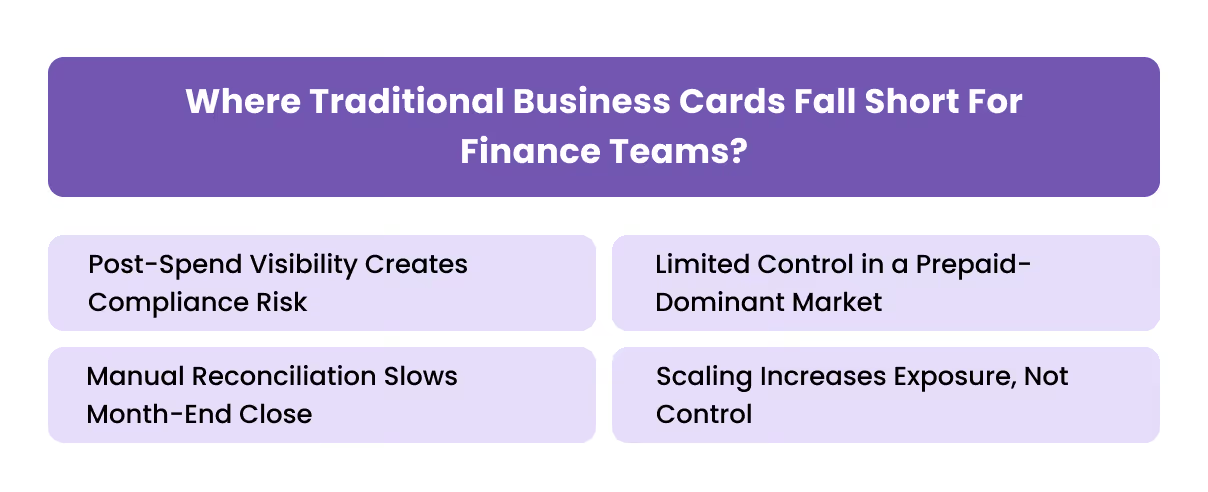
Where Traditional Business Cards Fall Short for Finance Teams?
In the UAE and KSA, business cards are still widely used, particularly by founders and small teams. However, as organisations scale, finance teams begin to encounter limitations that are specific to the region’s regulatory and operational environment.
Post-Spend Visibility Creates Compliance Risk
Most traditional business cards only provide transaction visibility after the spend has occurred. In markets where VAT compliance is closely monitored, this creates risk.
Missing or non-compliant tax invoices are often identified weeks later, making VAT recovery difficult or impossible.
For finance teams, this reactive visibility weakens internal controls and increases audit exposure.
Limited Control in a Prepaid-Dominant Market
Unlike markets that rely heavily on credit, many businesses in the UAE and KSA prefer prepaid or funded spending models to manage cash flow.
Business cards, which are typically credit-based, offer limited flexibility to align spend with funded balances or department budgets.
This disconnect makes it harder to enforce budget discipline across teams.
Manual Reconciliation Slows Month-End Close
Business cards rarely integrate natively with expense workflows or accounting systems. Finance teams are left reconciling transactions, receipts, and approvals manually, often across multiple systems.
As transaction volumes grow, this directly impacts reporting timelines and finance team capacity.
Scaling Increases Exposure, Not Control
As more employees gain access to business cards, finance teams face inconsistent spending behaviour, uneven approvals, and a higher risk of policy breaches. Without embedded controls, scale amplifies risk rather than improving oversight.
Many of these challenges are why finance teams move toward dedicated expense cards. This guide on how corporate expense cards simplify expense management explores that shift in more detail.
What Finance Teams Actually Need from a Corporate Card?
For finance leaders in the region, a modern corporate card must align with local compliance requirements, cash-flow preferences, and operational realities, not just global feature checklists.
Prepaid or Funded Spend Models
Corporate cards that operate on prepaid or funded balances give finance teams tighter control over cash outflows. This model aligns well with regional preferences for avoiding revolving credit exposure while maintaining flexibility.
Built-In VAT-Aware Expense Workflows
Given the importance of VAT compliance in both the UAE and KSA, corporate cards should support:
- Mandatory receipt capture
- Validation of tax invoice requirements
- Clear linkage between transactions and VAT documentation
This reduces the risk of rejected claims and lost recoverable VAT.
Granular Controls at the Point of Spend
Look for cards that allow finance teams to set:
- Category-based limits
- Vendor restrictions
- Role- or department-level budgets
These controls prevent off-policy spend before it happens, rather than relying on manual review later.
Integration with Regional Accounting Systems
Corporate cards should integrate seamlessly with commonly used accounting platforms, supporting accurate coding, faster reconciliation, and smoother audits.
For finance teams, this translates into shorter close cycles and more reliable financial reporting.
Many finance teams choose corporate cards to reduce manual work and enforce policies at the point of spend.
At Alaan, we combine corporate cards with automated expense capture, approvals, and VAT-ready workflows in one platform.

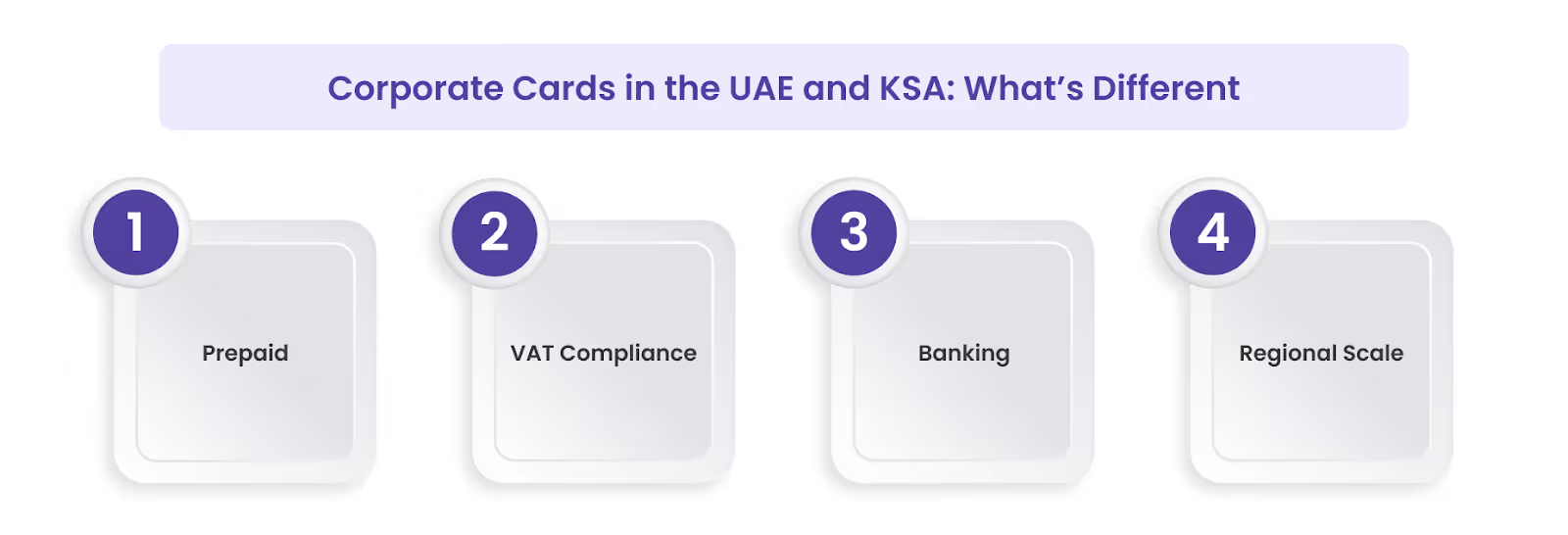
Corporate Cards in the UAE and KSA: What’s Different
Corporate card adoption in the UAE and KSA follows a different path compared to Western markets. Local banking norms, regulatory expectations, and cash-flow preferences significantly influence how businesses choose and use cards.
Prepaid and Funded Models Are Preferred
Many businesses in the region avoid revolving credit exposure. Instead, they prefer prepaid or funded card models that allow finance teams to control spending based on available balances. This approach:
- Improves cash-flow predictability
- Reduces dependency on credit limits
- Aligns spend with approved budgets
For finance leaders, this structure supports stronger discipline without sacrificing operational flexibility.
VAT Compliance Shapes Spend Management
Since the introduction of VAT in the UAE and KSA, documentation quality has become a critical concern. Corporate cards must support:
- Collection of valid tax invoices
- Clear linkage between transactions and receipts
- Accurate VAT categorisation for reporting and recovery
Without these capabilities, finance teams face rejected VAT claims and increased audit risk.
Banking and Regulatory Expectations
Local banks often require extensive documentation for traditional credit cards, especially for growing businesses. Approval timelines, credit assessments, and limit adjustments can be slow, making it harder to scale card access quickly as teams expand.
Modern corporate card solutions address this by offering faster issuance, simpler onboarding, and controls that sit outside traditional credit underwriting constraints.
Regional Scale and Distributed Teams
Businesses operating across emirates or between the UAE and KSA need consistent controls regardless of location. Corporate cards that offer centralised visibility and policy enforcement help finance teams manage spend uniformly across markets.
For a region-specific perspective, our guide on the benefits of corporate cards in the UAE outlines why these differences matter for local finance teams.
What Better Expense Control Looks Like Day to Day?
For finance teams, the real value of corporate cards lies in how they improve control across the entire expense lifecycle, not just at the point of payment.
Enforcing Policy Before Money Is Spent
Corporate cards allow finance teams to apply spend rules upfront. Limits, categories, and vendor restrictions ensure transactions align with policy before they are approved, reducing exceptions and rework.
Reducing Reliance on Reimbursements
By issuing cards directly to employees, businesses reduce reimbursement volumes. This lowers administrative overhead, improves employee experience, and gives finance teams clearer visibility into spending as it happens.
Improving Visibility and Decision-Making
Real-time transaction data allows finance leaders to:
- Monitor budgets continuously
- Identify unusual or high-risk spend early
- Make informed decisions without waiting for month-end reports
This level of visibility is particularly valuable in fast-growing or multi-entity organisations.
Accelerating Month-End Close
When transactions, receipts, and approvals are connected, reconciliation becomes faster and more accurate. Finance teams spend less time correcting data and more time analysing spend patterns and controlling costs.
When spend control, receipts, and approvals sit in one place, finance teams gain clarity without added complexity.
This is exactly how we support growing businesses at Alaan, helping teams reduce reconciliation effort and maintain real-time oversight.
To explore how different platforms approach spend control, see our roundup of the top expense management and corporate card solutions in 2025.
So, Where Does Alaan Fit into This Picture?
When finance teams evaluate corporate cards, the decision is rarely about rewards or credit limits. It is about control, compliance, and operational efficiency. This is where Alaan fits into the comparison.
At Alaan, we provide prepaid corporate cards, not business credit cards. This distinction matters in markets where finance leaders prefer funded spending models that align closely with budgets and cash-flow planning.
With Alaan, you can:
- Issue corporate cards instantly to teams while retaining central ownership and control.
- Apply spend limits and vendor restrictions upfront, ensuring transactions align with company policy before they occur.
- Automate expense capture and approvals, reducing manual reconciliation and review effort.
- Maintain VAT-ready documentation, with automated receipt collection and validation aligned with UAE Federal Tax Authority requirements.
- Integrate expense data with accounting systems, supporting accurate reporting and faster month-end close.
Rather than treating cards as standalone payment tools, Alaan connects spending, approvals, and accounting in one platform. This helps finance teams move from reactive oversight to proactive control, without adding operational friction.
For a real example from the region, see how SEE Engineering reduced 70% of cash handling by switching to Alaan corporate cards.
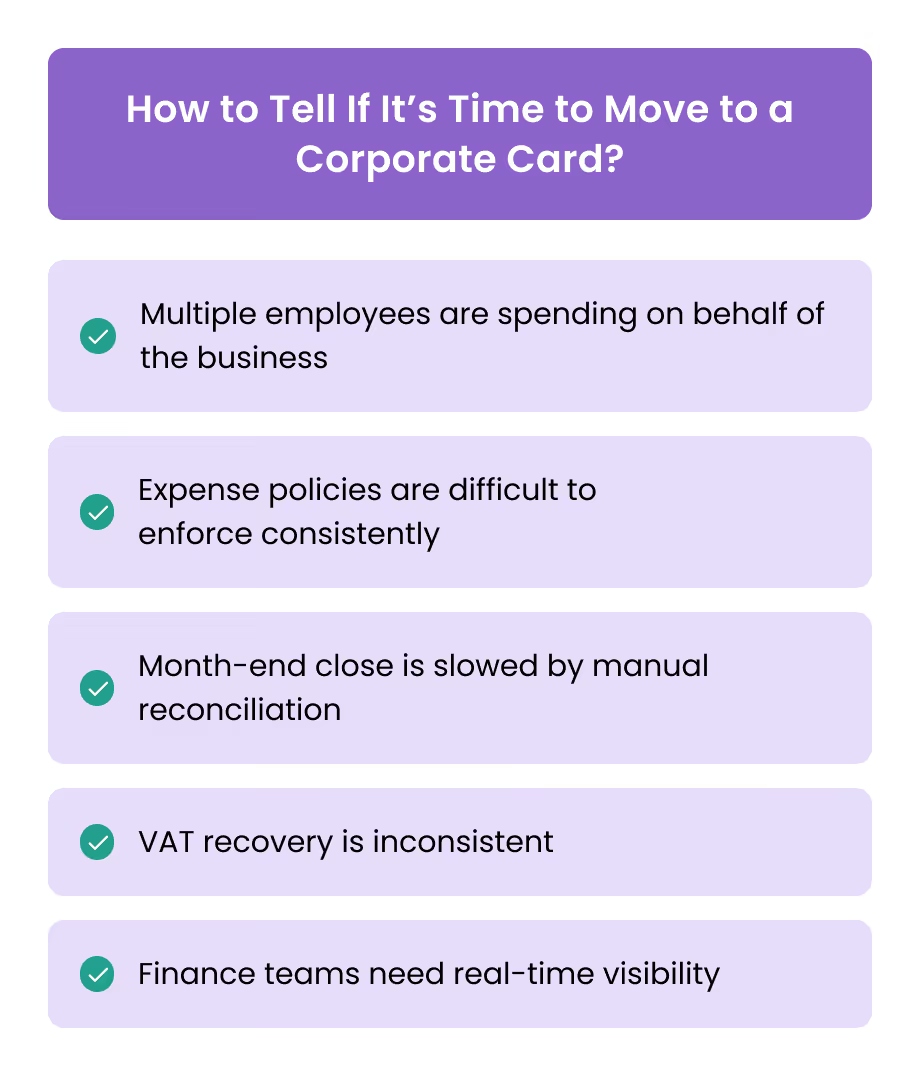
How to Tell If It’s Time to Move to a Corporate Card?
Not every business needs a corporate card on day one. However, certain signals indicate when a shift from business cards becomes necessary.
A corporate card model typically makes sense when:
- Multiple employees are spending on behalf of the business, across departments or locations.
- Expense policies are difficult to enforce consistently using reimbursements or shared cards.
- Month-end close is slowed by manual reconciliation and missing documentation.
- VAT recovery is inconsistent due to incomplete or late receipts.
- Finance teams need real-time visibility into spending rather than retrospective reports.
For businesses operating in the UAE and KSA, these challenges often emerge earlier due to compliance expectations and distributed operations. Moving to a corporate card at the right time helps finance teams regain control while supporting growth.
Choosing a corporate card should be viewed as a finance infrastructure decision. The right solution enables discipline, transparency, and scalability as spending becomes more complex.
Conclusion
Choosing between a small business card and a corporate card is ultimately a decision about control. As spending becomes more distributed and compliance expectations increase, finance teams need more than visibility after the fact. They need systems that guide spending before it happens.
For businesses in the UAE and KSA, this decision carries additional weight. Prepaid models, VAT requirements, and regional banking norms make it essential to choose a solution that aligns with how finance teams actually operate.
A corporate card, when combined with built-in controls and automation, helps you reduce manual work, strengthen policy enforcement, and maintain clarity over company spend as you scale.
If you’re evaluating whether a corporate card is the right next step for your business, book a demo with Alaan to see how modern spend control works in practice.
FAQs
1. Are corporate cards better than business credit cards for small businesses?
Corporate cards are better when spending involves multiple employees. They provide central control, role-based limits, and real-time visibility, which business credit cards typically lack.
2. Do corporate cards require credit checks in the UAE or KSA?
Many corporate card solutions in the region operate on prepaid or funded models, reducing reliance on traditional credit assessments and speeding up onboarding.
3. Can corporate cards help reduce expense policy violations?
Yes. Corporate cards enforce spend limits and category rules before transactions occur, preventing off-policy spend rather than flagging it after the fact.
4. Are corporate cards suitable for VAT-compliant expense management?
When paired with automated receipt capture and validation, corporate cards support accurate VAT documentation, improving recovery and reducing compliance risk.
5. When should a business switch from reimbursements to corporate cards?
If reimbursements are slowing month-end close, increasing errors, or frustrating employees, it’s a strong signal that direct corporate spending is more efficient.
Gain control over business expenses with Alaan corporate cards
Invygo earned AED 100,000 in cashback using Alaan cards
Personalise approval workflows to align with your business needs with Alaan's Spend Management platform
Discover the power of automated expense tracking and smarter spend control with Alaan
Turn data into actionable insights with Alaan's spend management tools
Stay Tax Compliant with UAE's #1 Corporate Card and Spend Management Platform
Customisable corporate card policy template
Know how much Corporate Tax you have to pay this fiscal year
Easily integrate Alaan with your ERP for accurate, real-time expense tracking
Close books faster with Alaan's AI-powered accounting automation
Reconcile your books in minutes instead of hours, every single month.
Keep petty cash organized with Alaan corporate cards and automated expense management