.avif)


يوضح هذا المقال كيف تنشأ غرامات ضريبة الشركات في الإمارات، وما تكلفتها الفعلية التي تتجاوز قيمة الغرامة نفسها، والضوابط التي يمكن للمديرين الماليين اعتمادها لتجنبها وإدارتها والاستعداد لها.
- حتى الثغرات الصغيرة في الامتثال في الإمارات يمكن أن تتفاقم سريعًا وتتحول إلى غرامات متراكمة وأضرار بالسمعة وتصحيحات في اللحظة الأخيرة تستهلك وقتًا يفضّل المديرون الماليون تخصيصه للتخطيط والنمو.
- يكلّف التأخر في تقديم الإقرارات 500 درهم إماراتي شهريًا خلال السنة الأولى، و1,000 درهم شهريًا بعد ذلك، وتُضاف إلى ذلك فائدة سنوية بنسبة %14 على الضريبة غير المسددة.
- لا تقتصر أسباب الغرامات على تفويت المواعيد النهائية، بل تشمل أيضًا الإقرارات غير الصحيحة، وضعف المواءمة مع ضريبة القيمة المضافة، والثغرات في تطبيق قواعد أسعار التحويل، وسوء حفظ السجلات، وعدم استيفاء متطلبات المادة الاقتصادية.
- تتجاوز التكلفة الفعلية قيمة الغرامة، إذ تضغط على التدفق النقدي، وتُربك التوقعات المالية، وترفع تكاليف الاستشارات، وتُضعف ثقة المستثمرين والبنوك.
- تساعد الآن من خلال تسجيل بيانات المصروفات بشكل فوري، وتجميع الفواتير والإيصالات في مكان واحد، والمزامنة مع الأنظمة المحاسبية مثل NetSuite وQuickBooks، مع العلم أنها تدعم الامتثال ولا تتولى تقديم إقراراتك الضريبية نيابة عنك.
في الإمارات، يشمل الامتثال لضريبة الشركات دقة البيانات، وأسعار التحويل، والمواءمة مع ضريبة القيمة المضافة، وتوقيت السداد، والموافقات، والجاهزية للتدقيق. وتُلزم الهيئة الاتحادية للضرائب (FTA) الأشخاص الخاضعين للضريبة بالاحتفاظ بالسجلات لمدة لا تقل عن 7 سنوات، ما يؤكد أهمية الامتثال على المدى الطويل والتوثيق الشامل.
وحتى الثغرات الصغيرة يمكن أن تتحول سريعًا إلى ضغط مالي بسبب تراكم الغرامات الإدارية، والمخاطر التي تمس السمعة، والتصحيحات في اللحظة الأخيرة التي تستهلك وقتًا يفضّل المديرون الماليون (CFO) تخصيصه للتخطيط والنمو.
في هذا المقال، نوضح كيف تنشأ غرامات ضريبة الشركات في الإمارات، وما تكلفتها الفعلية التي تتجاوز قيمة الغرامة نفسها، وكيف يمكنك تجنبها والتعامل معها وبناء استراتيجية امتثال قادرة على مواكبة التغييرات المستقبلية. وتندرج أسباب الغرامات هذه ضمن مجموعة أوسع من التزامات الامتثال التي يتعين على كل شخص خاضع للضريبة في الإمارات متابعتها باستمرار.
ملخص سريع
- الغرامات تتزايد بسرعة في الإمارات: يُفرض على التأخر في تقديم الإقرارات 500 درهم إماراتي شهريًا، ترتفع إلى 1,000 درهم بعد 12 شهرًا، بينما تُحتسب على الضريبة غير المسددة فائدة سنوية بنسبة %14، ما يزيد الضغط المالي.
- أسباب الغرامات لا تقتصر على تفويت المواعيد النهائية: تُعد الإقرارات غير الصحيحة، وضعف المواءمة مع ضريبة القيمة المضافة، والثغرات في تطبيق قواعد أسعار التحويل، وسوء حفظ السجلات، وعدم الامتثال للوائح متطلبات المادة الاقتصادية من الأسباب الشائعة لغرامات يمكن تجنبها.
- التكلفة الفعلية تتجاوز قيمة الغرامة: تضغط غرامات ضريبة الشركات على التدفق النقدي، وتُربك التوقعات المالية، وترفع تكاليف الاستشارات، وتُضعف ثقة المستثمرين والبنوك.
- الوقاية تتطلب ضوابط منظمة: تقلل الأتمتة الفورية، والتحقق من البيانات بالذكاء الاصطناعي، وربط التوقعات المالية بالامتثال الضريبي، والمراجعات الداخلية الدورية من التعرض للمخاطر قبل أن تتفاقم المشكلات.
- الاستجابة والاستعداد للمستقبل أمران أساسيان: يساعد التصريح الطوعي المبكر، والطعون الرسمية حيثما ينطبق ذلك، وأطر الحوكمة الأقوى المديرين الماليين على إدارة الغرامات والاستعداد لتطور التشريعات الضريبية في الإمارات.
7 أسباب رئيسية لغرامات ضريبة الشركات في الإمارات يجب أن يعرفها المديرون الماليون
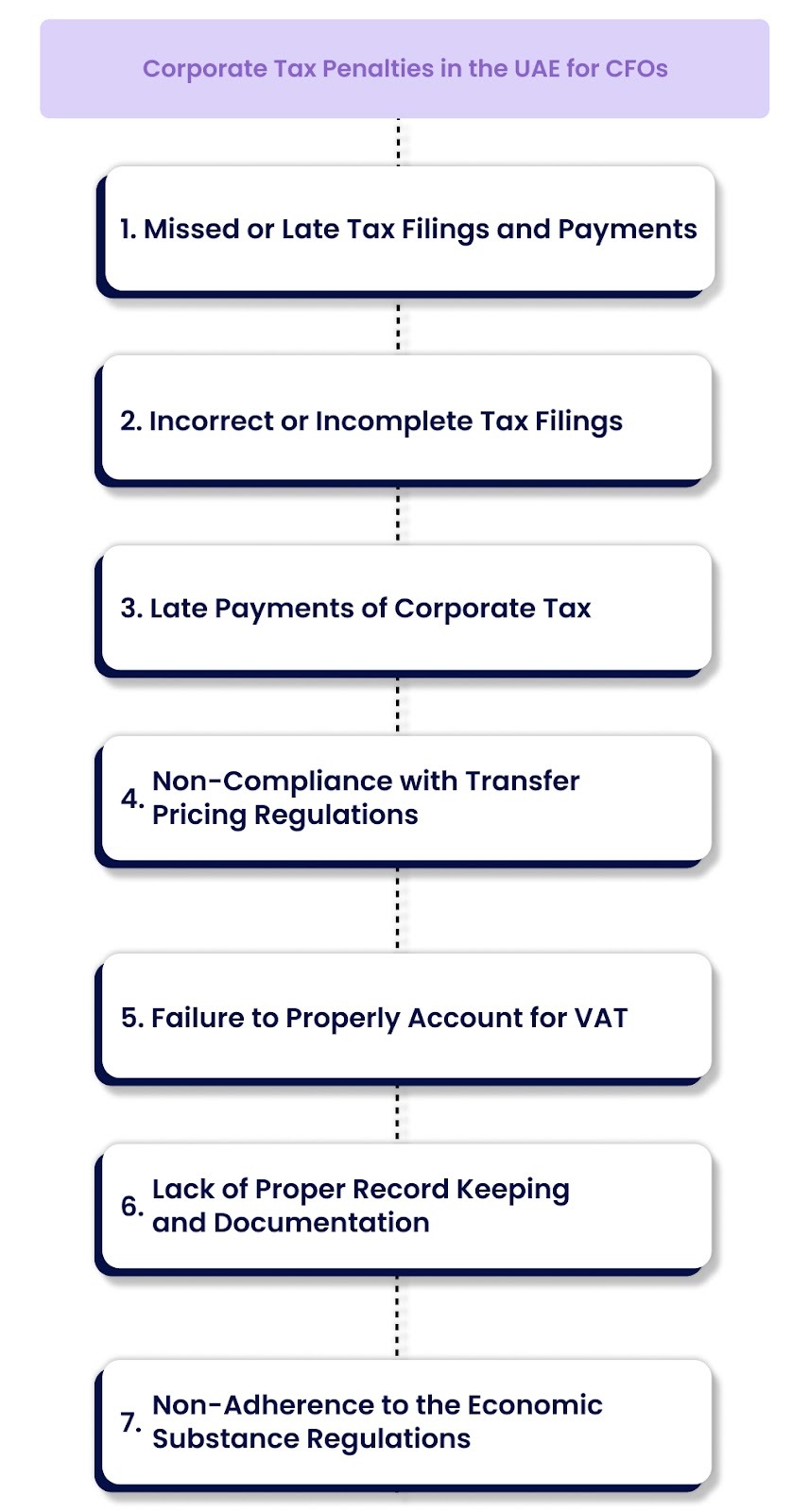
بصفتك مديرًا ماليًا في الإمارات، يمثل الامتثال لضريبة الشركات جزءًا أساسيًا من حماية شركتك. فإغفال بسيط واحد قد يؤدي إلى غرامات تؤثر في وضعك المالي وسمعتك معًا.
وعندما تفهم بوضوح الأسباب التي تؤدي إلى الغرامات الضريبية، يمكنك اتخاذ خطوات استباقية مبكرة وتقليل خطر التكاليف غير الضرورية أو مشكلات الامتثال.
فيما يلي أهم أسباب غرامات ضريبة الشركات في الإمارات التي ينبغي للمديرين الماليين الانتباه إليها.
1. عدم تقديم الإقرارات الضريبية وسداد الضريبة في المواعيد المحددة
تحدد الهيئة الاتحادية للضرائب في الإمارات مواعيد نهائية صارمة لتقديم إقرارات ضريبة الشركات وسداد الضريبة. وإذا فاتتك هذه المواعيد، فقد تُفرض عليك غرامات كبيرة.
تفاصيل الغرامة
- 500 درهم عن كل شهر خلال أول 12 شهرًا من التأخر في تقديم الإقرار الضريبي.
- 1,000 درهم عن كل شهر اعتبارًا من الشهر الـ13 في حال استمرار عدم الامتثال.
- تتراكم هذه الغرامات شهريًا.
إن إتمام إجراءات التسجيل بشكل صحيح منذ البداية يزيل السبب الأكثر شيوعًا لبدء احتساب هذه الغرامة من الأساس.
2. الإقرارات الضريبية غير الصحيحة أو غير المكتملة
يمكن أن تؤدي الأخطاء في الإقرارات الضريبية بسهولة إلى فرض غرامات، مثل الإفصاح عن دخل غير صحيح، أو المطالبة بخصومات غير صحيحة، أو إغفال تفاصيل أساسية. ويتحمل المديرون الماليون مسؤولية التأكد من دقة كل إقرار واكتماله.
تفاصيل الغرامة: غرامة ثابتة قدرها 500 درهم عند تقديم إقرار ضريبي غير صحيح وعدم تصحيح الخطأ قبل الموعد النهائي لتقديم الإقرار (9 أشهر من نهاية السنة المالية).
توفّر منصة الآن تصنيفًا آليًا للمصروفات وتحققًا فوريًا من البيانات، ما يقلل التباينات في التقارير قبل إعداد الإقرارات الضريبية. ويساعد ذلك الفرق المالية على تقليل خطر الحاجة إلى التصحيح وتجنب غرامات ضريبة الشركات التي يمكن تفاديها. كما أن تصنيف المصروفات بشكل صحيح منذ البداية يزيل أحد أكثر مصادر هذه الأخطاء شيوعًا.
3. التأخر في سداد ضريبة الشركات
يمكن أن يُربك التأخر في سداد الضريبة تدفقك النقدي بشكل كبير. ففي دولة الإمارات العربية المتحدة، يمكن أن تتراكم غرامات التأخر في السداد بسرعة، ما يزيد الضغط المالي الإجمالي على شركتك.
تفاصيل الغرامة:
- %14 سنويًا، تُحتسب شهريًا على مبلغ الضريبة غير المسدد، اعتبارًا من اليوم التالي لتاريخ الاستحقاق.
- في حالات التصريح الطوعي أو التقييم الضريبي، يبدأ احتساب غرامة الفائدة بعد 20 يوم عمل من تقديمه.
4. عدم الامتثال لقواعد أسعار التحويل
تهدف قواعد أسعار التحويل إلى منع الشركات متعددة الجنسيات من نقل أرباحها عبر الحدود بصورة غير عادلة. وإذا لم تلتزم شركتك بهذه القواعد، فقد تواجه غرامات كبيرة.
5. عدم المحاسبة الصحيحة لضريبة القيمة المضافة
لا تزال ضريبة القيمة المضافة من أكثر تحديات الامتثال شيوعًا لدى الشركات في الإمارات. ويمكن أن تؤدي الأخطاء في احتساب ضريبة القيمة المضافة، أو التأخر في تقديم الإقرارات، أو عدم توفر المستندات الداعمة إلى فرض غرامات بسرعة.
مقال مقترح: «تقديم إقرارات ضريبة القيمة المضافة وسدادها في الإمارات»
6. عدم حفظ السجلات والمستندات بالشكل الصحيح
قد يؤدي ضعف حفظ السجلات إلى إقرارات غير دقيقة ونقص في الشفافية. وخلال عمليات التدقيق، قد يثير ذلك مؤشرات تستدعي التحقق ويؤدي إلى فرض غرامات.

7. عدم الالتزام بلوائح متطلبات المادة الاقتصادية
تُلزم لوائح متطلبات المادة الاقتصادية في الإمارات بعض الشركات بإثبات أنها تمارس أنشطة جوهرية في الدولة. وإذا لم تتمكن من إثبات ذلك، فقد تُفرض عليك غرامات.
مقال ذو صلة: «المستندات المطلوبة لتقديم إقرار ضريبة الشركات في الإمارات»
ومعرفة الأسباب الشائعة لغرامات ضريبة الشركات تسهّل فهم أثرها المالي المحتمل.
الأثر المالي لغرامات ضريبة الشركات في الإمارات
يساعدك فهم الأثر المالي لغرامات ضريبة الشركات على حماية الوضع المالي لشركتك. فقد تضغط الغرامات على التدفق النقدي، وتُربك التوقعات المالية، وتُضعف العلاقات مع أصحاب المصلحة.
فيما يلي أبرز الآثار المالية لغرامات ضريبة الشركات في الإمارات:
1. ضغط فوري على التدفق النقدي
يمكن أن تُحدث غرامات ضريبة الشركات ضغطًا مفاجئًا على التدفق النقدي، خاصة لدى الشركات التي تعتمد على إدارة دقيقة للسيولة. وعندما تفرض الهيئة الاتحادية للضرائب غرامات، يتعين على الشركات سدادها بسرعة، وغالبًا دون وقت كافٍ لتعديل الموازنات أو الخطط المالية.
الأثر: قد يقلل ذلك رأس المال العامل ويضطرك إلى تحويل أموال من الاستثمارات الاستراتيجية أو المصروفات التشغيلية لسداد الغرامات. وبالنسبة للشركات التي تدير أحجامًا كبيرة من المعاملات، قد تُربك الغرامات توقعات التدفق النقدي وتؤثر في العمليات اليومية.
2. ارتفاع التكاليف التشغيلية
غالبًا ما تترتب على الغرامات مصروفات إدارية وتشغيلية إضافية، منها تكلفة الاستعانة بمستشارين ضريبيين أو قانونيين لمعالجة المشكلة.
الأثر: قد ترتفع هذه التكاليف غير المباشرة بسرعة، خاصة عندما تقضي وقتًا في إدارة النزاعات أو تقديم الطعون أو تصحيح الإقرارات الضريبية. وبالنسبة للمديرين الماليين الذين يركزون على ضبط التكاليف، قد تؤثر هذه المصروفات غير المتوقعة في الكفاءة التشغيلية.
3. أثر سلبي على الربحية
تقلل الغرامات الربحية مباشرة لأنها تُخصم من أرباح الشركة، ما يؤثر في هوامش الربح ويُضعف الأداء المالي.
الأثر: قد تؤدي الغرامات المتكررة أو الكبيرة إلى خفض الأرباح المحتجزة وإبطاء نمو الأعمال. وقد تحتاج الشركات إلى تعديل الموازنات أو تأجيل الاستثمارات، ما قد يؤثر في الخطط المالية طويلة الأجل.
4. الإضرار بالسمعة وفقدان ثقة المستثمرين
قد يضر استمرار فرض الغرامات بسمعة شركتك، خاصة لدى المستثمرين والمساهمين الذين يتوقعون الامتثال والشفافية.
الأثر: قد يقلل ذلك الثقة في الإدارة المالية لشركتك، وقد يصعّب أيضًا الحصول على التمويل أو يرفع تكلفة رأس المال مستقبلًا.
5. إرباك التخطيط المالي طويل الأجل
قد تعطل الغرامات الضريبية التخطيط المالي وتجعل التوقعات المالية أقل موثوقية، ما قد يؤخر قرارات استراتيجية مهمة.
الأثر: قد تؤثر الفرص الضائعة أو التوقعات غير الدقيقة في الخطط طويلة الأجل، بما في ذلك التوسع والاستثمارات الرأسمالية وعمليات الاندماج والاستحواذ.
6. تزايد الغرامات بمرور الوقت
غالبًا ما تتزايد الغرامات الضريبية في الإمارات إذا لم تعالجها الشركات بسرعة. وقد يؤدي التأخير أو تكرار عدم الامتثال إلى غرامات أعلى بمرور الوقت.
الأثر: يمكن أن يُحدث تزايد الغرامات ضغطًا ماليًا كبيرًا، خاصة على الشركات ذات هوامش الربح المحدودة. ويساعد التحرك المبكر على ضبط التكاليف وحماية الاستقرار على المدى الطويل.
وإدراك أثر الغرامات على الوضع المالي يبيّن أهمية اعتماد استراتيجيات متقدمة لتجنبها.
4 استراتيجيات متقدمة لتجنب غرامات ضريبة الشركات في الإمارات
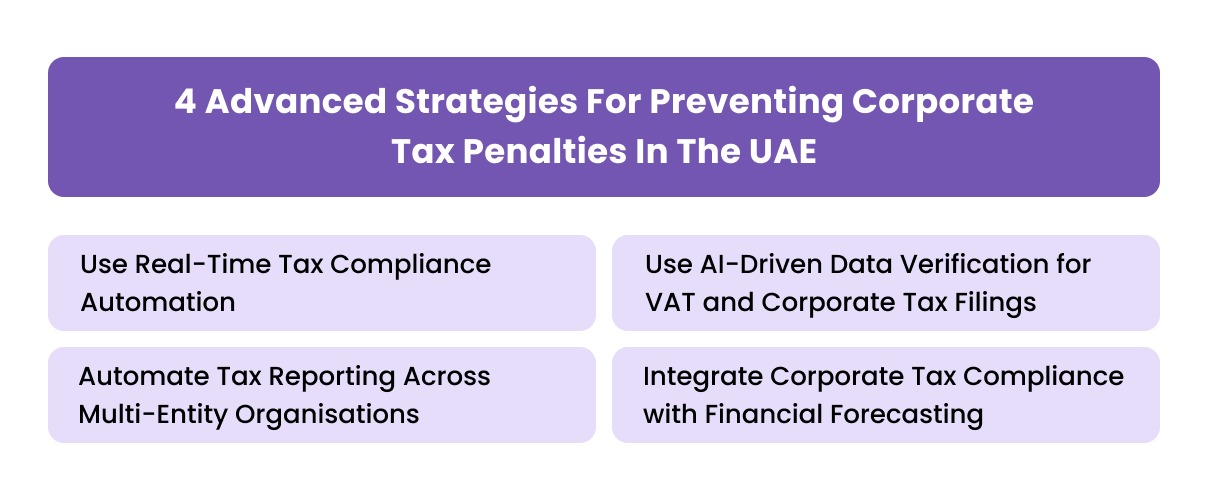
لا يكفي الامتثال الأساسي وحده لتجنب غرامات ضريبة الشركات. فأنت بحاجة إلى اتخاذ خطوات استباقية، واعتماد أنظمة مؤتمتة، ورفع وعي فريقك، ومواكبة التغييرات في التشريعات الضريبية لتقليل المخاطر والحفاظ على الامتثال الكامل.
فيما يلي بعض الاستراتيجيات المتقدمة لتجنب غرامات ضريبة الشركات في الإمارات:
1. أتمتة الامتثال الضريبي بشكل فوري
عندما تعتمد على إجراءات ضريبية يدوية، تزداد احتمالات الأخطاء وتفويت المواعيد النهائية. وتساعد أتمتة التقارير والإقرارات الضريبية الشركات على الاحتفاظ بسجلات دقيقة ومحدّثة بشكل فوري، ما يقلل خطر الغرامات.
طريقة التطبيق:
- استخدم أدوات لتقديم الإقرارات الضريبية تعمل بالذكاء الاصطناعي، تتابع المواعيد النهائية تلقائيًا وتقدّم التقارير في موعدها.
- اربط نظامك بأنظمة محاسبية مثل QuickBooks أو NetSuite لتسهيل احتساب الضريبة وتقديم الإقرارات.
- فعّل التنبيهات والإشعارات ليعرف فريقك فورًا إذا فات موعد نهائي أو وُجد خطأ في أحد الإقرارات.

2. التحقق من بيانات إقرارات ضريبة القيمة المضافة وضريبة الشركات بالذكاء الاصطناعي
تتطلب إقرارات ضريبة القيمة المضافة وضريبة الشركات تحققًا دقيقًا من البيانات. ويمكن للأدوات المعتمدة على الذكاء الاصطناعي مراجعة بيانات المعاملات واكتشاف الأخطاء مبكرًا، ما يساعد الشركات على تجنب الغرامات.
طريقة التطبيق:
- استخدم أدوات الذكاء الاصطناعي للتحقق من الإيصالات ومراجعة بيانات ضريبة القيمة المضافة تلقائيًا.
- اعتمد أنظمة تنبّه إلى حالات عدم التطابق بين الفواتير والمصروفات المسجلة.
- فعّل المزامنة الفورية بين أدوات إدارة المصروفات والأنظمة المحاسبية للحفاظ على دقة البيانات.
3. أتمتة التقارير الضريبية في المؤسسات متعددة الكيانات
غالبًا ما تواجه الشركات التي تضم عدة كيانات صعوبة في الحفاظ على اتساق تقاريرها الضريبية. وتساعد الأتمتة على جمع كل البيانات في مكان واحد وتوحيد التقارير على مستوى المؤسسة.
طريقة التطبيق:
- استخدم نظامًا مركزيًا للتقارير الضريبية يجمع البيانات من جميع الشركات التابعة والإدارات.
- ضع قواعد مؤتمتة لتوحيد التقارير الضريبية بين الكيانات.
- أجرِ مراجعات داخلية دورية للتأكد من بقاء الإقرارات الضريبية دقيقة ومتسقة.
4. ربط الامتثال لضريبة الشركات بالتوقعات المالية وإدارة التدفق النقدي
قد تؤثر الغرامات الضريبية في التدفق النقدي وتُربك التخطيط المالي. وعندما تربط الامتثال الضريبي بالتوقعات المالية، يمكنك الاستعداد للمدفوعات وتجنب المفاجآت في اللحظة الأخيرة.
طريقة التطبيق:
- استخدم أدوات التوقعات المالية لتقدير الالتزامات الضريبية ومواءمتها مع تدفقك النقدي.
- جدوِل مدفوعات ضريبية مؤتمتة تتوافق مع خططك المالية الشهرية أو التي تُعد كل ثلاثة أشهر.
- تابع الالتزامات الضريبية بشكل فوري وعدّل التوقعات عند الحاجة.
توفّر منصة الآن لوحات معلومات فورية للإنفاق تتيح للمديرين الماليين الاطلاع المستمر على المصروفات، ما يحسّن دقة التوقعات المالية ويدعم الجاهزية للتخطيط الضريبي. ويعزز ذلك الانضباط في إعداد التوقعات ويقلل خطر السداد في اللحظة الأخيرة.
ورغم أن الوقاية تقلل المشكلات، فإن معرفة ما يجب فعله بعد فرض غرامة ضريبية تضمن استجابة الشركة بفعالية.
مقال ننصح بقراءته: «الفرق بين إعداد الموازنة والتوقعات المالية»
ماذا تفعل عند فرض غرامة على شركتك بموجب قانون ضريبة الشركات؟
قد يمثل فرض غرامة ضريبة الشركات انتكاسة كبيرة لأي شركة، خاصة للمديرين الماليين وقادة الفرق المالية المسؤولين عن الامتثال وإدارة المخاطر. لكن طريقة استجابتك يمكن أن تؤثر بشكل كبير في الأثر المالي والتشغيلي.
فيما يلي ما يمكنك فعله عند فرض غرامة ضريبة الشركات:
1. تقييم طبيعة الغرامة وأثرها
يساعدك فهم تفاصيل الغرامة على تحديد الإجراء المناسب. فالغرامات لا تتساوى في أثرها؛ بعضها قد يكون غرامات بسيطة، بينما قد يؤثر بعضها الآخر في الوضع المالي والسمعة بشكل أكبر.
ما يمكنك فعله:
- راجع إشعار الغرامة بعناية لتحديد المشكلة بدقة، سواء كانت تأخرًا في السداد أو إقرارات غير صحيحة أو مستندات غير متوفرة.
- قيّم الأثر المالي وحدد ما إذا كانت غرامة لمرة واحدة أم جزءًا من مشكلة امتثال أكبر تتطلب معالجة طويلة الأجل.
- استشر مستشاريك القانونيين والضريبيين لفهم التبعات وأفضل الخطوات التالية.
2. التحقق من سبب الغرامة ومعالجته
تحديد السبب الجذري ضروري لمنع تكرار المشكلة، ومعالجة المشكلة الأساسية تعزز إطار الامتثال لديك.
ما يمكنك فعله:
- أجرِ مراجعة داخلية مفصلة لتحديد ما أدى إلى الغرامة، مثل تفويت المواعيد النهائية أو أخطاء البيانات أو عدم اكتمال المستندات.
- إذا كانت الغرامة متعلقة بالامتثال لضريبة القيمة المضافة أو بأسعار التحويل، فتأكد من توفر المستندات المناسبة ودقة الإقرارات.
3. تقديم طعن رسمي أو طلب تخفيض الغرامة
في بعض الحالات، يمكن الطعن في الغرامات أو تخفيضها، خاصة إذا كان الخطأ حالة منفردة وكان سجل امتثالك قويًا.
ما يمكنك فعله:
- راجع إجراءات الطعن التي حددتها الهيئة الاتحادية للضرائب في الإمارات وجهّز الأدلة الداعمة.
- أبرز سجل الامتثال لشركتك لتوضيح أن المشكلة حالة استثنائية.
- اطلب خطة سداد أو تمديدًا إذا كان السداد الفوري يؤثر في التدفق النقدي.
4. التواصل مع أصحاب المصلحة والمستثمرين
يساعد التواصل الواضح على الحفاظ على الثقة في الحوكمة المالية لشركتك.
ما يمكنك فعله:
- أبلغ أصحاب المصلحة بالغرامة واشرح الإجراءات التصحيحية المتخذة.
- طمئن المستثمرين إلى أن أنظمة وضوابط أقوى قيد التطبيق.
- أظهر التزامك بالامتثال وبالإدارة المالية المسؤولة.
وتُظهر الإدارة الفعالة للغرامة أهمية استعداد المديرين الماليين للتغييرات الضريبية المستقبلية في الإمارات.
3 طرق يستعد بها المديرون الماليون للتغييرات المستقبلية في ضريبة الشركات في الإمارات
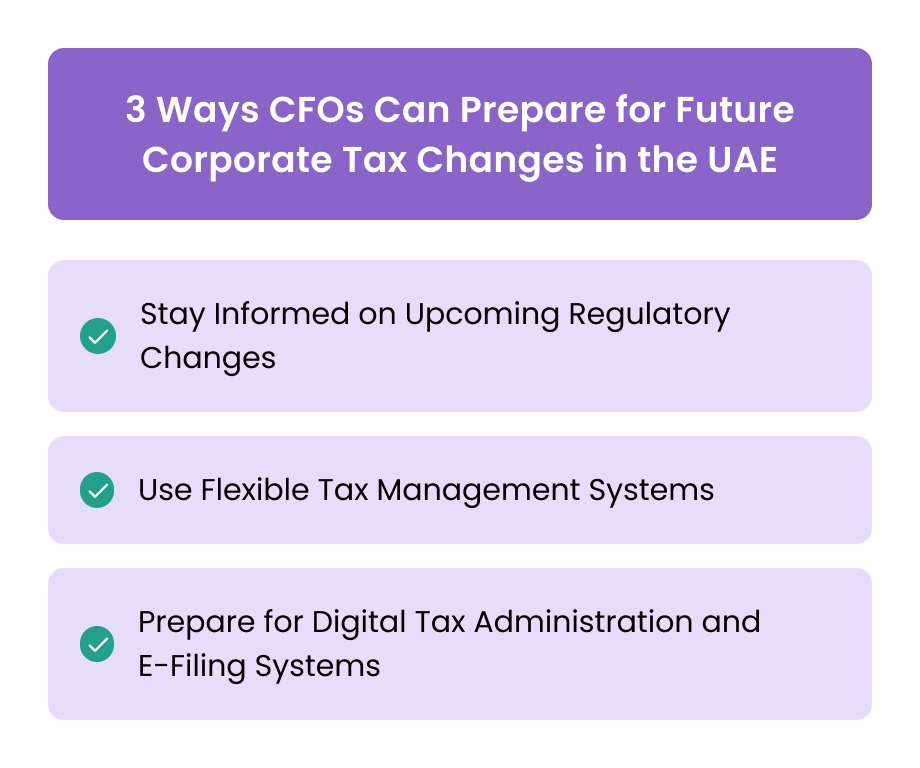
مع استمرار تطور الإطار الضريبي في الإمارات، عليك أن تبقى مستعدًا للحفاظ على امتثال مؤسستك وقوتها المالية. ولأن ضريبة الشركات لا تزال حديثة نسبيًا، فإن اتخاذ خطوات استباقية مبكرة يساعدك على التكيف بسلاسة، والحفاظ على الكفاءة التشغيلية، وتجنب المخاطر المستقبلية.
1. متابعة التغييرات التنظيمية المرتقبة
لا تزال تشريعات ضريبة الشركات في الإمارات في طور التطور، ومن المتوقع صدور تحديثات أو تعديلات عليها. وتساعد متابعة هذه التغييرات المديرين الماليين على الاستجابة في الوقت المناسب وتجنب ثغرات الامتثال.
ما يمكنك فعله:
- اشترك في التحديثات الصادرة عن الجهات الضريبية في الإمارات وابقَ على تواصل منتظم مع مستشاريك الضريبيين.
- تابع التوجهات الضريبية العالمية، خاصة إذا كانت شركتك تجري معاملات عبر الحدود.
- احتفظ بتقويم للامتثال الضريبي لمتابعة المواعيد النهائية والتغييرات التنظيمية المتوقعة.
2. استخدام أنظمة مرنة لإدارة الضرائب
قد تتطلب التغييرات الضريبية المستقبلية تعديلات سريعة على الأنظمة. وتسهّل الأنظمة الضريبية المرنة المدعومة بالذكاء الاصطناعي التكيف دون تعطيل العمليات.
ما يمكنك فعله:
- استثمر في أدوات ضريبية مؤتمتة يمكنها استيعاب القواعد الضريبية الجديدة بسهولة.
- استخدم أنظمة سحابية قابلة للتوسع تتعامل بكفاءة مع التحديثات التنظيمية.
- اربط أنظمة تخطيط موارد المؤسسة (ERP) بوحدات الامتثال الضريبي لدعم التغييرات المستقبلية في ضريبة القيمة المضافة وضريبة الشركات.
3. الاستعداد للإدارة الضريبية الرقمية وأنظمة تقديم الإقرارات إلكترونيًا
تتجه الإمارات نحو مزيد من الإجراءات الضريبية الرقمية، والاستعداد لذلك يضمن امتثالًا سلسًا عند تطبيق الأنظمة الجديدة.
ما يمكنك فعله:
- حوّل المستندات الضريبية والفواتير والسجلات إلى صيغة رقمية.
- استثمر في أدوات تتكامل مع المنصات الضريبية الرقمية.
- درّب الفرق المالية على تقديم الإقرارات الضريبية إلكترونيًا واستيفاء متطلبات الامتثال.
كيف تساعد الآن الشركات في الإمارات على تعزيز جاهزيتها لضريبة الشركات؟
لا تزال فرق مالية كثيرة في الإمارات تتعامل مع الامتثال لضريبة الشركات على أنه مهمة تُنجز في نهاية السنة. لكن في الواقع، غالبًا ما تنشأ تحديات الامتثال عندما تكون بيانات المصروفات مشتتة، أو المستندات غير مكتملة، أو السجلات المالية غير محدّثة بانتظام على مدار السنة.
تساعد الآن الفرق المالية على تعزيز الضوابط التشغيلية والتوثيق الداعم للامتثال لضريبة الشركات، من خلال تحسين الاطلاع على الإنفاق، وحوكمة مسارات الموافقة، والمزامنة مع الأنظمة المحاسبية.
دور الآن في دعم الامتثال بعيدًا عن تقديم الإقرارات
تعزز منصة الآن الجانب التشغيلي الذي يدعم إعداد سجلات مالية دقيقة وجاهزة للتدقيق.
1. الاطلاع الفوري على المصروفات للحصول على بيانات ضريبية أدق
توفّر المنصة تسجيلًا فوريًا لبيانات المصروفات وتصنيفًا تلقائيًا لها، ما يساعد الفرق على الاحتفاظ بسجلات مصروفات كاملة ومنظمة على مدار السنة. ويجعل ذلك إعداد إقرارات ضريبة الشركات أكثر كفاءة ويقلل الجهد اليدوي.
2. جمع الفواتير آليًا وتوثيق مركزي
تجمع منصة الآن الفواتير في مكان واحد وتتولى جمع الإيصالات وتسجيل بياناتها، مع ربط المعاملات بالمستندات الداعمة. ويساعد ذلك الفرق على الاحتفاظ بمسارات تدقيق يسهل الرجوع إليها وتقليل الجهد اليدوي أثناء إعداد الإقرارات الضريبية.
3. ضوابط توثيق جاهزة لمتطلبات ضريبة القيمة المضافة
تجمع المنصة الفواتير الضريبية وسجلات المصروفات وتنظمها، ما يساعد الفرق على الاحتفاظ بمستندات مستوفية للمتطلبات تدعم إعداد التقارير المالية والإجراءات الضريبية.
4. مسارات موافقة متعددة المستويات لحوكمة أقوى
تساعد مسارات الموافقة المنظمة على ضمان مراجعة المصروفات والتحقق منها قبل تسجيلها، بما يدعم الضوابط الداخلية ودقة التوثيق.
5. التكامل مع الأنظمة المحاسبية لتقارير متسقة
تزامن المنصة المصروفات والفواتير والموافقات مع الأنظمة المحاسبية مثل NetSuite وQuickBooks وXero وMicrosoft Dynamics وOdoo وZoho Books. ويساعد ذلك على الحفاظ على اتساق السجلات المالية ويقلل الفجوات في تسوية الحسابات أثناء إعداد الإقرارات الضريبية.
ما تقدمه منصة الآن وما لا تقدمه؟
منصة الآن ليست نظامًا لتقديم الإقرارات الضريبية، ولا تحل محل مستشاريك الضريبيين أو برنامجك المحاسبي.
بل توفّر ضوابط الإنفاق، وجمع المستندات وتسجيل بياناتها، والمزامنة مع الأنظمة المحاسبية، بما يساعد الفرق المالية على الاحتفاظ بسجلات مالية دقيقة وتعزيز الجاهزية التشغيلية للامتثال لضريبة الشركات.
الخلاصة
يمكن أن تتحول غرامات ضريبة الشركات في الإمارات سريعًا إلى خطر جدي يؤثر في التدفق النقدي والتوقعات المالية وثقة مجلس الإدارة.
ويمكن للفرق المالية التي تُدرج عمليات التحقق الضريبي في إجراءات عملها اليومية، وتتحقق من بيانات التكاليف والمستندات بشكل فوري، وتربط إعداد التقارير بتخطيط التدفق النقدي، أن تقلل المخاطر بشكل كبير. وعندها يصبح الامتثال عملية منظمة يسهل التحكم فيها وتدعم الاستقرار والنمو.
تبسّط الآن هذه العملية من خلال الجمع بين ضوابط الإنفاق وجمع المستندات ومسارات الموافقة المنظمة في نظام واحد. ويمنحك ذلك اطلاعًا واضحًا على مدفوعات المورّدين وسجلات المصروفات والبيانات المتعلقة بضريبة القيمة المضافة قبل وصولها إلى أنظمتك المحاسبية، ما يقلل الأخطاء اليدوية ويحسّن الجاهزية للتدقيق.
احجز عرضًا توضيحيًا مجانيًا لتتعرف على كيفية مساعدة الآن للشركات في الإمارات على تعزيز الرقابة المالية والجاهزية لضريبة الشركات.
يصبح تجنب الغرامات أسهل بكثير عندما تعرف جميع القواعد، ويشرح دليلنا الشامل لضريبة الشركات في الإمارات التسجيل والنسب الضريبية ومواعيد تقديم الإقرارات في مكان واحد.
الأسئلة الشائعة
س1. هل يمكن الإعفاء من غرامات ضريبة الشركات في الإمارات أو تخفيضها؟
ج1. في بعض الحالات، قد تخفّض الهيئة الاتحادية للضرائب الغرامات أو تعفي منها إذا تمكنت من إثبات سبب وجيه أو سجل امتثال قوي. ويمكن للمديرين الماليين تعزيز فرصهم من خلال الاحتفاظ بمستندات واضحة والرد سريعًا على أي إشعارات.
س2. هل تنطبق ضريبة الشركات على شركات المناطق الحرة في الإمارات؟
ج2. يمكن أن تستفيد شركات المناطق الحرة من نسبة ضريبة شركات تبلغ %0 إذا استوفت معايير «الشخص المؤهل في المنطقة الحرة». وقد يؤدي عدم استيفاء متطلبات المادة الاقتصادية أو متطلبات الامتثال إلى تطبيق النسبة الأساسية البالغة %9، ما يزيد المخاطر المالية.
س3. كيف يعمل التصريح الطوعي عند تصحيح أخطاء ضريبة الشركات في الإمارات؟
ج3. إذا اكتشفت خطأ في إقرار ضريبة شركات سبق تقديمه، يمكنك تقديم تصريح طوعي عبر المنصة الإلكترونية للهيئة الاتحادية للضرائب. ويساعد التحرك المبكر على تقليل الغرامات ويعكس حوكمة قوية، ما يحمي الوضع المالي لشركتك وسمعتها معًا.
س4. ما الجهة التي تفرض غرامات ضريبة الشركات في الإمارات؟
ج4. تفرض الهيئة الاتحادية للضرائب (FTA) غرامات ضريبة الشركات وتشرف على الامتثال والتقييمات الضريبية وإنفاذ القانون. ويجب على المديرين الماليين التأكد من أن جميع الإقرارات والمدفوعات والتصريحات متوافقة مع لوائح الهيئة لحماية التدفق النقدي والحفاظ على ثقة أصحاب المصلحة.
س5. كم مرة ينبغي للشركات مراجعة إطار الامتثال لضريبة الشركات لديها؟
ج5. ينبغي للشركات إجراء مراجعات داخلية مرة كل ثلاثة أشهر على الأقل، خاصة في السنوات الأولى من تطبيق ضريبة الشركات في الإمارات. وتساعد المراجعات الدورية على اكتشاف الثغرات مبكرًا ومعالجة المشكلات قبل أن تتحول إلى غرامات.
Gain control over business expenses with Alaan corporate cards
Invygo earned AED 100,000 in cashback using Alaan cards
Personalise approval workflows to align with your business needs with Alaan's Spend Management platform
Discover the power of automated expense tracking and smarter spend control with Alaan
Turn data into actionable insights with Alaan's spend management tools
Stay Tax Compliant with UAE's #1 Corporate Card and Spend Management Platform
Customisable corporate card policy template
Know how much Corporate Tax you have to pay this fiscal year
Easily integrate Alaan with your ERP for accurate, real-time expense tracking
Close books faster with Alaan's AI-powered accounting automation
Reconcile your books in minutes instead of hours, every single month.
Keep petty cash organized with Alaan corporate cards and automated expense management