



Most invoice delays in the UAE do not start with major errors. They usually start with smaller issues that compound. An incomplete supplier invoice. A missing TRN. An approval sitting in a manager’s inbox. A receipt uploaded without VAT details. These small points of friction extend processing timelines, disrupt payment schedules and increase the volume of exceptions finance teams must resolve at month end.
Delayed invoice processing affects more than operational efficiency. It reduces cash flow predictability, weakens supplier relationships, and increases the risk of late-payment penalties or missed early-payment discounts. In regulated environments, it also impacts VAT accuracy and the ability to substantiate claims during audits.
Finance leaders who shorten invoice cycles do not just work faster. They work with clearer information, fewer exceptions and stronger internal controls. The result is a more reliable payables function that suppliers trust and auditors respect.
In this blog, we examine why invoice cycles slow down inside UAE organisations and outline practical, finance-led tactics to shorten them.
Key Takeaways
- Bottlenecks are mostly internal, not supplier-driven. The quickest gains come from fixing invoice intake rules, VAT checks, and approval of ownership.
- Zero touch processing is the strongest AP benchmark. When most invoices flow straight from capture to approval, speed and VAT accuracy improve simultaneously.
- Approval delays matter more than data capture. One slow approver extends cycle time more than any other step. Mobile approvals and escalations fix this.
- Integration drives real throughput. Connecting cards, invoices and accounting removes manual reconciliation, which is the biggest drag on AP productivity.
- Early validation reduces VAT risk. When invoice issues surface on day one, not day twenty, filings become cleaner and audit adjustments drop sharply.
Why Faster Invoice Processing Matters For Finance Leaders
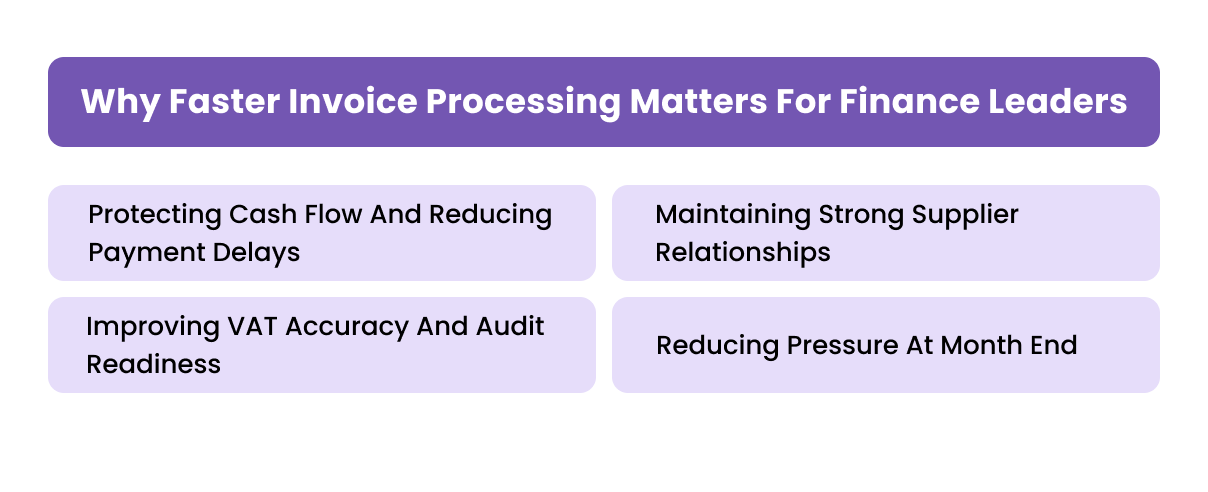
Shorter invoice cycles directly influence financial stability, vendor trust and internal reporting accuracy. For many UAE organisations, improving processing time is one of the simplest ways to strengthen operational control without large structural changes.
Protecting Cash Flow And Reducing Payment Delays
Cash flow forecasts depend on accurate visibility into upcoming outflows. When invoices remain unprocessed or approvals are inconsistent, expected payment dates lose reliability. Faster processing brings structure to payables and reduces volatility in weekly and monthly cash positions. This gives CFOs stronger control over liquidity planning.
Maintaining Strong Supplier Relationships
Suppliers in the UAE increasingly track payment discipline. Organisations that process invoices within defined windows often receive quicker issue resolution, better allocation of goods or services and more favourable commercial terms. Consistency in invoice processing signals financial stability and operational maturity.
Improving VAT Accuracy And Audit Readiness
VAT submissions depend on clear, timely documentation. Invoices that arrive late or lack required details lead to avoidable exceptions, delayed claims or adjustments to filed returns. When the processing flow is faster, VAT checks are performed promptly and errors are corrected before reporting periods close.
Reducing Pressure At Month End
Slow invoice processing pushes unresolved work to the end of the month. Finance teams then face compressed timelines, hurried reconciliations and incomplete data. When invoices flow continuously through the month, the close becomes a controlled review process instead of a corrective exercise.
Also Read: Accounts Payable Automation And Invoice Management Software
Common Reasons Invoice Processing Is Slow In UAE Organisations
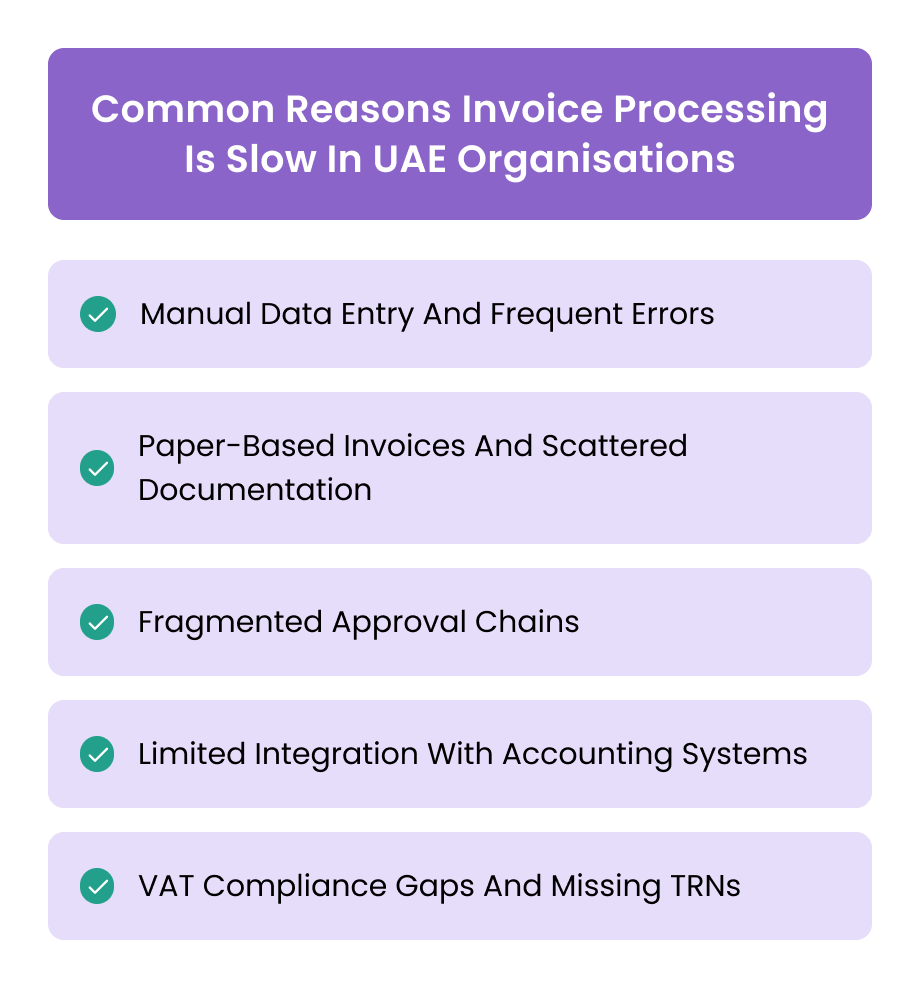
Many of the delays finance teams experience can be traced back to fragmented processes and inconsistent inputs. The slowdowns do not usually come from complex issues. They come from repetition, rework and missing information. Understanding these root causes makes it easier to design a workflow that operates reliably at scale.
Manual Data Entry And Frequent Errors
Re-keying invoice details exposes AP teams to avoidable mistakes. Small inaccuracies in amounts, dates or VAT fields become exceptions that require additional review and supplier confirmation. This creates repeat work and slows month-end reconciliation. Manual entry also limits throughput when invoice volume increases, which is common in project-driven industries across the UAE.
Paper-Based Invoices And Scattered Documentation
Despite widespread digital adoption, many suppliers still send physical invoices or informal PDF attachments. When documents arrive through multiple channels or remain with individual departments, AP teams lose visibility. Staff spend time searching for files, requesting resubmissions and following up on missing receipts. These delays accumulate quickly and extend the processing cycle by days.
Fragmented Approval Chains
Approvals routed through email or messaging apps are difficult to track. Finance teams cannot see where an invoice is stuck or how long it has been pending. A single delayed approval, even for a low-value invoice, disrupts scheduled payment runs and forces AP teams to chase managers manually. Over a full month, this creates a significant operational burden.
Limited Integration With Accounting Systems
When invoice capture tools and accounting platforms are not connected, AP teams rely on CSV uploads or manual posting. This introduces timing gaps, coding inconsistencies and duplicated effort. It also delays VAT categorisation and slows downstream processes like reconciliation and cash flow forecasting.
VAT Compliance Gaps And Missing TRNs
Invoices that do not meet UAE VAT requirements cannot progress through the workflow. Missing TRNs, incorrect VAT amounts or incomplete supplier details trigger manual checks and supplier follow-ups. Each exception interrupts the flow and increases the likelihood of late postings or missed VAT recovery.
Also Read: Post Expenses To VAT Compliant ERP Systems
Proven Strategies To Achieve Faster Invoice Processing
A well-structured AP process replaces reactive firefighting with predictable, repeatable steps. The strategies below address the most common sources of delay and can be implemented incrementally without disrupting business operations.
1. Standardise Your AP Workflow Across The Company
A consistent workflow removes ambiguity and reduces the back-and-forth that slows invoice processing. Finance teams that document and enforce a standard approach see immediate gains in turnaround time and accuracy.
Key Actions
- Define the minimum information every invoice must contain: supplier legal name, TRN, invoice date, invoice number, PO number where applicable, project code and VAT breakdown.
- Establish a single submission channel, such as a central AP inbox or upload portal, and make it the only accepted path for invoices.
- Set clear approval rules and SLAs. For example, invoices under a defined threshold should be reviewed within one business day, and higher-value invoices should follow a defined multi-level approval path.
- Ensure business units follow the same process. Fragmented departmental workflows are a major contributor to delays.
Impact
Standardisation reduces exceptions, improves accountability and lowers the risk of invoices being overlooked or misrouted.
2. Shift To Digital Invoices And E-Invoicing
Digital invoicing eliminates the physical handling and scanning delays that often slow AP cycles. It also improves data quality and reduces the effort required to verify VAT elements.
Key Actions
- Ask suppliers to send structured digital invoices or high-quality PDFs instead of paper documents.
- Provide suppliers with a simple guide outlining required fields and acceptable formats.
- Prioritise digital onboarding for your top suppliers, as they account for the majority of invoice volume.
- Where feasible, integrate with major suppliers using electronic data interchange or API-based feeds for direct invoice submission.
Impact
A digital-first approach shortens the time from invoice receipt to initial review, reduces document errors and makes validation more reliable, particularly for VAT compliance.
3. Use OCR And AI For Accurate Data Extraction
OCR and AI significantly reduce the manual workload involved in reviewing and coding invoices. These tools capture key information and flag potential issues before they reach approvers.
Key Actions
- Use OCR to extract invoice details such as supplier name, VAT number, invoice dates, amounts and tax lines.
- Implement AI checks that verify data accuracy, detect duplicates and highlight inconsistencies with past invoices.
- Route low-confidence or incomplete extractions to an exceptions queue for quick manual review.
- Train the system with historical invoices to improve recognition accuracy over time.
Impact
Automated extraction supports quicker triage, fewer data entry errors and a higher percentage of invoices moving straight to approval without intervention.
4. Implement Automated Approval Workflows
Automated workflows ensure invoices flow through the organisation without unnecessary pauses. Approvers receive clear context and finance teams gain visibility into where delays occur.
Key Actions
- Configure rules based on invoice amount, project type and department ownership.
- Enable mobile approvals so managers can approve invoices even when travelling.
- Set automated reminders and escalations for approvals that exceed SLA thresholds.
- Record all approval actions to create a detailed audit trail for VAT and internal controls.
Impact
Workflows reduce manual chasing, shorten approval times and improve adherence to company policy.
5. Integrate AP With Your Accounting System
Integration ensures invoices move seamlessly from capture to posting without duplication or manual re-entry. This strengthens accuracy and shortens reconciliation cycles.
Key Actions
- Connect your AP system to your ERP or accounting platform, such as Xero, QuickBooks, NetSuite or Microsoft Dynamics.
- Automate coding rules so invoices are mapped to the correct expense accounts, tax codes and projects.
- Validate VAT fields during posting to reduce errors during filing periods.
- Use bi-directional sync, where available, to reconcile posted invoices with payment status.
Impact
A connected workflow reduces processing time, improves data consistency and lowers the risk of discrepancies during audits.
6. Build A Centralised Invoice Repository
A single source of truth for invoices improves transparency across departments and simplifies audit preparation. It also reduces time spent locating or re-requesting documents.
Key Actions
- Store all invoices and supporting documents in one searchable, access-controlled repository.
- Include metadata attributes such as supplier, PO, project, TRN and invoice date to enable fast retrieval.
- Implement retention policies aligned with UAE regulatory requirements.
- Make the repository accessible to departments that frequently need invoice data, such as procurement and operations.
Impact
Centralisation eliminates duplicate file storage, supports VAT substantiation and improves collaboration across finance and business units.
7. Track AP Metrics Consistently
Process improvement requires measurable indicators. Tracking AP performance gives finance leaders a clear view of bottlenecks and operational risks.
Key Actions
- Monitor average invoice processing time, approval time, exceptions rate and VAT compliance ratio.
- Build dashboards that refresh daily to highlight overdue approvals and high-risk invoices.
- Review processing data with department heads to address recurring issues.
- Use insights to adjust workflows, supplier onboarding and coding rules.
Impact
Consistent measurement creates accountability, highlights inefficiencies and enables targeted improvements that can significantly reduce cycle time.
Also Read: Understanding Spend Visibility And Business Benefits
Practical End To End Invoice Workflow Example
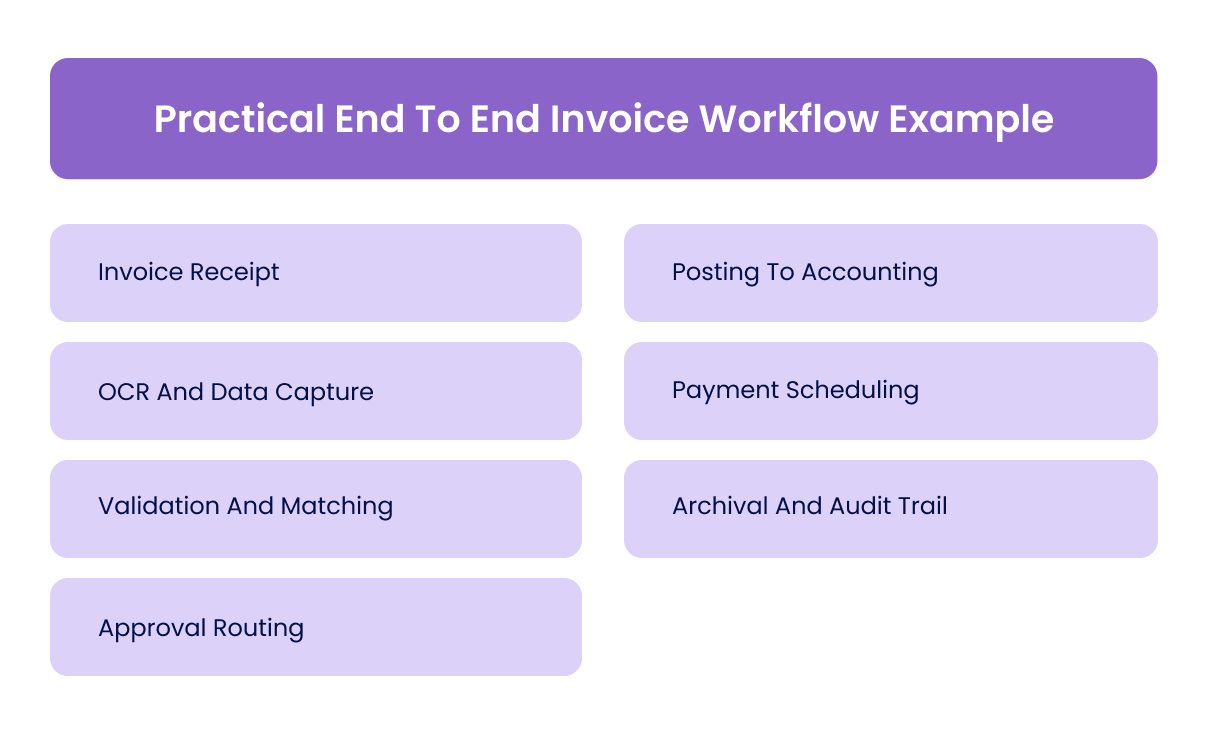
A streamlined AP process follows a predictable sequence from invoice receipt to payment. The example below reflects how a well-designed workflow typically operates in UAE organisations, especially those handling medium to high invoice volumes.
Step 1: Invoice Receipt
Suppliers submit invoices to a central AP inbox or upload portal. An automatic acknowledgement confirms receipt, which removes the uncertainty suppliers often experience and reduces follow-up emails.
Step 2: OCR And Data Capture
The system extracts key invoice details, including supplier information, TRN, invoice date, invoice number, amounts and VAT lines. For invoices that lack essential details or fall outside expected patterns, the system assigns a low-confidence score and sends them to an exceptions queue.
Step 3: Validation And Matching
Where possible, invoices are matched to purchase orders or associated expenses. Matching rules check quantities, values and VAT amounts. When a match is confirmed, the system applies default coding and prepares the invoice for approval. If discrepancies appear, AP receives an early alert instead of discovering issues at month end.
Step 4: Approval Routing
Invoices move through the predefined approval sequence based on value, department or project. Approvers can review supporting documents and approve from a mobile device. Reminder schedules and escalation paths ensure invoices do not stall for prolonged periods.
Step 5: Posting To Accounting
Once approved, the invoice posts directly to the accounting system. The correct chart of accounts, tax codes and project allocations are applied automatically. This step removes manual entry and keeps the general ledger updated throughout the month.
Step 6: Payment Scheduling
Finance teams schedule payments according to supplier terms, cash flow priorities or discount opportunities. Because invoices have already been validated and coded accurately, payment runs become more predictable and require fewer manual interventions.
Step 7: Archival And Audit Trail
All invoice data and approval actions are stored in a central repository for audit readiness. This allows teams to retrieve documents instantly, respond to supplier queries efficiently and maintain VAT substantiation without scrambling for information.
[cta-10]
What Faster Invoice Processing Looks Like In UAE Businesses
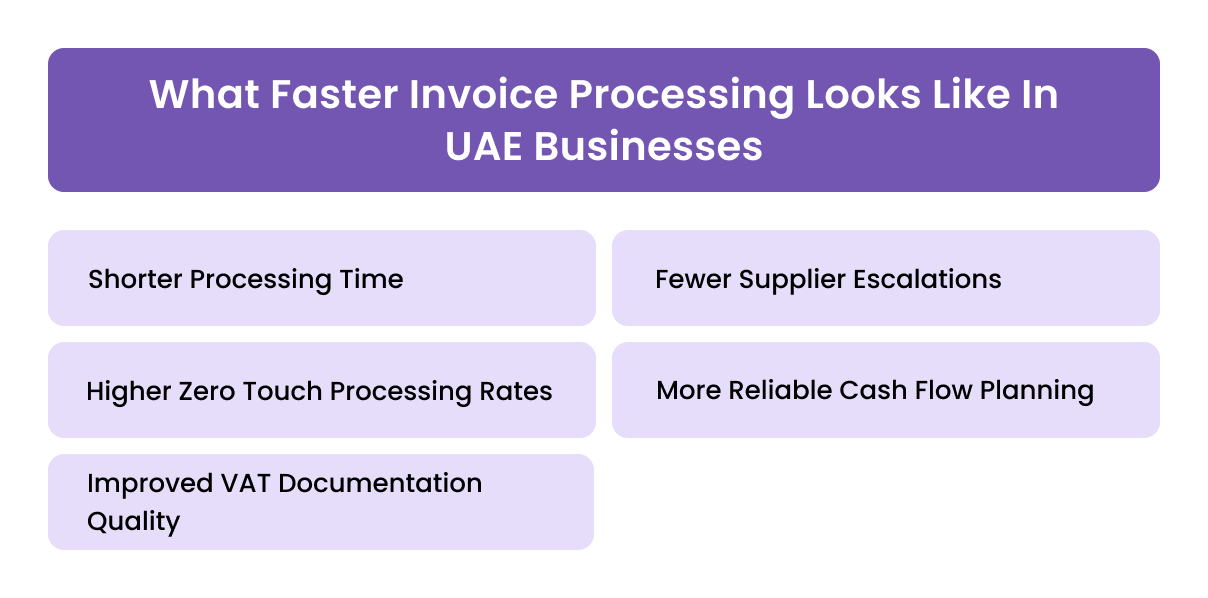
When invoice workflows improve, the impact shows up quickly in operational metrics and supplier behaviour. The benefits extend beyond higher speed. They improve accuracy, reduce friction and strengthen financial control.
Shorter Processing Time
Organisations that adopt structured workflows, OCR and automated approvals commonly reduce invoice cycles from a week or more to two or three days for standard invoices. High-quality supplier submissions can often be processed within 24 hours.
Higher Zero Touch Processing Rates
With good supplier data and well-trained OCR models, a large proportion of invoices can move from capture to approval with little or no manual intervention. A zero-touch rate of 70 to 85 per cent is achievable for recurring vendor invoices.
Improved VAT Documentation Quality
Invoices missing TRNs or VAT details are flagged earlier rather than during filing. This reduces the number of corrections required and results in cleaner, more accurate VAT submissions.
Fewer Supplier Escalations
When suppliers see predictable processing and payment behaviour, issue escalations decline. This strengthens trust and reduces time spent on dispute resolution.
More Reliable Cash Flow Planning
AP teams that maintain consistent processing cycles produce better short-term cash forecasts. Treasury teams can plan payment runs confidently, knowing approvals and coding will not be delayed.
Also Read: Procure To Pay Systems And Process Steps
How Alaan Helps Finance Teams Accelerate Invoice Processing
Alaan supports the end-to-end lifecycle of invoices by removing friction at every stage. The focus is on accuracy, control and visibility rather than simply speed. Each capability aligns with the operational needs of UAE finance teams.
AI Driven Invoice And Receipt Capture
At Alaan, invoices and receipts can be uploaded via email, mobile app or Chrome extension. OCR extracts supplier and VAT details, while AI checks for completeness and flags inconsistencies. This reduces the manual work typically required during invoice intake.
Automatic Matching And Duplicate Detection
The platform compares invoices against purchase orders and card transactions where applicable. Duplicate detection logic identifies repeated submissions based on invoice number, supplier patterns and amounts. This lowers the risk of duplicate payments and manual reconciliation.
Configurable Approval Workflows
Approval sequences reflect the organisation’s policy structure. Rules can be based on value, cost centre or project, and managers can approve from mobile devices. Each action is recorded to maintain a full audit trail.
Accounting Integrations
Alaan connects with major accounting systems used across the region. Approved invoices sync directly into the ledger with mapped accounts and VAT codes. This supports more accurate reporting and reduces the time spent on manual posting.
Centralised Repository And Audit Readiness
All invoices, receipts and approval logs are stored in one place. Finance teams can retrieve documents quickly for internal reviews, VAT audits or supplier queries, without relying on scattered files.
Real Time Dashboards
Alaan’s reporting tools give AP managers visibility into processing times, exceptions and pending approvals. This allows leaders to identify bottlenecks and improve performance continuously.
[cta-5]
Conclusion
Improving invoice processing does not depend on drastic structural changes. The biggest gains come from removing everyday friction: unclear submissions, inconsistent approvals, scattered documents and repetitive data entry. When these points are addressed, AP teams see faster cycle times, cleaner VAT documentation and a noticeable reduction in month end pressure.
For finance leaders, the value lies in predictability. When invoices move through the workflow without delays, cash flow planning becomes more reliable, supplier discussions become easier and compliance work becomes less reactive. These improvements compound over time, creating a more disciplined financial foundation for the organisation.
Alaan supports this shift by giving finance teams the tools to automate capture, strengthen controls and eliminate manual reconciliation. By unifying cards, invoices, and accounting, the platform helps teams move from reactive task management to a more strategic, insight-driven workflow.
Also Read:
Modern Expense Management Guide
https://www.alaan.com/blog/modern-expense-management-guide
If you want to streamline your invoice processing, reduce exceptions, and shorten approval cycles, you can explore how Alaan supports end-to-end AP automation.
Book a demo to see the workflow in action.
Frequently Asked Questions
1. What Is a Good Invoice Processing Time for a UAE Business?
For mid-sized UAE organisations with structured workflows, a strong benchmark is two to three business days from receipt to approval. High-volume suppliers or recurring invoices can often be processed within 24 hours when automation and clear approval rules are in place.
2. Why Do Invoices Get Stuck in Approval Workflows?
Invoices typically stall because approvers are unclear on their role, travelling without mobile access, or missing required context, such as PO number or project code. Organisations with automated routing, defined SLAs and mobile approvals see far fewer bottlenecks.
3. How Can Finance Teams Prevent Duplicate Invoice Payments?
Duplicate detection tools compare invoice number, supplier, amount and date against historical data. Finance teams should also centralise invoice receipt and avoid approving invoices sent through informal channels like WhatsApp or departmental inboxes.
4. Do UAE Companies Need Original Physical Invoices for VAT Purposes?
No. Digital invoices are acceptable as long as they include all mandatory fields and remain accessible for audit. However, companies must maintain consistent records, ensure authenticity and link each invoice to the correct VAT period.
5. What Metrics Help Identify Bottlenecks in Invoice Processing?
Useful metrics include approval turnaround time, exceptions rate, percentage of invoices missing VAT fields, zero touch processing rate and the number of invoices processed outside SLA. These highlight where to focus improvements.
6. Can Faster Invoice Processing Improve Supplier Terms?
Yes. Suppliers are more willing to offer better payment terms, priority fulfilment or early-payment discounts when they trust a company’s processing discipline. Predictability improves negotiation leverage.

.png)

%201.avif)
