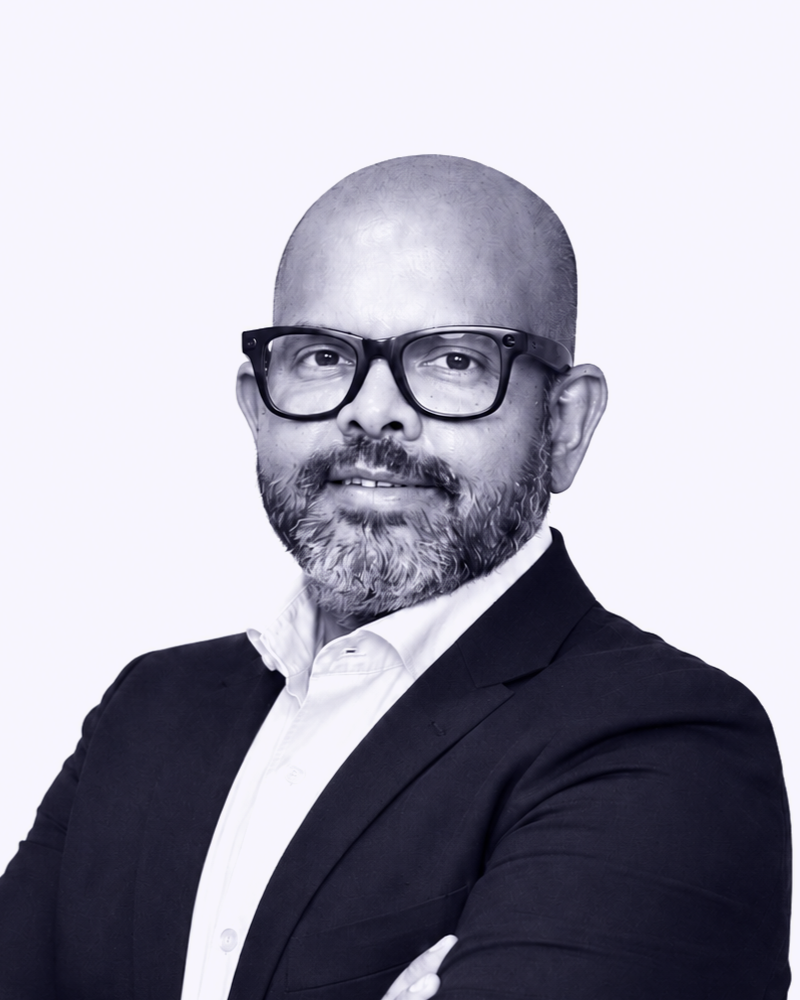
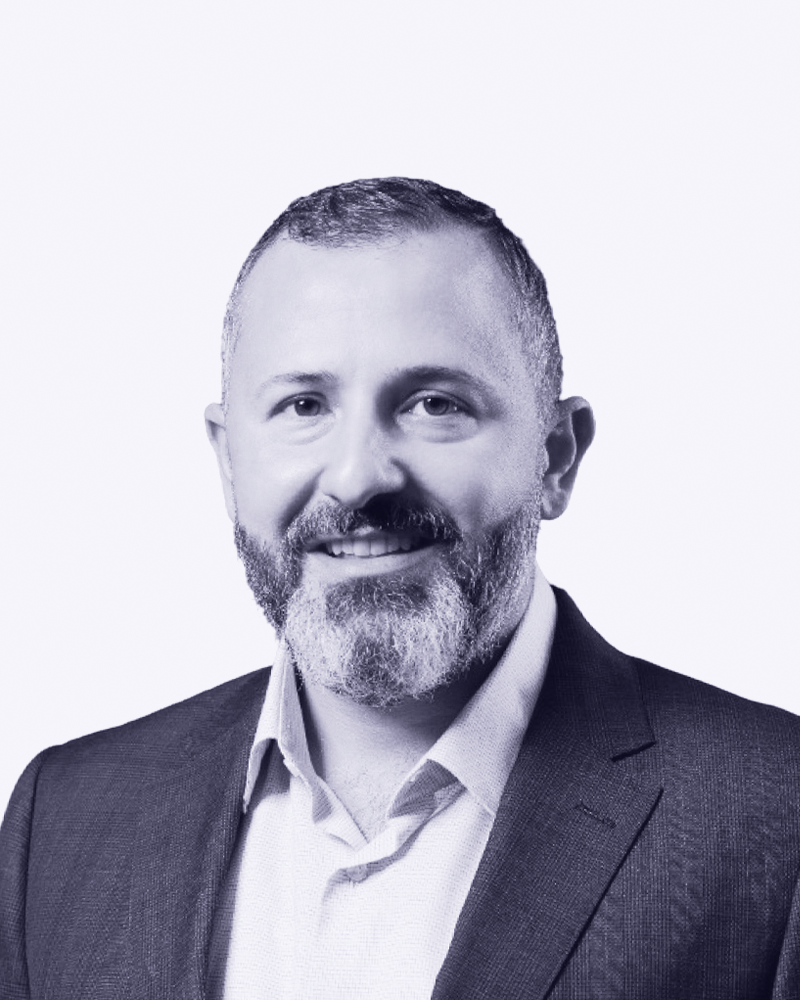
.avif)

You’ve had such a dynamic career across sectors - public, private, IPOs, transformations. Before we get into all of that, I’d love for you to tell us a bit about your journey.
My career has been a long, dynamic journey, one I often compare to a flight, with different phases, destinations, and moments of turbulence. It began in 1994 at American Express, where I built a strong foundation in finance, moving through roles like accountant, chief accountant, and supervisor while earning my CPA. From there, I took on leadership roles across both the public and private sectors, helping organizations through major transformations, whether it was transitioning from cash to accrual accounting, implementing ERP systems like Oracle and SAP, or preparing for IPOs. One of the highlights was leading the IPO of the National Company for Learning and Education in Saudi Arabia, where I saw firsthand how a family-run business could evolve into a publicly listed market leader. Over the last 30 years, I’ve worked across different regions—including the Middle East, North Africa, and Europe, gaining perspective not just on finance, but on people, culture, and change. Each experience added a new layer to my journey, and I still believe there’s more to come.
You’ve worked in both the public and private sectors. What’s something you learned in government that the private sector often overlooks and vice versa?
Working across both public and private sectors taught me that each side operates with a very different mindset, and both have blind spots. In government roles, I saw how ambitious and forward-looking public sector organizations can be, especially in places like Saudi Arabia where there’s strong backing for transformation and investment in long-term systems. They often have the freedom to build for the future without the same budget constraints or short-term pressures that private companies face. On the other hand, the private sector is typically more disciplined when it comes to cost control, ROI, and decision-making speed, because they’re accountable to shareholders and competition is real. What the private sector sometimes overlooks is the value of investing early in foundational systems and long-term planning. And what the public sector can miss is the urgency and commercial edge that comes from operating in a more competitive environment. The sweet spot lies in borrowing the best of both, being strategic like the public sector, but lean and execution-focused like the private one.
You led the IPO for the National Company for Learning and Education. What do people not talk about enough when it comes to taking a family-run company public?
What people don’t talk about enough is how emotionally and operationally intense it is to take a family-run company public. On paper, it looks like a financial milestone, but behind the scenes, it’s a massive transformation. Many companies are excited about the idea of listing, but underestimate how much internal change is required to actually get there. From restructuring governance to tightening financial controls and shifting the mindset from family-run to shareholder-driven, it’s a cultural shift as much as a strategic one. There’s often resistance, unexpected costs, and a realization that the six-month IPO timeline you envisioned might actually take two years. In the case of the National Company for Learning and Education, I joined during the final stretch of IPO preparation, and even then, it was clear that their earlier years of groundwork had made all the difference. They invested in systems, transparency, and professional leadership early, and that’s what helped them succeed post-listing. It’s not just about going public, it’s about staying credible once you do.
“Transformation” is often used as a buzzword but you’ve done it for real. What does it actually look like in the messy middle?
Transformation looks nothing like the polished slide decks, it’s resistance, setbacks, and a lot of uncomfortable change. You’re dealing with legacy systems people have used for 20 or 30 years, processes built on habit, and teams who are comfortable in their routines. It’s like waking someone from a deep sleep and asking them to run a marathon. The real work starts with mindset, getting leadership to lead from the front, breaking through resistance on the ground, and making sure people see the “why” before the “how.” Change doesn’t stick unless it’s people-led, not just system-driven. In my experience, you can’t force transformation, you have to seed it, nurture it, and walk through the discomfort with your team. That’s when it becomes real.
How do you get teams to embrace change rather than resist it?
The real shift happens when you stop just reporting numbers and start shaping decisions. Early in your career, it’s natural to focus on spreadsheets and reports, that’s how you build technical credibility. But to grow, you have to move from being the person who prepares the numbers to the person who guides the business with them. That means delegating the routine work, building a strong team, and freeing yourself up to think strategically. You spend more time with other departments, understanding their goals, challenges, and how finance can help. It’s also about communication, translating data into insights that drive action. The ones who make the leap are those who become business partners, not just finance experts. They know the numbers, but they also know the people, the story, and the impact behind them.
Many finance professionals struggle to evolve beyond the “numbers person.” What separates those who do?
The ones who evolve beyond being just the “numbers person” are the ones who realize that technical skills alone won’t get you to the leadership table. It’s not enough to prepare the reports, you need to understand what those numbers mean for the business, and more importantly, help others understand too. That shift starts when you build a strong team you can trust with the day-to-day, so you can focus on the bigger picture. It means spending more time with operations, HR, sales, learning their challenges and showing how finance can support growth, not just control costs. It’s about becoming a translator between data and decisions. The professionals who grow are the ones who step out from behind the spreadsheet and become active, trusted partners to the business.
Where should finance teams lean in when it comes to AI, and where should they be cautious?
Finance teams should lean in on using AI to automate repetitive, time-consuming tasks, things like document analysis, reconciliations, and report generation. These are areas where AI can save hours, reduce human error, and give teams more time to focus on strategic work. But where they need to be cautious is in over-relying on it without validation. AI can speed things up, but it can’t replace judgment. You still need human oversight to review outputs, spot context-specific risks, and make informed decisions. The mindset shouldn’t be “AI will do it for me”, it should be “AI will help me do it better.” Use it as an assistant, not a replacement. And most importantly, lead by example. When teams see their leaders experimenting with and benefiting from AI, they’re more likely to adopt it in meaningful ways.
How do you encourage your team to adopt AI in their workflows?
I keep it simple: I show them, not just tell them. If someone on the team is spending hours on a task, summarizing a report, cleaning data, building a model, I’ll step in and ask, “Have you tried using AI for this?” Then I’ll walk them through how it can help, even if it’s just something like ChatGPT or a basic tool. Most people resist new tech because it feels overwhelming or irrelevant. But when they see a real example, when AI helps them finish in 30 minutes what used to take 3 hours, that’s when it clicks. I don’t push tools they’re not ready for, but I do lead by example and create a culture where it’s safe to try, fail, and learn. You build adoption by making AI useful, not mandatory.
You’ve spent much of your career in Saudi. How is Vision 2030 showing up in everyday business conversations?
Vision 2030 isn’t just a national plan anymore, it’s shaping real, everyday business decisions. You see it in how companies think bigger, move faster, and invest more confidently in growth and innovation. Whether it’s expanding into new sectors, modernizing systems, or scaling operations, there’s a clear sense that the environment is ready for bold moves. I’ve worked with businesses that set 5-year goals and hit them in 2 because the momentum around them pushed everyone forward. Vision 2030 has created a mindset shift, companies aren’t just reacting to change, they’re driving it. And when you operate in a market that’s this ambitious, it raises the bar for everyone.
What advice would you give a first-time CFO in their first 90 days?
Listen first, act later. Your first 90 days as a CFO shouldn’t be about proving yourself, it should be about understanding the business inside out. Spend time with people at every level, not just the executive team. Ask questions, read the financials, study the systems, and observe the dynamics. Don’t assume you need to have all the answers on day one. Instead, build trust by being curious, collaborative, and clear about your intent. Set a simple plan, weekly goals, checkpoints with leadership, and space to adjust as you learn more. And remember, you’re not there to change everything overnight. You’re there to add value without disrupting what’s already working. Be humble, be strategic, and let your impact grow over time.
Where is your journey headed in the next five years?I still see myself in the cockpit, flying, not landing just yet. While I once thought I’d slow down by 60, I’ve realized there’s more to contribute, more to build. Over the next five years, I see myself continuing in leadership roles where I can drive meaningful change, whether that’s guiding a company through transformation, mentoring the next generation of finance leaders, or even taking on strategic consulting projects. Eventually, I do hope to return home to Egypt and live a quieter life with my family. But for now, the journey continues, with purpose, energy, and the belief that there’s still plenty of value to create before I touch down.
Bio
With over 20 years of experience in finance and more than 15 years dedicated to accounting advisory, financial planning, IFRS, and budget control, Amro brings deep technical expertise and executive leadership to every role he takes on.
His background spans corporate governance, policy and procedure development, and organizational planning, with a consistent focus on aligning financial operations to international standards. He also has in-depth experience in ERP system planning, implementation, and optimization.
Known for his analytical skills, strong team leadership, and clear communication, Amro combines financial precision with a practical, results-driven approach.



.jpeg)