.avif)


دليل لتقارير أعمار الذمم المدينة موجّه إلى الفرق المالية في الإمارات، يشرح كيف تكشف هذه التقارير الفواتير المتأخرة، وكيف تدعم الامتثال لضريبة القيمة المضافة، وكيف تحسّن دقة توقعات التدفق النقدي.
- يصنّف تقرير أعمار الذمم المدينة فواتير العملاء غير المسددة حسب مدة تأخرها، فيمنح الفرق المالية صورة مؤرخة لما يستحق على كل عميل.
- مع انتظار %60 من الشركات الصغيرة والمتوسطة في الإمارات أكثر من 60 يومًا لتحصيل مستحقاتها، يصبح اكتشاف الحسابات المتأخرة مبكرًا هو ما يحمي رأس المال العامل من النفاد.
- تُجمَّع الفواتير في فئات زمنية مثل الفواتير غير المستحقة بعد، والمتأخرة من 1 إلى 30 يومًا، والمتأخرة أكثر من 90 يومًا، حتى تبدأ الفرق بمتابعة الحسابات الأعلى خطورة أولًا.
- تتبُّع ضريبة القيمة المضافة على الفواتير المتأخرة، وتمييز الفواتير التي تقترب من استيفاء شروط تسوية الضريبة على الديون المعدومة، يحافظان على دقة الإقرارات الضريبية ويجنّبان الشركة الغرامات الإدارية من الهيئة الاتحادية للضرائب.
- منصة الآن ليست وحدة للذمم المدينة، لكنها تدعم دقة التقرير عبر توحيد جمع الفواتير وتسجيل بياناتها، ومطابقة الإيصالات مع المعاملات، ومزامنة سجلات أدق مع نظامك المحاسبي.
قد تبدو فاتورة واحدة متأخرة السداد أمرًا بسيطًا، لكنها قد تُربك التدفق النقدي سريعًا، وتضغط على العلاقة مع المورّدين، وتُصعّب تسوية الحسابات في نهاية الشهر.
بالنسبة إلى القيادات المالية في الإمارات، تعني إدارة الذمم المدينة اكتشاف المدفوعات المتأخرة مبكرًا، والحفاظ على انتظام التدفق النقدي، والامتثال لضريبة القيمة المضافة، والمبادرة بالتحصيل قبل تفاقم التأخير. وهذا التقرير جزء واحد من مخرجات دورة عمل الذمم المدينة الكاملة التي يندرج ضمنها تقرير الأعمار، بدءًا من إصدار الفواتير وانتهاءً بالتحصيل.
من دون اطلاع واضح على المستحقات، قد تتحول حالات التأخير الصغيرة إلى اختناقات تشغيلية، فتقضي وقتًا أطول في ملاحقة المدفوعات بدلًا من اتخاذ القرارات الاستراتيجية. فعلى سبيل المثال، تنتظر %60 من الشركات الصغيرة والمتوسطة في الإمارات أكثر من 60 يومًا لتحصيل مستحقاتها، وهو ما يبيّن مدى شيوع التأخير الذي يضغط على رأس المال العامل ويبطئ النمو.
يشرح هذا المقال كيف تساعد تقارير أعمار الذمم المدينة الشركات على تبسيط إدارة التدفق النقدي، وتقليل الديون المعدومة، والحفاظ على الامتثال، وتوفير المعلومات التي تحتاج إليها لإدارة عملياتها بكفاءة.
الملخص
- تقارير أعمار الذمم المدينة تدعم التدفق النقدي: تتيح الاطلاع الفوري على المدفوعات المتأخرة، ما يمكّن من المبادرة بتحصيل الديون وتحسين دقة التوقعات.
- الفئات الزمنية ترفع الكفاءة: تقسيم الفواتير المتأخرة إلى فئات يتيح للشركات التركيز على الحسابات ذات الأولوية واسترداد الأموال بسرعة أكبر.
- الأتمتة توفّر الوقت وتقلل الأخطاء: أتمتة تتبّع الفواتير ومطابقة الإيصالات تضمن الدقة وتمنع الأخطاء.
- ترتيب أولويات التحصيل يحسّن التدفق النقدي: التركيز على الحسابات المتأخرة يرفع كفاءة التحصيل ويقلل مخاطر الديون المعدومة.
- تقارير أعمار الذمم المدينة تضمن الامتثال لضريبة القيمة المضافة: دمج عمليات التحقق من ضريبة القيمة المضافة وسجلات السداد يساعد الشركات على البقاء ملتزمة واتخاذ قرارات مبنية على البيانات.
لماذا تهم تقارير أعمار الذمم المدينة القيادات المالية في الإمارات؟
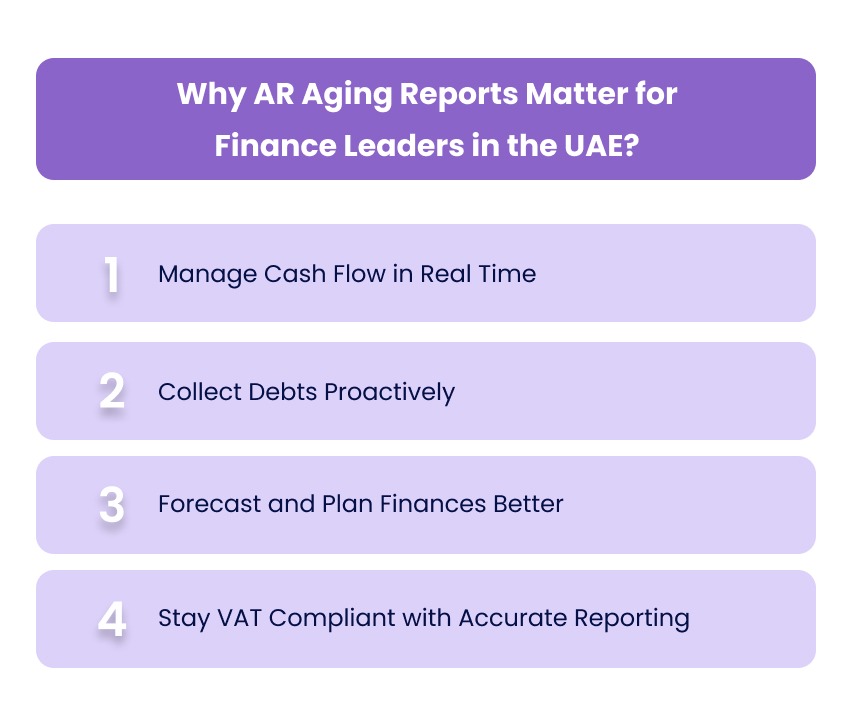
في الإمارات، يُعد الحفاظ على انتظام التدفق النقدي وتحصيل المدفوعات في مواعيدها أمرًا أساسيًا لسير أعمال الشركة دون تعثر. وتوفر تقارير أعمار الذمم المدينة صورة واضحة عن المدفوعات المتأخرة، فتساعد الفرق على تقليل مخاطر الديون المعدومة ومتابعة الامتثال لضريبة القيمة المضافة أولًا بأول.
فيما يلي أسباب أهمية تقرير أعمار الذمم المدينة للقيادات المالية في الإمارات:
1. إدارة التدفق النقدي لحظة بلحظة
قد يؤدي تأخر العملاء في السداد إلى إرباك التدفق النقدي والضغط على العمليات اليومية. وتمنحك تقارير أعمار الذمم المدينة صورة محدّثة للأرصدة المستحقة، فتساعدك على التخطيط وترتيب أولويات المدفوعات. وبذلك تبقى السيولة متاحة للاحتياجات اليومية ولفرص الاستثمار المحتملة.
اقرأ أيضًا: أهم 8 خطوات لإتقان إدارة التدفق النقدي في شركتك
2. المبادرة بتحصيل الديون
يشيع تأخر المدفوعات، خصوصًا في قطاعات مثل العقارات والتجارة الإلكترونية، حيث تختلف شروط العقود من عميل إلى آخر. ومن خلال تصنيف الفواتير حسب مدة تأخرها، تساعدك تقارير أعمار الذمم المدينة على تحديد الحسابات المتأخرة وتوجيه جهود التحصيل إلى حيث تكون أكثر أهمية. والتحرك المبكر يضمن وصول المدفوعات في موعدها ويقلل مخاطر الديون المعدومة.
3. تحسين التوقعات والتخطيط المالي
عندما يصعب توقع مواعيد سداد العملاء، يصعب التخطيط للمستقبل. وتمنحك تقارير أعمار الذمم المدينة معلومات عن المبالغ المتأخرة، ما يمكّنك من توقع التدفقات النقدية الداخلة بدقة أكبر. وهذا يسهّل التخطيط للمصروفات وسداد الديون ودعم النمو طويل الأجل دون مفاجآت مالية.
4. الامتثال لضريبة القيمة المضافة عبر تقارير دقيقة
تشترط قواعد ضريبة القيمة المضافة في الإمارات تتبعًا دقيقًا للمعاملات الخاضعة للضريبة، بما فيها الفواتير المتأخرة. وتسهّل تقارير أعمار الذمم المدينة تطبيق ضريبة القيمة المضافة بشكل صحيح، فتبسّط الامتثال وتجنّبك الغرامات الإدارية. وهذا يُبقي الشركات ملتزمة بقوانين الضرائب المحلية ويخفف الأعباء الإدارية.
بعد فهم أهمية تقارير أعمار الذمم المدينة، يصبح من الأسهل معرفة كيفية إعداد التقرير خطوة بخطوة.
كيف تُعِد الفرق المالية تقرير أعمار الذمم المدينة خطوة بخطوة؟
بالنسبة إلى الفرق المالية التي تتعامل مع عملاء أو كيانات متعددة أو أعداد كبيرة من المعاملات، يبدأ إعداد تقرير أعمار الذمم المدينة باستخراج بيانات دقيقة للذمم المدينة من النظام المحاسبي أو نظام تخطيط موارد المؤسسة (ERP)، ثم تنظيمها بحيث تُظهر المدة التي بقيت فيها كل فاتورة دون سداد.
والهدف هو إعداد صورة واضحة للأرصدة المستحقة في تاريخ محدد. وفيما يلي الخطوات التي تتبعها الفرق المالية عادةً:
1. اختيار تاريخ التقرير
ابدأ بتحديد تاريخ فصل الفترة المحاسبية الذي يُعد عليه التقرير، وهو التاريخ الذي تُقيَّم الفواتير المستحقة على أساسه.
تربط معظم الفرق المالية هذا التاريخ بما يلي:
- مواعيد إقفال نهاية الشهر
- تقارير نهاية الربع
- دورات المراجعة الداخلية
تُحسب مدة تأخر كل فاتورة استنادًا إلى هذا التاريخ.
2. استخراج دفتر الذمم المدينة كاملًا
بعد ذلك، صدّر دفتر الذمم المدينة كاملًا من نظام ERP أو النظام المحاسبي، مع التأكد من إدراج جميع الفواتير والإشعارات الدائنة وتعديلات المدفوعات حتى تاريخ التقرير.
تشمل الحقول الأساسية المطلوبة:
- اسم العميل
- رقم الفاتورة
- تاريخ الفاتورة
- تاريخ الاستحقاق
- المبلغ المستحق
اكتمال البيانات ودقتها يضمنان صحة احتساب أعمار الذمم.
3. تصنيف الفواتير في فئات زمنية
عندما تصبح البيانات جاهزة، صنّف كل فاتورة حسب عدد الأيام التي مرت على تاريخ استحقاقها دون سداد. ويمكنك الاطلاع على مؤشر متوسط فترة تحصيل الذمم المدينة (DSO) ومعدل دوران الذمم المدينة اللذين يكمّلان هذه الفئات للحصول على صورة أشمل عن كفاءة التحصيل.
تستخدم معظم الفرق المالية فئات زمنية معيارية، مثل:
- غير مستحقة بعد
- متأخرة من 1 إلى 30 يومًا
- متأخرة من 31 إلى 60 يومًا
- متأخرة من 61 إلى 90 يومًا
- متأخرة أكثر من 90 يومًا
يساعد هذا التقسيم على تنظيم الذمم المدينة حسب مدة تأخرها.
4. احتساب إجمالي كل فئة
بعد تصنيف الفواتير، احسب إجمالي المبالغ المستحقة في كل فئة زمنية.
يوفر ذلك صورة مجمّعة عن:
- إجمالي الذمم المدينة المستحقة
- توزيع الأرصدة على الفترات الزمنية
- إجمالي المبالغ المستحقة على كل عميل
تشكّل هذه الإجماليات جوهر تقرير الأعمار.
5. مراجعة التقرير والتحقق منه
أخيرًا، راجع التقرير للتأكد من دقته واكتماله.
تتحقق الفرق المالية عادةً من:
- عدم إغفال أي فاتورة
- تطابق الأرصدة المستحقة مع دفتر الأستاذ المحاسبي
- صحة تسوية أرصدة العملاء
- توافق مبالغ ضريبة القيمة المضافة وسجلات الفواتير مع القيود الضريبية والمحاسبية
كما يساعدك إعداد تقرير أعمار الذمم المدينة على تحديد التحديات الشائعة وطرق معالجتها.
5 تحديات شائعة في تقارير أعمار الذمم المدينة وطرق معالجتها
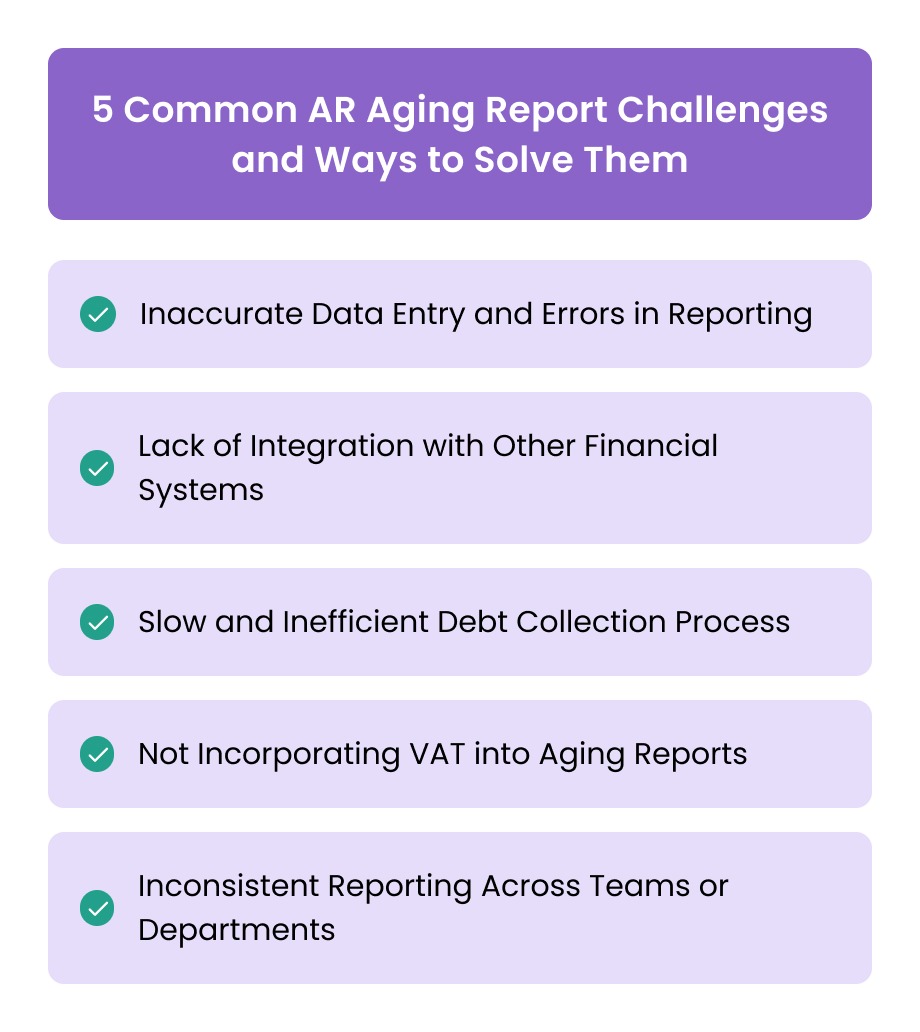
تُعد تقارير أعمار الذمم المدينة أداة أساسية لإدارة التدفق النقدي وتحسين تحصيل الديون. غير أن إعداد هذه التقارير وقراءتها قد ينطويان على صعوبات وتحديات. ومع ذلك، يمكن التعامل مع هذه العقبات بالاستراتيجيات المناسبة، بما يحافظ على انتظام العمليات المالية.
1. أخطاء إدخال البيانات وعدم دقة التقارير
التحدي: قد يؤدي الإدخال اليدوي لبيانات الذمم المدينة إلى أخطاء وفروقات في تقارير أعمار الذمم المدينة. ويزداد هذا التحدي في قطاعات مثل الخدمات اللوجستية والعقارات، حيث يرتفع حجم المعاملات وعدد عقود العملاء.
الحل: أتمت إدخال البيانات وزامنها فوريًا مع نظامك المحاسبي. فأدوات الأتمتة قادرة على التحقق من الإيصالات ومطابقتها مع الفواتير، ما يقلل الأخطاء ويُبقي أرصدة الأعمار دقيقة في جميع الأوقات.
في منصة الآن، نجمع بيانات الفواتير، ونطابق الإيصالات مع المعاملات، ونزامن السجلات تلقائيًا مع نظامك المحاسبي، ما يقلل أخطاء الإدخال اليدوي. ويساعدك ذلك على الحفاظ على بيانات مالية دقيقة تدعم تقارير مالية وتقارير تدفق نقدي موثوقة.
2. غياب التكامل مع الأنظمة المالية الأخرى
التحدي: من دون تكامل سلس بين تقارير أعمار الذمم المدينة والأدوات المالية الأخرى، مثل نظام ERP أو البرامج المحاسبية، يصعب على الفرق المالية الاطلاع الفوري على الحسابات المتأخرة والتدفق النقدي.
الحل: اربط تقارير أعمار الذمم المدينة بنظام ERP لديك، مثل QuickBooks أو NetSuite أو Xero، لتحديث الحسابات المتأخرة تلقائيًا وإنشاء مصدر موحّد وموثوق للبيانات. وهذا يسهّل إعداد التقارير ويتيح للفرق التفرغ للقرارات الاستراتيجية.
اقرأ أيضًا: كيفية ربط نظام Microsoft Dynamics ERP بأنظمة إدارة علاقات العملاء (CRM)
3. بطء عملية تحصيل الديون وضعف كفاءتها
التحدي: بطء إجراءات التحصيل قد يطيل مدة بقاء الأرصدة المتأخرة ويضر بالتدفق النقدي. وفي قطاعات مثل البناء أو العقارات، حيث ترتبط المدفوعات بمراحل إنجاز المشاريع، قد يكون التأخير ضارًا بشكل خاص.
الحل: فعّل تذكيرات التحصيل الآلية انطلاقًا من تقارير أعمار الذمم المدينة لضمان المتابعة في الوقت المناسب. ويمكن لمسارات العمل المخصصة أن تضمن حصول الفواتير المتأخرة أكثر من 60 يومًا على متابعة مكثفة، مثل الاتصال المباشر أو عرض خطط سداد.
4. عدم إدراج ضريبة القيمة المضافة في تقارير الأعمار
التحدي: في الإمارات، قد يؤدي إغفال تتبّع ضريبة القيمة المضافة على الفواتير المتأخرة إلى إقرارات ضريبية غير صحيحة وغرامات إدارية من الهيئة الاتحادية للضرائب (FTA).
الحل: أتمت استخراج مبالغ ضريبة القيمة المضافة من الفواتير في تقارير أعمار الذمم المدينة، وميّز بيانات الضريبة الناقصة أو غير الصحيحة، لضمان دقة التقارير والامتثال.

5. عدم اتساق التقارير بين الفرق أو الإدارات
التحدي: كثيرًا ما تواجه المؤسسات الكبيرة أو الشركات متعددة الجنسيات عدم اتساق في تقارير الذمم المدينة، لأن كل فريق يستخدم أساليب أو أدوات مختلفة.
الحل: وحّد إجراءات إعداد تقارير أعمار الذمم المدينة على مستوى المؤسسة. واستخدم نظامًا متكاملًا ولوحات معلومات مشتركة حتى يطّلع كل فريق على البيانات الفورية نفسها، بما يضمن تقارير متسقة وموثوقة.
معالجة التحديات التشغيلية ترفع دقة التقارير، لكن تحسين تقارير أعمار الذمم المدينة يذهب أبعد من ذلك، إذ يساعد الفرق المالية على إحكام التخطيط لضريبة القيمة المضافة وتوقعات التدفق النقدي.
3 طرق لتحسين تقارير أعمار الذمم المدينة لأغراض ضريبة القيمة المضافة والتوقعات المالية في الإمارات
في الشركات الإماراتية، تؤدي تقارير أعمار الذمم المدينة دورًا رئيسيًا في ضمان دقة تقارير ضريبة القيمة المضافة وموثوقية توقعات التدفق النقدي. وعند تنظيمها بالشكل الصحيح، تساعدك على رؤية حجم الضريبة المرتبط بالذمم غير المحصّلة بوضوح، والتخطيط للسيولة بثقة أكبر.
فيما يلي بعض الطرق لتحسين تقارير أعمار الذمم المدينة لأغراض ضريبة القيمة المضافة والتوقعات المالية في الإمارات.
1. فصل الذمم المدينة المتضمنة لضريبة القيمة المضافة عن أرصدة الإيرادات الصافية
افصل مبلغ ضريبة القيمة المضافة عن إجمالي الفاتورة في تقرير الأعمار، لتفهم أثر الذمم المدينة غير المسددة على التدفق النقدي المتعلق بالضريبة.
طريقة التطبيق:
- أضف عمودين منفصلين لمبلغ ضريبة القيمة المضافة وصافي قيمة الفاتورة في كل فئة زمنية.
- تتبّع مقدار ضريبة القيمة المضافة الذي سُدِّد بالفعل إلى الجهات المختصة عن فواتير لم يسددها العملاء بعد.
- راقب الفواتير الكبيرة التي تنتقل إلى فئتي أكثر من 60 يومًا وأكثر من 90 يومًا، لتقدير فجوات السيولة المؤقتة الناتجة عن سداد الضريبة من أموال الشركة قبل تحصيلها من العملاء.
- استخدم هذا التحليل للتدفق النقدي لتجنب ضغوط السيولة غير المتوقعة الناتجة عن مدفوعات ضريبة القيمة المضافة.
في منصة الآن، تُجمع مبالغ ضريبة القيمة المضافة وبيانات الفواتير المتعلقة بإنفاق الشركة وتُزامَن مع نظام ERP لديك، ما يساعد على الحفاظ على سجلات ضريبية دقيقة. ويدعم ذلك تقييمًا أكثر استنارة للمركز النقدي ورأس المال العامل عند تحليل التقارير المالية.
2. إضافة افتراضات تحصيل مرجّحة بالاحتمالات إلى الفئات الزمنية
طبّق افتراضات تحصيل واقعية على بيانات الأعمار، حتى تعكس توقعات التدفق النقدي ما يُرجَّح أن تحصّله فعلًا، لا ما هو مستحق فقط.
طريقة التطبيق:
- حدّد نسبة احتمال تحصيل لكل فئة زمنية بناءً على اتجاهات التحصيل السابقة.
- طبّق هذه النسب على الأرصدة المستحقة لتقدير التدفقات النقدية الداخلة المتوقعة.
- عدّل الافتراضات حسب نوع العميل أو حجم المشروع أو دورات الفوترة المرتبطة بمراحل الإنجاز.
- استخدم الإجماليات المرجّحة في التوقعات المالية وتقارير مجلس الإدارة لتحسين دقة التوقعات.
اقرأ أيضًا: أساليب توقع التدفق النقدي التي يعتمد عليها المديرون الماليون لتقدير السيولة بدقة
3. تتبّع أهلية تسويات ضريبة القيمة المضافة ضمن تقارير الأعمار
ميّز الفواتير التي قد تكون مؤهلة لتسويات ضريبة القيمة المضافة، حتى تتمكن الفرق المالية من التخطيط لاسترداد الضريبة والبقاء ملتزمة.
طريقة التطبيق:
- أضف عمودًا لتتبّع عمر الفاتورة مقارنةً بالمدد الزمنية المحددة لاستيفاء شروط تسوية ضريبة القيمة المضافة على الديون المعدومة في الإمارات.
- ميّز الفواتير التي تقترب من استيفاء الشروط حتى تجهّز الفرق المستندات الداعمة مبكرًا.
- أدرج مبالغ ضريبة القيمة المضافة المحتمل استردادها في توقعات الضريبة والتدفق النقدي.
- راجع هذه الفواتير المميّزة بانتظام لضمان إجراء تسويات ضريبة القيمة المضافة في موعدها ودقة التقارير الضريبية.
كيف تدعم منصة الآن دقة البيانات المالية التي تؤثر في تقارير أعمار الذمم المدينة؟
تعتمد فرق مالية كثيرة في الإمارات على تقارير أعمار الذمم المدينة لتتبّع الفواتير المتأخرة. لكن دقة هذه التقارير تتوقف إلى حد كبير على جودة المستندات، ومسارات الموافقة، والانضباط في تسوية الحسابات.
وعندما تتوزع السجلات المالية والموافقات ومستندات المعاملات على أدوات متعددة، قد تعكس التقارير المالية تأخيرًا أو عدم اتساق.
في منصة الآن، نعزّز العمليات المالية التي تقوم عليها دقة التقارير، من خلال تحسين التوثيق والموافقات وإجراءات تسوية الحسابات التي تدعم دقة التقارير المالية بوجه عام.
ما تدعمه منصة الآن بخلاف تقارير أعمار الذمم المدينة؟
في منصة الآن، نعزّز العمليات المالية التي تدعم تقارير مالية أدق وجاهزة للتدقيق.
1. توحيد المستندات وجمع الفواتير وتسجيل بياناتها
نوحّد جمع الفواتير وتسجيل بياناتها، وإعادة توجيه الإيصالات، وحفظ المستندات رقميًا في مكان واحد. فتبقى جميع السجلات الداعمة متاحة ومنظمة، ما يساعد على تقليل الأخطاء التشغيلية التي قد تؤثر في دقة التقارير المالية.
2. سجلات جاهزة لضريبة القيمة المضافة لدفاتر مالية دقيقة
تتولى منصة الآن جمع مستندات المصروفات ومراجعتها، وتنبّه إلى المعلومات الناقصة قبل المزامنة مع نظامك المحاسبي. ويساعد ذلك على الحفاظ على سجلات مالية أكثر اكتمالًا وامتثالًا.
3. ضوابط موافقة تقلل التأخير الداخلي
نتيح للفرق المالية إعداد مسارات موافقة متعددة المستويات تجمع عمليات التحقق في مكان واحد وتنشئ سجلات تدقيق واضحة. وتساعد الموافقات المنظمة على تقليل التأخير التشغيلي ودعم اتساق السجلات المالية.
4. الاطلاع الفوري على الإنفاق بجميع أشكاله
توفر منصة الآن اطلاعًا فوريًا على إنفاق بطاقات الشركة والمصروفات والموافقات. ويمنح ذلك القيادات المالية صورة أوضح عن إنفاق الشركة والتزاماتها، بما يدعم تحليلًا ماليًا أفضل إلى جانب البيانات المحاسبية.
5. تسوية حسابات أدق وتكامل مع نظام ERP
نربط المستندات والموافقات مباشرة بـ نظامك المحاسبي، ما يقلل العقبات في تسوية الحسابات. ونتيجة لذلك، تعكس التقارير المالية بيانات أحدث وأكثر موثوقية.
حقيقة دور منصة الآن (وما لا تقدّمه)
منصة الآن ليست نظامًا محاسبيًا ولا وحدة للذمم المدينة.
بل نعزّز العمليات المالية السابقة لمرحلة التقارير، مثل التوثيق وحوكمة الموافقات والتحقق من ضريبة القيمة المضافة وتسوية الحسابات، وهي العمليات التي ترفع دقة التقارير المالية بوجه عام.
خلاصة القول
تُعد تقارير أعمار الذمم المدينة أساسية للحفاظ على التدفق النقدي والاستقرار المالي، لا سيما في الإمارات، حيث يكتسب الامتثال والتخطيط للسيولة أهمية بالغة.
ومع أن المدفوعات المتأخرة تُربك العمليات وتنشئ مخاطر ائتمانية، فإن الفرق المالية التي تجمع بين الاطلاع الشامل على الإنفاق والتوثيق المحكم ومسارات العمل المؤتمتة تستطيع تحسين وضوح الصورة المالية ودعم إدارة الذمم المدينة.
في منصة الآن، نوفر معلومات فورية عن الإنفاق، ومطابقة آلية للإيصالات، ومستندات جاهزة لضريبة القيمة المضافة، وأتمتة للموافقات، واطلاعًا مركزيًا على جميع المعاملات.
تساعد هذه الإمكانات على ضمان اكتمال بياناتك المالية ودقتها، ما يدعم بدوره إعداد التقارير المالية وتحليل التدفق النقدي بسلاسة أكبر إلى جانب نظامك المحاسبي.
احجز عرضًا توضيحيًا مجانيًا لمنصة الآن لترى كيف تعزّز الشركات في الإمارات عملياتها المالية وتقلل مخاطر عدم الامتثال.
يخبرك تقرير الأعمار بما يستحق على كل عميل، والسؤال التالي هو: هل تتحمل سيولتك استمرار تأخر هذه المبالغ؟ وتجيب عن ذلك أداة اختبار تحمّل التدفق النقدي المجانية، إذ تحدد المدة التي تكفيها سيولتك والتواريخ التي تستدعي التحرك. أما على جانب المدفوعات، فإن حساب الأعمال المبني على الذكاء الاصطناعي من منصة الآن يتولى سداد الفواتير والموافقات ويتزامن مع برنامجك المحاسبي، فتصبح إدارة الذمم الدائنة أسهل وأقل مفاجآت.
الأسئلة الشائعة
س1. لماذا تعتمد الشركات في الإمارات على تقرير الأعمار؟
ج1. تستخدم الشركات في الإمارات تقرير أعمار الذمم المدينة لإدارة التدفق النقدي وتتبّع الفواتير المتأخرة. وتمكّن المعلومات الفورية الفرق المالية من التحرك سريعًا تجاه المدفوعات المتأخرة، ما يمنع تعطل العمليات ويحافظ على السيولة.
س2. ما الفرق بين تقرير أعمار الذمم المدينة وتقرير أعمار الذمم الدائنة؟
ج2. تتتبّع تقارير أعمار الذمم المدينة (AR) مدفوعات العملاء المتأخرة لترتيب أولويات التحصيل وتحسين التدفق النقدي. أما تقارير أعمار الذمم الدائنة (AP) فتراقب فواتير المورّدين غير المسددة، فتساعد الشركات على إدارة مستحقاتها للمورّدين والحفاظ على ثقتهم وتجنب رسوم التأخير.
س3. كيف تستخدم تقرير أعمار الذمم المدينة؟
ج3. يصنّف تقرير أعمار الذمم المدينة الفواتير حسب عمرها (مثل 0 إلى 30 يومًا، و30 إلى 60 يومًا)، ما يمكّن الفرق المالية من التركيز على الحسابات المتأخرة أولًا، ورفع كفاءة التحصيل، وتقليل مخاطر الديون المعدومة.
س4. كيف تُعِد تقرير أعمار الذمم الدائنة؟
ج4. نظّم فواتير المورّدين المستحقة في فئات زمنية حسب تاريخ الاستحقاق. ويساعد ذلك على التخطيط للمدفوعات بشكل مدروس، والحفاظ على الاستقرار المالي، وضمان السداد في المواعيد.
س5. كيف تتصرف بناءً على معلومات تقرير أعمار الذمم الدائنة؟
ج5. راجع فواتير المورّدين المتأخرة وبادر إلى سدادها في موعدها أو إعادة التفاوض على الشروط. وتحسّن المتابعة المنتظمة إدارة التدفق النقدي مع الحفاظ على علاقات قوية مع المورّدين.
Gain control over business expenses with Alaan corporate cards
Invygo earned AED 100,000 in cashback using Alaan cards
Personalise approval workflows to align with your business needs with Alaan's Spend Management platform
Discover the power of automated expense tracking and smarter spend control with Alaan
Turn data into actionable insights with Alaan's spend management tools
Stay Tax Compliant with UAE's #1 Corporate Card and Spend Management Platform
Customisable corporate card policy template
Know how much Corporate Tax you have to pay this fiscal year
Easily integrate Alaan with your ERP for accurate, real-time expense tracking
Close books faster with Alaan's AI-powered accounting automation
Reconcile your books in minutes instead of hours, every single month.
Keep petty cash organized with Alaan corporate cards and automated expense management