.avif)


You may have a written expense policy, but if your team still files late claims, submits weak receipts, or routinely breaches the rules, then the policy is not driving the behaviour you need. Expense policy reinforcement is not simply about having a document; it’s about making it a behaviour-shaping, accountability-driving system that your organisation follows in practice.
For finance leaders, the challenge is clear: turn rules into everyday behaviour so that policies aren’t just written, but followed, enforced, and improved over time.
This requires a blend of clear policy design, practical workflows, and systems that reinforce compliance, not only at the point of reimbursement but throughout the entire spend lifecycle.
In this article, you’ll learn how to build and reinforce expense policies that improve control, reduce disputes, and scale with your business goals.
Key Takeaways
- Reinforcement drives compliance: Expense policies are effective only when consistently applied; real behaviour change matters more than policy length.
- Clarity reduces friction: Defined rules, limits, and approval flows make adherence predictable and reduce confusion across departments.
- Automation builds discipline: Embedding controls at the point of spend and approval ensures compliance happens naturally, not manually.
- Monitoring keeps policies relevant: Regular reviews and data-driven insights ensure expense rules evolve with business growth and regulatory updates.
- Consistency creates culture: Reinforced policies turn compliance into everyday behaviour, building accountability across the organisation.
Why Expense Policies Break Down Without Reinforcement
Most expense policies fail in practice, not because they lack detail, but because they aren’t embedded into the actual behaviours of employees and managers. A policy can sit on a drive or intranet, but without reinforcement, it becomes a reference document, not a control mechanism.
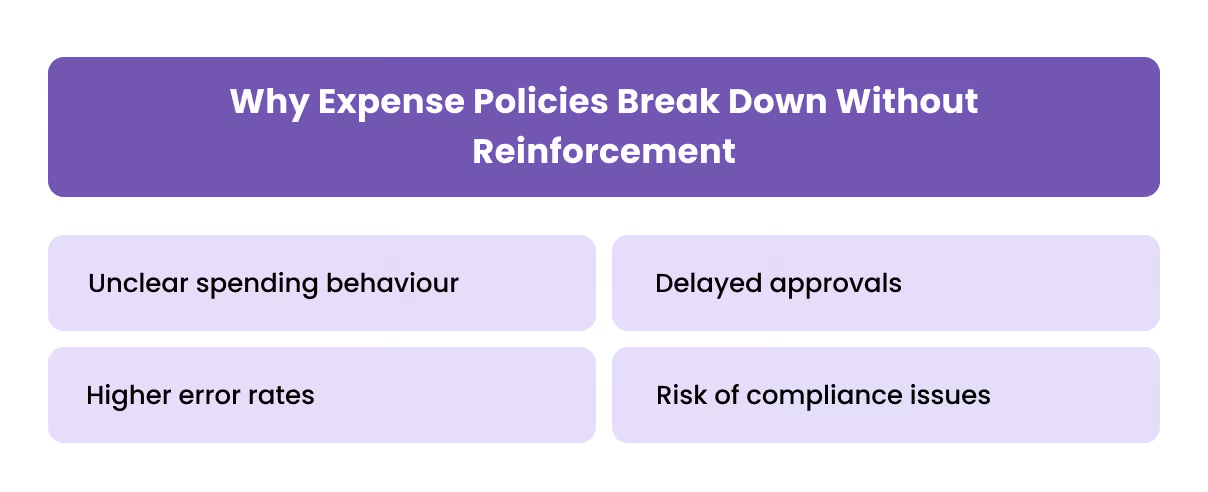
From your perspective in finance, weak enforcement leads to:
- Unclear spending behaviour, where teams interpret rules differently and inconsistently.
- Delayed approvals, which slow reporting and create cash–flow ambiguity.
- Higher error rates, with missing receipts and misclassification.
- Risk of compliance issues such as incorrect VAT claims, late filings, or audit red flags.
Many organisations write their expense policies with checklists and limits, but later discover that employees ignore or bypass them because the policies are difficult to follow or lack real-time accountability.
In your role, reinforcing policy means the rules must be both clear and supported by processes that make following the policy the path of least resistance. This requires visibility, automation, and continuous monitoring, not annual reminders.
As you refine your expense policy, the goal should be simple: make compliance easy and desirable, and non-compliance costly in terms of time, approval delays, or visibility.
Defining the Purpose and Scope of Your Expense Policy
Expense policy reinforcement starts with clarity. If the purpose and scope of your policy are not clearly defined, enforcement becomes inconsistent and subjective.
Clarifying the Purpose of the Policy
Your expense policy should clearly state why it exists. From a finance perspective, the purpose typically includes:
- Protecting company funds from misuse or leakage
- Ensuring consistent treatment of expenses across teams
- Supporting accurate financial reporting and VAT compliance
- Improving visibility and accountability for business spending
When this purpose is explicit, employees understand that the policy is not administrative paperwork, but a control framework that supports financial discipline.
Identifying Who the Policy Applies To
Reinforcement weakens when it is unclear who must follow the policy. You should clearly define whether it applies to:
- Full-time employees
- Contractors or consultants
- Temporary staff or third parties authorised to spend
As organisations scale, roles change quickly. Clear applicability avoids disputes and ensures consistent enforcement regardless of seniority or department.
Defining the Types of Expenses Covered
Your policy should also specify which expense categories are governed. This often includes:
- Travel and accommodation
- Meals and client entertainment
- Subscriptions and software tools
- Operational and project-related purchases
Clear scope reduces assumptions, prevents misuse, and ensures everyone operates within the same financial boundaries.
For a deeper look at why clarity at this stage matters, read our guide on why your business needs a detailed expense policy.

Drawing Clear Lines Between Reimbursable and Non-Reimbursable Expenses
Ambiguity around reimbursements is one of the fastest ways to undermine an expense policy. Reinforcement depends on removing guesswork from the process.
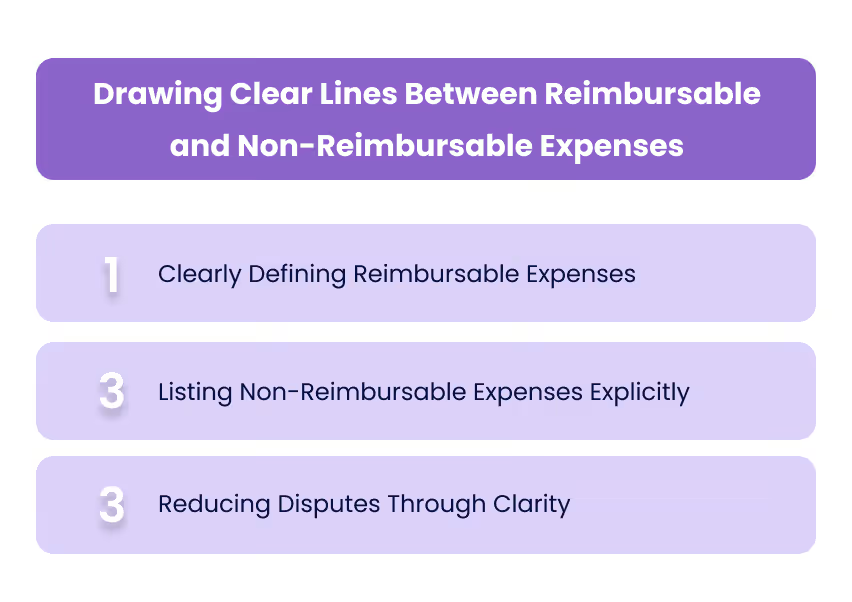
Clearly Defining Reimbursable Expenses
Your policy should outline which expenses are eligible for reimbursement, such as:
- Pre-approved business travel within set limits
- Client meetings aligned with company guidelines
- Essential operational purchases made for work purposes
Providing examples helps employees self-assess claims before submission, reducing unnecessary back-and-forth.
Listing Non-Reimbursable Expenses Explicitly
Non-reimbursable expenses should be equally clear. Common examples include:
- Personal purchases or upgrades
- Expenses submitted outside the defined timelines
- Claims without valid receipts or documentation
- Spend that falls outside approved categories
Explicit exclusions strengthen reinforcement by setting firm boundaries.
Reducing Disputes Through Clarity
From a finance standpoint, clear reimbursement rules:
- Reduce approval delays
- Minimise policy disputes
- Improve data accuracy in accounting systems
- Support consistent VAT treatment
When employees know what will and will not be reimbursed, compliance becomes predictable rather than reactive.
Clear boundaries reduce disputes, speed up approvals, and help employees self-check claims before submission.
If you’re refining reimbursement rules, this guide on small business expense reimbursement policy best practices is a useful reference.
Setting Spend Limits That Balance Control and Flexibility
Spend limits play a critical role in reinforcing your expense policy. When limits are unclear or unrealistic, employees either bypass them or constantly request exceptions, both of which weaken control.
Establishing Category-Wise Limits and Per Diems
Your policy should define spending caps by category, such as:
- Daily meal allowances
- Hotel and travel limits
- Client entertainment thresholds
- Software and subscription spending
Category-wise limits provide guardrails without requiring case-by-case intervention from finance teams.
Aligning Limits with Business Reality
Reinforcement fails when limits are disconnected from how your teams actually work. You should review:
- Market rates in regions where employees operate
- Role-specific needs, such as sales versus operations
- Frequency of travel or client-facing activities
When limits reflect real conditions, compliance improves naturally because employees are not forced to work around the policy.
Defining a Clear Exception Process
Even well-designed limits require flexibility. Your policy should clearly explain:
- When exceptions are allowed
- Who can approve them
- How they should be documented
A transparent exception process reinforces discipline by making flexibility structured rather than informal.
Spend limits are most effective when they reflect real business needs rather than static assumptions, especially as teams scale or operate across regions.
For practical examples of how limits and rules are structured, see our sample guide on creating a business expense policy.
Documentation and Receipt Rules That Actually Get Followed
Receipt requirements are often where expense policies break down. Strict rules without practical execution lead to missing documentation and delayed claims.
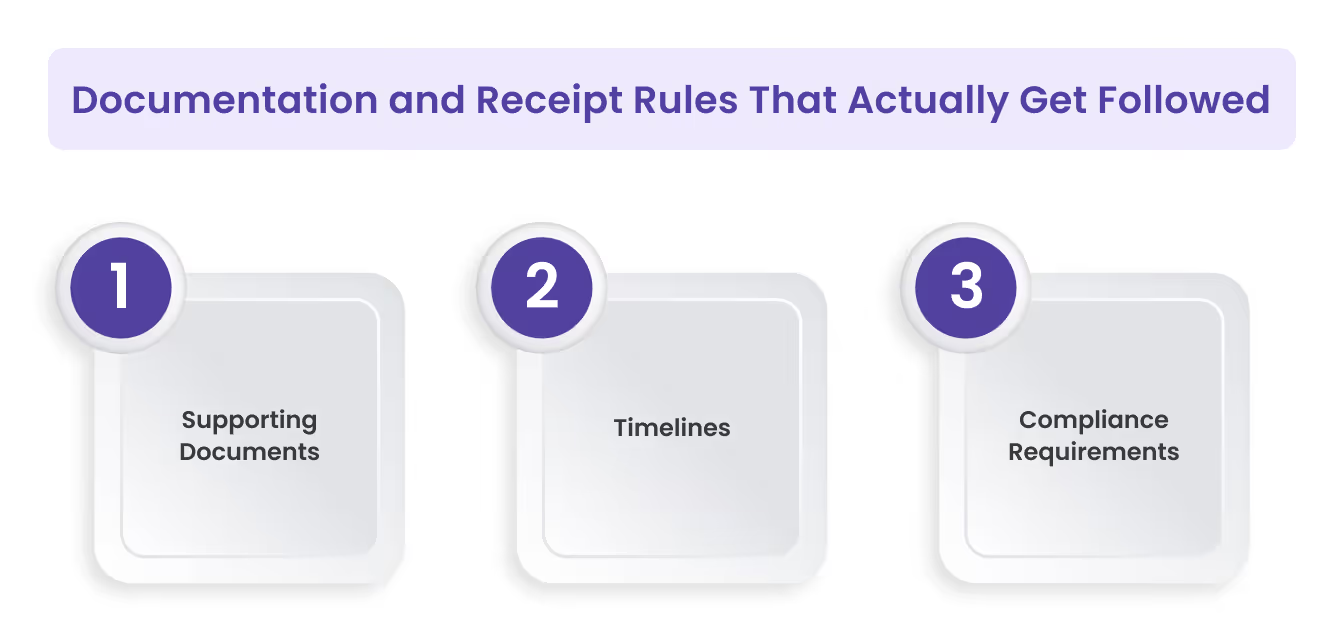
Specifying Required Supporting Documents
Your policy should clearly state what documentation is required for each expense type, including:
- Itemised tax invoices
- Vendor details and transaction dates
- VAT breakdowns where applicable
This clarity reduces rejected claims and repeated follow-ups.
Defining Accepted Formats and Timelines
Reinforcement improves when expectations are simple. Your policy should specify:
- Accepted formats, such as digital receipts or invoices
- Submission deadlines to prevent delayed claims
- Consequences for missing or late documentation
Clear timelines encourage timely behaviour and cleaner month-end reporting.
Linking Documentation to Compliance Requirements
For UAE-based businesses, receipt rules should align with Federal Tax Authority requirements. Valid VAT invoices must include mandatory details such as the supplier’s TRN and VAT amount.
When documentation standards are tied to compliance, employees better understand the importance of accuracy rather than viewing receipts as an administrative burden.
Approval Workflows That Reinforce Policy, Not Slow Teams Down
Approval workflows are where expense policies are tested in practice. If approvals are unclear or inconsistent, enforcement weakens, and teams lose confidence in the policy.
Mapping the Submission and Approval Flow
Your policy should clearly outline how an expense moves from submission to approval. This includes:
- How employees submit expenses
- The sequence of approvals required
- What happens when an expense is rejected or queried
Clear workflows remove ambiguity and ensure expenses are reviewed consistently, regardless of department or role.
Defining Approval Roles and Thresholds
Reinforcement improves when approvals are role-based rather than ad hoc. Your policy should specify:
- Who approves expenses at different spend levels
- When a finance review is mandatory
- How seniority or department affects approval paths
Defined thresholds reduce subjective decision-making and help managers approve faster with confidence.
Using Automation to Maintain Consistency and Audit Trails
Manual approvals often lead to delays and uneven enforcement. Automated workflows help ensure:
- Expenses are routed to the right approver every time
- Policy checks are applied consistently
- Audit trails are created automatically for reviews and audits
For finance teams, this means stronger control without increasing administrative workload.
Well-designed approval workflows reinforce accountability while keeping expenses moving without unnecessary delays.
To explore this further in the context of travel and entertainment spend, read our guide on understanding corporate T&E policy and expense management.

Standardising Expense Categorisation for Better Visibility and Control
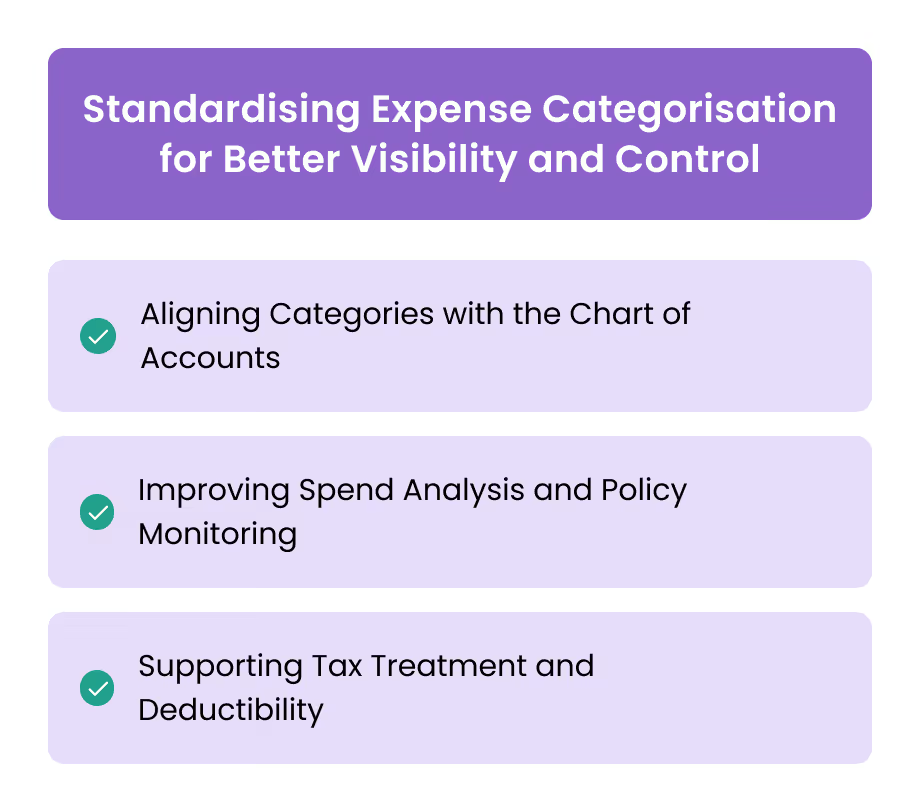
Expense categorisation is a foundational element of policy reinforcement. Without consistent categories, even compliant expenses become difficult to analyse and control.
Aligning Categories with the Chart of Accounts
Your policy should require employees to categorise expenses according to your chart of accounts. This ensures:
- Accurate financial reporting
- Easier reconciliation with accounting systems
- Cleaner data for audits and reviews
Clear category definitions reduce misclassification and rework for finance teams.
Improving Spend Analysis and Policy Monitoring
When expenses are categorised consistently, you can:
- Track spend patterns by category and department
- Identify policy breaches or unusual trends early
- Assess whether limits and rules remain appropriate
This visibility turns expense data into a reinforcement tool, not just a record.
Supporting Tax Treatment and Deductibility
Proper categorisation also supports correct tax treatment. Certain expense categories may be partially deductible, non-deductible, or VAT-recoverable. Standardisation helps ensure:
- Accurate VAT reporting
- Reduced compliance risk
- Better readiness for audits
Integrating Expense Policies with Accounting and Payroll Systems
An expense policy cannot be effectively reinforced if it operates in isolation. When expense data sits outside your accounting and payroll systems, gaps emerge that weaken visibility, accuracy, and control.
Ensuring Seamless Data Flow Across Systems
Your policy should clearly state that all approved expenses flow directly into your accounting system. This integration ensures:
- Expenses are recorded consistently and in real time
- Manual re-entry is eliminated
- Finance teams work with a single source of truth
When systems are connected, policy compliance is reflected immediately in your books, not discovered weeks later.
Supporting Audit Readiness and VAT Recovery
Integrated systems make it easier to trace expenses from transaction to ledger. This is especially important for:
- Audit preparation
- VAT validation and recovery
- Ensuring expense claims meet documentation standards
When expense data, receipts, and approvals are synced, finance teams can respond confidently to audits without last-minute reconciliation efforts.
Reducing Errors and Manual Intervention
Disconnected systems often lead to duplicate entries, mispostings, or delayed corrections. Integration reinforces policy by:
- Applying consistent rules across expense and accounting workflows
- Reducing human error
- Allowing finance teams to focus on oversight rather than data cleanup
Turning Expense Policies into Everyday Behaviour Through Automation
Reinforcement works best when compliance happens naturally, not through constant reminders or manual checks. Automation plays a central role in making expense policies part of everyday behaviour.
Embedding Rules at the Point of Spend
Automated controls allow policies to be enforced before money is spent, not after. This includes:
- Spend limits are applied in real time
- Vendor or category restrictions
- Automatic flagging of non-compliant transactions
By guiding behaviour upfront, automation reduces violations without creating friction.
Replacing Manual Reviews with Consistent Policy Checks
Manual reviews are time-consuming and inconsistent. Automated checks ensure:
- Every expense is reviewed against the same rules
- Exceptions are flagged immediately
- Finance teams gain confidence in policy enforcement
This consistency strengthens trust in the policy and the process.
Reinforcing Accountability Without Micromanagement
Automation shifts reinforcement from policing to visibility. Employees understand:
- What is allowed
- What will be flagged
- How approvals work
This transparency encourages responsible spending while preserving autonomy.
Automation closes the gap between policy intent and real-world behaviour by embedding controls directly into daily workflows.
To see how this works in practice, read how Washmen put its spend management on autopilot and saved 80+ hours per week using Alaan.

Educating Teams Without Creating Policy Fatigue
Even the most well-designed expense policy will fail if employees see it as complex or restrictive. Reinforcement depends on helping teams understand why the policy exists and how to follow it with minimal effort.
Communicating the Policy in Practical Ways
Lengthy documents are rarely effective on their own. You should reinforce your expense policy through:
- Short, role-specific guidelines
- Clear examples tied to common spending scenarios
- Easy access to policy summaries when expenses are submitted
When employees can quickly find answers, compliance improves without repeated clarification from finance teams.
Providing Ongoing Guidance and Support
Education should not be limited to onboarding. As policies evolve, reinforcement requires:
- Periodic refreshers when rules or limits change
- Clear communication around updates and reasons for change
- A defined point of contact for questions or edge cases
This approach builds confidence and reduces unintentional policy breaches.
Building Trust Through Transparency
Employees are more likely to follow policies when enforcement feels fair and consistent. Transparency around approvals, rejections, and exceptions helps teams understand that rules apply equally across the organisation, regardless of role or seniority.
Monitoring, Auditing, and Strengthening Policy Compliance Over Time
Expense policy reinforcement is not a one-time exercise. As your business grows, spending patterns change, and policies must evolve to remain effective.
Using Data to Monitor Compliance Trends
Regular monitoring helps you identify:
- Repeat violations by category or department
- Unusual spending patterns
- Areas where policies may be unclear or outdated
These insights allow finance teams to address root causes rather than reacting to individual claims.
Conducting Regular Audits Without Disruption
Audits should be structured and predictable, not reactive. A clear audit approach:
- Validates policy adherence
- Supports regulatory and VAT compliance
- Reinforces accountability without disrupting daily operations
Consistent audits strengthen trust in both the policy and the finance function.
Refining the Policy Based on Real Behaviour
The strongest expense policies evolve. Use insights from monitoring and audits to:
- Adjust limits that no longer reflect reality
- Clarify ambiguous rules
- Strengthen controls where risk increases
This continuous feedback loop ensures your policy remains relevant, enforceable, and aligned with business goals.
How Alaan Supports Expense Policy Reinforcement in Practice
Expense policy reinforcement depends on more than written rules. It requires systems that guide spending behaviour, apply controls consistently, and give finance teams real-time visibility. This is where Alaan supports finance leaders in practice.
At Alaan, we provide an AI-powered spend and expense management platform designed for businesses in the UAE and wider MENA region. Our platform brings together corporate cards, expense automation, and accounting integrations to help you reinforce policies at scale.
Our core offerings include:
- Corporate cards with built-in spend limits and vendor controls, allowing you to enforce policy rules at the point of spend.
- Automated expense management, where transactions are captured instantly, receipts are uploaded digitally, and policy checks happen automatically.
- Configurable approval workflows that reflect your internal hierarchies and spending thresholds, ensuring consistent enforcement.
- VAT-aware receipt validation aligned with UAE Federal Tax Authority requirements, supporting accurate and compliant reporting.
- Real-time dashboards and insights that help you monitor adherence, identify exceptions, and refine policies using actual spend data.
Trusted by more than 1,000 businesses across the UAE, from startups to large enterprises, Alaan helps finance teams save time, reduce errors, and gain complete visibility over company spending.
At this stage, many finance leaders want to quantify the impact of stronger policy reinforcement rather than rely on assumptions.
Use Alaan’s Savings Calculator to estimate how much time and cost your business could save each year through automated expense management.
Conclusion
Reinforcing your expense policy is about shaping everyday spending behaviour, not tightening rules after the fact. When policies are clear, supported by the right workflows, and reinforced through automation, compliance becomes part of how your teams operate, not an extra task they work around.
For finance leaders, this approach delivers real value. You gain better visibility, fewer disputes, cleaner data, and stronger control as your business scales. More importantly, you move from reacting to policy breaches to preventing them altogether.
If you’re looking to turn expense rules into consistent, compliant behaviour across your organisation, book a demo with Alaan and see how expense policy reinforcement works in practice.
FAQs
1. What is expense policy reinforcement in finance management?
Expense policy reinforcement refers to the systems, processes, and controls that ensure employees consistently follow expense rules in daily spending, rather than relying on manual reviews or post-spend corrections.
2. Why do expense policies fail even when clearly written?
Expense policies often fail because they rely on manual enforcement, unclear workflows, or delayed visibility. Without built-in controls, employees interpret rules differently, leading to inconsistent compliance.
3. How can automation improve expense policy compliance?
Automation enforces rules in real time through spend limits, approvals, and receipt validation. This reduces manual intervention and ensures consistent application of policies across teams and departments.
4. How often should expense policies be reviewed?
Expense policies should be reviewed at least annually, or sooner if business models, spending patterns, or regulatory requirements change, to ensure continued relevance and effectiveness.
5. How does expense policy reinforcement support VAT compliance in the UAE?
Reinforcement ensures valid documentation, accurate categorisation, and timely submission of expenses, which are essential for meeting UAE VAT requirements and reducing compliance risks.
Gain control over business expenses with Alaan corporate cards
Invygo earned AED 100,000 in cashback using Alaan cards
Personalise approval workflows to align with your business needs with Alaan's Spend Management platform
Discover the power of automated expense tracking and smarter spend control with Alaan
Turn data into actionable insights with Alaan's spend management tools
Stay Tax Compliant with UAE's #1 Corporate Card and Spend Management Platform
Customisable corporate card policy template
Know how much Corporate Tax you have to pay this fiscal year
Easily integrate Alaan with your ERP for accurate, real-time expense tracking
Close books faster with Alaan's AI-powered accounting automation
Reconcile your books in minutes instead of hours, every single month.
Keep petty cash organized with Alaan corporate cards and automated expense management