.avif)

When a business reaches a certain transaction velocity, the accounting engine that once worked begins to strain. High-volume environments generate a continuous stream of entries, card transactions, supplier invoices, refunds, reversals, bank movements, multi-platform sales, and VAT-linked documentation. What breaks first is not the accounting system; it’s the team’s capacity to keep pace with the volume while maintaining accuracy.
Finance leaders across retail, logistics, e-commerce, hospitality, and multi-entity groups in the UAE report the same challenges: reconciliation cycles that stretch into late evenings, inconsistent coding across teams, fragmented documentation for VAT evidence, and month-end closes that slip unpredictably. Automation has moved from an efficiency preference to an operational necessity, not to reduce headcount, but to allow the finance team to operate with precision at scale.
High-volume businesses don’t require more accountants; they require smarter, real-time workflows that eliminate repetitive tasks, reduce errors, and allow teams to focus on exception handling rather than rebuilding data.
In this blog, we’ll explore why high-volume environments outgrow manual accounting, the areas where automation makes the greatest impact, and how finance teams can structure automation for scale.
Key Takeaways
- High-volume businesses outgrow manual accounting fast; automation is essential for consistent coding, VAT compliance, and predictable month-end closes.
- Automation reduces errors by capturing data in real time and processing it with rules rather than manual judgment.
- Reconciliation, AP workflows, AR matching, VAT documentation, and multi-entity alignment benefit the most from automation.
- Finance teams must build automation on top of clean COA structures, integrated systems, and strong approval rules.
Challenges High-Volume Finance Teams Face Without Automation
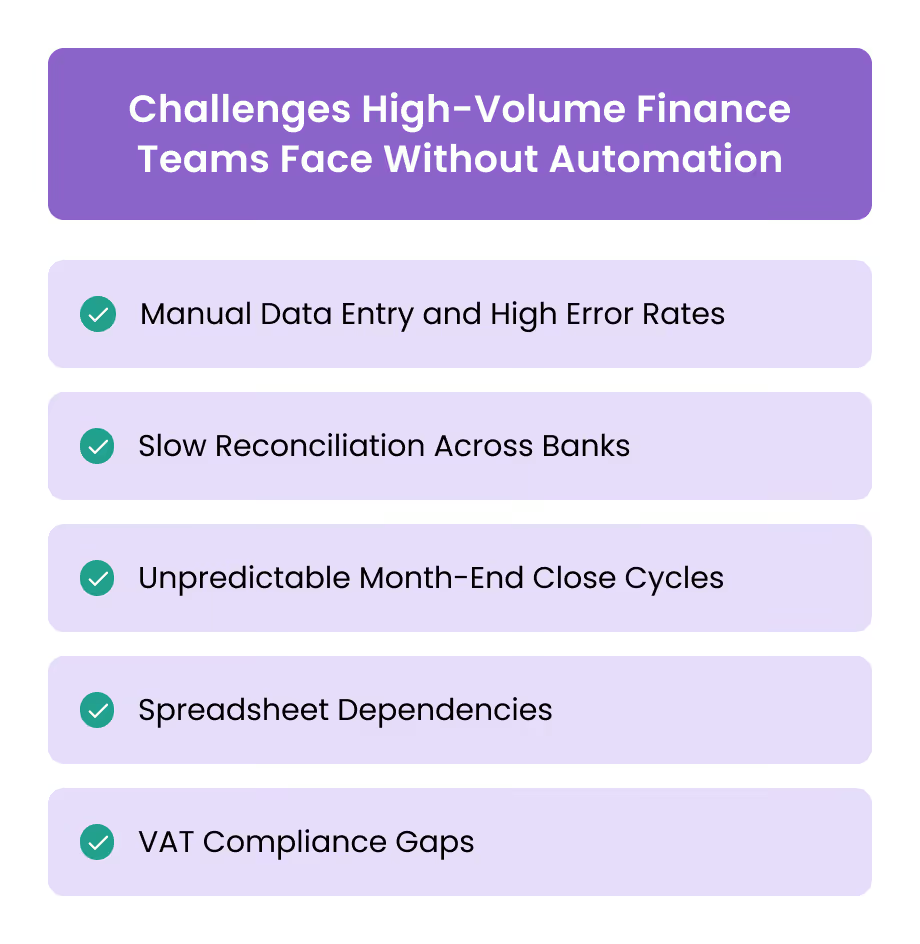
Manual workflows do not deteriorate gradually; they fail suddenly once transaction volume crosses a threshold. Below are the pain points most UAE finance teams raise during audits or process reviews.
Manual Data Entry and High Error Rates
When thousands of entries flow through multiple channels each month, manual data entry inevitably introduces inconsistencies. Even a small error rate compounds into:
- Misposted expenses
- Incorrect VAT treatment
- Vendor disputes
- Adjustments during audits or CT filings
The higher the volume, the less sustainable manual accuracy becomes.
Slow Reconciliation Across Banks, Cards and Platforms
Reconciling bank feeds, card statements, payment gateways, POS systems, and marketplace payouts manually creates backlogs that slow down cash-flow reporting.
The more sources a business relies on, the longer reconciliation gaps become, eventually pushing month-end timelines beyond control.
Unpredictable Month-End Close Cycles
When reconciliations depend on spreadsheet patching, late invoices, or missing receipts, the close cycle becomes unpredictable. Leadership loses confidence in reporting timelines, and auditors face inconsistent records.
Disjointed Systems and Spreadsheet Dependencies
High-volume businesses often use multiple systems: ERP, e-commerce platforms, POS tools, supplier portals, and banking channels.
When these do not communicate, finance must rebuild data manually in spreadsheets. This duplication limits scalability and increases the risk of discrepancies.
VAT Compliance Gaps Due to Incomplete Documentation
Missing TRNs, incorrect invoice formats, and unsupported transactions are common in volume-heavy environments. These gaps impact both VAT submissions and the accuracy of accounting books.
Also read: Understanding Recording Business Expenses
What Accounting Automation Means for High-Volume Environments
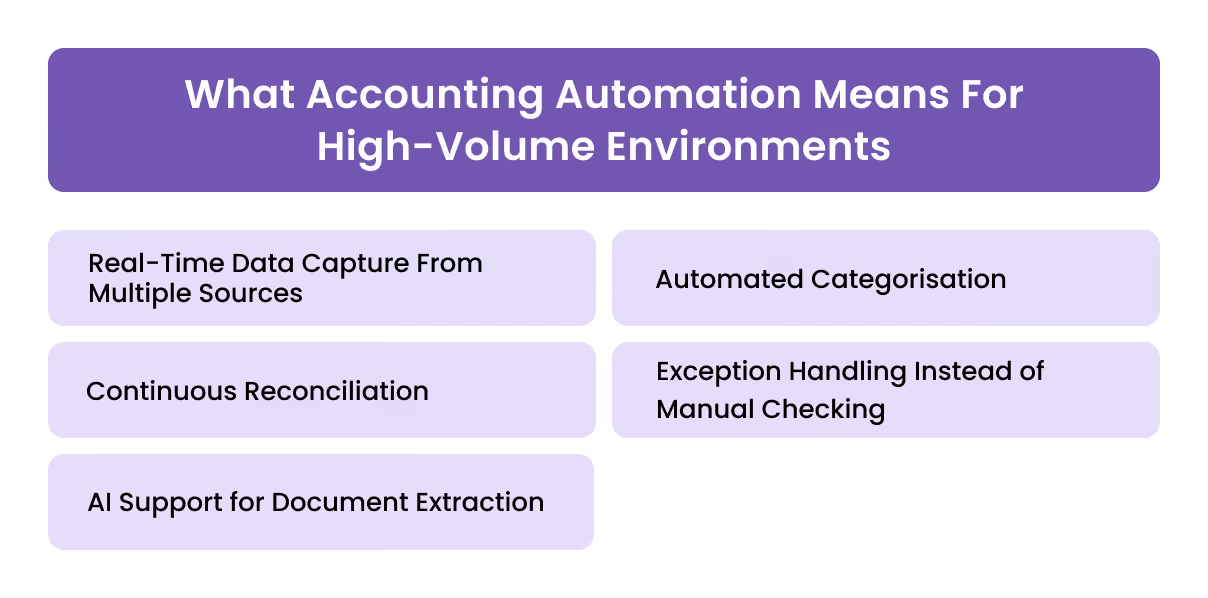
Automation is not a piece of software; it is a shift in how accounting work is structured. For high-volume businesses, the objective is consistency, control, and predictable reporting.
1. Real-Time Data Capture From Multiple Sources
Automated data capture ensures transactions from bank feeds, corporate cards, sales platforms, and vendor systems enter the accounting environment immediately. This prevents backlog accumulation and reduces dependency on end-of-month uploads.
2. Automated Categorisation and Coding Based on Rules
High-volume teams benefit from rule-based classification:
- Vendor-specific coding
- Recurring transaction logic
- Tax category mapping
- Department-level routing
This reduces manual decisions and standardises the accounting output.
3. Continuous Reconciliation Instead of Month-End Bulk Work
Automation enables reconciliations to happen daily rather than monthly. Errors surface early, discrepancies are resolved faster, and the close cycle becomes structured rather than rushed.
4. Exception Handling Instead of Manual Checking
Instead of scanning every transaction, teams only review items that fall outside rules, duplicates, mismatches, missing documents, or coding exceptions. This shifts their work from clerical review to control oversight.
5. AI Support for Document Extraction and Error Detection
AI accelerates accuracy by extracting VAT details, supplier information, dates, and totals from receipts and invoices. In high-volume environments, this consistency is difficult to achieve manually.
[cta-5]
Also read: Modern Expense Management Guide
Key Areas Where Automation Improves Accounting Performance
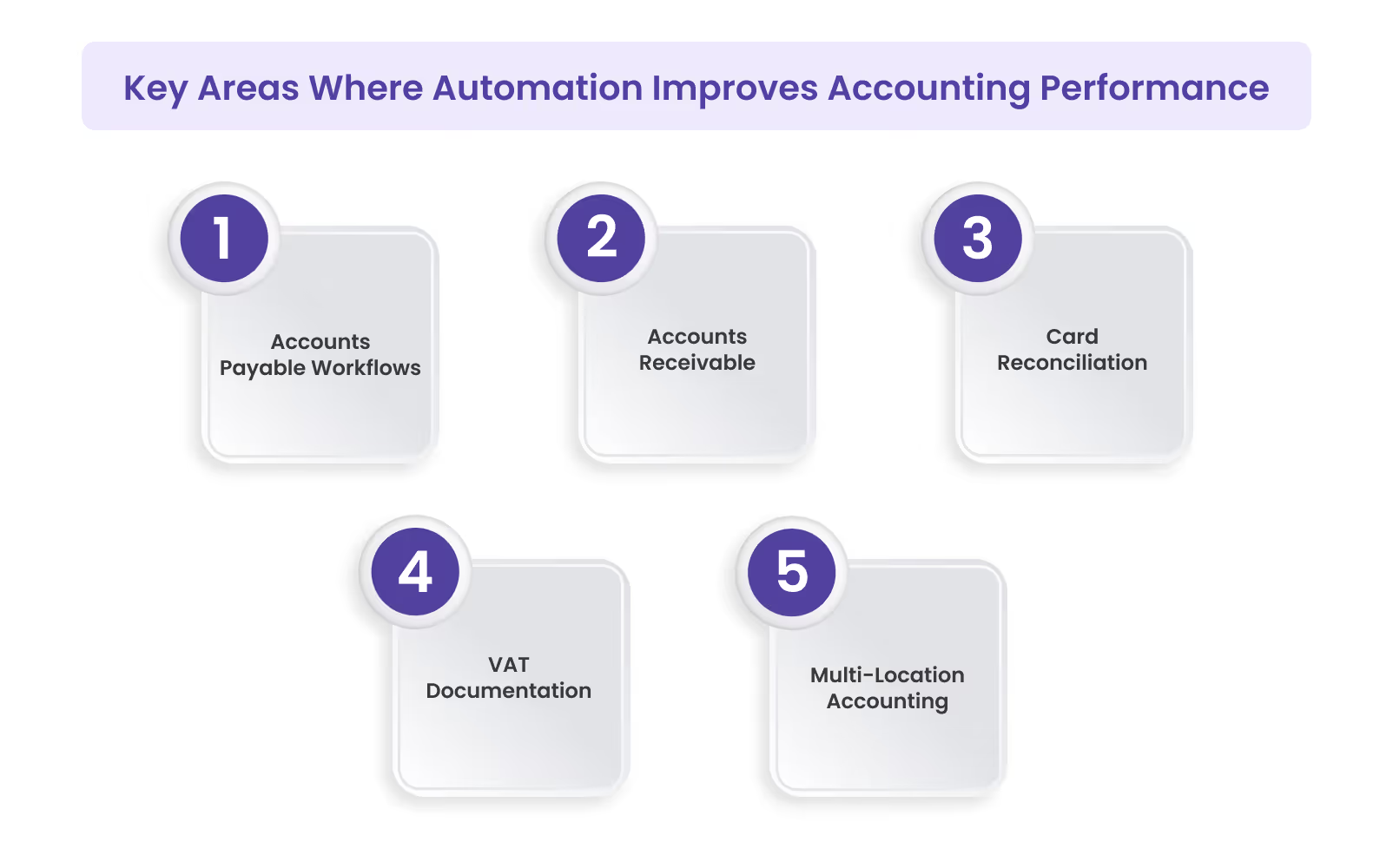
High-volume businesses rarely struggle because they lack visibility; they struggle because the volume of operational tasks outpaces the team’s ability to process them consistently. Automation addresses the areas where scale creates the most friction.
1. Accounts Payable Workflows
In high-volume environments, AP teams handle a mix of recurring invoices, one-off vendor bills, contract-based charges, and purchase-linked payables. Manual processes often result in:
- Late postings
- Duplicate entries
- Incorrect coding
- Misaligned VAT treatment
Automation standardises invoice capture, extracts VAT-relevant fields instantly, and routes invoices through predefined approval rules. This reduces the time spent verifying documentation and correcting coding errors.
2. Accounts Receivable and Cash Application
Businesses with high sales volumes often struggle with matching incoming payments to invoices or platform payouts. Automation helps:
- Match receipts to open invoices
- Identify short payments or discrepancies
- Update ageing schedules in real time
This gives finance leaders clearer visibility into cash flow and reduces the manual workload tied to collections.
3. Bank and Card Reconciliation
For high-volume companies, daily reconciliation is impossible without automation. Automated matching compares:
- Bank statement lines
- Card transactions
- Platform payouts
- ERP ledger entries
It identifies discrepancies instantly, reducing end-of-month bottlenecks and improving reporting accuracy.
4. VAT Documentation and Filing Accuracy
VAT compliance becomes increasingly difficult as transaction volume grows. Automation helps by:
- Capturing all receipts and invoices at the point of spend
- Extracting VAT amounts and TRN details
- Ensuring invoices meet UAE VAT requirements
- Reducing exposure to input VAT disallowances
This improves both monthly VAT returns and year-end accounting accuracy.
5. Multi-Entity and Multi-Location Accounting
Groups operating across multiple entities or branches often face:
- Different coding practices
- Inconsistent COA structures
- Manual intercompany entries
Automation enforces standardisation and ensures all entities follow the same rules across coding, categorisation and document capture.
Also read: ERP Integration Benefits Explained
How High-Volume Businesses Should Structure Their Automation Workflow
Automation cannot succeed without a reliable system foundation. For high-volume teams, the workflow must be built on consistency and data discipline, not just software adoption.
Standardising the Chart of Accounts to Support Automation
A unified chart of accounts ensures that automation rules behave predictably across the organisation. It prevents overlapping categories, duplicate expense types, and ambiguous coding logic that introduce inconsistencies at scale.
When each category is clearly defined and applied uniformly across departments and locations, automation can classify transactions accurately without repeated intervention from finance.
Defining Rules for Coding, Categorisation and Approvals
Rule-based logic gives high-volume teams predictable workflows. These rules can reflect vendor type, cost centre, spend category, VAT applicability, or recurring transaction patterns.
By structuring logic around how the organisation actually spends, finance reduces manual judgment calls and ensures that expense coding remains consistent, even as volume increases. This reduces rework at month-end and supports cleaner financial reporting.
Integrating ERP, Expense Management and Banking Systems
Automation only works when systems communicate. High-volume businesses should ensure:
- ERP integrations run continuously
- Banking feeds update automatically
- Expense management tools sync transactions in real time
This eliminates data silos and gives finance teams a single source of truth.
Maintaining Data Quality for Reliable Automated Processing
Automation amplifies both good and bad data. If inputs are inconsistent, incorrect vendor names, missing documents, or wrong tax mapping, errors multiply at scale. Clean data governance is essential.
Redesigning Roles Around Review, Analysis and Controls
As automation takes over repetitive processing tasks, finance teams shift towards work that strengthens oversight and decision-making. This includes managing exceptions, analysing variances, enforcing spend policies, and monitoring internal controls.
Redesigning roles toward review and analysis ensures that automation enhances, not replaces, the team’s impact. The result is a finance function that operates with greater efficiency and a clearer focus on risk, accuracy, and strategic insight.
Also read: Understanding Chart of Accounts
Indicators That a Business Is Ready for Accounting Automation
Most high-volume companies don’t realise they’ve crossed the automation threshold until operational strain becomes visible. These signals are common across UAE SMEs and mid-market businesses.
1. Frequent Backlogs in Reconciliation and Invoice Processing
If reconciliations regularly fall behind schedule, volume has exceeded team capacity.
2. Increasing Volume Outgrowing Team Capacity
When hiring more accountants becomes the only short-term solution, automation provides a more scalable long-term answer.
3. High Dependence on Spreadsheets to Patch Data
If Excel becomes the place where data is “fixed,” the underlying systems are not supporting the volume.
4. Repeated VAT Adjustments or Documentation Gaps
Missing invoices, incorrect VAT mapping, and inconsistent recovery claims are signs that manual processes are no longer reliable.
5. Unpredictable Close Cycles Impacting Reporting
Performance instability during month-end typically signals that processes need automation, not more effort.
Also read: ERP Integration Challenges and Solutions
How Alaan Supports Accounting Automation for High-Volume Companies
Alaan helps finance teams reduce manual workload and improve accounting accuracy by ensuring that every stage of the spend-to-book process is automated, structured, and audit-ready.
- Real-Time Transaction Sync into ERPs
At Alaan, we push transactions directly into ERPs such as Xero, QuickBooks, NetSuite, and Microsoft Dynamics. This removes the lag between when a payment happens and when it shows up in accounting. High-volume teams gain faster visibility over expenses and fewer surprises during reconciliation.
- Automated Receipt and Invoice Capture With VAT Checks
Receipts and invoices are captured the moment a transaction occurs. Alaan Intelligence extracts supplier information, VAT amounts, TRN details, dates, and totals, and flags incomplete or non-compliant documentation. This ensures UAE VAT accuracy and reduces missing evidence issues at month-end.
- Cleaner Coding Through Policy-Based Controls
Finance teams can define controls around spend categories, vendor types, department limits, and tax applicability. These rules prevent inaccurate entries from entering the system, reduce manual recoding later, and maintain consistent chart-of-accounts mapping.
- Faster Reconciliation With Complete Transaction Data
Because every transaction contains correct coding, documentation, and policy validation upfront, reconciliation becomes a verification step rather than a clean-up exercise. High-volume businesses benefit from fewer exceptions and more predictable close cycles.
- Audit-Ready Records for Every Expense
Each expense processed through Alaan contains a complete trail of who spent, what was purchased, receipt evidence, VAT extraction, coding, and approvals. This reduces the time spent preparing for audits and supports cleaner reviews across internal and external stakeholders.
[cta-10]
Also read: Post Expenses and VAT in ERP Systems
Conclusion
For high-volume businesses, automation is not just a way to streamline accounting; it is how finance maintains accuracy, compliance, and operational predictability as transaction volume grows. When data flows into the ERP in real time, coding follows consistent rules, VAT documentation is complete, and reconciliations run continuously, the finance function becomes significantly more scalable.
Accounting automation gives finance leaders the confidence that the numbers are accurate, the close cycle is stable, and the organisation can support higher transaction volumes without adding complexity or unnecessary manual workload.
At Alaan, we help high-volume businesses automate expense capture, VAT checks, ERP syncing, and reconciliation so your finance team can operate with accuracy at scale.
If you want a clearer, more automated accounting workflow tailored to UAE requirements, you can book a demo and see how Alaan supports your current ERP and process structure.
Frequently Asked Questions (FAQs)
1. What does accounting automation mean for high-volume businesses?
It refers to replacing manual data entry, coding, document capture, and reconciliation with automated workflows that process transactions in real time. This improves accuracy and reduces the time required to close books.
2. Which accounting tasks benefit most from automation?
Accounts payable, accounts receivable matching, bank and card reconciliation, VAT documentation, and intercompany processing are the areas that typically see the greatest improvement.
3. How does automation impact month-end close timelines?
By reconciling continuously and reducing manual corrections, automation makes the close cycle faster and more predictable. High-volume businesses often report significant reductions in close time.
4. Does automation replace accountants?
No. It shifts their focus from data entry and corrections toward analysis, control, and exception handling. Automation supports the finance team; it doesn’t replace it.
5. Why is VAT evidence difficult to manage at high volumes?
Large numbers of transactions increase the chances of missing invoices, incomplete documentation, or incorrect VAT mapping. Automated receipt capture and VAT extraction help maintain compliant records.
6. How does Alaan support accounting automation?
Alaan syncs transactions into ERPs in real time, extracts VAT details from receipts, enforces coding and policy rules, and creates audit-ready records. This reduces reconciliation effort and improves accounting accuracy.
Gain control over business expenses with Alaan corporate cards
Invygo earned AED 100,000 in cashback using Alaan cards
Personalise approval workflows to align with your business needs with Alaan's Spend Management platform
Discover the power of automated expense tracking and smarter spend control with Alaan
Turn data into actionable insights with Alaan's spend management tools
Stay Tax Compliant with UAE's #1 Corporate Card and Spend Management Platform
Customisable corporate card policy template
Know how much Corporate Tax you have to pay this fiscal year
Easily integrate Alaan with your ERP for accurate, real-time expense tracking
Close books faster with Alaan's AI-powered accounting automation
Reconcile your books in minutes instead of hours, every single month.
Keep petty cash organized with Alaan corporate cards and automated expense management