.avif)


While clinical outcomes are measured in the OR, financial health is won or lost in the back office. In a region where healthcare spending has crossed AED 24.5 billion, the biggest threat to a provider isn't a lack of patients; it’s the 'invisible leakage' of WhatsApp approvals, unreconciled emergency purchases, and reimbursement trails that go cold before the month ends.
That is why healthcare expense management is no longer just about tracking costs. It is about controlling visibility across procurement, approvals, reimbursements, vendors, and multi-branch operations before financial inefficiencies start affecting care delivery.
Key Takeaways:
- Healthcare Spending Pressure: UAE healthcare spending has crossed AED 24.5 billion, making healthcare expense management a core operational priority for hospitals and clinics.
- Biggest Financial Leaks: Delayed reimbursements, fragmented procurement, emergency purchases, and informal approvals create the highest hidden costs for healthcare providers.
- Critical Finance Metrics: Metrics like reimbursement cycle time, operational cash burn, average cost per patient, and maintenance ROI help detect inefficiencies before they impact cash flow.
- 2026 Cost Challenges: With UAE medical inflation projected to hit 11.3% in 2026, healthcare groups need tighter budget visibility and faster approval controls to protect margins.
- Role of Automation: Platforms like Alaan centralise procurement, automate approvals, simplify compliance, and improve real-time expense visibility across branches.
Why Healthcare Expense Management Is More Complex Than Other Industries
A clinic or hospital cannot pause operations because a reimbursement workflow is stuck. In healthcare, financial decisions are forged at the intersection of operational urgency, regulatory pressure, and patient dependency.
Managing this spend is uniquely difficult because a healthcare facility is not a single entity; it is a collection of independent units, pharmacies, labs, and radiology centres, each with its own procurement rules and documentation needs.
This complexity is driven by three primary factors:
- The Conflict Between Urgency and Governance: Unlike a standard office, healthcare cannot wait for a 48-hour approval cycle when a life-saving consumable is out of stock. This creates a shadow economy of emergency purchases that often bypass traditional financial controls.
- Siloed Accountability: Clinical departments often operate as independent fiefdoms. When the pharmacy, the laboratory, and the administration team all use different vendors and approval processes, finance teams lose the ability to see a unified truth regarding total spend.
- High Audit Sensitivity: Every dirham spent in a UAE medical facility carries a heavy documentation burden. Between DHA compliance, insurance reconciliation, and VAT requirements, a single lost invoice isn't just a financial leak; it’s a regulatory risk.

Also Read: Hospital Accounts Receivable: A Practical Guide For Healthcare Finance Leaders
To manage healthcare spending effectively, finance teams first need clear visibility into where operational costs are actually being generated across the organisation.
Main Types of Healthcare Expenses
Maintaining financial health in a medical environment requires more than just balancing books; it demands a granular understanding of where every dirham flows.
From the rapid turnover of surgical kits in a Dubai Mall clinic to the continuous maintenance of MRI machines in Abu Dhabi, healthcare spending is distinct because it directly underpins the ability to treat patients.
Effective oversight ensures that administrative friction never stands in the way of clinical excellence.
Core Categories of Healthcare Expenditure:

1. Clinical Consumables and Pharmaceutical Supplies
These form the largest portion of daily outgoings for most UAE medical facilities. These encompass everything from high-turnover items like sterile dressings to temperature-sensitive biologics and specialised medication.
In a high-demand environment, sourcing these from local distributors often involves managing varied credit terms and bulk-purchase agreements that require meticulous tracking to avoid stockouts.
2. Diagnostic and Laboratory Overheads
This category includes the costs associated with running in-house testing or outsourcing to centralised labs. Beyond the initial investment in machinery, these expenses cover chemical reagents, specialised kits, and third-party processing fees.
Facilities often face fluctuating costs here based on the volume of specialised screenings or seasonal health trends across the Emirates.
3. Medical Equipment Maintenance
Recurring financial commitments for high-value assets such as ultrasound machines and dental chairs require strict service contracts with authorised local vendors to remain compliant with Dubai Health Authority (DHA) or Department of Health (DoH) regulations.
These technical service fees and emergency repair costs can disrupt monthly budgets if not accounted for through a structured oversight system.
4. Administrative and Facility Operations
Essential back-office and physical costs of running a clinic or hospital group involve:
- Licencing and Regulatory Fees: Renewals for facility permits, staff DHA/MOHAP licences, and data protection certifications.
- Utilities and Rent: High-capacity cooling systems and medical-grade waste management services tailored to the UAE’s climate and environmental laws.
- Logistics: The cost of transporting lab samples or pharmaceutical deliveries between branches using temperature-controlled couriers.
5. Employee-Related Disbursements
Clinical staff often incur out-of-pocket expenses for mandatory Continuing Medical Education (CME) credits, professional indemnity insurance, and travel for medical conferences.
Managing these reimbursements alongside the costs of recruitment and visa processing for a global workforce adds another layer of financial movement that requires clear documentation.
6. Patient-Centric Support Services
Common in the luxury healthcare segment, these expenditures include premium patient amenities, valet parking, and high-end catering for inpatient wards. While these enhance the patient experience, they generate a high volume of small, frequent invoices from various service providers that can easily lead to reconciliation errors.
Must Read: Detailed Breakdown of Hospital Operating Expenses
Once healthcare expenses begin overlapping across departments, reimbursements, and procurement cycles, finance teams need operational metrics to identify where financial pressure is building.
Key Healthcare Finance Metrics to Monitor
The UAE’s 2025-2026 federal budget directs nearly 40% of social development funding toward healthcare and education. As the sector scales, the standard accounting report is no longer enough.
To maintain a healthy margin, providers must monitor operational metrics that capture financial movement in real-time.
Pillar 1: Patient & Treatment Efficiency
To protect margins in a high-inflation environment, healthcare leaders must look beyond gross revenue and focus on the granular costs associated with delivering every individual unit of care:
- Average Cost Per Patient: This is the ultimate pulse of your facility. It tracks total operational spend divided by patient volume. If this rises while revenue stays flat, it’s a red flag for supply chain inflation or staffing inefficiencies.
- Staff Cost Ratio: Healthcare is workforce-intensive. Tracking the payroll ratio (including specialist fees, visas, and CME credits) against total revenue ensures that your most expensive asset, your people, is used effectively.
Pillar 2: Liquidity & Cash Flow
In a market heavily dependent on insurance ecosystems, maintaining a healthy cash position requires rigorous oversight of the timing and velocity of all incoming and outgoing capital:
- Insurance Reimbursement Cycle Time: This measures the vital window between claim submission and cash-in-hand, providing an early warning system for liquidity pressure before it affects vendor payments.
- Operational Cash Burn: By monitoring how quickly operational expenses consume available liquidity across procurement and staffing, leadership can ensure that expansion remains financially sustainable.
Pillar 3: Asset & Infrastructure Health
To ensure a high return on investment, healthcare groups must move from reactive repairs to a data-driven model that maximises the lifecycle of their medical infrastructure:
- Equipment Utilisation & Maintenance ROI: Tracking maintenance spend against downtime reveals whether high-value assets like MRI machines are generating a consistent return or becoming a drain on the budget.
- Procurement Cycle Efficiency: Monitoring the time from purchase request to delivery helps identify approval bottlenecks, reducing the need for expensive, last-minute emergency orders.
- Compliance & Licencing Overhead: Tracking the costs of audit prep and regulatory renewals ensures that the move toward unified digital systems doesn’t lead to unbudgeted penalties or delays.
These metrics tell a story that raw revenue numbers often hide, surfacing the specific friction points where a healthcare group’s growth is beginning to outpace its efficiency.
Example of Healthcare Finance Metrics in Action
Imagine a Dubai-based healthcare group operating:
- 3 diagnostic centres,
- 2 outpatient clinics,
- and an in-house pharmacy network.
Patient inflow remains strong throughout the quarter, but finance teams begin noticing operational pressure building in specific areas despite healthy revenue growth.
Here is a simplified operational finance snapshot:
At first glance, the healthcare group appears financially healthy because patient volumes and revenue continue growing. But these finance metrics reveal deeper operational risks building underneath daily operations.
Finance teams may now need to:
- renegotiate insurer settlement timelines,
- reduce procurement inefficiencies,
- centralise branch approvals,
- review vendor contracts,
- and improve operational visibility across departments before expansion costs begin affecting cash reserves.

Also Read: Steps to Automate Expense Management and Approvals
This is why healthcare finance teams increasingly rely on real-time expense visibility and operational reporting instead of depending only on month-end accounting summaries.
Tips to Improve Healthcare Expense Management in 2026
With UAE medical inflation projected to hit 11.3% in 2026, healthcare finance teams are under growing pressure to do more than reduce costs. The real challenge is building operational visibility and control across procurement, approvals, reimbursements, and branch-level spending before inefficiencies compound into larger financial risks.
Here are five practical ways healthcare providers in the UAE can tighten expense management without disrupting care delivery.
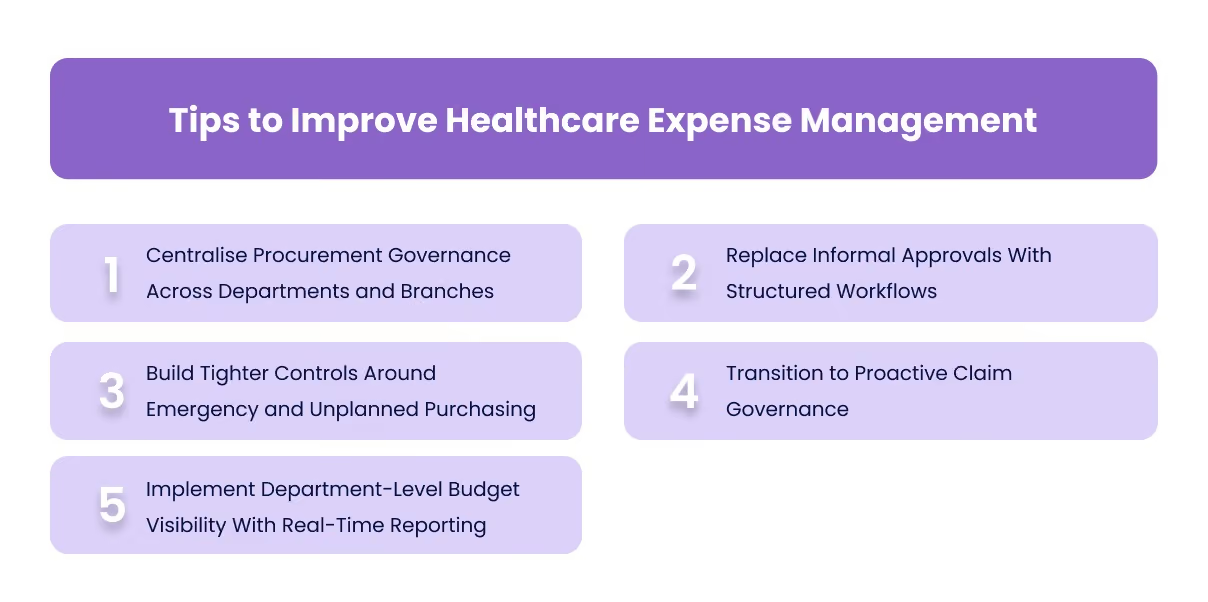
1. Centralise Procurement Governance Across Departments and Branches
One of the most common sources of financial leakage in healthcare organisations is fragmented procurement. When pharmacy, diagnostics, administration, and branch operations each purchase independently from different vendors, finance teams lose visibility into total spending, miss bulk pricing opportunities, and struggle to reconcile invoices on time.
To address this:
- Consolidate your vendor list across departments and branches to eliminate duplicate suppliers and negotiate better pricing through consolidated volume.
- Set spend thresholds by category so that purchases above a defined limit trigger a structured approval workflow rather than being processed informally through WhatsApp or verbal sign-offs.
- Create a preferred vendor register for recurring categories like consumables, pharmaceuticals, and facility maintenance so that off-contract purchases are flagged automatically rather than discovered during month-end reconciliation.
This is especially important for healthcare groups operating across multiple Emirates, where branch-level purchasing decisions are often made in isolation from central finance oversight.
2. Replace Informal Approvals With Structured Workflows
In many healthcare organisations, spending approvals still travel through informal channels. A department head approves a purchase over a phone call. An emergency supply order is authorised over WhatsApp. A vendor invoice is signed off without a corresponding purchase order on record.
These informal approval patterns create three operational problems. Spending happens without documentation. Finance teams cannot track commitments before they become invoices. And when auditors or insurers request approval trails, they simply do not exist.
Building a structured approval workflow means:
- Defining clear approval tiers based on spend amount, department, and expense category.
- Ensuring every purchase commitment generates a digital record before payment is processed.
- Giving finance teams real-time visibility into pending approvals so that cash flow planning reflects actual committed spend, not just settled invoices.
For healthcare groups managing branches across Dubai, Abu Dhabi, and other Emirates, centralised digital approvals also reduce the delays that occur when branch managers wait for sign-off from central finance teams.

3. Build Tighter Controls Around Emergency and Unplanned Purchasing
Emergency procurement is an operational reality in healthcare. Medical supplies run out. Equipment fails unexpectedly. Patient volume spikes create sudden demand for consumables that were not anticipated in the weekly purchasing plan.
The problem is not that emergency purchases happen. The problem is that they almost always bypass normal approval and documentation processes, creating reconciliation gaps that finance teams discover weeks later.
Healthcare finance teams can manage this better by:
- Creating a pre-approved emergency vendor list so that urgent purchases happen from known, contracted suppliers rather than whoever is available at short notice.
- Setting emergency spend limits by role so that clinical leads or branch managers can authorise urgent purchases up to a defined amount without waiting for central approval, while still generating a documented record.
- Requiring same-day documentation for any emergency purchase, including the purchase amount, vendor, approving authority, and clinical justification, so that reconciliation can happen within the same reporting period rather than being carried forward.
This approach keeps operational continuity intact while ensuring emergency spending remains visible and auditable.
4. Transition to Proactive Claim Governance
Insurance settlements are the lifeblood of UAE providers. To protect liquidity, finance teams must move from manual tracking to automated escalation triggers, flagging claims that remain unsettled for 21 days before they impact payroll.
Finance teams can reduce reimbursement-related cash flow pressure by:
- Centralising Submission Data: Track claim dates and insurer response timelines in one system to eliminate the visibility gaps caused by disconnected spreadsheets.
- Diagnostic Denial Tracking: Categorise rejection reasons so that recurring coding issues are addressed at the point of care rather than being corrected reactively after a denial.
- Time-Based Alerts: Set internal triggers for claims nearing your defined settlement threshold, allowing teams to intervene with insurers before delays show up in monthly reporting.
For healthcare groups managing high patient volumes, even a small improvement in the average reimbursement cycle can meaningfully reduce the working capital pressure that builds during rapid expansion.
5. Implement Department-Level Budget Visibility With Real-Time Reporting
Many healthcare finance teams still operate on a reporting cycle where actual spending is only visible after the month has closed. By the time overspending in pharmacy procurement or unexpected equipment maintenance costs appear in a report, the financial impact has already been absorbed.
Real-time budget visibility allows finance teams to manage spending as it happens rather than reconciling it after the fact.
This means:
- Assigning budgets by department, branch, and expense category so that spending can be tracked against defined limits throughout the month, not only at month-end.
- Generating automated alerts when departments approach or exceed budget thresholds, giving finance teams and department heads time to adjust purchasing decisions before overspending becomes a problem.
- Producing consolidated spend reports across branches so that leadership can see where operational costs are scaling faster than patient revenue without waiting for the finance team to compile data manually.
For healthcare groups expanding across the UAE, this kind of real-time departmental visibility is what separates finance teams that are managing growth from those that are constantly catching up to it.
Also Read: Guide to Modern Expense Management Practices
As these operational controls become harder to manage manually across growing healthcare networks, many providers are moving toward unified spend management platforms.
How Alaan Improves Healthcare Expense Management
Alaan is the UAE’s leading spend management platform, trusted by over 3,000 businesses across the Middle East and rated number one in expense management on G2. Built for multi-department and multi-branch operations, it helps healthcare finance teams centralise procurement, approvals, reimbursements, vendor payments, and accounting workflows into one connected system.
For healthcare providers still managing expenses through spreadsheets, petty cash, emails, or informal approvals, Alaan replaces fragmented finance operations with real-time visibility and stronger operational control across clinics, hospitals, pharmacies, and diagnostic centres.
What Healthcare Finance Teams Get With Alaan:
- Corporate Cards: Issue physical and virtual corporate cards with smart spend controls, merchant restrictions, and department-wise limits for healthcare teams and branch operations.
- Spend Management: Track procurement, reimbursements, operational expenses, and branch-level spending in real time from one central dashboard.
- Accounts Payable: Manage vendor invoices, approvals, and healthcare supplier payments through structured workflows with complete visibility across departments.
- SuperPay™: Make local and international vendor payments at competitive FX rates with zero transfer fees directly from the same platform.
- Accounting Automation: Sync expenses automatically with Xero, QuickBooks, NetSuite, SAP, Odoo, Dynamics 365, and Zoho Books while reducing reconciliation work and manual data entry.
- AI Receipt Capture: Automatically extract vendor details, VAT information, receipt data, and expense categories through AI-powered invoice and receipt scanning.
- Approval Workflows: Create structured finance approvals across procurement, reimbursements, branch operations, and department-level spending with full audit visibility.
- Real-Time Analytics: Monitor spending trends, operational cost spikes, budget utilisation, and financial activity throughout the month instead of waiting for month-end reports.
- Compliance & Security: Maintain VAT-ready documentation and PCI DSS-compliant transaction security aligned with UAE operational and audit requirements.
Get a personalised demo to see how Alaan can simplify healthcare finance operations across your organisation.
Conclusion
In 2026, the distinction between a struggling clinic and a thriving healthcare group will not be determined solely by clinical expertise, but by the maturity of the financial infrastructure supporting it. Delivering world-class care requires an equally sophisticated back-end system.
As medical inflation and regulatory standards tighten across the UAE, relying on reactive financial oversight has become a primary operational risk.
The immediate priority for healthcare leadership is to integrate financial visibility directly into the clinical workflow. This involves transitioning from fragmented, manual approvals to a unified digital framework where every expenditure is validated and tracked in real time.
This is where Alaan serves as the structural foundation for your finance team. By centralising multi-branch procurement, automating insurance claim documentation, and replacing legacy reimbursement cycles with controlled corporate cards, Alaan provides the transparency needed to scale operations without compromising margins.
To evaluate how high-precision spend management can stabilise your facility’s cash flow, consider scheduling a personalised demonstration centred on your specific departmental requirements.
FAQs
1. What are the biggest healthcare expense management challenges in 2026?
Delayed insurance reimbursements, emergency purchases outside approval workflows, rising medical supply costs, and fragmented branch-level procurement are the biggest financial pressure points for healthcare providers.
2. Why do hospitals struggle with reimbursement tracking?
Claims often get delayed because of coding errors, missing documentation, and disconnected tracking systems, creating cash flow pressure for hospitals and clinics.
3. Which healthcare expenses usually go over budget first?
Pharmacy procurement, emergency consumables, equipment repairs, and branch-level operational purchases are the most common overspending categories in healthcare.
4. How can clinics reduce unnecessary healthcare spending?
Clinics reduce leakage by centralising procurement, setting approval limits, automating expense tracking, and monitoring department budgets in real time.
5. Why is real-time expense visibility important for healthcare finance teams?
Real-time visibility helps finance teams detect overspending, delayed approvals, and cash flow risks before they affect payroll, procurement, or patient operations.
Gain control over business expenses with Alaan corporate cards
Invygo earned AED 100,000 in cashback using Alaan cards
Personalise approval workflows to align with your business needs with Alaan's Spend Management platform
Discover the power of automated expense tracking and smarter spend control with Alaan
Turn data into actionable insights with Alaan's spend management tools
Stay Tax Compliant with UAE's #1 Corporate Card and Spend Management Platform
Customisable corporate card policy template
Know how much Corporate Tax you have to pay this fiscal year
Easily integrate Alaan with your ERP for accurate, real-time expense tracking
Close books faster with Alaan's AI-powered accounting automation
Reconcile your books in minutes instead of hours, every single month.
Keep petty cash organized with Alaan corporate cards and automated expense management