

.avif)
How to use this
calculator
every result updates the moment you type.
Skip doing this by hand for every invoice
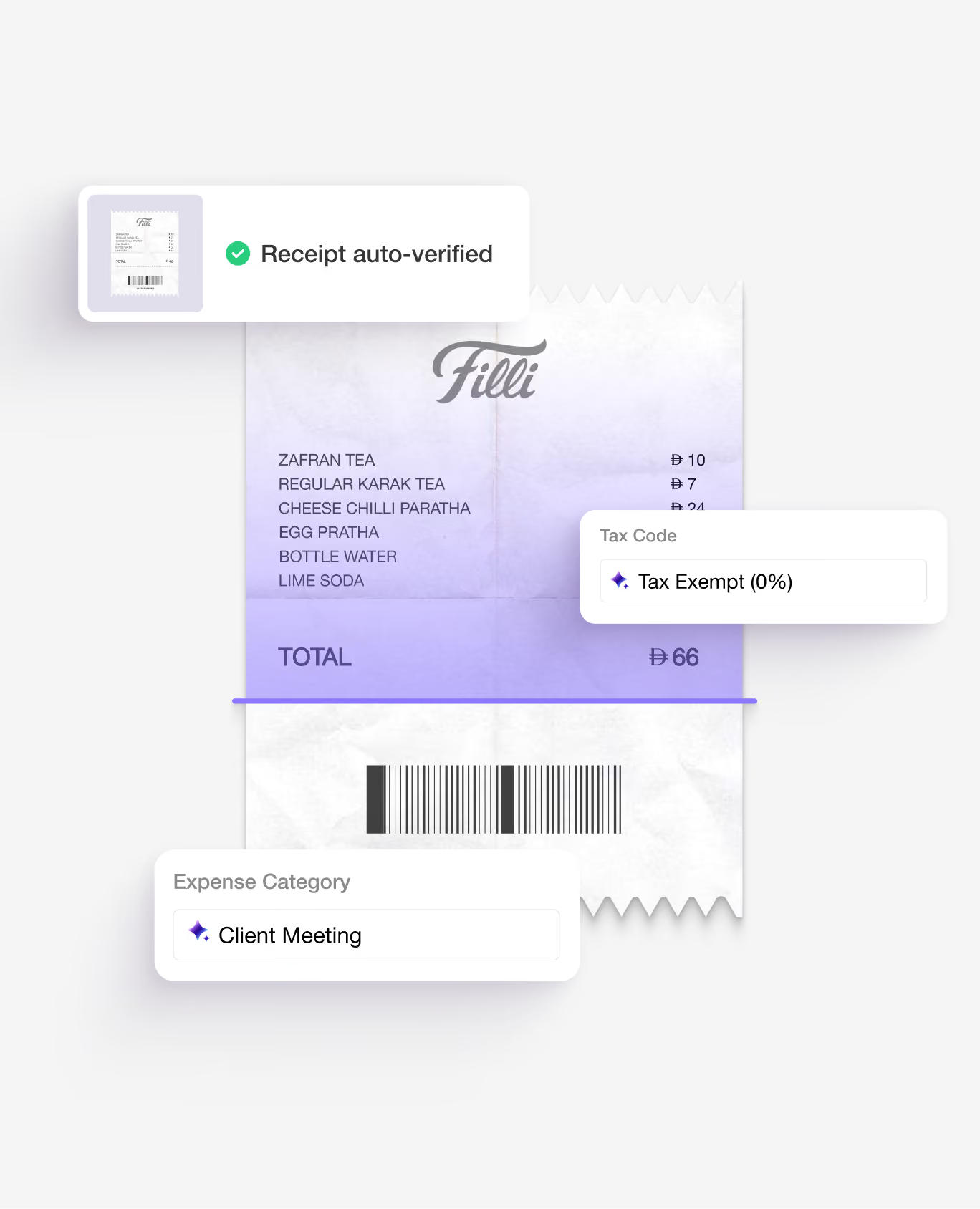

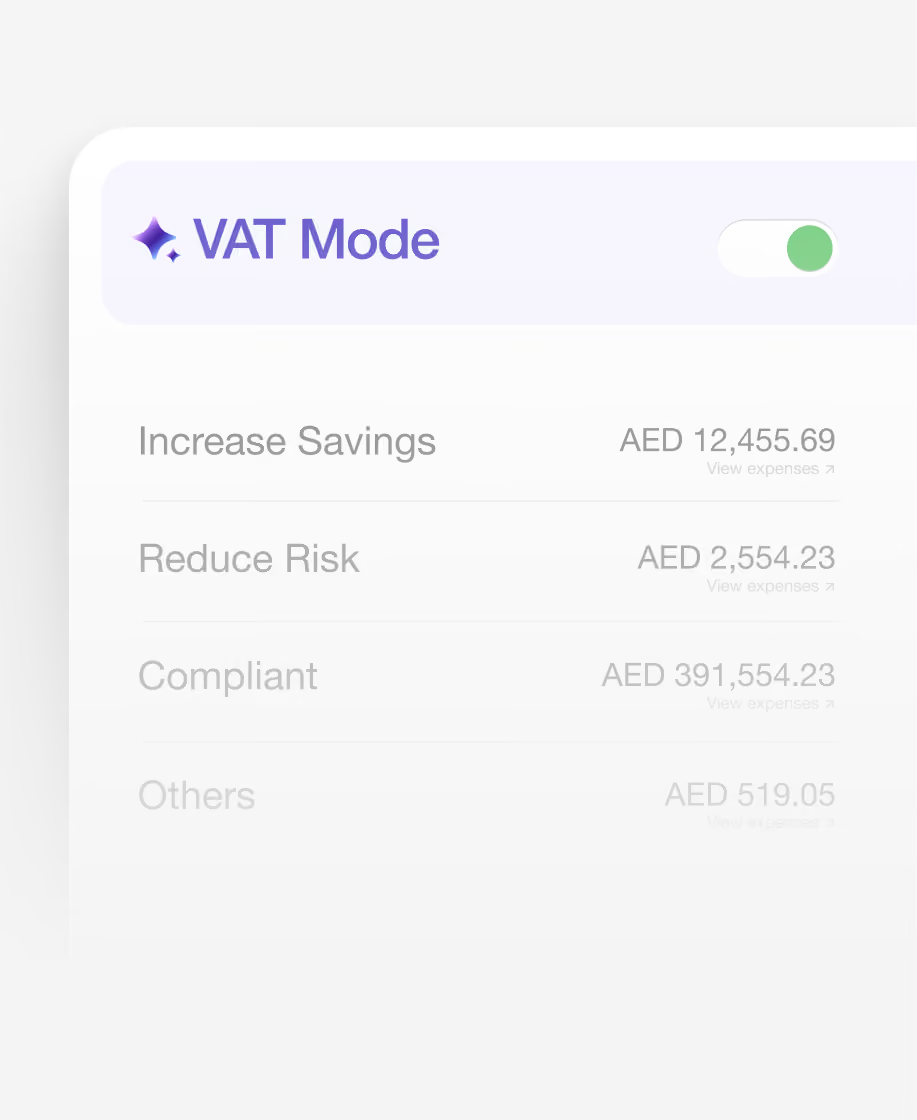
Expense category → VAT rate & input tax recovery guide
How common business expenses are treated under the UAE VAT Executive Regulations — pick a category in the calculator above to auto-apply the rate, or look it up here.
“Blocked / Restricted” supplies are still charged 5% VAT by the supplier — the restriction is on the buyer's side, where input VAT on that specific cost cannot be reclaimed from the FTA.
How UAE VAT works
Gross = Amount + VAT
VAT = Amount − Net
Expense category → VAT rate & input tax recovery guide
Calculating VAT
one invoice at a time?
- Collects receipts automatically from WhatsApp, email and the app — no manual uploads needed
- Real-time visibility into VAT-related spend and cash flow
- Digital receipt management, so you stay audit-ready

FAQs
The UAE's standard VAT rate is 5%, in effect since 1 January 2018. Most goods and services are taxed at this rate unless they qualify as zero-rated or exempt under FTA rules.
To add VAT to a net amount: VAT = Amount × 0.05, and Gross = Amount + VAT. For example, on AED 1,000 the VAT is AED 50, giving a gross total of AED 1,050.
To remove VAT from a gross (VAT-inclusive) amount: Net = Amount ÷ 1.05, and VAT = Amount − Net. For example, a gross amount of AED 1,050 has a net amount of AED 1,000 and VAT of AED 50.
Zero-rated supplies (e.g. exports, international transport, some healthcare and education) are taxed at 0% but businesses can still recover related input VAT. Exempt supplies (e.g. certain financial services, bare land, residential rents) have no VAT charged and input VAT on related costs generally cannot be recovered.
The calculator uses the standard FTA formulas for adding and removing VAT and rounds to 2 decimal places, matching how VAT is shown on invoices. It's intended for quick calculations and educational use — confirm the correct VAT treatment for your specific supply with the FTA or a tax advisor before filing.
This tool is built around the UAE's 5% standard rate and Alaan's UAE expense-category treatment. It is not pre-configured with other GCC countries' specific VAT rules.
Yes — fuel and gas are charged at the standard 5% rate and the input VAT is generally recoverable when the vehicle is used for business, per Federal Decree-Law No. 8/2017, Art. 3. Keep the fuel receipt as evidence.
It depends on use. VAT on car rental and vehicle maintenance for business purposes is generally recoverable at 5%. But input VAT on a motor vehicle made available for an employee's personal use is specifically blocked under Cabinet Resolution No. 52/2017, Art. 53, even though the supplier still charges 5%.
Mostly no. General business entertainment (client dinners, hospitality) is typically blocked input VAT under Cabinet Resolution No. 52/2017, Art. 53, regardless of the 5% charged. Some related costs can still be taxable and reclaimable, so check the itemised invoice rather than assuming a flat treatment.
No — airfares typically have no VAT component to reclaim on the ticket price, for both domestic and international flights, so there's nothing to recover on the airline expense itself.
Yes, in most cases. VAT on imports is accounted for via the reverse charge mechanism, and a VAT-registered business can generally recover it as input VAT on the same return, subject to the normal recovery rules for the underlying goods.
Yes, if it's from a UAE-registered supplier and used for business — standard 5% VAT applies and is generally recoverable, the same as any other retail purchase. Purchases from overseas sellers may instead fall under import VAT and the reverse charge mechanism.