.avif)

A compliance guide to building a business spending policy in the UAE that controls costs and meets VAT and corporate tax rules.
- Corporate fraud in the MENA region involves collusion in 55% of cases, which is why internal controls and a clear spending policy matter so much.
- A spending policy is a compliance tool as much as a cost control, guarding against VAT errors, corporate tax breaches, and financial leakage in the UAE.
- Precise rules beat vague ones, so define reimbursable categories, spending caps by role, and approval hierarchies to cut fraud and disputes.
- Regular checks keep it honest, with monthly compliance reports and quarterly high-risk audits catching misuse early.
- Alaan's platform enforces policies through controlled corporate cards, multi-level approvals, and automatic VAT categorisation to FTA guidelines.
Controlling employee expenses is a critical challenge for businesses, where unchecked spending can quickly damage profit margins and complicate financial oversight. A study highlights the frequent nature of corporate fraud in the MENA region, emphasising the critical need for internal controls, real-time fraud detection, and building ethical workplace cultures to combat fraud involving collusion in 55% of cases.
Implementing a clear, well-structured spending policy for businesses helps mitigate these risks by enforcing spending limits, streamlining approval workflows, and ensuring adherence to VAT and corporate tax laws. This reduces budget overruns and promotes transparent financial governance
This blog explains why a formal, written spending policy for business is essential, and guides you through creating one that balances control with ease of use, helping you protect your financial health without weeks of administrative hassle.
[cta-3]
Key Takeaways
- A spending policy is a compliance tool, not just a cost‑control measure: In the UAE, it safeguards against VAT errors, corporate tax breaches, and financial leakage.
- Clarity beats flexibility in expense rules: Precisely defined reimbursable categories, spending caps, and approval hierarchies reduce fraud and disputes.
- Automation closes compliance gaps: Digital expense platforms with UAE‑specific VAT logic cut processing time, prevent errors, and enforce real‑time policy adherence.
- Regular auditing is non‑negotiable: Quarterly high‑risk audits and monthly compliance reports catch misuse early and refine policies faster.
What is Spending Policy for Businesses?
A spending policy for businesses is a formal document that outlines detailed rules and procedures for managing company expenditures. It serves as a control mechanism to prevent misuse of funds, ensure compliance with UAE VAT and corporate tax laws, and optimise resource allocation.
This policy sets clear boundaries on what expenses are permissible, who can approve spending, and the documentation required for transparency and audit readiness.
A spending policy’s definition naturally raises the question of why it is essential for businesses, especially within the demanding financial and regulatory landscape of the UAE.
What is the Need to Create a Spending Policy for Business?
Creating a spending policy for business is crucial to establishing financial control, minimising risks, and ensuring regulatory compliance. In the UAE’s context, where companies operate under strict VAT regulations, evolving corporate tax laws, and heightened scrutiny from authorities, a spending policy acts as a foundational safeguard.
Reasons to create a spending policy for business:
- Regulatory Compliance: Ensures all expenditures adhere to UAE VAT and corporate tax laws, preventing costly fines and improving audit outcomes.
- Fraud Mitigation: Reduces risk of expense fraud and policy abuse by setting clear spending limits, approval processes, and mandatory documentation.
- Cost Control and Budget Management: Provides strict guidelines to prevent overspending and align expenses with corporate financial goals.
- Consistency in Financial Practices: Standardises how different departments and employees manage expenses, ensuring uniformity across the organisation.
- Enhanced Transparency and Accountability: Creates an auditable trail of spending decisions, promoting integrity and trust among stakeholders.
- Operational Efficiency: Streamlines expense approvals and reimbursements, reducing administrative delays and improving employee satisfaction.
- Support for Strategic Decision-Making: Offers data-driven insights into spending patterns that inform budgeting and financial forecasting.
- Facilitation of Growth and Sustainability: Enables businesses to allocate resources prudently, supporting long-term financial health amid UAE’s competitive market conditions.
After understanding the basocs, its important to understand the core components that make such a policy effective and practical for businesses.
[cta-4]
Key Elements of an Effective Spending Policy
An effective spending policy is a comprehensive framework that clearly defines the principles and procedures for managing business expenses. It must be detailed enough to prevent ambiguity and ensure consistent application across all levels of the organisation, particularly in the UAE’s regulatory context where compliance with VAT and corporate tax laws is paramount.
Here’s a detailed listing of key spending policy elements:
1. Reimbursable vs. Non-Reimbursable Expenses
Clearly distinguish expenses eligible for company reimbursement from those that are not. For instance, reimbursable expenses typically cover business travel, client entertainment within set limits, and office supplies, whereas personal expenses, fines, or luxury items are excluded.
2. Spending Limits by Category and Employee Role:
Establish firm ceilings on expenditure amounts, varying by expense type and employee seniority or department. This prevents unauthorised financial outflows and ensures spend control aligned with organisational accountability frameworks.
3. Approval Hierarchies and Workflows:
Define precise authorisation channels for approving expenses, assigning responsibility at different levels, and providing escalation processes for exceptions or high-value transactions. This hierarchical approval mechanism underpins financial governance and audit readiness.
4. Documentation and Receipt Requirements:
Mandate submission of original or verified receipts, invoices, or digital proofs for all expenses, enabling transparent audit trails, VAT reclaim processes, and financial accuracy in reporting.
5. Compliance with UAE VAT, Corporate Tax, and Local Laws:
Integrate relevant legal compliance mandates, ensuring expense categorisation, documentation, and reporting satisfy requirements set by the UAE Federal Tax Authority and other regulatory bodies, reducing risk of penalties.
6. Monitoring, Auditing, and Updating Protocols:
Describe mechanisms for regular expense monitoring, scheduled audits, and policy reviews to adapt to evolving business needs or regulatory changes, preserving policy effectiveness and compliance integrity.
Now that you know the key components of a spending policy, let’s have a look at the structured approach to draft a spending policy.
Step-by-Step Guide to Drafting a Spending Policy for Business
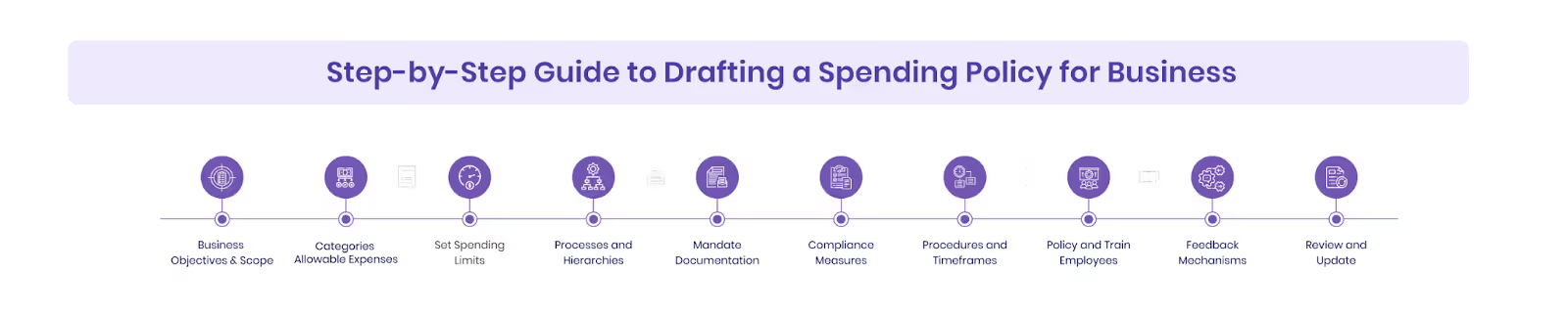
Crafting a spending policy requires deliberate planning, with each step designed to address specific business objectives and regulatory requirements within the UAE. The process should be clear, actionable, and adaptable to the company’s size, industry, and operational complexity.
Here’s a stepwise process to draft a spending policy for business:
[cta-5]
1. Define Business Objectives and Scope
Establish the primary goals, whether controlling costs, ensuring compliance with UAE VAT and corporate tax laws, preventing fraud, or improving auditability. Determine the policy’s scope, including which departments, expense types, and employee roles it covers.
2. Identify and Categorise Allowable Expenses
Specify precisely which expenses are reimbursable and non-reimbursable, aligning categories with typical UAE business costs such as travel, client entertainment, office supplies, and technology. This clarity prevents misunderstandings and potential abuse.
3. Set Spending Limits for Each Category and Role
Define maximum allowable amounts for each expense category, considering the seniority and responsibilities of employees. For example, senior management might have higher limits for travel or client entertainment, whereas junior staff have stricter caps.
4. Establish Clear Approval Processes and Hierarchies
Designate authorised approvers for different spending thresholds, incorporating multiple levels for higher-value expenses. Establish protocols for exceptions and escalation to ensure stringent oversight without operational delays.
5. Mandate Documentation and Receipt Submission
Require original receipts, invoices, or electronic proofs for all claims. Set guidelines on the format and timing for submission to comply with UAE auditing and VAT recovery regulations.
6. Integrate VAT and Corporate Tax Compliance Measures
Embed procedures to ensure expense reporting fits UAE Federal Tax Authority standards, facilitating accurate tax filing and VAT reclaim. This includes categorising expenses in accordance with tax deductibility rules.
7. Define Reimbursement Procedures and Timeframes
Standardise processes for submitting, reviewing, and reimbursing expenses, detailing acceptable payment methods and expected turnaround times to promote efficiency and employee satisfaction.
8. Communicate the Policy and Train Employees
Distribute the policy across the organisation clearly and conduct regular training sessions for all staff and finance personnel. Effective communication prevents non-compliance caused by misunderstanding or lack of knowledge.
9. Implement Monitoring, Auditing, and Feedback Mechanisms
Create systems to regularly track spending patterns, compliance rates, and policy adherence. Schedule audits to identify discrepancies or patterns of misuse, and gather employee feedback to refine and improve the policy over time.
10. Review and Update the Policy Periodically
Set a routine review cycle to update the policy in response to evolving UAE regulations, business growth, or operational changes. This ensures the policy remains effective and compliant with current legal standards.
It is crucial to recognise the common challenges businesses face when implementing a spending policy. Addressing these challenges head-on ensures the policy’s effectiveness.
Common Challenges and How to Overcome Them
Implementing a spending policy comes with distinct hurdles that can undermine its purpose if not properly managed. These challenges range from employee resistance to legal complexities and operational inefficiencies, all of which must be carefully navigated to ensure compliance and operational success.
Below are mentioned some of the common challenges that business face while drafting a spending policy along with the tips to overcome them:
1. Employee Resistance and Lack of Buy‑In
Employees may see spending policies as restrictive, leading to non‑compliance or workarounds, often due to poor communication or previous slow reimbursement experiences.
Tip: Explain the policy’s purpose clearly, involve key departments in drafting, and provide focused training with quick‑reference guides to build acceptance.
2. Complexity of UAE Regulations
Frequent changes in VAT, corporate tax, and FTA requirements cause policy gaps and non‑compliance risks.
Tip: Work with UAE tax specialists, embed compliance rules into expense categories, and review the policy after every major legal update.
3. Manual Tracking and Approval Delays
Paper forms and spreadsheets slow approvals, risk lost receipts, and hinder VAT claim accuracy.
Tip: Implement UAE‑compliant digital expense tools with receipt capture, automated VAT coding, and defined turnaround KPIs.
4. Ambiguity in Policy Language
Vague terms like “reasonable expense” lead to inconsistent approvals and VAT mismatches.
Tip: Use specific limits and criteria—e.g., “Max AED X/night hotel within UAE” and require FTA‑valid invoices.
5. Lack of Monitoring and Auditing
Without regular checks, fraud or out‑of‑policy spend may go unnoticed until formal audits.
Tip: Produce monthly compliance reports, run quarterly high‑risk expense audits, and adjust the policy based on findings.
6. Poor Technology Integration
Disconnected finance, expense, and tax systems create duplication, errors, and weak enforcement.
Tip: Deploy an integrated platform covering expenses, budgets, accounting, and VAT compliance with real‑time alerts.
After understanding challenges and overcoming them, the next logical step for businesses seeking efficient expense management is adopting practical solutions designed for the UAE market’s unique needs.
Get Started With Alaan
Alaan offers a comprehensive spend management platform designed specifically for businesses operating in the UAE, seamlessly integrating with the country’s tax and regulatory environment.
It empowers organisations with end-to-end control over expenses, from policy enforcement and real-time approval workflows to automated VAT reconciliation and detailed expenditure analytics.
Key features specific to Alaan's spend management solution include:
- Automated Expense Management: Digitises the entire expense lifecycle—receipt capture, validation, and approval, reducing manual errors and accelerating processing times, critical for maintaining compliance with UAE VAT and corporate tax laws.
- Corporate Cards Integration: Provides fully controlled corporate cards linked directly to Alaan’s platform, enabling set spending limits, real-time transaction tracking, and instant policy compliance checks. This prevents unauthorised spending and simplifies reconciliation.
- Multi-level Approvals: Supports hierarchical approval workflows tailored to organisational structures, ensuring accountability and governance at every spending level.
- Real-time VAT Compliance: Automatically categorises expenses according to UAE Federal Tax Authority guidelines, facilitating accurate VAT reclaim and minimising audit risks.
- Comprehensive Reporting and Analytics: Delivers actionable insights on spending patterns and compliance metrics, aiding CFOs and finance teams in strategic decision-making and budget optimisation.
- Integration Capabilities: Easily connects with existing accounting, ERP, and payroll systems, streamlining financial operations while maintaining data integrity.
Schedule a personalised demo today to see how Alaan can streamline your spend management, strengthen compliance, and empower smarter financial control within your business.
[cta-7]
Conclusion
In the UAE’s competitive and tightly regulated business environment, a well‑structured spending policy is no longer optional, it is a strategic necessity. From preventing expense fraud and controlling costs to ensuring full compliance with VAT and corporate tax laws, the right policy framework strengthens financial governance and protects profitability.
By defining clear expense categories, setting role‑based limits, streamlining approval workflows, and embedding compliance measures, businesses can avoid financial leakage while enhancing transparency and operational efficiency.
Alaan’s spend management solution and corporate cards give UAE businesses the tools to implement and enforce spending policies with precision.
With automated approvals, real‑time VAT compliance, and actionable analytics, we at Alaan helps businesses eliminate inefficiencies, mitigate risks, and maintain full regulatory adherence.
Book a demo today to see how Alaan can transform your expense management into a driver of profitability, compliance, and sustainable growth.
Frequently Asked Questions (FAQs)
1. How often should a spending policy be reviewed in the UAE?
Ideally, spending policies should be reviewed annually or immediately following significant regulatory changes, such as updates from the UAE Federal Tax Authority or corporate tax reforms.
2. Can SME businesses in the UAE use simplified spending policies?
Yes, SMEs can adopt streamlined policies with basic controls and approval tiers but must still comply with VAT and tax documentation requirements.
3. Are cash expenses covered under spending policies?
Yes, cash expenses must be strictly documented and justified, with limits set on cash disbursements to avoid misuse and ensure audit compliance.
4. What role does employee training play in spending policy effectiveness?
Regular, focused training ensures employees understand the policy, reducing errors and non-compliance, which is critical under UAE regulatory scrutiny.
5. Can a spending policy include sustainability-related expense controls?
Yes, businesses can incorporate green spending criteria to support sustainability goals alongside financial controls.
6. How should disputes over expense claims be handled?
The policy should outline a clear dispute resolution process involving finance and HR, with documented appeals and final decision authority to maintain fairness and transparency.
Gain control over business expenses with Alaan corporate cards
Invygo earned AED 100,000 in cashback using Alaan cards
Personalise approval workflows to align with your business needs with Alaan's Spend Management platform
Discover the power of automated expense tracking and smarter spend control with Alaan
Turn data into actionable insights with Alaan's spend management tools
Stay Tax Compliant with UAE's #1 Corporate Card and Spend Management Platform
Customisable corporate card policy template
Know how much Corporate Tax you have to pay this fiscal year
Easily integrate Alaan with your ERP for accurate, real-time expense tracking
Close books faster with Alaan's AI-powered accounting automation
Reconcile your books in minutes instead of hours, every single month.
Keep petty cash organized with Alaan corporate cards and automated expense management