.avif)


Delayed payments and manual invoicing continue to slow down cash flow for businesses across the UAE. Finance teams are often stuck juggling spreadsheets, chasing payments over email, and manually tracking receivables—leaving too much room for delays, errors, and missed follow-ups.
The impact is real: 21% of suppliers report that their buyers pay invoices more than 30 days late, with 7% waiting over 45 days. That’s not just an operational inconvenience; it’s a direct strain on working capital, forecasting, and day-to-day financial stability.
Now, with the UAE’s e-invoicing rollout in 2026, the shift toward structured, digital receivables is no longer optional. Businesses will need to move beyond fragmented processes and adopt systems that ensure accuracy, compliance, and real-time visibility into cash flow.
This is where accounts receivable automation comes in. This blog breaks down how AR automation works, its key benefits for UAE businesses, and how it helps finance teams improve cash flow control.
Key Takeaways:
- End-to-end automation: Standardises the invoice-to-cash cycle by automating invoicing, delivery, tracking, reminders, and reconciliation
- Payment delays impact cash flow: 21% of suppliers face delays beyond 30 days and 7% beyond 45 days, affecting liquidity and working capital
- UAE e-invoicing shift: The 2026 rollout requires structured digital invoicing, making manual AR processes harder to sustain
- Consistent collections: Automation ensures timely invoicing, systematic follow-ups, and real-time tracking to reduce delays
- Unified cash visibility: Tools like Alaan combine payments and spend data, giving finance teams real-time control over cash flow
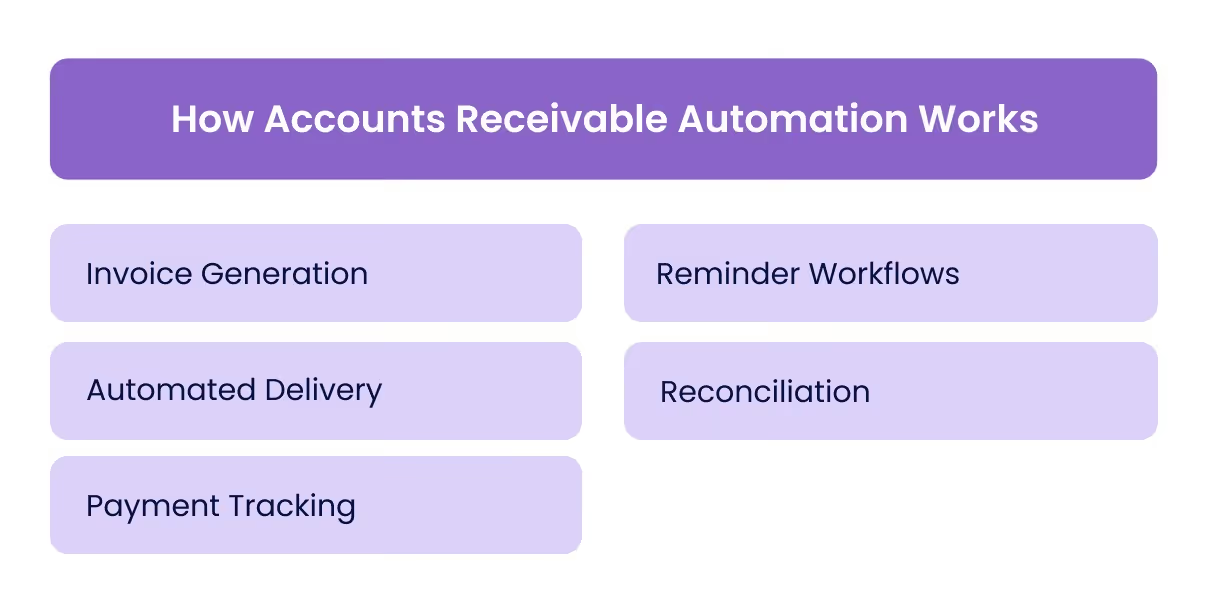
How Accounts Receivable Automation Works
Accounts receivable automation digitises and streamlines the entire billing-to-cash cycle. It starts with invoice creation and ends with final payment reconciliation. This replaces manual follow-ups, spreadsheets, and disconnected tools with a single, structured workflow.
For UAE businesses, this shift is becoming increasingly important as the move toward e-invoicing and structured digital reporting in 2026 makes manual AR processes harder to sustain.
Here’s how the process typically works:
• Invoice Generation: Automatically creates invoices using ERP or accounting data while aligning with UAE VAT and e-invoicing requirements.
• Automated Delivery: Sends invoices instantly via email or portals to ensure timely delivery and faster payment cycles.
• Payment Tracking: Tracks invoice status in real time, giving full visibility into receivables and cash inflows.
• Reminder Workflows: Triggers automated follow-ups based on due dates to reduce delays and missed payments.
• Reconciliation (Cash Application): Matches payments to invoices automatically and updates records for accurate reporting and compliance.
Also Read: Accounting Automation for High-Volume Businesses: How Finance Teams Scale
With the process streamlined end-to-end, the real impact shows up in how AR automation improves cash flow, efficiency, and control, starting with these key benefits.
10 AR Automation Benefits That Reduce DSO and Improve Visibility
Once the receivables process is automated end-to-end, the impact goes far beyond faster invoicing. Finance teams gain tighter control over cash flow, reduce operational friction, and unlock better visibility across the entire revenue cycle.
Below are the key benefits that make accounts receivable automation a critical upgrade for modern finance teams.
1. Faster Cash Flow
Automation removes lag between invoice creation, delivery, and follow-ups, turning receivables into cash faster. Businesses report accelerated collections and improved liquidity once delays are eliminated.
How it’s applied:
- Auto-generate and send invoices instantly after a transaction
- Enable embedded payment links within invoices
- Trigger reminders before and after due dates to reduce lag

2. Reduced Days Sales Outstanding (DSO)
Late collections are often caused by inconsistent follow-ups and a lack of prioritisation. Automation ensures every invoice is tracked and acted on at the right time.
How it’s applied:
- Set rule-based reminder workflows (e.g., T-3 days, due date, +7 days)
- Segment customers by risk or payment behaviour
- Escalate overdue invoices automatically
3. Improved Cash Flow Predictability
Without structured tracking, finance teams rely on assumptions. Automation replaces guesswork with real-time visibility into what’s expected and when.
How it’s applied:
- Use dashboards to track ageing reports and expected inflows
- Analyse historical payment behaviour for forecasting
- Integrate AR data with financial planning tools
Also Read: Understanding Robotic Process Automation in Accounting: Key Processes and Benefits
4. Higher Collection Efficiency
Manual collections are reactive; teams chase payments after they become overdue. Automation shifts this to a proactive system where follow-ups happen before delays escalate.
How it’s applied:
- Prioritise high-value or overdue invoices automatically
- Use automated dunning sequences instead of manual chasing
- Track collection performance by customer segment
5. Reduced Manual Workload
A large part of AR work is repetitive: sending invoices, tracking payments, and updating spreadsheets. Automation removes these tasks from daily workflows.
How it’s applied:
- Automate invoice creation, sending, and status tracking
- Remove spreadsheet-based tracking
- Use workflows instead of manual coordination across teams

6. Fewer Errors and Disputes
Errors in invoices or mismatched payments often lead to disputes and delays. Automation standardises processes and reduces dependency on manual input.
How it’s applied:
- Pull invoice data directly from ERP systems
- Use consistent invoice templates and tax calculations
- Maintain audit trails for all invoice and payment activities
7. Lower Operational Costs
Manual AR processes require more time, effort, and people as the business grows. Automation reduces the effort required per invoice.
How it’s applied:
- Automate high-volume, low-value tasks
- Reduce dependency on manual reconciliation
- Scale AR processes without increasing team size
8. Better Customer Payment Experience
Customers are more likely to pay on time when the process is simple, clear, and convenient. Manual systems often create confusion and delays.
How it’s applied:
- Offer multiple digital payment options
- Send clear, structured invoices with payment instructions
- Provide self-service portals for invoice access and payments
9. Real-Time Visibility and Control
Without a central system, receivables data is scattered across tools and teams. Automation brings everything into one place with live updates.
How it’s applied:
- Monitor ageing buckets and overdue invoices in real time
- Track KPIs like DSO, collection rates, and payment trends
- Identify at-risk customers early
10. Scalability Without Complexity
As invoice volumes increase, manual processes become harder to manage. Automation ensures the same workflows can handle growth without breaking.
How it’s applied:
- Use rule-based workflows that scale with invoice volume
- Standardise processes across regions and entities
- Integrate AR automation with ERP and finance systems

Without these systems in place, receivables quickly become fragmented, leading to the common challenges finance teams face with manual AR processes.
Common Challenges Without AR Automation
When accounts receivable is managed manually, the process quickly becomes fragmented across spreadsheets, emails, and disconnected systems. This creates delays, errors, and blind spots that directly impact cash flow and operational efficiency.
In practice, most finance teams don’t struggle because they lack effort; they struggle because the system itself isn’t structured to scale or provide visibility.
Here are the most common challenges teams face without AR automation, and how they can be addressed:
Also Read: Guide to Modern Expense Management Practices
Fixing these challenges requires more than process tweaks; it requires real-time visibility and control over receivables, which is where Alaan comes in.
How Alaan Helps Finance Teams Improve Cash Flow Visibility
For most finance teams, the problem isn’t just delayed payments; it’s not knowing where the money stands at any given moment. Receivables sit in one system, expenses in another, and cash flow visibility becomes reactive instead of real-time. This fragmentation is exactly where modern finance platforms step in.
Alaan is built specifically for finance teams in the UAE as an all-in-one spend management and payments platform that combines corporate cards, expense tracking, and automation into a single system.
Instead of stitching together spreadsheets, emails, and accounting tools, Alaan brings everything into one place. It gives finance teams control, compliance, and real-time visibility by default.
How Alaan Helps Improve Cash Flow Visibility:
- Unified view of cards and supplier payments (SuperPay)
Alaan combines corporate card spend and supplier payments (via SuperPay) into a single system, so finance teams can track all outgoing cash in one place, rather than across banks, emails, and tools. - Real-time transaction tracking (Super Visibility)
Every card swipe, transfer, or expense is recorded instantly, giving a live view of company spend instead of waiting for reports. - Smart corporate cards with granular controls (SuperCard)
Alaan’s SuperCard lets finance teams control spend at the source with limits, restrictions, and approvals built in. - AI-powered automation (Alaan Intelligence)
AI handles receipt matching, expense categorisation, and anomaly detection, ensuring clean, structured financial data without manual effort. - Automated accounting and real-time sync (Super Sync)
Alaan integrates with tools like Xero, QuickBooks, and NetSuite to automatically sync transactions into books. - End-to-end control with approval workflows
Payments and expenses follow pre-set approval flows and policies, ensuring every outflow is tracked and authorised. - Cashback and cost optimisation built in
With direct cashback on transactions, businesses recover a portion of their spend automatically, improving their net cash position.
Book a demo with Alaan to get real-time visibility and control over your cash flow.
Conclusion
Improving accounts receivable isn’t about chasing payments harder; it’s about removing the friction that causes delays in the first place. That means tightening invoicing timelines, standardising follow-ups, and building visibility into every stage of the receivables cycle.
For finance teams, the focus should be on three things:
- Consistency in how invoices are sent and followed up on.
- Visibility into what’s due, overdue, and expected.
- Control over how cash moves across the business.
Without these, collections remain reactive. With them, cash flow becomes predictable.
This is where systems like Alaan naturally fit in. By bringing together payments, spend tracking, and real-time financial data, finance teams can move from piecing together information to actually operating with clarity and control, without adding more manual work.
Schedule a demo with Alaan to see how real-time visibility and automation can improve your cash flow.
FAQs
1. What is accounts receivable automation, and how does it work?
Accounts receivable automation uses software to handle invoicing, payment tracking, reminders, and reconciliation automatically. It replaces manual tasks like spreadsheets and email follow-ups with structured workflows that run in real time.
2. How does accounts receivable automation help reduce late payments?
It ensures that invoices are sent on time and that follow-ups are consistent. Automated reminders and easy payment options make it simpler for customers to pay without delays.
3. What are the main benefits of accounts receivable automation?
The key benefits include faster cash flow, better visibility into receivables, reduced manual work, fewer errors, and improved collection efficiency.
4. Is accounts receivable automation suitable for small businesses?
Yes. Even small teams benefit from automation by saving time, avoiding errors, and maintaining consistent collections without needing additional resources.
5. How can UAE businesses prepare for e-invoicing with AR automation?
By using systems that generate and track structured digital invoices, automate compliance-related processes, and maintain accurate, real-time financial records.
Gain control over business expenses with Alaan corporate cards
Invygo earned AED 100,000 in cashback using Alaan cards
Personalise approval workflows to align with your business needs with Alaan's Spend Management platform
Discover the power of automated expense tracking and smarter spend control with Alaan
Turn data into actionable insights with Alaan's spend management tools
Stay Tax Compliant with UAE's #1 Corporate Card and Spend Management Platform
Customisable corporate card policy template
Know how much Corporate Tax you have to pay this fiscal year
Easily integrate Alaan with your ERP for accurate, real-time expense tracking
Close books faster with Alaan's AI-powered accounting automation
Reconcile your books in minutes instead of hours, every single month.
Keep petty cash organized with Alaan corporate cards and automated expense management