.avif)


شرح لمعنى رأس مال التدفق النقدي، والمواضع التي تُحتجز فيها السيولة داخل الدورة التشغيلية، وكيف تحمي الشركات في الإمارات سيولتها دون الإفراط في الاقتراض.
- قد تحقق الشركة مبيعات كبيرة ومع ذلك تعاني نقصًا في النقد عندما تكون أموالها محتجزة في الذمم المدينة والمخزون والتزامات المورّدين.
- رأس مال التدفق النقدي ليس مصطلحًا محاسبيًا رسميًا، بل يصف السيولة الفعلية التي تحافظ على استمرار العمليات أثناء دوران النقد داخل الشركة.
- أفادت شركة أتراديوس (Atradius) بأن الفواتير المتأخرة السداد تشمل %58 من المبيعات بين الشركات (B2B) في الإمارات، وهو ما يحتجز النقد حتى بعد تسجيل الإيرادات.
- قد يزيد النمو الضغط على السيولة، لأن الشركة تبيع أكثر وتحصّل في وقت لاحق، بينما تظل مستحقات المورّدين والرواتب واجبة السداد في مواعيدها.
- تساعد الآن الفرق المالية على إبقاء التدفقات النقدية الخارجة متوافقة مع الأولويات، من خلال بطاقات الشركات المزودة بضوابط الإنفاق، ومسارات الموافقة قبل حدوث الإنفاق، والاطلاع الفوري على الإنفاق التشغيلي، والمزامنة مع Xero وQuickBooks وNetSuite وMicrosoft Dynamics.
يُختبر رأس مال التدفق النقدي عندما يكون لدى الشركة نشاط مبيعات كافٍ دون أن تتوفر لها سيولة كافية تتحرك عبر الدورة التشغيلية. فقد تنمو الإيرادات، ومع ذلك يظل النقد محتجزًا في الذمم المدينة والمخزون والتزامات المورّدين والرواتب والمصروفات التشغيلية المتكررة.
ويكتسب هذا الأمر أهمية خاصة للشركات الصغيرة والمتوسطة في الإمارات. فقد وجد مسح أعمال الشركات متناهية الصغر والصغيرة والمتوسطة الصادر عن مصرف الإمارات العربية المتحدة المركزي أن %17 فقط من هذه الشركات تقدّمت بطلبات للحصول على ائتمان مصرفي في عام 2020، وأن %9 فقط حصلت على التمويل الذي تحتاجه. كما حدّد التقرير ضعف السيولة وقيود التدفق النقدي ونقص الضمانات بوصفها أسبابًا لتعثّر هذه الشركات في الحصول على التمويل المصرفي.
لذلك لا ينبغي اختزال رأس مال التدفق النقدي في مسألة تمويل. فقبل زيادة الاقتراض، تحتاج الفرق المالية إلى معرفة أين يُحتجز رأس المال، ومدى سرعة تحصيل الذمم المدينة وتحويلها إلى نقد، ومواعيد استحقاق مدفوعات المورّدين، وحجم المخزون المحتفظ به، وما إذا كان الإنفاق التشغيلي يرفع تدريجيًا ودون أن يُلاحظ الحد الأدنى من النقد اللازم لتشغيل الشركة.
نشرح في هذا المقال معنى رأس مال التدفق النقدي من الناحية العملية، وعلاقته برأس المال العامل، وكيف تحمي الشركات سيولتها بإدارة الدورة النقدية بفعالية أكبر.
ملخص سريع / أهم النقاط
- يشير رأس مال التدفق النقدي إلى السيولة المتاحة فعليًا لدعم العمليات اليومية أثناء حركة النقد داخل الشركة.
- يرتبط ارتباطًا وثيقًا برأس المال العامل، لكنه يركّز أكثر على الفجوات الزمنية بين التحصيلات ومدفوعات المورّدين والمخزون والرواتب والإنفاق التشغيلي.
- قد يزيد نمو الإيرادات الضغط على رأس مال التدفق النقدي عندما ترتفع التكاليف قبل تحصيل النقد من العملاء.
- تُعد الذمم المدينة والمخزون وشروط الدفع للمورّدين والتكاليف الثابتة والإنفاق المتكرر أهم المواضع التي تُحتجز فيها السيولة.
- تستطيع الشركات حماية رأس مال التدفق النقدي بتحسين التحصيل، ومواءمة مواعيد المدفوعات، وضبط المخزون، والاطلاع المستمر على الإنفاق التشغيلي.
معنى رأس مال التدفق النقدي من الناحية العملية
رأس مال التدفق النقدي ليس مصطلحًا محاسبيًا رسميًا يرد في القوائم المالية، وإنما يُستخدم بمعنى عملي لوصف رأس المال المتاح لدعم حركة النقد داخل الشركة.
ويمثّل السيولة اللازمة من أجل:
- سداد مستحقات المورّدين
- دفع الرواتب
- تمويل المخزون
- تغطية المصروفات التشغيلية
- سد الفجوات الزمنية بين التدفقات النقدية الداخلة والخارجة
وعلى خلاف الأرباح أو الإيرادات التي تُقاس على أساس محاسبي، يعكس رأس مال التدفق النقدي مدى توفر الأموال فعليًا في أي لحظة. فقد تبدو الشركة قوية في قوائمها المالية، لكنها تواجه ضغطًا على السيولة إذا كان النقد محتجزًا في الذمم المدينة أو المخزون.
ولهذا يتطلب فهم رأس مال التدفق النقدي النظر إلى ما هو أبعد من الأرصدة، والتركيز على سرعة حركة النقد عبر الدورة التشغيلية.
العلاقة بين التدفق النقدي ورأس المال العامل
يرتبط التدفق النقدي ورأس المال العامل ارتباطًا وثيقًا، لكنهما ليسا الشيء نفسه. وفهم الفرق بينهما ضروري لإدارة السيولة بفعالية.
يتتبّع التدفق النقدي حركة الأموال الداخلة إلى الشركة والخارجة منها خلال فترة زمنية. أما رأس المال العامل فيعكس الفرق بين الأصول المتداولة والالتزامات المتداولة، ويبيّن ما إذا كانت الشركة قادرة على الوفاء بالتزاماتها قصيرة الأجل.
ويمكن تلخيص العلاقة بينهما على النحو الآتي:
| المجال | التدفق النقدي | رأس المال العامل |
|---|---|---|
| ما يقيسه | حركة النقد | مركز السيولة قصير الأجل |
| محور التركيز | توقيت التدفقات الداخلة والخارجة | الموارد المتاحة مقارنة بالالتزامات |
| الخطر الرئيسي | فجوات نقدية بسبب التوقيت | رأس مال محتجز في الأصول |
قد يكون رأس المال العامل لدى الشركة موجبًا، ومع ذلك تواجه ضغطًا على التدفق النقدي إذا تأخرت التدفقات الداخلة. وبالمثل، قد يخفي التدفق النقدي القوي مؤقتًا ضعف رأس المال العامل إذا كان مصدره التمويل أو تأجيل المدفوعات. راجع منظور تدفق الأموال الذي تستخدمه بعض الفرق المالية إلى جانب التدفق النقدي لتتبّع هذه الحركة.
اقرأ أيضًا: دليل «إدارة التدفق النقدي للشركات بفعالية»
أين يُحتجز رأس المال داخل الدورة النقدية؟
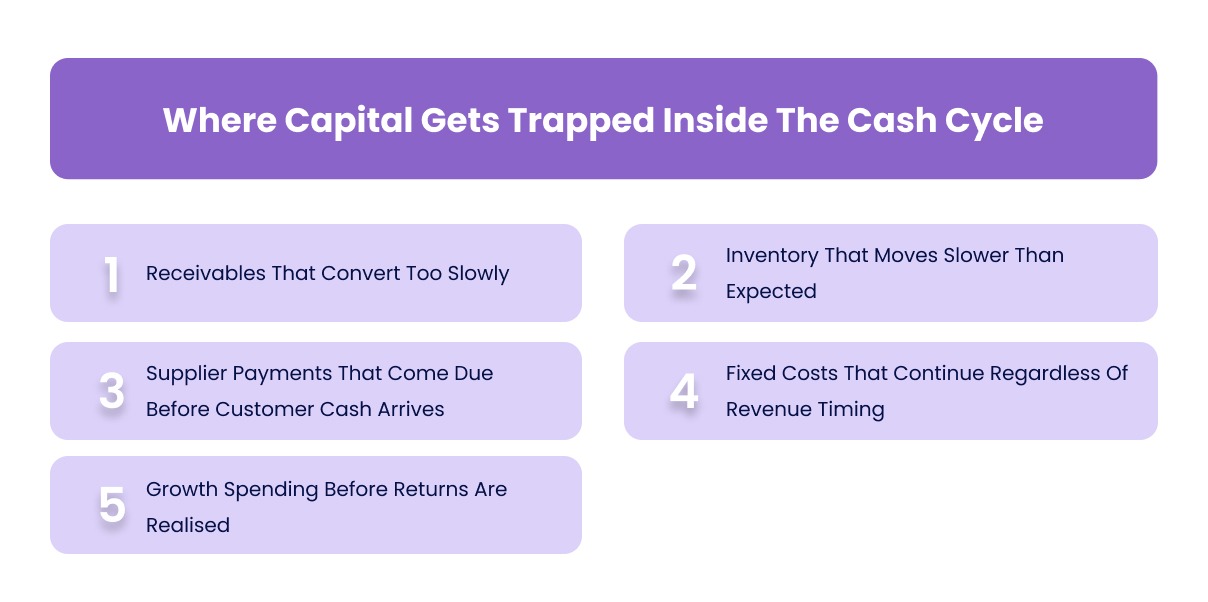
لا يتراجع رأس مال التدفق النقدي في الغالب بسبب مشكلة واحدة كبيرة، بل بسبب أوجه قصور صغيرة متعددة على امتداد الدورة التشغيلية. وفيما يلي المواضع التي تُحتجز فيها السيولة عادةً.
1. ذمم مدينة يتأخر تحويلها إلى نقد
عندما يتأخر العملاء في السداد، يبقى النقد محتجزًا في الفواتير غير المسددة، ما يخلق فجوة بين إثبات الإيراد وتوفر النقد فعليًا. ووجدت شركة أتراديوس (Atradius)، في تقريرها لعام 2025 عن ممارسات الدفع في الإمارات، أن الفواتير المتأخرة السداد تشمل %58 من المبيعات بين الشركات (B2B)، وهو ما يبيّن كيف يمكن لتأخر تحصيل الذمم المدينة أن يقلّص رأس مال التدفق النقدي المتاح حتى بعد تسجيل الإيرادات.
2. مخزون يتحرك أبطأ من المتوقع
يحتجز المخزون النقد إلى أن يُباع. ويؤدي فائض المخزون أو الأصناف بطيئة الحركة إلى زيادة رأس المال اللازم لاستمرار العمليات.
3. مدفوعات مورّدين تستحق قبل وصول النقد من العملاء
عندما يطلب المورّدون السداد مبكرًا بينما يسدد العملاء في وقت لاحق، يتعين على الشركة سد هذه الفجوة من نقدها الخاص أو من رأس مال خارجي.
4. تكاليف ثابتة تستمر بصرف النظر عن توقيت الإيرادات
تستمر مصروفات مثل الرواتب والإيجار والاشتراكات والخدمات اللوجستية حتى عندما تتأخر التدفقات الداخلة.
5. إنفاق على النمو قبل تحقق العوائد
غالبًا ما تسبق الاستثمارات في التوظيف أو التسويق أو التوسع تحويلَ الإيرادات إلى نقد، ما يزيد الضغط على السيولة في المدى القصير.

لماذا قد يزيد نمو الإيرادات الحاجة إلى رأس مال التدفق النقدي؟
يُفترض غالبًا أن النمو يعزز الاستقرار المالي، لكنه قد يزيد أيضًا الضغط على رأس مال التدفق النقدي.
فمع نمو الشركة، تميل عادةً إلى:
- بيع المزيد مع تحصيل المبالغ في وقت لاحق
- الاحتفاظ بمخزون أكبر
- توظيف عدد أكبر من الموظفين
- زيادة المصروفات التشغيلية
وهذا يعني أن التدفقات النقدية الخارجة ترتفع قبل أن تلحق بها التدفقات الداخلة بالكامل. ومن دون تخطيط دقيق، قد يوسّع النمو الفجوة بين الإنفاق وتوفر النقد.
فعلى سبيل المثال، قد تضاعف شركة مبيعاتها الشهرية، لكن إذا كان العملاء يسددون خلال 60 يومًا بينما يطلب المورّدون السداد في مدة أقصر، فستحتاج الشركة إلى رأس مال إضافي لمواصلة هذا النمو.
اقرأ أيضًا: مقال «استراتيجيات وأساليب تحسين التدفق النقدي»
كيف تعرف ما إذا كانت الشركة بحاجة إلى مزيد من رأس مال التدفق النقدي؟
لا يظهر الضغط على التدفق النقدي فجأة في كل الأحوال. ففي معظم الحالات، توجد مؤشرات مبكرة على أن رأس المال المتاح للعمليات بدأ يصبح غير كافٍ.
وتكون هذه المؤشرات عادةً تشغيلية لا محاسبية.
1. تباطؤ التحصيل مع ثبات مواعيد المدفوعات
إذا تأخرت مدفوعات العملاء بينما يستمر سداد التزامات المورّدين في مواعيدها، تبدأ الشركة في تمويل الفجوة من مواردها الداخلية، وهو ما يقلّص السيولة المتاحة بمرور الوقت.
2. زيادة مشتريات المخزون بوتيرة أسرع من تحويل المبيعات إلى نقد
عندما يتراكم المخزون بوتيرة أسرع من بيعه، يُحتجز مزيد من النقد في المخزون، ما يقلّص رأس المال المتاح للاحتياجات التشغيلية الأخرى.
3. تحوّل الاقتراض قصير الأجل إلى ممارسة معتادة
قد يكون الاقتراض من حين لآخر لإدارة الفجوات الزمنية أمرًا طبيعيًا. لكن عندما يصبح حاجة متكررة، فإنه يشير إلى مشكلة هيكلية في رأس مال التدفق النقدي.
4. تكرار ظهور فجوات نقدية في التوقعات
إذا أظهرت توقعات التدفق النقدي عجزًا باستمرار، فهذا يدل على أن الدورة التشغيلية الأساسية لا تتوافق مع التدفقات الداخلة والخارجة الفعلية.
اقرأ أيضًا: دليل «توقعات التدفق النقدي»
5. تأجيل الفرق للمدفوعات أو لقرارات الإنفاق
عندما تبدأ الإدارات في تأجيل المدفوعات أو تقليص الإنفاق الضروري بسبب عدم اليقين، فإن ذلك يعكس غالبًا ضغطًا كامنًا على السيولة. راجع طريقة حساب التدفق النقدي شهريًا للحصول على مؤشرات إنذار مبكر أكثر تفصيلًا.
تحسين رأس مال التدفق النقدي دون الإفراط في الاقتراض
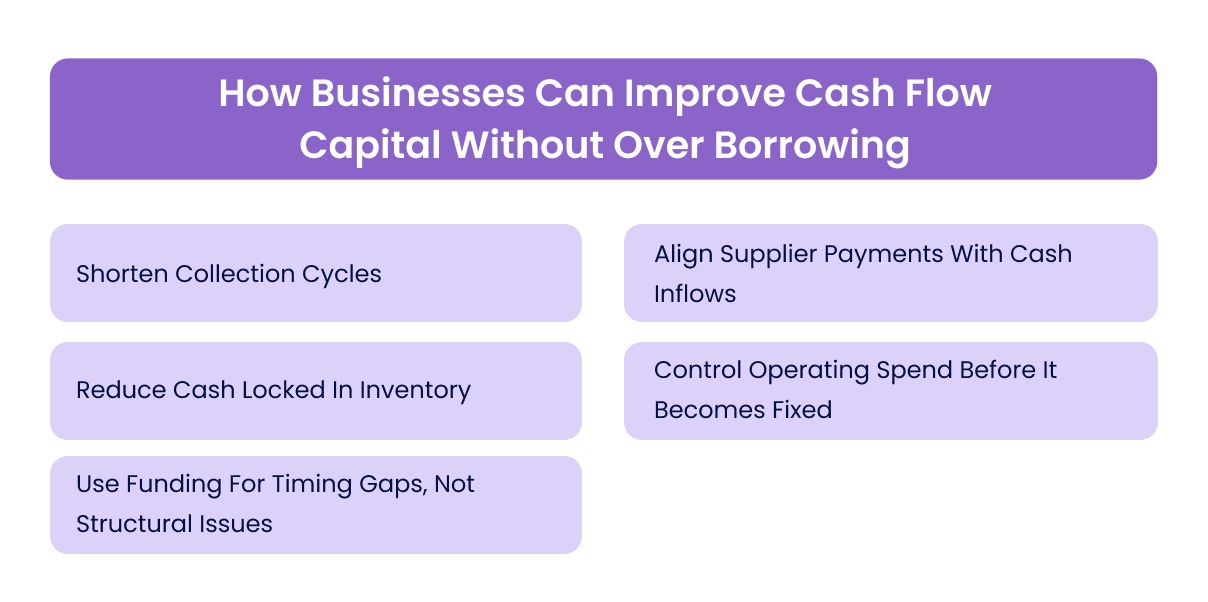
لا تعني زيادة رأس مال التدفق النقدي دائمًا جمع أموال جديدة. ففي كثير من الحالات، يمكن لتحسين كفاءة الدورة التشغيلية أن يحرر نقدًا موجودًا بالفعل داخل الشركة.
1. تقصير دورات التحصيل
يمكن لتحسين دقة إصدار الفواتير، ومتابعة التحصيل، وشروط الدفع أن يقلّص المدة اللازمة لتحويل الإيرادات إلى نقد.
وحتى التحسينات الصغيرة في توقيت التحصيل يمكن أن تحسّن السيولة بدرجة كبيرة.
2. مواءمة مدفوعات المورّدين مع التدفقات النقدية الداخلة
يساعد التفاوض على شروط دفع أفضل، أو مواءمة جداول السداد مع التدفقات الداخلة المتوقعة، على تقليص الفجوات الزمنية.
والهدف ليس تأخير المدفوعات دون مبرر، بل جعل توقيت التدفقات الخارجة أقرب إلى توقيت التدفقات الداخلة.
3. تقليل النقد المحتجز في المخزون
يمكن لتحسين تخطيط الطلب وإدارة المخزون أن يمنع فائض المخزون من احتجاز رأس المال.
ويساعد التركيز على معدل دوران المخزون بدلًا من حجمه على الحفاظ على التوازن.
4. ضبط الإنفاق التشغيلي قبل أن يتحول إلى تكلفة ثابتة
كثيرًا ما تزداد التكاليف المتكررة الصغيرة ومصروفات الفرق الموزعة تدريجيًا. ومن دون ضبطها، ترفع الحد الأدنى من النقد الذي تحتاجه الشركة.
موضوع ذو صلة: دليل «إدارة إجمالي إنفاق الشركة»
5. استخدام التمويل لسد الفجوات الزمنية لا لمعالجة المشكلات الهيكلية
ينبغي أن يدعم رأس المال الخارجي حالات عدم التوافق المؤقتة بين التدفقات الداخلة والخارجة. أما استخدام التمويل لتغطية أوجه قصور مستمرة فيزيد المخاطر على المدى الطويل.

متى يكون اللجوء إلى رأس المال الخارجي منطقيًا؟
مع أن تحسين الإجراءات الداخلية أمر ضروري، توجد حالات يكون فيها رأس المال الخارجي مناسبًا.
ويمكن أن يكون التمويل الخارجي مفيدًا في الحالات الآتية:
- عندما يكون الطلب على منتجات الشركة أو خدماتها متوقعًا، لكنها تواجه فجوات زمنية بين التدفقات الداخلة والخارجة
- عندما تتطلب فرص النمو استثمارًا مسبقًا قبل تحقق العوائد
- عندما تحتاج دورات المورّدين أو المخزون إلى دعم إضافي للسيولة
لكن الاعتماد على رأس المال الخارجي دون معالجة أوجه القصور الكامنة قد يؤدي إلى ضغط متكرر على السيولة.
والمهم هو التمييز بين احتياجات السيولة قصيرة الأجل والمشكلات الهيكلية في الدورة التشغيلية. ومن الخيارات التي يجدر فهم تكلفتها تحويل الذمم المدينة بطيئة التحصيل إلى نقد فورًا بدلًا من انتظار اكتمال الدورة.
ما الذي ينبغي أن تراجعه الفرق المالية قبل جمع رأس المال أو تخصيصه؟
قبل اتخاذ قرار بجمع رأس مال إضافي أو تخصيصه، ينبغي أن تقيّم الفرق المالية طريقة حركة النقد داخل الشركة حاليًا.
وتساعد المراجعة المنظمة على تحديد ما إذا كانت المشكلة في التوقيت، أو في ضعف الكفاءة، أو في حاجة حقيقية إلى التمويل.
| مجال المراجعة | سبب أهميته |
|---|---|
| أعمار الذمم المدينة | يبيّن مدى سرعة تحويل الفواتير إلى نقد |
| شروط الدفع للمورّدين | يوضح الالتزامات النقدية المستحقة الدفع |
| معدل دوران المخزون | يحدد النقد المحتجز في المخزون |
| التكاليف الثابتة الشهرية | يحدد الحد الأدنى المطلوب من السيولة |
| التزامات الإنفاق | يرصد الالتزامات التي لم تنعكس بعد في الرصيد النقدي |
| الانحراف عن التوقعات | يبيّن مدى موثوقية افتراضات التخطيط |
اقرأ أيضًا: مقال «نظام الرقابة على إدارة النقد في الإمارات»
كيف تساعد الآن الفرق المالية على حماية رأس مال التدفق النقدي؟
لا يتأثر رأس مال التدفق النقدي بالذمم المدينة أو المخزون أو شروط الدفع للمورّدين فحسب، بل ينشأ جزء كبير من الضغط من طريقة إدارة الإنفاق التشغيلي على مستوى الشركة.
ومع نمو الشركات، يتوزع الإنفاق على عدد أكبر من الفرق والمورّدين والأدوات. ومن دون إطار منظم، يؤدي ذلك إلى قرارات متفرقة، وتأخر الاطلاع على الإنفاق، وارتفاع الحد الأدنى من النقد الذي تحتاجه الشركة.
تساعد الآن الفرق المالية على إحكام الرقابة على مرحلة تنفيذ الإنفاق هذه، بحيث تبقى التدفقات النقدية الخارجة متوافقة مع أولويات الشركة.
- بطاقات الشركات مع ضوابط الإنفاق وقيود على المورّدين
يمكن للشركات إصدار بطاقات بحدود إنفاق محددة مع ضوابط على التجار، بما يضمن بقاء الإنفاق ضمن الحدود المعتمدة. - مسارات موافقة منظمة قبل حدوث الإنفاق
يمكن توجيه جميع المصروفات عبر مسارات موافقة قابلة للتخصيص، بحيث تُراجَع القرارات قبل الالتزام بصرف النقد. - الاطلاع الفوري على الإنفاق التشغيلي
تستطيع الفرق المالية تتبّع الإنفاق عبر الفرق والفئات لحظة حدوثه، ما يسهّل رصد التدفقات الخارجة غير الضرورية أو غير المتوقعة. - جمع الفواتير والإيصالات وتسجيل بياناتها مركزيًا
تكون جميع المعاملات مدعومة بمستندات مرتبطة بها، ما يحسّن الدقة ويقلّل الثغرات في السجلات المالية. - تسوية حسابات أدق ومزامنة مع الأنظمة المحاسبية
تضمن عمليات التكامل مع أنظمة مثل Xero وQuickBooks وNetSuite وMicrosoft Dynamics انتقال بيانات المصروفات مباشرة إلى النظام المحاسبي.
وبذلك لا يتآكل رأس مال التدفق النقدي تدريجيًا بسبب إنفاق غير مضبوط أو غير متتبَّع، وتتمكن الفرق المالية من التحرك قبل أن يبلغ الضغط على السيولة مرحلة حرجة.
اقرأ أيضًا:
- مقال «فوائد الاطلاع على الإنفاق للشركات»
- دليل «إدارة المصروفات الحديثة»
- مقال «تتبّع مصروفات الشركة وإدارتها»
الخاتمة
رأس مال التدفق النقدي ليس مقياسًا محاسبيًا رسميًا، لكنه يعكس إحدى أهم حقائق إدارة أي شركة، وهي ما إذا كانت السيولة كافية لدعم العمليات أثناء حركة النقد داخلها.
الإيرادات والأرباح والنمو كلها مهمة، لكنها لا تضمن توفر النقد عند الحاجة إليه. فتوقيت التدفقات الداخلة والخارجة، ومدى كفاءة استخدام رأس المال، هما ما يحدد قدرة الشركة على العمل دون تعثر.
ومن خلال تحسين التحصيل، ومواءمة مدفوعات المورّدين، وإدارة المخزون، وضبط الإنفاق التشغيلي، تستطيع الشركات تعزيز رأس مال التدفق النقدي دون الاعتماد المفرط على التمويل الخارجي.
إذا كنت تريد تحسين طريقة تتبّع شركتك للتدفقات النقدية الخارجة وضبطها، يمكنك التعرّف على الطريقة التي تساعد بها الآن الفرق المالية على الاطلاع المستمر على الإنفاق، وتطبيق الموافقات، وإبقاء الإنفاق متوافقًا مع الأولويات المالية. احجز عرضًا توضيحيًا اليوم!
إذا أردت معرفة حجم السيولة المتاحة لديك فعليًا في الظروف غير المواتية، فإن أداة اختبار ضغط التدفق النقدي المجانية تطبّق ستة سيناريوهات معدّة مسبقًا، وتبيّن لك المدة التي تكفيها سيولتك والتاريخ الذي ستحتاج فيه إلى اتخاذ إجراء.
الأسئلة الشائعة
1. هل رأس مال التدفق النقدي هو نفسه رأس المال العامل؟
لا، فرأس المال العامل مقياس مالي محدد يُحسب بطرح الالتزامات المتداولة من الأصول المتداولة، بينما يشير رأس مال التدفق النقدي بمعنى أوسع إلى السيولة المتاحة لدعم حركة النقد في العمليات.
2. هل يمكن أن تحقق الشركة إيرادات مرتفعة وتواجه مع ذلك مشكلات في رأس مال التدفق النقدي؟
نعم، إذا تأخرت مدفوعات العملاء أو تحمّلت الشركة التكاليف قبل استلام النقد، فقد يزيد نمو الإيرادات الضغط على السيولة المتاحة.
3. كيف يؤثر المخزون في رأس مال التدفق النقدي؟
يحتجز المخزون النقد إلى أن يُباع. ويزيد المخزون بطيء الحركة أو الفائض من حجم رأس المال اللازم لاستمرار العمليات.
4. متى ينبغي أن تلجأ الشركة إلى رأس المال الخارجي لدعم التدفق النقدي؟
يكون رأس المال الخارجي مفيدًا عند وجود فجوة زمنية مؤقتة بين التدفقات الداخلة والخارجة، لكن لا ينبغي استخدامه لتغطية أوجه قصور مستمرة.
5. ما الفرق بين فجوة التدفق النقدي ومشكلة رأس المال العامل؟
فجوة التدفق النقدي عادةً مسألة توقيت قصيرة الأجل، بينما تكون مشكلة رأس المال العامل أكثر ارتباطًا بالهيكل، وتتعلق بطريقة إدارة الأصول والالتزامات.
6. ما التقارير المالية التي تساعد على تتبّع رأس مال التدفق النقدي؟
تساعد تقارير مثل قائمة التدفقات النقدية، وأعمار الذمم المدينة، وجداول استحقاق الذمم الدائنة، وتوقعات التدفق النقدي على تكوين صورة أوضح عن السيولة وطريقة استخدام رأس المال.
Gain control over business expenses with Alaan corporate cards
Invygo earned AED 100,000 in cashback using Alaan cards
Personalise approval workflows to align with your business needs with Alaan's Spend Management platform
Discover the power of automated expense tracking and smarter spend control with Alaan
Turn data into actionable insights with Alaan's spend management tools
Stay Tax Compliant with UAE's #1 Corporate Card and Spend Management Platform
Customisable corporate card policy template
Know how much Corporate Tax you have to pay this fiscal year
Easily integrate Alaan with your ERP for accurate, real-time expense tracking
Close books faster with Alaan's AI-powered accounting automation
Reconcile your books in minutes instead of hours, every single month.
Keep petty cash organized with Alaan corporate cards and automated expense management