.avif)

تدفع كثير من الشركات ذات المسؤولية المحدودة (LLC) في الإمارات ضريبة شركات أعلى من اللازم، لا لأنها تحقق أرباحًا أكبر، بل لأن المصروفات غير الموثقة أو المصنفة خطأً ترفع أرباحها الخاضعة للضريبة دون أن تنتبه قبل موسم تقديم الإقرارات.
- تشرف الهيئة الاتحادية للضرائب (FTA) في الإمارات حاليًا على أكثر من 640,000 تسجيل في ضريبة الشركات، والتدقيق في طريقة توثيق هذه الشركات لمصروفاتها يزداد صرامة.
- تخضع الأرباح الخاضعة للضريبة حتى 375,000 درهم إماراتي لنسبة %0، وما يزيد على ذلك لنسبة %9، أي أن الضريبة تُفرض على الأرباح لا على الإيرادات، وكل مصروف غير موثق يرفع هذه الأرباح.
- الفواتير التي لم تُستلم، وأرقام التسجيل الضريبي (TRN) غير الصحيحة، والمصروفات الشخصية المدفوعة من حسابات الشركة، تُنشئ ما يمكن تسميته «الربح الخفي»، وهو مال أُنفق فعلًا لكنه ما زال يخضع للضريبة بنسبة %9.
- مصروفات ضيافة العملاء قابلة للخصم بنسبة %50 فقط في الغالب، بينما الغرامات والمشتريات الشخصية غير قابلة للخصم إطلاقًا.
- تربط منصة الآن بطاقات الشركات والموافقات والفواتير ومدفوعات المورّدين عبر SuperPay، فتبقى كل معاملة قابلة للتتبع منذ لحظة خروج المال من الشركة، ويُكتشف تسرّب الإنفاق قبل أن يتراكم.
على الأرجح لن يأتي أكثر الأخطاء الضريبية كلفة على شركتك من الهيئة الاتحادية للضرائب، بل من مصروفات لا تستطيع الشركة تبريرها بشكل صحيح بعد ستة أشهر، مثل دفعة لمورّد دون فاتورة مستوفية للمتطلبات، أو مصروف شخصي لأحد المؤسسين مدرج ضمن المصروفات التشغيلية، أو حتى إيصال مفقود يحوّل تكلفة عمل قابلة للخصم إلى ربح خاضع للضريبة.
والواقع أن معظم الشركات في الإمارات لا تدفع ضرائب زائدة لأنها تحقق أرباحًا أكبر، بل لأن صورتها المالية تفقد وضوحها قبل بدء موسم تقديم الإقرارات بوقت طويل. وهذا الضغط يتزايد بسرعة، إذ تشرف الهيئة الاتحادية للضرائب (FTA) في الإمارات حاليًا على أكثر من 640,000 تسجيل في ضريبة الشركات.
لم تعد ضريبة الدخل على الشركات ذات المسؤولية المحدودة في الإمارات مسألة امتثال فحسب، بل أصبحت مسألة ما إذا كانت أنظمتك التشغيلية ترفع التزاماتك الضريبية دون أن تدرك ذلك.
أبرز النقاط:
- ضريبة الشركات تُحتسب على الأرباح: تدفع الشركات ذات المسؤولية المحدودة في الإمارات ضريبة بنسبة %0 على الأرباح الخاضعة للضريبة حتى 375,000 درهم، و%9 على ما يزيد على ذلك، ولذلك يُعد تتبع المصروفات أساسيًا لخفض الالتزامات الضريبية.
- المصروفات غير الموثقة تُنشئ «ربحًا خفيًا»: الفواتير التي لم تُستلم، وأرقام التسجيل الضريبي غير الصحيحة، والمصروفات المتعلقة بالمؤسسين، قد تحوّل مالًا أُنفق فعلًا إلى دخل خاضع للضريبة.
- ليست كل المصروفات قابلة للخصم بالكامل: مصروفات ضيافة العملاء قابلة للخصم بنسبة %50 فقط في كثير من الأحيان، بينما تبقى الغرامات والمصروفات الشخصية غير قابلة للخصم.
- الإمارات تشدد متطلبات وضوح البيانات المالية: مع أكثر من 640,000 تسجيل في ضريبة الشركات وبدء تطبيق الفوترة الإلكترونية، تحتاج الشركات حاليًا إلى مسارات تدقيق أقوى وتوثيق فوري للمعاملات.
- الرقابة التشغيلية تساعد على الحد من التسرّب: تعتمد الشركات بشكل متزايد على أنظمة مثل منصة الآن لتوحيد الموافقات والفواتير وتتبع الإنفاق والمدفوعات في مكان واحد قبل أن يتراكم التسرّب.
ما هي ضريبة الدخل على الشركات ذات المسؤولية المحدودة في الإمارات؟
يُقصد بضريبة الدخل على الشركات ذات المسؤولية المحدودة في الإمارات ضريبة الشركات المفروضة على الأرباح الخاضعة للضريبة للشركات ذات المسؤولية المحدودة العاملة في الدولة. لكن من أكبر المفاهيم الخاطئة التي ما زالت منتشرة بين الشركات أن الضريبة تُفرض على الإيرادات. والصحيح أن الإمارات لا تفرض الضريبة على إيراداتك، بل على ما يتبقى بعد احتساب مصروفات الأعمال المسموح بها والتعديلات والإعفاءات والخصومات بشكل صحيح.
وفقًا لنظام ضريبة الشركاتفي الإمارات:
- يخضع الدخل الخاضع للضريبة حتى 375,000 درهم لنسبة %0.
- يخضع الدخل الخاضع للضريبة الذي يزيد على 375,000 درهم لنسبة %9.
وهذا يغيّر نظرة الشركات ذات المسؤولية المحدودة إلى عملياتها اليومية. فتصنيف المصروفات، وضوابط المشتريات، وتتبع الفواتير، ومسحوبات المؤسسين، والمعاملات مع الأطراف المرتبطة، والمستندات المستوفية لمتطلبات ضريبة القيمة المضافة أصبحت تؤثر مباشرة في حجم الأرباح التي تخضع للضريبة في نهاية السنة المالية.
ومن التحولات المهمة أيضًا أن ضريبة الشركات تسري على الجهات العاملة في البر الرئيسي للإمارات بصرف النظر عن جنسية المالك. كما تفترض شركات كثيرة أن الشركات ذات المسؤولية المحدودة في المناطق الحرة معفاة تلقائيًا، لكن الأهلية تعتمد على استيفاء الشركة لشروط الشخص المؤهل في المنطقة الحرة وفق التعريف الوارد في قانون ضريبة الشركات في الإمارات.
والأهم من ذلك أن ضريبة الدخل على الشركات ذات المسؤولية المحدودة لم تعد مجرد إجراء محاسبي في نهاية السنة. فالإطار الضريبي في الإمارات يتوقع بشكل متزايد أن تحتفظ الشركات بسجلات معاملات سليمة، ومستندات المورّدين، وصورة مالية واضحة، وتقارير جاهزة للتدقيق على مدار السنة، لا في موسم تقديم الإقرارات فقط.
لماذا تدفع شركات كثيرة ذات مسؤولية محدودة في الإمارات ضرائب أكثر من اللازم؟
وفقًا لإطار ضريبة الشركات في الإمارات، لا تكون المصروفات قابلة للخصم عمومًا إلا إذا تُكبّدت «بالكامل وحصرًا» لأغراض العمل ووُثقت بشكل صحيح. يبدو ذلك بسيطًا من الناحية النظرية، لكن عند التطبيق العملي تخسر شركات كثيرة ذات مسؤولية محدودة أموالًا دون أن تنتبه.
ومن أبرز الأسباب التي تجعل هذه الشركات ترفع أرباحها الخاضعة للضريبة دون داعٍ ما يلي:
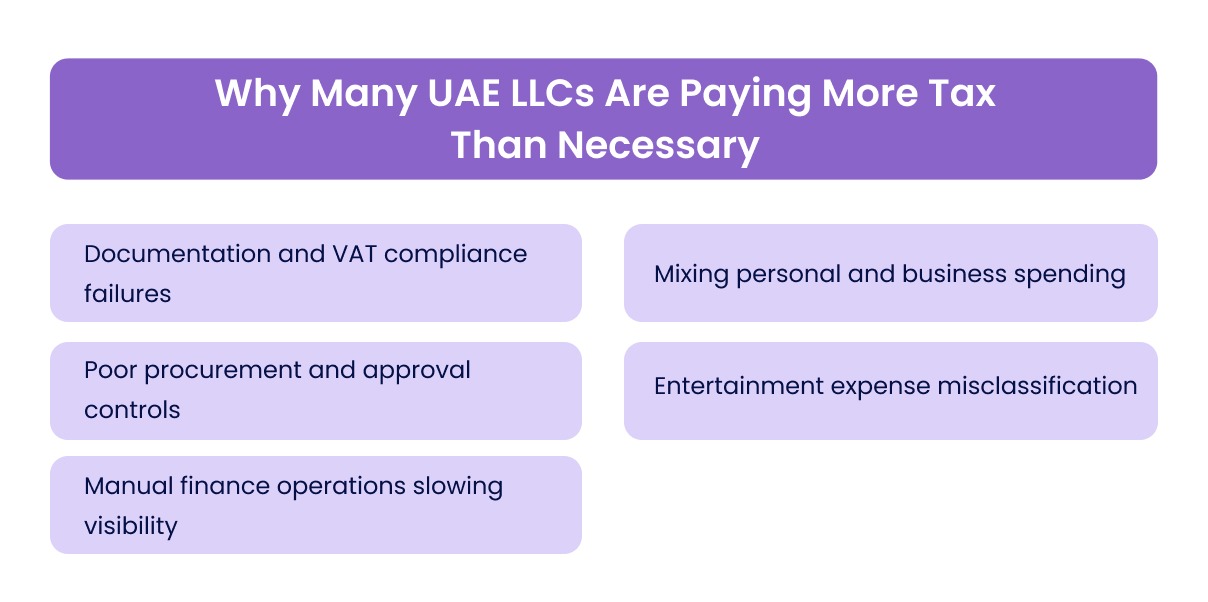
- إخفاقات التوثيق والامتثال لضريبة القيمة المضافة
الفواتير التي لم تُستلم، وأرقام التسجيل الضريبي غير الصحيحة، والإيصالات غير المكتملة، وضعف مسارات التدقيق، كلها قد تُضعف في الوقت نفسه استرداد ضريبة المدخلات وقابلية المصروفات للخصم من ضريبة الشركات، فتتحول مصروفات تشغيلية مشروعة إلى التزام ضريبي كان يمكن تجنبه. - الخلط بين المصروفات الشخصية ومصروفات العمل
وجبات المؤسسين وسفرهم واشتراكاتهم أو مشترياتهم الشخصية المدفوعة من حسابات الشركة قد تجعل هذه المصروفات غير قابلة للخصم جزئيًا أو كليًا. - ضعف ضوابط المشتريات والموافقات
المشتريات المخالفة لسياسة الشركة، والدفعات المكررة للمورّدين، وتشتت الإنفاق بين الأقسام، كلها تُنشئ في الغالب «تسرّبًا غير مرئي» لا تكتشفه الفرق المالية إلا بعد أن تكون الأرباح الخاضعة للضريبة قد تضخمت بالفعل. - الخطأ في تصنيف مصروفات الضيافة
ما زالت شركات كثيرة تفترض خطأً أن ضيافة العملاء قابلة للخصم بالكامل، مع أن قواعد ضريبة الشركات في الإمارات تحدّ من قابلية الخصم لكثير من مصروفات الضيافة لتقتصر على %50. - العمليات المالية اليدوية التي تؤخر وضوح الصورة
الشركات التي ما زالت تعتمد على جداول البيانات والموافقات عبر واتساب والتأخر في تسوية الحسابات تواجه في الغالب صعوبة في تحديد المصروفات غير القابلة للخصم أو عالية المخاطر في وقت مبكر يكفي لتصحيحها بشكل سليم.
هل تريد تقديرًا أوضح لمقدار ضريبة الشركات المستحقة فعلًا على شركتك ذات المسؤولية المحدودة في الإمارات؟ جرّب حاسبة ضريبة الشركات من منصة الآن لتقييم التزامك الضريبي المحتمل بسرعة بناءً على أرباح شركتك وخصوماتها.
وحتى الشركات التي تفهم أساسيات ضريبة الشركات تتخذ في الغالب قرارات تشغيلية بناءً على افتراضات لم تعد صحيحة في ظل الإطار الضريبي المتطور في الإمارات.
ما أبرز المفاهيم الخاطئة عن ضريبة الدخل على الشركات ذات المسؤولية المحدودة في الإمارات؟
من أكبر المشكلات المرتبطة بتطبيق ضريبة الشركات في الإمارات أن كثيرًا من مالكي الشركات ذات المسؤولية المحدودة ما زالوا يعملون وفق افتراضات تعود إلى ما قبل فرض الضريبة. والنتيجة ليست مجرد التباس في الامتثال، بل قرارات مالية تُتخذ بناءً على قواعد لا تفهمها الشركات إلا جزئيًا.
وفيما يلي بعض أكثر المفاهيم الخاطئة شيوعًا التي ما زالت تؤثر في الشركات ذات المسؤولية المحدودة في الإمارات في 2026:
| المفهوم الخاطئ | الواقع |
|---|---|
| «تُفرض الضريبة بمجرد تجاوز الإيرادات 375,000 درهم.» | تُفرض ضريبة الشركات في الإمارات على الأرباح الخاضعة للضريبة، لا على الإيرادات. |
| «الشركات ذات المسؤولية المحدودة في المناطق الحرة معفاة من الضريبة تلقائيًا.» | لا يستفيد من نسبة %0 لضريبة الشركات إلا الأشخاص المؤهلون في المنطقة الحرة (QFZP) الذين يستوفون شروطًا محددة. |
| «المصروفات الصغيرة لا تؤثر كثيرًا في الضريبة.» | تكرار المشتريات غير الموثقة والفواتير التي لم تُستلم قد يرفع الأرباح الخاضعة للضريبة تدريجيًا مع مرور الوقت. |
| «ضريبة القيمة المضافة وضريبة الشركات نظامان منفصلان.» | فواتير ضريبة القيمة المضافة، وأرقام التسجيل الضريبي للمورّدين، وجودة المستندات، تؤثر بشكل متزايد في النظامين معًا. |
| «ضيافة العملاء قابلة للخصم بالكامل.» | كثير من مصروفات الضيافة قابلة للخصم بنسبة %50 فقط وفق قواعد ضريبة الشركات في الإمارات. |
| «سيتولى المحاسب الأمر لاحقًا.» | تعتمد الجاهزية الضريبية حاليًا بدرجة كبيرة على الاطلاع على المصروفات على مدار السنة وعلى الضوابط التشغيلية. |
| «جداول البيانات تكفي.» | تتجه الإمارات نحو مسارات تدقيق رقمية أقوى، ومستندات منظمة، والجاهزية للفوترة الإلكترونية. |
وعند فهم الطريقة التي تتعامل بها الهيئة فعليًا مع فئات المصروفات المختلفة، يتحول التخطيط لضريبة الشركات من مسألة نظرية إلى ممارسة تشغيلية.
اقرأ أيضًا: قواعد ضريبة القيمة المضافة في معاملات B2B في الإمارات: دليل عملي للشركات
ما المصروفات التي يمكن للشركات ذات المسؤولية المحدودة في الإمارات خصمها وما التي لا يمكن خصمها؟
يتمثل التحدي الحقيقي لكثير من الشركات ذات المسؤولية المحدودة في الإمارات في معرفة المصروفات التي ستُقبل فعلًا عند تدقيق ضريبة الشركات لاحقًا. فقد تنفق شركتان المبلغ نفسه على عملياتهما، ومع ذلك تُصرّحان عن أرباح خاضعة للضريبة مختلفة تمامًا، بحسب طريقة تنظيم هذه المصروفات وتوثيقها وتصنيفها على مدار السنة.
وفيما يلي أهم فئات المصروفات التي ينبغي للشركات في الإمارات فهمها في 2026:
| نوع المصروف | قابلية الخصم | ما تغفل عنه الشركات في الغالب |
|---|---|---|
| رواتب الموظفين ومزاياهم | قابلة للخصم عمومًا | الحوافز المدفوعة دون مستندات داعمة أو تعديلات الرواتب غير الرسمية قد تُنشئ مخاطر امتثال. |
| البرمجيات وخدمات SaaS والأدوات الرقمية | قابلة للخصم إذا كانت متعلقة بالعمل | الاشتراكات المكررة بين الفرق تمر في الغالب دون ملاحظة حتى مرحلة تسوية الحسابات. |
| سفر العمل والإقامة | قابلة للخصم إذا كان لها مبرر تجاري | ضعف الموافقات على السفر وغياب السجلات الداعمة قد يُنشئان التزامًا ضريبيًا. |
| ضيافة العملاء | قابلة للخصم بنسبة %50 فقط | ما زالت شركات كثيرة تطالب خطأً بخصمها بالكامل وفق قواعد ضريبة الشركات في الإمارات. |
| الغرامات والجزاءات التنظيمية | غير قابلة للخصم | مخالفات المرور وغرامات عدم الامتثال والمخالفات الأخرى لا يمكن أن تخفض الدخل الخاضع للضريبة. |
| المصروفات الشخصية للمؤسسين أو المساهمين | غير قابلة للخصم | المشتريات الشخصية المدفوعة من حسابات الشركة ما زالت من أبرز مصادر المخاطر. |
ويبدأ الأثر المالي الحقيقي عندما تتراكم فجوات التوثيق هذه والمصروفات المقيدة عبر مئات المعاملات اليومية.
كيف يرفع تسرّب الإنفاق الأرباح الخاضعة للضريبة دون أن تنتبه الشركة؟
لم يعد تسرّب الإنفاق مشكلة محاسبية بسيطة، بل أصبح استنزافًا مباشرًا للسطر الأخير (صافي الربح). فبالنسبة إلى الشركة ذات المسؤولية المحدودة في الإمارات، تعامل الهيئة الاتحادية للضرائب فعليًا كل درهم يُنفق دون مسار تدقيق مستوفٍ للمتطلبات على أنه ربح لم يخرج من الشركة أصلًا.
ويُحدث تسرّب الإنفاق فجوة بين الإنفاق الفعلي والأرباح الخاضعة للضريبة من خلال ثلاث نقاط ضغط محددة:
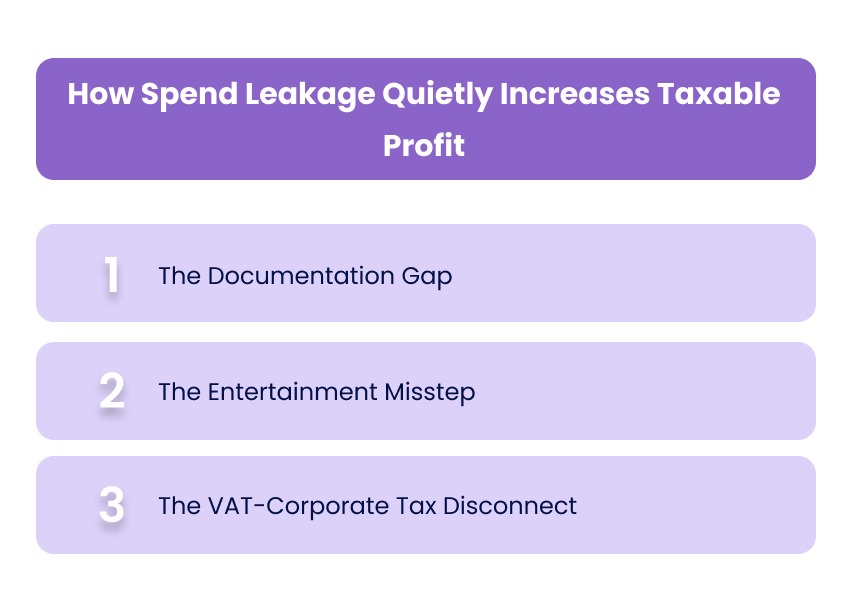
- فجوة التوثيق: وفقًا لقاعدة «بالكامل وحصرًا»، يُعد المصروف الذي لا تدعمه فاتورة صحيحة تتضمن رقم التسجيل الضريبي غير موجود قانونيًا بالنسبة إلى الهيئة. فإذا كان لدى شركتك إنفاق متسرّب بقيمة 100,000 درهم، يتراوح بين مبالغ من صندوق المصروفات النثرية لم تُسجل واشتراكات رقمية لم تُتتبع، يُعاد إضافة هذا المبلغ إلى دخلك الخاضع للضريبة. أي أنك تدفع فعليًا غرامة بنسبة %9 على مال أنفقته الشركة بالفعل.
- الخطأ في التعامل مع مصروفات الضيافة: مع أن الأقسام السابقة من هذا الدليل توضح أن ضيافة العملاء قابلة للخصم بنسبة %50 فقط، يحدث التسرّب عندما لا يُسجَّل الغرض التجاري المحدد للاجتماع لحظة الإنفاق. ومن دون هذا السياق الموثق في حينه، تُرفض في الغالب حتى وجبات العمل المشروعة بالكامل عند المراجعة، فتتحول تكلفة تجارية ضرورية إلى مبلغ خاضع للضريبة بنسبة %100.
- الفجوة بين ضريبة القيمة المضافة وضريبة الشركات: بحلول عام 2026، أصبحت الأنظمة الضريبية الرقمية في الإمارات أكثر تكاملًا. والمصروف المتسرّب يؤدي في الغالب إلى خسارة مزدوجة، إذ لا تسترد ضريبة المدخلات البالغة %5، وتخسر قيمة خصم ضريبة الشركات البالغة %9. وينتج عن ذلك خسارة إجمالية بنسبة %14 على كل معاملة غير موثقة، ما يجعل الإنفاق غير المرئي أكثر كلفة بكثير مما يبدو.
اقرأ أيضًا: دليل الإطار التنظيمي للفوترة الإلكترونية في الإمارات لعامي 2025 و2026
لماذا تؤدي الثغرات في الضوابط الداخلية إلى تدقيق خارجي؟
يُحدث الإنفاق المشتت، مثل رسوم SaaS الصغيرة المتكررة أو مدفوعات المورّدين التي تتم خارج إجراءات الشراء الرسمية، تسرّبًا متكررًا في الغالب. ومع أن كل ثغرة منها قد تبدو صغيرة، فإنها تشير للسلطات الضريبية إلى أن ضوابطك الداخلية غير كافية.
وفي ظل مستوى التطبيق الحالي، قد تؤدي هذه الأنماط إلى إجراء تدقيق ضريبي شامل، يضع سجلك المالي بأكمله تحت تدقيق مفصل.
ولفهم ذلك عمليًا، من المفيد النظر في الطريقة التي تتراكم بها الثغرات التشغيلية الصغيرة لتصبح التزامًا ضريبيًا حقيقيًا خلال سنة مالية واحدة.
كيف تخسر شركة ذات مسؤولية محدودة في الإمارات أموالًا قبل تقديم الإقرار الضريبي؟
لفهم كيفية حدوث تسرّب الإنفاق عمليًا، لنأخذ مثال شركة استشارات نموذجية تقدم خدماتها في دبي. في 2026، حققت هذه الشركة إيرادات جيدة، لكن الإدارة اكتشفت في نهاية السنة المالية أن رصيد الشركة في البنك لا يتوافق مع الأرباح الخاضعة للضريبة المصرّح عنها.
وقد أدت الفجوة بين الإنفاق التشغيلي الفعلي وما تعده الهيئة الاتحادية للضرائب مصروفًا قابلًا للخصم إلى التزام خفي كبير.
| الحالة | إجمالي الإنفاق | المعاملة الضريبية | الأثر على الأرباح الخاضعة للضريبة |
|---|---|---|---|
| ضيافة العملاء | 40,000 درهم | قابلة للخصم بنسبة %50 فقط | 20,000 درهم تُضاف إلى الأرباح الخاضعة للضريبة |
| إيصالات SaaS غير المتوفرة | 15,000 درهم | غير مقبولة للخصم (لعدم وجود إثبات) | 15,000 درهم تُضاف إلى الأرباح الخاضعة للضريبة |
| السفر الشخصي للمساهمين | 25,000 درهم | غير قابل للخصم | 25,000 درهم تُضاف إلى الأرباح الخاضعة للضريبة |
| الغرامات التنظيمية | 5,000 درهم | غير قابلة للخصم | 5,000 درهم تُضاف إلى الأرباح الخاضعة للضريبة |
| إجمالي الربح الخفي | 85,000 درهم | - | 7,650 درهم ضريبة إضافية مستحقة |
تفصيل الخسارة
أنفقت الشركة 85,000 درهم على هذه البنود خلال السنة. لكن لأن هذه التكاليف كانت إما مقيدة قانونيًا، أو موثقة بشكل ضعيف، أو ذات طبيعة شخصية، فإن الهيئة لا تأخذها في الاعتبار عند احتساب الضريبة.
ونتيجة لذلك، يتعين على الشركة دفع ضريبة بنسبة %9 على مبلغ 85,000 درهم كما لو أنه ما زال في حسابها البنكي على شكل ربح. وهذا يكلف الشركة فعليًا 7,650 درهم في مدفوعات ضريبية لا داعي لها، وهو رأس مال كان يمكن إعادة استثماره في النمو أو في مكافآت الموظفين لو سُجّل الإنفاق وصُنّف بشكل صحيح.

ومع نضج تطبيق ضريبة الشركات في الإمارات، لم يعد وضوح الصورة المالية مسألة تسهيل لمسك الدفاتر بقدر ما أصبح مسألة قدرة على الدفاع عن البيانات المالية أمام الهيئة.
لماذا أصبح الاطلاع على المصروفات أكثر أهمية بعد تطبيق ضريبة الشركات؟
مع التطبيق الكامل لضريبة الشركات حاليًا، يجب ألا تبقى أي فجوة بين إنفاقك اليومي وإقرارك الضريبي في نهاية السنة. وفيما يلي أسباب كون الاطلاع الفوري على كل درهم يُنفق هو السبيل الوحيد لحماية شركتك.
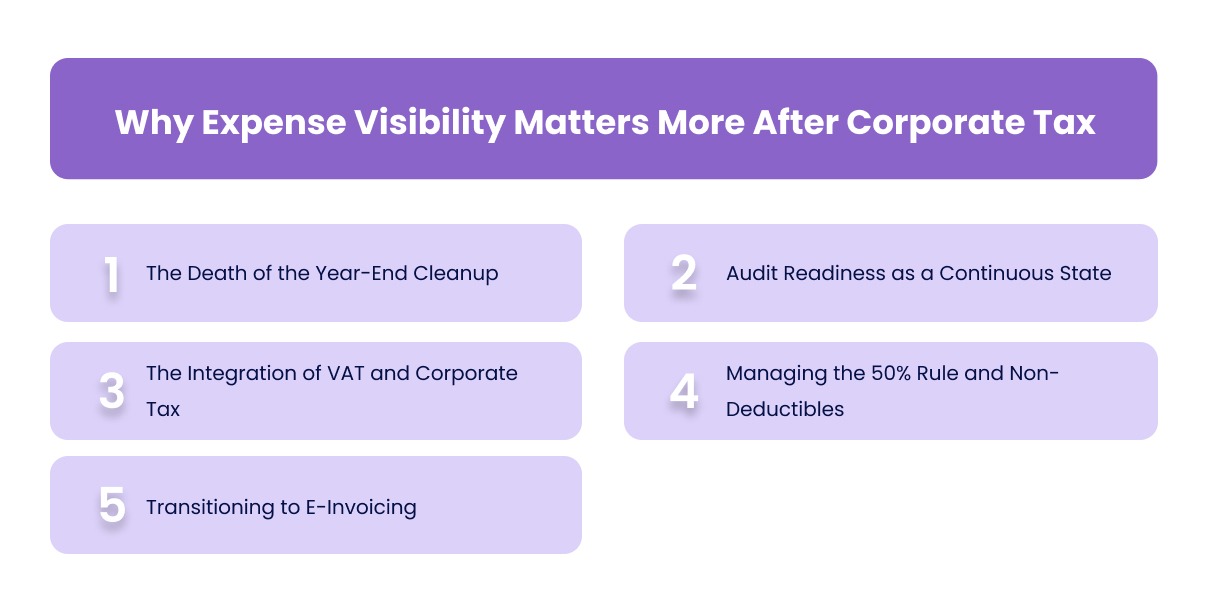
1. انتهاء أسلوب تصحيح الدفاتر في نهاية السنة
اعتادت شركات كثيرة في الإمارات الانتظار حتى نهاية السنة المالية لتصحيح دفاترها وتنظيمها. أما في ظل النظام الجديد، فقد أصبح هذا الأسلوب مصدر خطر كبير. إذ تتوقع الهيئة بشكل متزايد وضوحًا على مستوى كل معاملة، بحيث يُسجَّل كل مصروف ويُصنَّف ويُدعم بالمستندات وقت حدوثه.
وانتظار ستة أشهر للبحث عن فاتورة لم تُستلم يعني في الغالب أن الخصم قد ضاع بالفعل، لأن المستندات التي تُستكمل بأثر رجعي نادرًا ما تُقبل خلال المراجعة الرسمية.
2. الجاهزية للتدقيق حالة مستمرة
في 2026، لم يعد التدقيق عشوائيًا، بل أصبح قائمًا على المخاطر والبيانات. وتبحث الأنظمة الرقمية للهيئة عن أي تناقضات بين إقرارات ضريبة القيمة المضافة وإقرارات ضريبة الشركات الخاصة بك.
- قاعدة الـ48 ساعة: إذا طلبت الهيئة سجلات داعمة، يُطلب من الشركات في الغالب تقديمها خلال مهلة ضيقة جدًا (قد لا تتجاوز أحيانًا 48 ساعة).
- التفاصيل المفقودة: من دون الاطلاع الفوري على الإنفاق، يصبح تحديد الغرض التجاري المحدد لدفعة غير واضحة أُجريت قبل أشهر شبه مستحيل، ما يؤدي إلى رفض الخصم واحتمال فرض غرامات.
3. التكامل بين ضريبة القيمة المضافة وضريبة الشركات
أصبحت سجلات ضريبة القيمة المضافة حاليًا الدليل الرئيسي لدعم مطالباتك في ضريبة الشركات. فإذا كانت لديك صورة كاملة عن الإنفاق، يمكنك التأكد من أن كل فاتورة مورّد تتضمن رقم التسجيل الضريبي (TRN) اللازم وتستوفي متطلبات الشكل الإلزامية.
وإذا كان المصروف موثقًا بما يكفي لاسترداد ضريبة القيمة المضافة، فإنه في الغالب موثق بما يكفي ليُقبل عند تدقيق ضريبة الشركات. ومن دون هذا التطابق، تواجه خطر دفع الضريبة مرتين على المعاملة نفسها.
اقرأ أيضًا: إعداد الفاتورة الضريبية لضريبة القيمة المضافة في الإمارات
4. إدارة قاعدة الـ%50 والمصروفات غير القابلة للخصم
كما أوضحنا في التفصيل السابق، لا تُعامل كل المصروفات بالطريقة نفسها. والاطلاع الفوري على الإنفاق يتيح لك تصنيف المصروفات لحظة حدوثها.
- التصنيف التلقائي: تصنيف وجبة على أنها ضيافة عملاء يطبّق فورًا استبعاد نسبة %50 في توقعاتك الضريبية، فتحصل على صورة فورية لالتزامك الضريبي الفعلي.
- الغرامات والمصروفات الشخصية: يمنع الاطلاع الفوري اختلاط الغرامات الحكومية أو المصروفات الشخصية للمساهمين بالمصروفات التشغيلية عن طريق الخطأ، وهو مؤشر خطر شائع يؤدي إلى تحقيقات أعمق من الهيئة.
5. الانتقال إلى الفوترة الإلكترونية
مع توجه الإمارات نحو الفوترة الإلكترونية الإلزامية بدءًا من منتصف 2026، ستتمكن الهيئة قريبًا من الاطلاع المباشر على معاملاتك بين الشركات (B2B). فلم يعد الاطلاع على المصروفات يتعلق بما تراه أنت فقط، بل بما تراه الجهات الحكومية أيضًا. وجاهزية أنظمتك الداخلية لهذا المستوى من الشفافية هي ما يحدد الفرق بين تقديم إقرار دون عقبات وأزمة امتثال.
وبالنسبة إلى الشركات ذات المسؤولية المحدودة في الإمارات، أصبح الحد من التسرّب الضريبي يعتمد على طريقة تنظيم الأنظمة التشغيلية على مدار السنة أكثر من اعتماده على التصحيحات في نهاية السنة.

كيف تستعد الشركات ذات المسؤولية المحدودة في الإمارات لعام 2026؟
الانتقال من بيئة خالية من الضرائب إلى نظام منظم لضريبة الشركات يتطلب أكثر من مجرد تغيير البرنامج المحاسبي. ولحماية هوامش الربح وضمان الامتثال الكامل في 2026، يجب على الشركات ذات المسؤولية المحدودة في الإمارات اعتماد استراتيجية استباقية تمتد على مدار السنة.
وفيما يلي الخطوات الأساسية لأي شركة ذات مسؤولية محدودة تسعى إلى التعامل بفعالية مع البيئة الضريبية الحالية:
1. تقييم الأهلية لإعفاء الأعمال الصغيرة
مددت حكومة الإمارات العمل بنظام إعفاء الأعمال الصغيرة (SBR) لدعم الأشخاص الخاضعين للضريبة المقيمين. فإذا بقيت إيرادات شركتك دون حد 3 ملايين درهم في الفترة الضريبية الحالية والفترات السابقة، فقد يكون بإمكانك اختيار تطبيق هذا الإعفاء.
- الميزة: تُعامل شركتك على أنها لم تحقق أي دخل خاضع للضريبة عن تلك الفترة.
- التحفظ: يظل عليك التسجيل في ضريبة الشركات والاحتفاظ بسجلات دقيقة لإثبات أن إيراداتك بقيت دون الحد.
اقرأ أيضًا: كيفية تقديم الإقرارات الضريبية للشركات الصغيرة
2. توحيد إجراءات المشتريات والتوثيق
في 2026، تولي الهيئة الاتحادية للضرائب اهتمامًا أكبر بجودة المستندات. ولم يعد كشف الحساب البنكي وحده كافيًا لتبرير أي مصروف.
- جمع فواتير ضريبية صحيحة: تأكد من أن كل مورّد يقدم فاتورة ضريبية كاملة تتضمن رقم التسجيل الضريبي الخاص به والاسم القانوني لشركتك.
- وضع سياسات للمصروفات: طبّق قواعد واضحة تحدد ما يُعد مصروف عمل وما يُعد مصروفًا شخصيًا، لمنع تسرّب المصروفات غير القابلة للخصم قبل حدوثه.
3. مراجعة المعاملات مع الأطراف المرتبطة
المعاملات بين الشركات الشقيقة أو المدفوعات للمساهمين أمر شائع في كثير من الشركات ذات المسؤولية المحدودة. ووفقًا لقانون ضريبة الشركات، يجب أن تستوفي هذه المعاملات مبدأ السعر المحايد.
- القيمة السوقية: تأكد من أن أي خدمات أو قروض أو مدفوعات إيجار بين الأطراف المرتبطة تتم بالقيمة السوقية العادلة.
- مستندات أسعار التحويل: احتفظ بملف لأسعار التحويل يبرر هذه التكاليف، لأن الهيئة تدقق في هذه المعاملات عن كثب لمنع تحويل الأرباح.
4. مواءمة تقارير ضريبة القيمة المضافة وضريبة الشركات
من أكثر الأخطاء التي تقع فيها الشركات ذات المسؤولية المحدودة شيوعًا وجود عدم تطابق بين إقرارات ضريبة القيمة المضافة وإقرارات ضريبة الشركات.
- تسوية الحسابات كل ثلاثة أشهر: قارن بانتظام قيمة التوريدات والمصروفات المصرّح عنها في إقرارات ضريبة القيمة المضافة مع دفاترك المحاسبية.
- معالجة الفروقات: إذا أظهرت إقرارات ضريبة القيمة المضافة إيرادات بقيمة 1 مليون درهم بينما أظهر إقرار ضريبة الشركات 900,000 درهم، فمن المرجح أن يُطلق ذلك تنبيهًا تلقائيًا بوجود خطر في نظام تقييم المخاطر لدى الهيئة.
5. الاستعداد لتطبيق الفوترة الإلكترونية
تتجه الإمارات نحو إطار إلزامي للفوترة الإلكترونية (النموذج اللامركزي للإيرادات) خلال 2026.
- التكامل الرقمي: تأكد من أن أنظمتك المالية قادرة على إصدار الفواتير الإلكترونية المنظمة واستلامها وفق المعايير الجديدة في الإمارات.
- التقارير الفورية: يعني هذا التحول أن الهيئة ستطّلع بشكل شبه فوري على معاملاتك بين الشركات (B2B)، فتصبح التعديلات اليدوية بأثر رجعي من الماضي.
6. إجراء تقييم مهني للأثر الضريبي
إذا كانت شركتك تعمل في أكثر من نطاق اختصاص أو تحمل رخصة منطقة حرة، فإن وضعها الضريبي أكثر تعقيدًا بكثير.
- الدخل المؤهل: حدد ما إذا كانت شركتك في المنطقة الحرة تستوفي المعايير الصارمة للبقاء شخصًا مؤهلًا في المنطقة الحرة (QFZP) بنسبة %0.
- تحقيق أقصى استفادة من الخصومات: تعاون مع مستشار ضريبي لتحديد جميع الخصومات المشروعة، مثل المخصصات الرأسمالية وحدود خصم مصروفات الفائدة، التي يمكن أن تخفض أرباحك الخاضعة للضريبة بشكل قانوني.
ولهذا تحديدًا تعيد فرق مالية كثيرة في الإمارات النظر في طريقة الربط التشغيلي بين الإنفاق والموافقات والفواتير ومسارات العمل المحاسبية.
كيف تساعد منصة الآن الشركات ذات المسؤولية المحدودة في الإمارات على الحد من التسرّب الضريبي؟
بالنسبة إلى كثير من الشركات ذات المسؤولية المحدودة في الإمارات، لا ينتج التسرّب الضريبي عن احتيال كبير أو إخفاق محاسبي، بل يتراكم تدريجيًا بسبب ثغرات تشغيلية، مثل الموافقة على مصروفات دون معرفة سياقها، ورفع الفواتير في وقت متأخر جدًا، وتوزع المدفوعات على أنظمة غير مترابطة، ومحاولة الفرق المالية استنتاج الغرض التجاري من المعاملة بعد أشهر من حدوثها.
وهذه هي الفجوة التشغيلية التي صُممت منصة الآن لمعالجتها.
فبدلًا من أن تقتصر منصة الآن على دور مزود لبطاقات الشركات أو أداة لتتبع المصروفات، فإنها تعمل بوصفها بنية تحتية متكاملة لإدارة الإنفاق للشركات في الإمارات. إذ تربط المنصة إنفاق الموظفين والموافقات والفواتير واسترداد المصروفات والمزامنة مع الأنظمة المحاسبية ومدفوعات المورّدين في نظام واحد، فتبقى المعاملات قابلة للتتبع منذ لحظة خروج المال من الشركة.
ومن الطرق التي تساعد بها منصة الآن على الحد من تسرّب الإنفاق تشغيليًا:
- بطاقات الشركات من منصة الآن تربط المعاملات مباشرة بالموظفين والأقسام والموافقات والتجار والإيصالات، ما يقلل عدد المصروفات التي يصعب تبريرها أو تسويتها لاحقًا.
- الاطلاع الفوري على الإنفاق يتيح للفرق المالية معرفة الفواتير التي لم تُستلم، والاشتراكات المكررة، والمعاملات غير المعتادة، والمشتريات المخالفة للسياسة في وقت أبكر، قبل بدء تسوية الحسابات في نهاية الشهر.
- مسارات عمل إدارة المصروفات تجمع الإيصالات وطلبات استرداد المصروفات والمستندات الداعمة في مكان واحد، فلا تتوزع السجلات المالية بين رسائل البريد الإلكتروني وجداول البيانات والموافقات عبر المحادثات.
- المزامنة التلقائية مع الأنظمة المحاسبية تخفف ضغط تسوية الحسابات يدويًا، وتقلل احتمال عدم تطابق المعاملات بين السجلات التشغيلية والأنظمة المحاسبية.
- أدوات جمع الفواتير وتسجيل بياناتها وتصنيفها تساعد الشركات على الاحتفاظ بالمستندات الداعمة في وقت أقرب إلى لحظة المعاملة، بدلًا من الاعتماد على جمعها لاحقًا بأثر رجعي.
- ضوابط الإنفاق والموازنات على مستوى الأقسام تساعد على الحد من المشتريات التشغيلية غير المضبوطة التي تُنشئ في الغالب مع مرور الوقت مصروفات غير موثقة أو غير قابلة للخصم.
- SuperPay، وهي بنية منصة الآن لمدفوعات المورّدين والمدفوعات الدولية، تجمع مدفوعات المورّدين وموافقات الدفع وربط الفواتير بالمدفوعات وتتبع التحويلات في مسار عمل واحد، بدلًا من توزيعها بين البوابات المصرفية والإجراءات المالية اليدوية.
- السجلات الموحدة للإنفاق والمدفوعات تسهّل على الفرق المالية الربط بين الفواتير والموافقات وسجلات الدفع والقيود المحاسبية عند الاستعداد لمراجعات ضريبة القيمة المضافة أو ضريبة الشركات.
الخلاصة
الشركات التي ستتعامل مع ضريبة الشركات على أفضل وجه خلال السنوات القليلة المقبلة ليست بالضرورة تلك التي تنفق أقل، بل تلك التي تستطيع تبرير إنفاقها بأسرع وقت.
بالنسبة إلى كثير من المؤسسين، لا تتمثل الخطوة العملية التالية في توسيع الفرق المالية أو تعقيد إجراءات الامتثال، بل في ضبط الممارسات اليومية الصغيرة التي تحدد الأرباح الخاضعة للضريبة مع مرور الوقت، مثل مراجعة الاشتراكات المتكررة في البرمجيات كل ثلاثة أشهر، ووضع قواعد أكثر صرامة للمشتريات الشخصية، وتوحيد فواتير المورّدين مبكرًا، وتقليل عدد المعاملات الموزعة بين المحادثات ورسائل البريد الإلكتروني وجداول البيانات.
وهذا الوضوح التشغيلي هو ما يدفع مزيدًا من الشركات في الإمارات إلى اعتماد منصات متخصصة، مثل منصة الآن، لجمع الإنفاق والموافقات والفواتير واسترداد المصروفات والمدفوعات في مسار عمل واحد مترابط، بدلًا من محاولة تجميع كل ذلك بعد أشهر.
وإذا كنت تدرس كيف يمكن لشركتك الحد من تسرّب الإنفاق قبل أن يتحول إلى التزام ضريبي كان يمكن تجنبه، فإن حجز عرض توضيحي مخصص مع منصة الآن قد يكون نقطة انطلاق مفيدة.
وللاطلاع على القواعد التي يستند إليها كل ذلك، بما فيها النسب والتسجيل والمواعيد النهائية لتقديم الإقرارات، يقدم دليل «ضريبة الشركات في الإمارات» الصورة الكاملة.
الأسئلة الشائعة
1. هل يتعين على كل شركة ذات مسؤولية محدودة في الإمارات دفع ضريبة الشركات؟
لا. لا تُستحق ضريبة الشركات في الإمارات إلا عندما تحقق الشركة ذات المسؤولية المحدودة أرباحًا خاضعة للضريبة تزيد على 375,000 درهم. وتخضع الأرباح الخاضعة للضريبة التي تقل عن هذا الحد حاليًا لنسبة %0، بينما تخضع الأرباح التي تزيد عليه لنسبة %9. وقد تتأهل أيضًا بعض الجهات في المناطق الحرة لمعاملة مختلفة إذا استوفت شروط الشخص المؤهل في المنطقة الحرة (QFZP).
2. هل جميع مصروفات الأعمال قابلة للخصم الضريبي في الإمارات؟
لا. يجب أن تُتكبد المصروفات بالكامل وحصرًا لأغراض العمل حتى تكون قابلة للخصم. وقد تكون بعض الفئات، مثل الغرامات والمصروفات الشخصية وأجزاء من مصروفات الضيافة، مقيدة أو غير قابلة للخصم بالكامل.
3. هل ضيافة العملاء قابلة للخصم بالكامل وفق ضريبة الشركات في الإمارات؟
في الغالب لا. فكثير من مصروفات ضيافة العملاء قابلة للخصم بنسبة %50 فقط وفق قواعد ضريبة الشركات في الإمارات، بحسب طريقة تصنيف المصروف وتوثيقه.
4. ما السجلات التي يجب على الشركات ذات المسؤولية المحدودة في الإمارات الاحتفاظ بها للامتثال لضريبة الشركات؟
يجب على الشركات الاحتفاظ بالفواتير الضريبية والإيصالات والموافقات والعقود والسجلات المحاسبية ومستندات ضريبة القيمة المضافة وسجلات الرواتب والأدلة الداعمة للمعاملات. وتشترط الهيئة الاتحادية للضرائب عمومًا الاحتفاظ بالسجلات لمدة سبع سنوات على الأقل.
5. ما الذي يرفع الالتزامات الضريبية للشركات ذات المسؤولية المحدودة في الإمارات؟
ضعف إدارة الفواتير، والإنفاق التشغيلي غير الموثق، والمصروفات الشخصية المدفوعة من حسابات الشركة، وعدم التطابق في ضريبة القيمة المضافة، وضعف ضوابط الموافقات، من أكثر الأسباب شيوعًا التي تجعل الشركات ترفع أرباحها الخاضعة للضريبة دون قصد.
Gain control over business expenses with Alaan corporate cards
Invygo earned AED 100,000 in cashback using Alaan cards
Personalise approval workflows to align with your business needs with Alaan's Spend Management platform
Discover the power of automated expense tracking and smarter spend control with Alaan
Turn data into actionable insights with Alaan's spend management tools
Stay Tax Compliant with UAE's #1 Corporate Card and Spend Management Platform
Customisable corporate card policy template
Know how much Corporate Tax you have to pay this fiscal year
Easily integrate Alaan with your ERP for accurate, real-time expense tracking
Close books faster with Alaan's AI-powered accounting automation
Reconcile your books in minutes instead of hours, every single month.
Keep petty cash organized with Alaan corporate cards and automated expense management