.avif)


The difference between fixed price and variable price becomes more important when costs move quickly. A supplier agreement that looks manageable at signing can affect cash flow very differently if usage rises, input costs change, or market-linked charges move against the business.
That risk is visible in current global cost conditions. The World Bank’s latest Commodity Markets Outlook projects energy prices to surge by 24% in 2026 and overall commodity prices to rise by 16%, driven by higher energy, fertiliser, and metals prices. For UAE businesses exposed to logistics, fuel, imports, materials, or FX-linked supplier pricing, variable cost exposure can become a direct budgeting issue.
Fixed pricing can give finance teams more predictability when scope and usage are stable. Variable pricing can give the business flexibility, but it requires closer monitoring because costs may change before budgets or forecasts are updated.
In this blog, we will explain the difference between fixed price and variable price, how each model affects business spending, where fixed and variable costs fit in, and how finance teams can manage both with better visibility and controls.
TL;DR / Key Takeaways
- Fixed pricing gives businesses more budget certainty when scope, usage, and contract terms are clear.
- Variable pricing gives businesses flexibility, but it can create budget variance when usage, demand, market prices, or exchange rates change.
- Fixed price and fixed cost are related but not identical; a fixed-price agreement can still include overages, add-ons, or scope changes.
- Variable pricing should be monitored more closely because costs can rise gradually before finance teams see the full cash impact.
- The right pricing model depends on usage patterns, supplier risk, budget sensitivity, contract terms, and the business’s ability to track spend in real time.
What Fixed Price Means
A fixed price is an agreed amount that remains the same for a defined product, service, scope, or time period. It is commonly used in subscription-based services, retainers, long-term supplier contracts, and project-based work where deliverables are clearly defined.
For finance teams, fixed pricing provides a level of predictability. Monthly expenses can be planned more easily, and budgets can be allocated with fewer surprises. This is particularly useful when managing recurring commitments such as software subscriptions or service contracts.
However, fixed pricing is only as reliable as the scope behind it. If the scope is unclear, or if the agreement allows for add-ons, overages, or changes, the final cost may not remain truly fixed. In practice, many “fixed” contracts still include variation clauses or additional charges that can affect the total spend.
Also Read: Recurring Expenses Examples Vs Non Recurring
What Variable Price Means
A variable price changes based on predefined factors such as usage, volume, demand, or external market conditions. Instead of committing to a fixed amount, the business pays in proportion to how much it consumes or based on how certain inputs fluctuate.
This model is common in areas such as usage-based software, logistics, fuel costs, utilities, commission-based services, and any supplier agreement linked to market rates or foreign exchange.
Variable pricing introduces flexibility. Businesses do not need to commit to a fixed cost when usage is uncertain, which can be beneficial during periods of growth or fluctuation. However, this flexibility comes with a trade-off. Costs become less predictable, and finance teams need stronger monitoring to avoid unexpected increases.
Related: Understanding Spend Visibility Business Benefits
Fixed Price Vs Variable Price
The difference between fixed and variable pricing becomes clearer when viewed across key business factors. Each model affects cost predictability, flexibility, and financial planning in different ways.
Neither model is inherently better. The choice depends on how stable the business’s usage patterns are and how much flexibility is required.

Fixed Price Vs Variable Cost
The terms “price” and “cost” are often used interchangeably, but they refer to different concepts. Pricing describes how a supplier charges for a product or service, while cost describes how that expense behaves within the business.
Fixed costs remain relatively stable regardless of output, while variable costs change with business activity. For example, rent is typically a fixed cost, while raw materials or commission-based payments are variable.
A fixed price can result in a fixed cost, but this is not always the case. A fixed-price contract may include variable elements such as usage limits or additional charges. Similarly, a variable pricing model may still become predictable over time if usage patterns stabilise.
Understanding this distinction helps finance teams interpret cost behaviour more accurately and avoid confusion when analysing expenses.
Also Read: Fixed Variable Periodic Expenses Explained
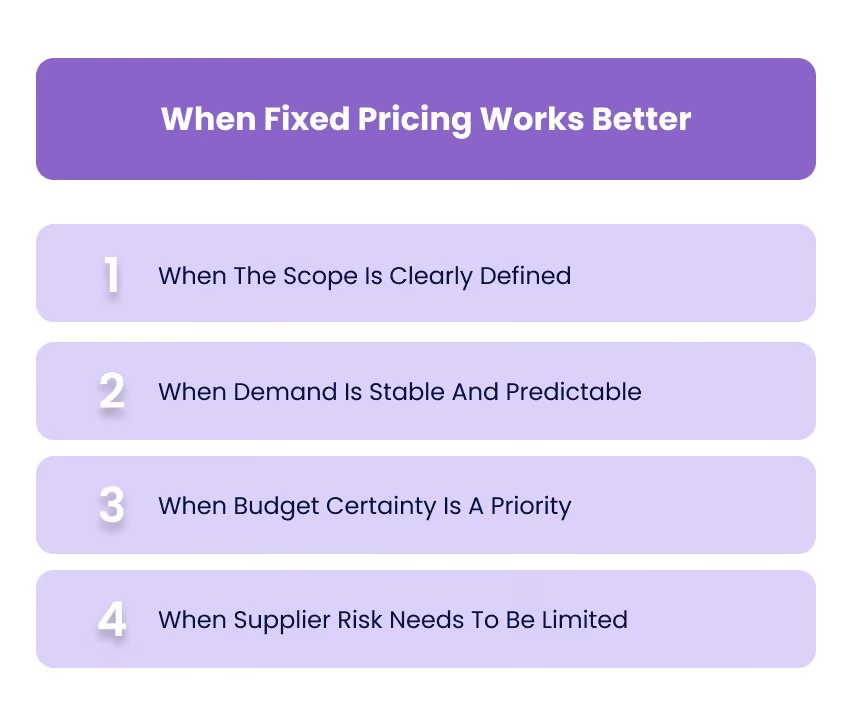
When Fixed Pricing Works Better
Fixed pricing is most effective when the business can define its requirements clearly and expects relatively stable usage. In these situations, predictability becomes more valuable than flexibility, especially for finance teams managing budgets and committed spend.
1. When The Scope Is Clearly Defined
Fixed pricing works best when the deliverable is specific and measurable. For example, a software subscription with defined features or a service contract with clear deliverables reduces ambiguity and limits the need for ongoing adjustments.
When scope is unclear, fixed pricing often leads to change requests, add-ons, or renegotiations, which can undermine the original predictability.
2. When Demand Is Stable And Predictable
If the business expects consistent usage, a fixed price can simplify cost planning. This is common in recurring services such as accounting support, IT maintenance, or long-term vendor agreements.
In these cases, the business is less likely to overpay for unused capacity and benefits from stable monthly costs.
3. When Budget Certainty Is A Priority
Finance teams often prefer fixed pricing when managing departmental budgets or planning cash flow. Predictable expenses make it easier to allocate resources, track performance, and avoid unexpected cost spikes.
This is particularly relevant for businesses operating with tight margins or fixed revenue cycles.
4. When Supplier Risk Needs To Be Limited
Fixed pricing can help protect against price fluctuations, especially in volatile markets. If the supplier absorbs part of the risk, the business gains more stability in its cost structure.
However, this often comes at a premium, as suppliers may price in that risk when setting the fixed rate.
Also Read: Create Effective Financial Plan
When Variable Pricing Works Better
Variable pricing becomes more effective when the business needs flexibility or when demand and usage are uncertain. Instead of committing to a fixed cost, the business pays in proportion to actual consumption or changing conditions.
1. When Usage Is Uncertain
If demand fluctuates, a variable pricing model prevents the business from committing to costs it may not fully utilise. This is common in early-stage growth, seasonal businesses, or when testing new tools and services.
2. When Costs Should Align With Revenue
Variable pricing can help match costs more closely with revenue. For example, commission-based services or transaction-based pricing ensures that expenses scale with business activity rather than remaining fixed.
This can reduce financial pressure during slower periods.
3. When Flexibility Is More Valuable Than Predictability
In some cases, the ability to scale usage up or down is more important than having a fixed monthly cost. This is relevant for businesses expanding into new markets or adjusting operations frequently.
4. When Pricing Is Linked To External Factors
Certain costs cannot be fixed easily because they depend on external variables such as fuel prices, exchange rates, or market-driven supplier costs. In these cases, variable pricing reflects the commercial reality of the market.
OECD’s March 2026 Economic Outlook notes that higher energy prices are expected to keep G20 inflation higher in 2026, with G20 inflation projected at 4.0% before easing to 2.7% in 2027, which reinforces why variable pricing linked to external inputs needs active monitoring.
Related: Cash Flow Forecasting
How Fixed And Variable Pricing Affect Cash Flow
The choice between fixed and variable pricing has a direct impact on how cash moves through the business. It influences not just the amount of spend, but also the predictability and timing of cash outflows.
Fixed pricing provides consistency. Monthly outflows are easier to forecast, and finance teams can plan payments with greater confidence. This makes budgeting more straightforward and reduces the risk of unexpected cash shortages.
Variable pricing introduces variability. Costs may rise or fall depending on usage or market conditions, which makes cash flow planning more complex. Without proper tracking, businesses may only realise the impact after expenses have already been incurred.
The key differences from a cash flow perspective include:
- Forecast Accuracy improves with fixed pricing but requires monitoring under variable pricing
- Cash Buffer Planning is easier when outflows are predictable
- Spend Volatility increases with variable pricing, especially during growth or demand spikes
- Payment Timing Sensitivity becomes more important when costs fluctuate
Over time, businesses often use a combination of both models. Fixed pricing supports stability, while variable pricing allows flexibility where needed.
Related: Cash Flow Operating Activities Guide
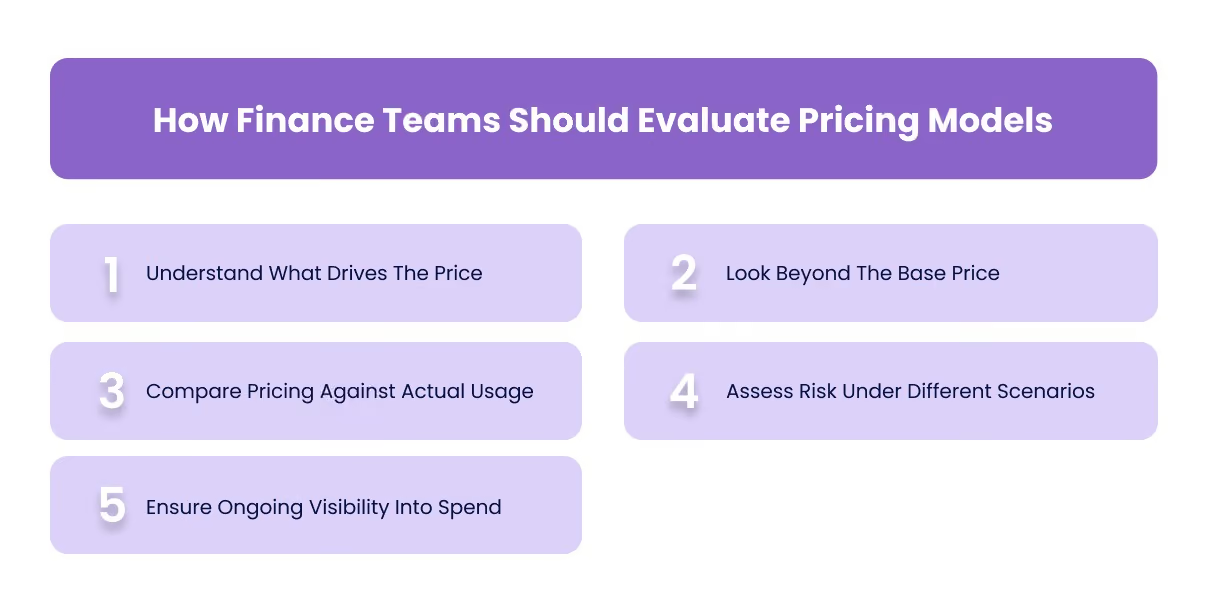
How Finance Teams Should Evaluate Pricing Models
Choosing between fixed and variable pricing is not just a procurement decision. It is a financial decision that affects cost structure, risk exposure, and operational flexibility. Finance teams need to evaluate pricing models beyond the headline number.
1. Understand What Drives The Price
The first step is identifying what actually determines the cost. This may include usage, transaction volume, time, market rates, or contractual terms.
Without this clarity, it becomes difficult to predict how costs will behave over time.
2. Look Beyond The Base Price
The quoted price often does not reflect the full cost. Additional elements such as setup fees, overage charges, minimum commitments, renewal terms, and hidden add-ons can significantly affect total spend.
3. Compare Pricing Against Actual Usage
A fixed price may seem efficient, but it only works if usage is consistent. Similarly, a variable price may appear flexible but can become expensive if usage scales quickly.
Evaluating historical or expected usage helps determine which model is more cost-effective.
4. Assess Risk Under Different Scenarios
Finance teams should consider how pricing behaves under different conditions. For example:
- What happens if usage doubles?
- What happens if demand drops?
- How does pricing change if external factors shift?
This helps avoid unexpected cost increases.
5. Ensure Ongoing Visibility Into Spend
Regardless of the pricing model, continuous tracking is essential. Without visibility into how costs are evolving, businesses may not detect issues until they affect budgets or cash flow.
Also Read: What is Expense Analysis & How to Analyse Business Expenses
Common Mistakes When Comparing Fixed And Variable Prices
Choosing between fixed and variable pricing often looks straightforward at the surface level. In practice, many businesses make decisions based on incomplete comparisons, which leads to cost inefficiencies or unexpected financial pressure later.
1. Comparing Only The Headline Price
The most common mistake is focusing only on the base price without understanding the full cost structure. A lower fixed price may exclude additional services, while a variable price may include charges that only appear under certain conditions.
Without reviewing the complete pricing model, the comparison becomes misleading.
2. Ignoring Actual Usage Patterns
A fixed price may appear expensive if usage is low, but it can become efficient if usage is consistent or high. Similarly, a variable price may seem flexible initially but can become costly as usage increases.
Decisions should always be based on realistic usage expectations rather than assumptions.
3. Treating Fixed Pricing As Risk Free
Fixed pricing reduces variability, but it does not eliminate risk. If the business overestimates its needs, it may end up paying for unused capacity. If the contract includes add-ons or scope changes, the cost may still increase.
4. Underestimating Variable Price Fluctuations
Variable pricing introduces exposure to changes in demand, usage, or external factors. Without proper monitoring, costs can rise gradually and go unnoticed until they affect budgets or cash flow.
5. Overlooking Add Ons And Overage Charges
Many pricing models include thresholds, after which additional charges apply. These are often missed during initial evaluation but can significantly increase total spend.
6. Reviewing Pricing Only At Renewal Time
Waiting until contract renewal to review pricing limits the ability to control costs proactively. Regular monitoring allows businesses to identify trends and adjust usage or supplier relationships earlier.
Related: Track And Manage Business Expenses
How Alaan Helps Businesses Control Fixed And Variable Spend
Once a pricing model is chosen, the real challenge shifts to execution. Even the most carefully negotiated pricing structure can lose its effectiveness if spending is not controlled, tracked, and documented properly.
At Alaan, we focus on this execution layer, helping finance teams maintain visibility and control over both fixed and variable expenses as they occur.
- Corporate Cards With Spend Controls And Vendor Restrictions
Businesses can issue cards with defined limits and merchant-level controls, ensuring that spending aligns with approved categories and supplier agreements. - Structured Approval Workflows Before Spend Happens
Expenses can be routed through configurable approval flows, helping prevent unplanned or unnecessary spending before it impacts cash flow. - Real Time Visibility Into Spend Across Categories
Finance teams can track spending by supplier, category, and team as it happens, making it easier to identify trends and detect unexpected increases in variable costs. - Centralised Receipt And Invoice Capture
All supporting documents are linked directly to transactions, improving transparency and making it easier to validate both fixed and variable charges. - Cleaner Reconciliation And Accounting Integration
Integrations with systems like Xero, QuickBooks, NetSuite, and Microsoft Dynamics ensure that expense data flows into accounting accurately, reducing manual effort and improving reporting reliability.

With better visibility and structured controls, businesses can manage fixed commitments more confidently and monitor variable costs before they create financial pressure.
Also Read: Modern Expense Management Guide
Conclusion
The choice between fixed price and variable price is not about which model is better in general. It is about which model fits the nature of the expense, the stability of demand, and the level of financial control the business needs.
Fixed pricing offers predictability and simplifies budgeting when usage is stable and scope is clear. Variable pricing provides flexibility and aligns costs with activity, but requires closer monitoring to avoid unexpected increases.
For finance teams, the focus should be on understanding how pricing structures behave over time and ensuring that spending remains visible and controlled throughout the month. When pricing decisions are supported by clear approvals, real-time tracking, and accurate documentation, both fixed and variable costs become easier to manage.
If you want to improve how your business tracks and controls spend across different pricing models, you can explore how Alaan helps finance teams maintain visibility, enforce approvals, and keep expense data accurate from transaction to reconciliation. Book a demo to see how better spend control can improve financial predictability.
Frequently Asked Questions
1. Can A Fixed Price Contract Still Have Extra Charges
Yes. A fixed price may apply only to the agreed scope. Add-ons, usage beyond limits, change requests, delivery fees, renewal clauses, or out-of-scope work can increase the final cost.
2. Why Do Suppliers Sometimes Prefer Variable Pricing
Variable pricing helps suppliers avoid taking on too much risk when costs depend on usage, market rates, fuel, raw materials, labour hours, or foreign exchange movement. It allows pricing to adjust when input costs change.
3. How Should A Business Compare Fixed And Variable Pricing
The comparison should include expected usage, worst-case usage, fees, caps, exclusions, renewal terms, and payment timing. A fixed price is not automatically cheaper, and variable pricing is not automatically riskier.
4. Is Variable Pricing Better For Startups Or Growing Companies
It can be better when demand is uncertain and the business wants to avoid fixed commitments. However, variable pricing can become expensive quickly if usage scales faster than expected.
5. How Do Fixed And Variable Prices Affect Budgeting
Fixed pricing makes budgets easier to forecast because the amount is more predictable. Variable pricing requires closer monitoring because costs may change month to month based on usage, volume, or external factors.
6. When Should Finance Teams Renegotiate A Pricing Model
Renegotiation may be needed when usage patterns change, variable costs become consistently high, fixed commitments are underused, supplier terms no longer match business needs, or spend visibility shows repeated budget variance.
Gain control over business expenses with Alaan corporate cards
Invygo earned AED 100,000 in cashback using Alaan cards
Personalise approval workflows to align with your business needs with Alaan's Spend Management platform
Discover the power of automated expense tracking and smarter spend control with Alaan
Turn data into actionable insights with Alaan's spend management tools
Stay Tax Compliant with UAE's #1 Corporate Card and Spend Management Platform
Customisable corporate card policy template
Know how much Corporate Tax you have to pay this fiscal year
Easily integrate Alaan with your ERP for accurate, real-time expense tracking
Close books faster with Alaan's AI-powered accounting automation
Reconcile your books in minutes instead of hours, every single month.
Keep petty cash organized with Alaan corporate cards and automated expense management