.avif)


Running a business in the UAE comes with its own set of financial challenges, and understanding where your money is coming from and where it’s going is key to staying ahead.
An income statement is the essential tool that shows you the full picture, highlighting revenue, expenses, and profits over a specific period. For businesses in the UAE, where financial transparency and compliance with regulations like VAT are crucial, the income statement offers more than just a summary of performance; it helps you make informed decisions that can drive growth.
Managing a fast-growing startup or an established company in the UAE, mastering your income statement can uncover areas for improvement and set a clear path for financial success. This guide will break down everything you need to know about income statements, how to prepare them, and how they can help your business thrive in the competitive UAE market.
Key Takeaways
- The income statement is a crucial financial tool that tracks revenue, expenses, and profit, providing a clear view of a business's financial health over a set period.
- For businesses in the UAE, the income statement plays a vital role in ensuring compliance with VAT and tax regulations, supporting accurate reporting for audits.
- By analysing the statement’s margins, it becomes easier to identify areas where businesses can improve profitability and cost management, essential for growth in the UAE’s competitive market.
- Regularly reviewing your income statement helps in making data-driven decisions on pricing, budgeting, and operational adjustments that align with financial goals.
- Solutions like Alaan help simplify income statement preparation by automating expense tracking, ensuring accurate, clean financial records for smoother month-end reporting.
Income Statement Meaning in Accounting
The income statement, along with the balance sheet and cash flow statement, forms the core of financial reporting. It shows a company’s revenue, expenses, and profitability over a specific period, offering insight into operational performance.
The balance sheet details assets and liabilities at a given moment, while the cash flow statement tracks cash inflows and outflows, highlighting liquidity.
For businesses in the UAE, keeping up with these financial statements is essential for VAT compliance, accurate tax filings, and financial transparency.
Accrual Basis vs. Cash View
- Accrual accounting records revenue when earned and expenses when incurred, giving a more accurate representation of a company’s financial health.
- Cash accounting only records transactions when cash is received or paid. This method can mislead in the UAE market, where businesses often operate on credit and need to account for VAT.
For UAE businesses, accrual accounting is the preferred method for VAT compliance and financial reporting. It ensures that tools like Alaan’s real-time visibility help businesses accurately track expenses, taxes, and earnings.
What the Statement Can and Cannot Tell You?
The income statement provides key insights into profitability, showing how much revenue is earned and how it compares with expenses. It also highlights tax liabilities, helping businesses plan for VAT and other taxes in the UAE.
However, it doesn’t offer a full picture of cash flow or asset management. A company might be profitable but face cash flow challenges due to delayed payments or unpaid receivables.
For businesses in the UAE, understanding these nuances is vital. Alaan's automated solutions ensure businesses maintain accurate cash flow and VAT tracking, helping them stay on top of their financial health and sustain growth.
Must Read: Understanding Financial Statements for Beginners Guide

Why Is the Income Statement Important?
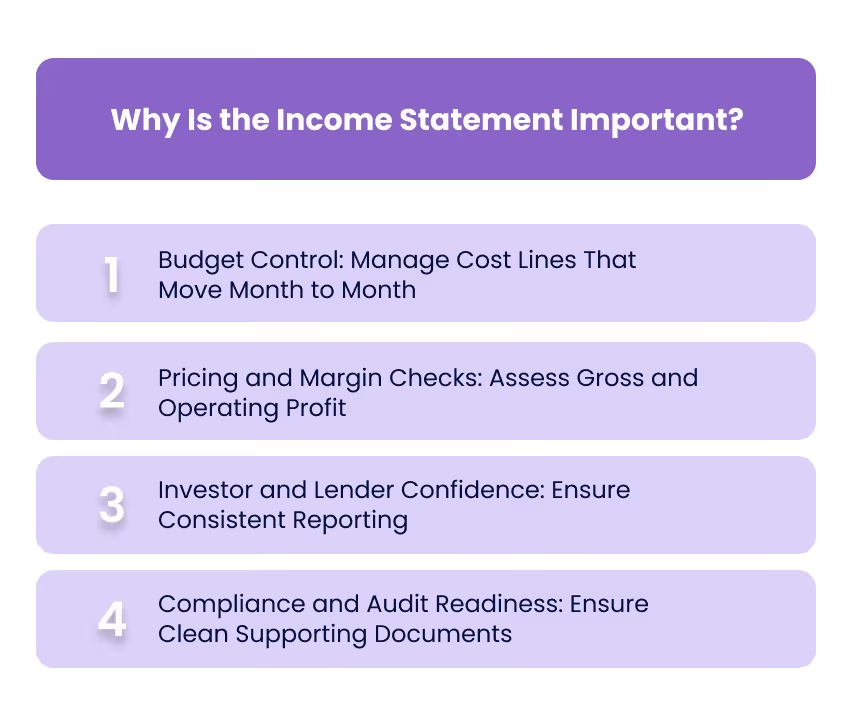
The income statement is a key financial document that provides insight into a company’s revenue, expenses, and profitability. It helps businesses make informed decisions, track financial performance, and ensure compliance with regulations, especially in the UAE.
1. Budget Control: Manage Cost Lines That Move Month to Month
The income statement is essential for tracking variable costs such as marketing, utilities, and salaries. It helps businesses in the UAE monitor expenses month-to-month and adjust quickly to stay profitable.
2. Pricing and Margin Checks: Assess Gross and Operating Profit
By reviewing gross profit and operating profit margins, the income statement reveals how much of your revenue is retained after covering costs. It’s crucial for pricing decisions and improving overall profitability.
3. Investor and Lender Confidence: Ensure Consistent Reporting
An accurate and consistent income statement builds confidence with investors and lenders, ensuring they see reliable financial performance when evaluating your business for funding or loans.
4. Compliance and Audit Readiness: Ensure Clean Supporting Documents
In the UAE, compliance with VAT regulations and audit readiness are crucial. The income statement plays a key role in validating tax filings and maintaining financial transparency, ensuring your business stays on track for audits and tax reviews. Alaan’s automated tools make it easier to capture and organise documents for audit readiness.
Income Statement Format and Layout
The format of an income statement is designed to present a clear picture of a company's financial performance over a specific period. Understanding its layout is key to accurate financial reporting and decision-making.
- What the Header Includes: The income statement typically includes the company name, the reporting period (e.g., monthly, quarterly, annually), and the currency used for the figures. For businesses in the UAE, it's essential to ensure that this information is clearly stated for transparency and consistency.
- Typical Ordering (Top Line to Bottom Line): The top line starts with revenue or sales, followed by cost of goods sold (COGS), resulting in gross profit. From there, operating expenses are subtracted to arrive at operating income. Non-operating items such as interest or taxes are listed next, leading to the net income or profit/loss at the bottom.
- IFRS-Based Presentation: Most businesses in the UAE follow IFRS (International Financial Reporting Standards) for financial reporting, which outlines specific requirements for the presentation and structure of income statements. This ensures businesses comply with regulatory standards, making their reports universally understandable to investors and regulators alike.
The Main Sections and Line Items
Understanding the main sections and line items of the income statement is critical for accurate financial reporting. This clarity ensures that businesses in the UAE can track revenue, costs, and profit effectively, while staying compliant with local regulations like VAT.
Explanation of Key Sections:
- Revenue: The starting point, showing total income generated by your primary business activities. In the UAE, accurate reporting of revenue is essential for VAT compliance, particularly when distinguishing between taxable and non-taxable income.
- Cost of Sales / COGS: This includes direct costs associated with producing goods or services sold during the period. For businesses in the UAE, correctly accounting for direct costs helps in calculating accurate gross profit and is critical for VAT deductions where applicable.
- Gross Profit: The difference between revenue and COGS. It provides insight into the core profitability of the business, helping companies assess if their core activities are generating enough revenue after covering direct costs.
- Operating Expenses: This includes indirect costs like marketing, salaries, and overheads. In the UAE, accurately categorising these costs is crucial for managing operating margins and maintaining compliance with local tax rules.
- Operating Profit: Also known as EBIT (Earnings Before Interest and Tax), this figure represents profit from core operations, helping assess the efficiency of the business without external factors like taxes or interest.
- Finance Costs: This includes interest paid on loans and other financing expenses. In UAE businesses, correctly categorising these expenses ensures accurate profitability calculations and financial health assessments.
- Tax: The income tax owed, often based on net income or specific tax incentives. UAE businesses need to ensure that VAT and corporate tax obligations are properly reflected here, along with any applicable tax credits or deductions.
- Net Profit: This is the final line, representing the actual profitability after all expenses, including taxes. It shows whether the business has generated a profit or incurred a loss for the period.
Single-Step vs Multi-Step Income Statements
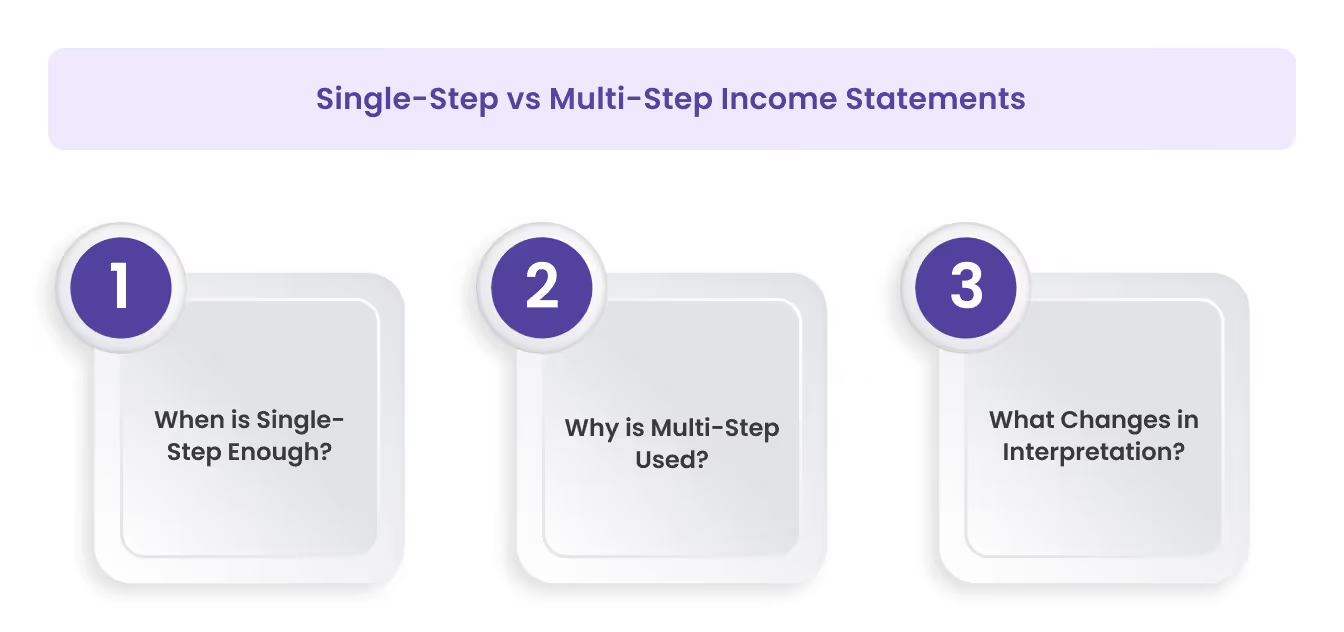
When preparing an income statement, businesses in the UAE often face a choice between using a single-step or multi-step format. Both serve the same fundamental purpose: showing revenue, expenses, and profit. However, the level of detail differs depending on the needs of the business.
When is Single-Step Enough?
A single-step income statement is straightforward, summarising all revenue and expenses in one simple calculation. It’s ideal for small businesses or startups in the UAE that need a quick snapshot of profitability without complex breakdowns.
It is also more cost-effective and quicker to prepare, making it useful for businesses with fewer transactions or less detailed operational tracking.
Why is Multi-Step Used?
A multi-step income statement breaks down revenues and expenses into distinct categories, providing a more detailed view of a business’s financial performance. It is commonly used by larger UAE companies or those that require detailed financial analysis for external stakeholders, such as investors or lenders.
The multi-step format separates operating performance from non-operating activities, offering clear subtotals for:
- Gross profit: Revenue minus the cost of goods sold (COGS).
- Operating income: Profit after operating expenses.
- Net income: Final profit after interest and taxes.
This format provides more granular insights into business performance, making it easier to identify areas for improvement.
What Changes in Interpretation?
- Gross Margin Visibility: In a multi-step income statement, you can easily see gross margin, the difference between revenue and COGS. This is important for UAE businesses with product lines or services that need to track profitability at the core operational level.
- Operating vs Non-Operating Income: The multi-step format distinguishes between operating income (from core business activities) and non-operating income (like interest or investment gains), providing a clearer picture of what drives your business’s profit.
Suggested Read: Guide to Preparing Financial Statements Efficiently
Income Statement Example (Simple Walkthrough)
To better understand how an income statement works, let’s walk through a simple example with numbers. This example will demonstrate the key subtotals and what each tells you about your business’s performance. In the UAE, businesses can use this format to track profitability and make informed decisions on budgeting and operational efficiency.
What Each Subtotal Tells You:
- Gross Profit (AED 300,000): This is your revenue minus the cost of goods sold (COGS). It shows how much money you have left after covering the direct costs of producing your goods or services. For UAE businesses, this helps assess whether the core business activities are generating healthy profits.
- Operating Profit (AED 200,000): This figure subtracts operating expenses (like marketing, salaries, and rent) from gross profit. It’s crucial for understanding how well your business is managing its core operations, excluding interest, taxes, and other non-operating activities.
- Net Profit (AED 153,000): This is the final line and represents your bottom-line profit after all expenses, including finance costs and taxes, have been deducted. It shows the company’s true profitability and is a key indicator of financial health.
How to Prepare an Income Statement Step by Step
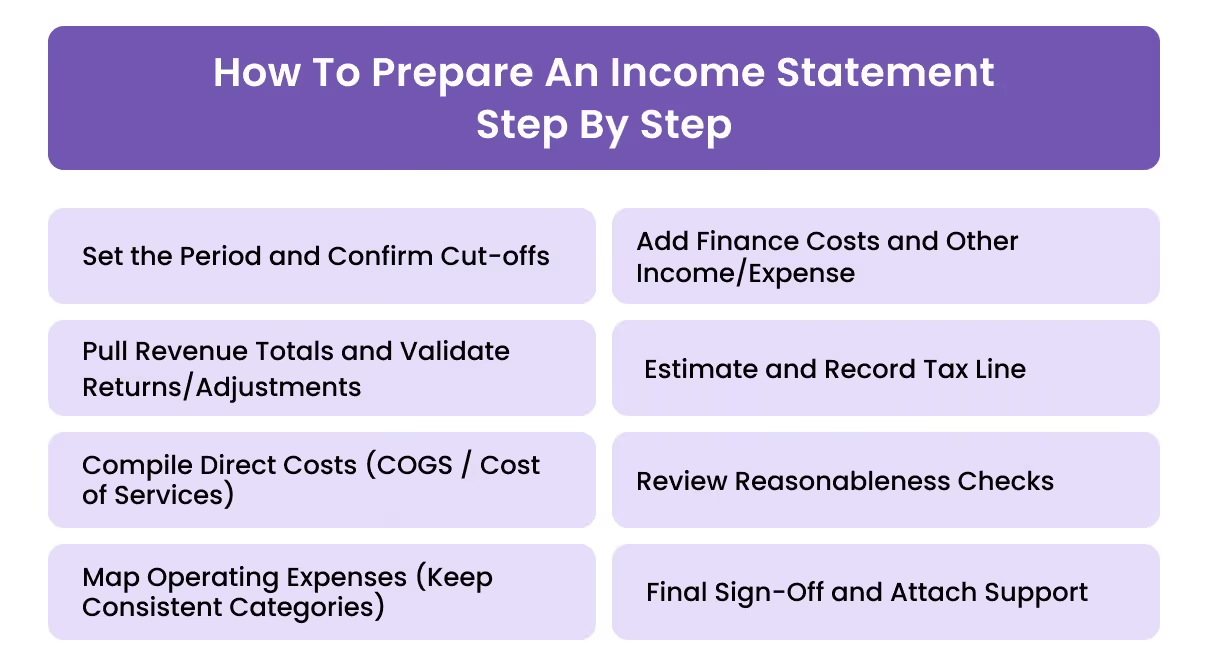
Preparing an income statement is crucial for tracking your company’s financial health. The process involves gathering financial data, categorising it correctly, and ensuring compliance with local regulations, such as VAT in the UAE.
Below is a step-by-step guide to help you prepare an accurate income statement for your business.
1. Set the Period and Confirm Cut-offs
- Choose the time frame for the income statement: monthly, quarterly, or annually.
- Confirm cut-off dates to ensure that only relevant transactions within the selected period are included. This is especially important for UAE businesses that deal with monthly or quarterly VAT returns.
2. Pull Revenue Totals and Validate Returns/Adjustments
- Gather all revenue sources: sales of goods, services rendered, or other income streams.
- Validate returns or adjustments: Ensure returns, discounts, and adjustments are accurately reflected, especially in the UAE, where VAT impacts pricing and revenue recognition.
3. Compile Direct Costs (COGS / Cost of Services)
- Calculate the cost of goods sold (COGS) or cost of services: This includes direct expenses like raw materials, labour costs, and production costs.
- For UAE businesses, make sure to track any import duties or VAT on purchases as part of COGS to ensure compliance with VAT regulations.
4. Map Operating Expenses (Keep Consistent Categories)
- Categorise operating expenses: These include salaries, rent, utilities, marketing, and other indirect costs.
- Use consistent categories from month to month or year to year. This helps with trend analysis and budgeting.
- In the UAE, track VAT-exempt expenses separately to ensure accurate reporting.
5. Add Finance Costs and Other Income/Expense
- Include any interest expense on loans, finance costs, and other income not related to core business activities (e.g., investment income).
- For businesses in the UAE, ensure that foreign exchange gains/losses are also recorded if applicable, particularly in cross-border transactions.
6. Estimate and Record Tax Line (High-Level Note: Rules Vary by Jurisdiction)
- Estimate tax obligations: Record income tax based on your profit (note: the UAE currently does not have a federal corporate tax, but companies must account for VAT and other levies).
- For UAE businesses, it's critical to distinguish between VAT and any corporate tax obligations, particularly if the business is operating in multiple jurisdictions.
7. Review Reasonableness Checks (Margin, Large Variances, Unusual Items)
- Check for consistency: Review gross margins and operating margins to ensure they align with expectations.
- Investigate large variances or any unusual items such as one-off costs or extraordinary income.
- Make sure there are no misclassifications of operating vs non-operating income/expenses. This is particularly important for UAE businesses as incorrect VAT handling can lead to compliance issues.
8. Final Sign-Off and Attach Support (Invoices, Contracts, Payroll Summaries)
- Final review: Cross-check the income statement for any inconsistencies or missing data.
- Attach supporting documentation for all expenses, such as invoices, contracts, payroll summaries, and VAT invoices. For UAE businesses, this step ensures that all VAT-related expenses are backed up and ready for potential audits.
Close Checklist:
- Revenue Totals: Confirm all income streams are accounted for.
- Cost of Goods Sold (COGS): Ensure direct costs are correctly classified.
- Operating Expenses: Check for consistency in category usage.
- Tax Line: Confirm accurate VAT and tax calculations.
- Supporting Documents: Attach all necessary receipts and contracts.
How to Read and Analyse an Income Statement
Reading and analysing an income statement helps finance teams understand the financial health of a business. It’s not just about reviewing numbers, but interpreting what those numbers say about profitability, cost management, and sustainability. Here's how to approach it:
1. Three Core Questions: Margin, Cost Control, Sustainability
When analysing your income statement, ask yourself:
- Margin: Are your profit margins (gross and operating profit) in line with expectations? This is crucial for identifying whether your core operations are profitable, especially in the UAE, where costs can fluctuate due to factors like import duties and VAT.
- Cost Control: Are your operating expenses under control? In fast-moving sectors like retail or construction in the UAE, controlling costs is essential for profitability.
- Sustainability: Is your net profit sustainable, or is it driven by one-off gains or non-recurring items? In the UAE, ensuring that profits aren’t overstated is crucial for long-term growth.
2. Vertical View: Each Line as a Percentage of Revenue
Use vertical analysis to evaluate the income statement by comparing each line item to total revenue. This gives you a clearer view of where money is being spent and how efficiently it's being used. For instance:
- COGS as a percentage of revenue shows the cost of producing goods or services.
- Operating expenses as a percentage of revenue help identify any overheads or inefficiencies.
This approach is particularly helpful in the UAE, where VAT and currency fluctuations can impact margins, and businesses need to ensure cost efficiency.
3. Period Comparison: Month-on-Month, Year-on-Year
- Month-on-month comparisons help you track short-term financial performance and spot cash flow issues, especially important in UAE businesses, where delayed payments or seasonal fluctuations can impact revenue.
- Year-on-year comparisons give a clearer view of long-term performance and growth trends, allowing businesses to benchmark against industry standards and make data-driven decisions for the future.
Comparing periods helps you see where you are progressing and where corrective actions might be needed.
4. Red Flags to Watch For
Keep an eye on these potential red flags:
- Revenue spikes without cash alignment: If revenue increases but cash flow doesn’t follow, there may be issues with credit sales or delayed payments, common in UAE businesses that deal with extended payment terms.
- Rising operating costs: If operating costs rise without a corresponding increase in revenue, it could indicate inefficiencies or unsustainable growth.
- Margin compression: If gross margins or operating margins are shrinking, this could signal price pressures or rising costs that are outpacing revenue growth, particularly in competitive markets in the UAE.
Income Statement vs Balance Sheet vs Cash Flow
Understanding the differences between these three core financial statements is crucial for businesses in the UAE. Each serves a unique purpose and helps answer a different financial question. Here's a quick comparison:
Use to understand liquidity, ensuring there is enough cash for day-to-day operations, particularly important in the UAE, where cash flow management is critical for growth.
This table makes it easy to quickly understand the distinct roles of each statement in the financial picture of a UAE business. While the income statement helps track profitability, the balance sheet gives a snapshot of financial health, and the cash flow statement ensures you have the liquidity to operate effectively.
Understanding when to use each helps businesses make better financial decisions and stay compliant with local regulations.
How Alaan Helps Finance Teams Keep Statements Clean
At Alaan, we help finance teams streamline their financial processes and ensure accurate, clean income statements.
- Capture Spend at Source: With our corporate cards and built-in controls (top-up model), we ensure real-time tracking of all expenses, reducing errors and missed entries.
- Real-Time Receipt Collection and Checks: Automated receipt collection and verification eliminate missing support for transactions, ensuring audit readiness and compliance.
- Automated Coding and ERP Integrations: Our system offers automated coding suggestions, making month-end reporting seamless. We integrate with popular tools like Xero, QuickBooks, NetSuite, and Microsoft Dynamics, supporting your existing workflows for cleaner financial statements.
Note: We are not accounting software. Alaan complements your accounting tools by automating expense management and integrating with your current systems.

Conclusion
An income statement is a vital financial document that shows your business's revenue, expenses, and profitability over a specific period. It helps assess performance, track costs, and inform key decisions, making it essential for businesses in the UAE to stay on top of their financial health.
To ensure your income statement is accurate, it’s important to follow a structured process, tracking revenue, categorising costs, and ensuring all supporting documents are in place. With Alaan, you can streamline expense capture and reconciliation for cleaner, more efficient financial reporting.
Learn more about automating expense capture and reconciliation with Alaan. Schedule a free demo today.
FAQs
Q1. What is an income statement, and why do businesses in the UAE use it?
An income statement is a financial report that summarises a company’s revenue, expenses, and profit or loss over a specific period. UAE businesses use it to assess operational performance, monitor profitability, and support VAT reporting and compliance with financial regulations.
Q2. How often should a business prepare an income statement?
Most companies prepare income statements monthly, quarterly, and annually to track performance over time. Monthly statements help with short‑term budget checks, while quarterly and annual reports support strategic planning and compliance, including VAT reporting requirements in the UAE.
Q3. What are the main components of an income statement?
Key components include revenue (top line), cost of goods sold (COGS), gross profit, operating expenses, operating profit, finance costs, tax, and net profit. Recognising each component accurately helps business owners and finance teams evaluate profitability and cost control.
Q4. How does an income statement differ from a balance sheet?
The income statement reports financial performance over a period by showing profits and expenses. In contrast, a balance sheet shows a company’s financial position at a specific point in time by detailing assets, liabilities, and equity. Both are used together to give a full financial picture.
Q5. Can an income statement show cash flow details?
No. An income statement shows profitability, not the actual cash movements. For cash flow insights, businesses must use a cash flow statement, which tracks the timing of cash inflows and outflows. This distinction is important for UAE businesses to avoid assuming profit equals available cash.
Gain control over business expenses with Alaan corporate cards
Invygo earned AED 100,000 in cashback using Alaan cards
Personalise approval workflows to align with your business needs with Alaan's Spend Management platform
Discover the power of automated expense tracking and smarter spend control with Alaan
Turn data into actionable insights with Alaan's spend management tools
Stay Tax Compliant with UAE's #1 Corporate Card and Spend Management Platform
Customisable corporate card policy template
Know how much Corporate Tax you have to pay this fiscal year
Easily integrate Alaan with your ERP for accurate, real-time expense tracking
Close books faster with Alaan's AI-powered accounting automation
Reconcile your books in minutes instead of hours, every single month.
Keep petty cash organized with Alaan corporate cards and automated expense management