.avif)
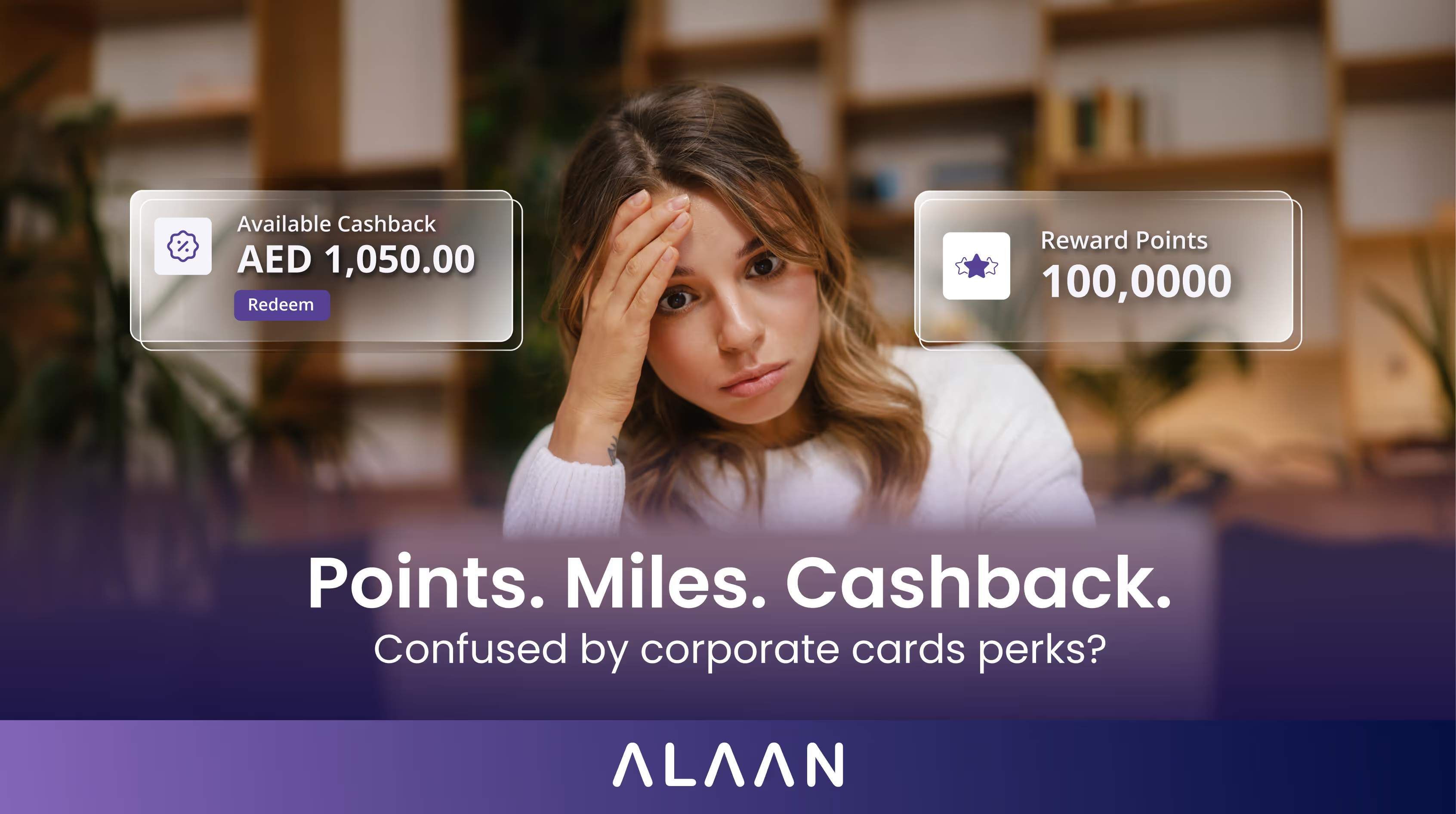

Corporate card points can look generous but often convert to around 0.2% once caps and restrictions bite, while straightforward cash back can return 2%.
- On AED 1,000,000 of company spend, a points programme that looks generous at 0.1 to 0.3 points per dirham often works out to about 0.2% cash back once you account for caps and low-multiplier categories, while straight cash back can return 2%.
- Cash back is what it sounds like: a percentage of your spend returned as cash, usable for anything, with no points to track or expire.
- Points and miles feel valuable because the reward is disconnected from what it actually costs the provider, but restrictions, conversion caps, blackout dates, and quiet devaluation tend to shrink that value.
- The high multipliers usually apply to a narrow slice of spend, so before you are swayed by a big points number, work out its real worth in dirhams.
When it comes to corporate card rewards, the decision between reward points and cash back can feel like standing at a crossroads. Each path offers its own set of benefits, but which one should you opt for? Let’s take a closer look at exactly how corporate card cashback and points work, and how you can choose between the two.
Cashback is exactly what it sounds like, you get a certain percentage of your spending back in cash. It's straightforward and easy to understand.
Reward points, on the other hand, come in the form of points or miles you earn for each dirham spent. These can be redeemed for travel, shopping, or other perks. But often, they can be confusing.
Rewards are only one part of the decision — see the wider set of corporate expense card features worth weighing first.
When faced with the choice of corporate card rewards, businesses often wonder why there's a divide between points and cashback offerings. This decision boils down to the strategies corporate card providers use to attract and retain customers:
Cashback is a straightforward concept: companies return a portion of the transaction amount to you as cash. It's a direct, transparent reward that reflects a percentage of your spending back to your account.
Rewards points, however, introduce several layers of complexity. The strategy here is about perceived value; points can seem lucrative because they disconnect the reward from the actual cost to the provider, and this can be misleading. Points often come with restrictions, such as limited redemption options or fluctuating point values, making it challenging to leverage them fully. For example, points might be devalued over time, requiring more points for the same conversion for flight miles, subtly diminishing their value.
This situation ultimately comes down to how card providers handle the interchange revenue they earn from merchants when you use your card. The goal? To give out as little as possible while making it seem like a lot. It's all about creating a layer of complexity that makes it hard to see just how much - or how little - you're actually getting back. The more complicated the system, the easier it is for providers to hold onto a larger portion of the interchange revenue.
Understanding the real value of cashback versus points requires a practical example. Assuming a business spends AED 1,000,000 across various categories and is tempted by offers of 0.1-0.3 points per dirham of spend on certain expenses, the actual return might not be as lucrative as initially expected. This discrepancy is due to the fact that most spending does not qualify for these high multipliers and is instead subject to a lower rate, leading to a lower overall value.
Further, the amount of points that can be transferred annually is capped. To illustrate, consider the corresponding conversions:
Example points conversion:

In the above example, the actual value generated is equivalent to 0.2% cashback. This can vary widely between reward programs. It's important for you to carefully review the fine print of the program to understand the exact conversion rates. You can then use websites such as The Points Guy to calculate the equivalent dollar or dirham value of points/miles. Here is an example calculator.
Example cash back conversion:

In the above example, the actual value generated is 2% cashback.
When you really look at how much points are worth, you see that what sounds like a great deal at first might not give you as much back as you thought. Corporate card providers need to make money from the interchange fees they charge for each card use, meaning the offered rewards will always be calibrated to ensure the provider's profitability.
This scenario highlights the importance of closely examining rewards programs and understanding their actual value in terms of AED, rather than being swayed by seemingly high points.
So what's the better option, cash back or rewards?
Choosing between cash back and rewards depends on what you value more: simplicity and versatility or the potential for perks. Cash back offers a straightforward benefit—you get a percentage of your spending returned to you in cash. This means immediate value that can be used for any business need, without having to juggle points, worry about their expiration, or navigate restrictions and blackout dates.
On the flip side, reward points seem attractive initially but they come with their own complexities. The supposed high-value rewards are not as accessible as they seem, due to restrictions, conversion caps, blackout dates, or the potential for devaluation. Moreover, the attractive points multipliers are frequently applicable to a narrow slice of spending categories. This limitation means that despite the initial appeal of rewards, they often fall short in practical value compared to the direct, no-strings-attached benefit of cash back.
See how this plays out specifically for travel-heavy spend, where miles are more likely to pay off.
If you're still choosing a card in the first place, our guide to how corporate cards work covers providers, controls and what to compare beyond the rewards. For what it's worth, the Alaan SuperCard went with cashback, plus unlimited virtual cards and spend controls that sync to your accounting software.
Gain control over business expenses with Alaan corporate cards
Invygo earned AED 100,000 in cashback using Alaan cards
Personalise approval workflows to align with your business needs with Alaan's Spend Management platform
Discover the power of automated expense tracking and smarter spend control with Alaan
Turn data into actionable insights with Alaan's spend management tools
Stay Tax Compliant with UAE's #1 Corporate Card and Spend Management Platform
Customisable corporate card policy template
Know how much Corporate Tax you have to pay this fiscal year
Easily integrate Alaan with your ERP for accurate, real-time expense tracking
Close books faster with Alaan's AI-powered accounting automation
Reconcile your books in minutes instead of hours, every single month.
Keep petty cash organized with Alaan corporate cards and automated expense management