.avif)


Maverick spending is off-process buying that quietly raises costs and weakens control, and the real fix is making the approved route easier to follow than the workaround.
- Maverick spending usually starts when teams buy outside approved suppliers or workflows to move faster, and it quietly erodes cost control, supplier bargaining power, and reporting quality.
- Research from the Hackett Group puts maverick spend at up to 20% of total procurement spend in some organisations, which is enough to hurt pricing and audit trails.
- Most of it comes from process friction rather than bad intent, so the best fix is making compliant purchasing faster and clearer than the shortcut, backed by pre-spend approvals and clear supplier rules.
- Alaan helps with corporate cards that carry spend limits and vendor controls, approvals that run before a purchase completes, and AI checks that flag duplicates, so off-process buying is harder to do and easier to catch.
Maverick spending usually does not start as deliberate policy avoidance. In many businesses, it begins with urgency, convenience, or a team trying to move faster than the formal process allows. But once purchases start happening outside approved suppliers, contracts, or workflows, the business loses more than procurement discipline. It loses visibility, pricing control, and the ability to manage spend consistently.
This is not a minor issue. Research from the Hackett Group has found that maverick spend can account for up to 20% of total procurement spend in some organisations. That level of off-process buying is enough to materially affect cost control, supplier leverage, and reporting quality.
In practical terms, maverick spending refers to purchases made outside approved procurement rules, supplier frameworks, or buying channels. It is often well-intentioned, but it can still create higher costs, weaker compliance, and poorer visibility across the business.
In this article, we explain what maverick spending means, why it happens, how it affects cost and control, and what businesses can do to reduce it without slowing purchasing down
TL;DR
- Maverick spending happens when purchases are made outside approved suppliers, contracts, or buying workflows.
- It weakens more than procurement discipline. It also affects cost control, supplier leverage, and reporting quality.
- In most businesses, maverick spend is driven by process friction, not deliberate misconduct.
- The best fix is to make compliant purchasing easier, faster, and clearer than the workaround.
- Stronger approval logic, supplier discipline, and real-time spend visibility help reduce repeat exceptions.
- Alaan helps businesses control maverick spend with pre-spend approvals, spend limits, vendor controls, and cleaner documentation.
What Maverick Spending Actually Means
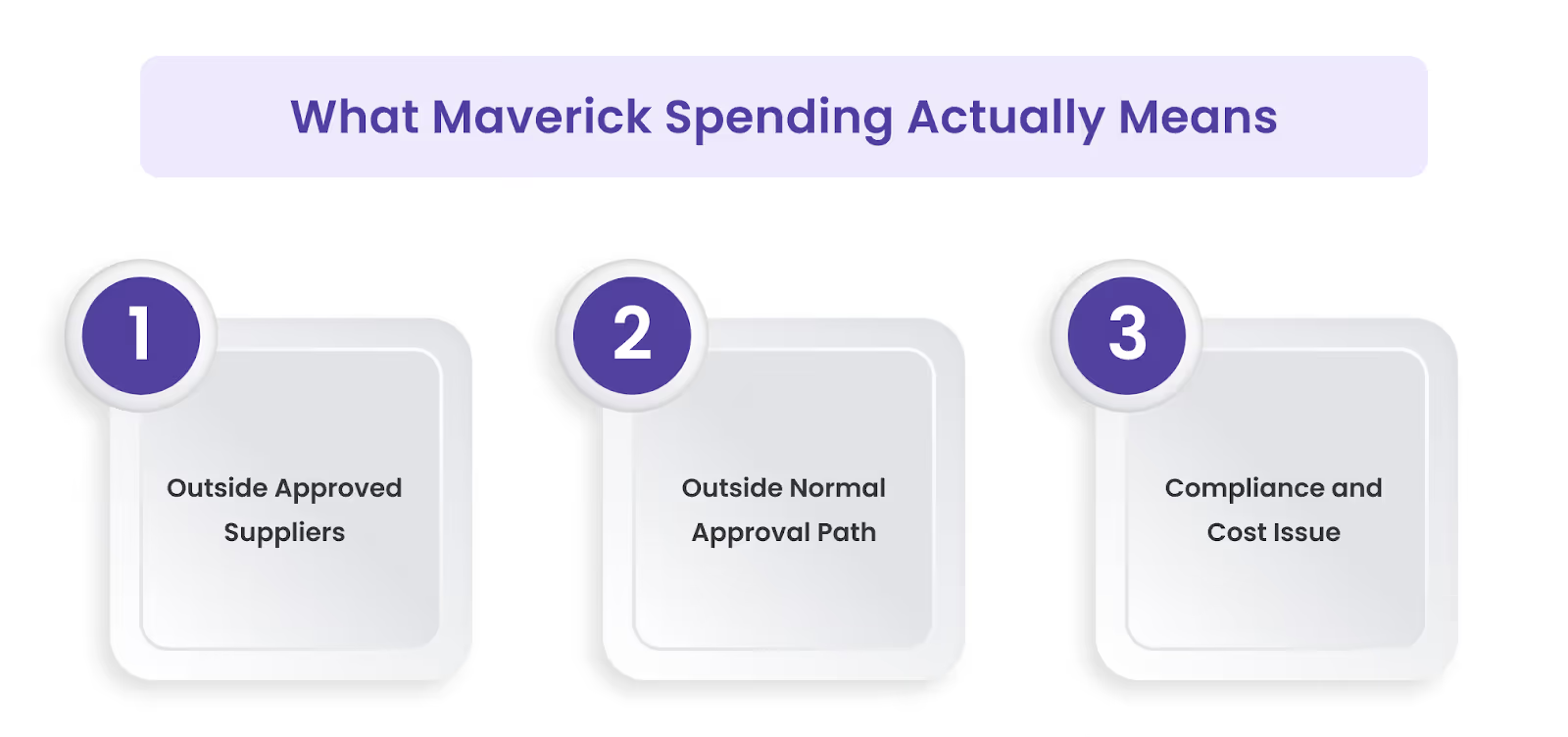
Maverick spending is not just informal buying. It is spending that happens outside the organisation’s approved procurement path, whether that means using a non-approved supplier, bypassing a contract, skipping the purchase order route, or avoiding the required approval flow. That is what makes it a control issue rather than just a buying habit.
The problem is not only that the purchase happened differently. The bigger issue is that once spend moves outside the approved route, the business loses some of its ability to enforce policy, aggregate demand properly, and maintain a clean audit trail around who bought what, from whom, and under which terms.
- It Happens Outside Approved Suppliers Or Contracts
A team may buy from a vendor that is not on the approved list, or purchase from an approved supplier but outside negotiated terms or agreed channels. Either way, the spend falls outside the organisation’s intended control model. - It Often Sits Outside The Normal Approval Path
Maverick spend is common where purchases happen directly by employees or departments without going through the expected procurement or approval route first. That weakens oversight before finance even sees the transaction. - It Is A Compliance Issue As Much As A Cost Issue
Off-process buying can create higher costs, but it can also introduce quality, policy, legal, or regulatory risk if purchases are made without the controls the organisation intended to apply.
Also Read: Understanding Procure To Payment Process
Why Maverick Spend Happens
Most maverick spend is not driven by bad intent. It happens because the approved process feels slower, less clear, or less useful than simply buying directly. That is why businesses usually reduce maverick spend more effectively by improving process design than by relying only on reminders or escalation.
The underlying cause is often the same: the compliant route feels like extra work, while the non-compliant route feels faster. Once that pattern sets in, off-process spending starts looking normal inside teams even when it is creating cost leakage and control problems for finance and procurement.
- Approvals Take Too Long
When routine purchases take too long to clear, teams start looking for workarounds. Speed pressure is one of the most common reasons approved buying channels get bypassed. - Employees Buy Directly For Convenience
Online purchasing makes it easy for employees to source business goods and services on their own. That convenience can quickly turn into rogue buying if the approved route is harder to use. - Approved Channels Do Not Meet Immediate Needs
If users cannot find what they need quickly through the official route, they are more likely to buy elsewhere. The process then fails not because a policy is missing, but because the policy is not operationally effective. - Policies Exist But Are Not Enforced
A policy on paper does not reduce maverick spend by itself. The business still needs practical enforcement through approvals, supplier controls, guided buying, or exception review. - Spend Visibility Is Too Weak
If finance or procurement sees off-process spending only after invoices arrive or cards have already been used, the control point comes too late. By then, the spend has already happened.
Related: Procurement Automation Software Solution
Why Maverick Spending Is A Problem
Maverick spending creates more than a procurement irritation. It weakens cost control, reduces the business’s ability to use negotiated supplier terms properly, and makes it harder to understand where money is actually going. Over time, those small exceptions can turn into a much larger visibility and compliance problem.
It also makes finance work harder. Once purchases happen outside approved channels, documentation is often weaker, supplier consistency falls, and reconciliation becomes more difficult. That means the cost of maverick spend is not limited to price. It also shows up in admin effort, fragmented data, and weaker auditability.
- Higher Purchase Costs
Off-contract or off-process purchases can bypass negotiated pricing and reduce the organisation’s ability to consolidate demand effectively. - Weaker Supplier Leverage
When spend is dispersed across one-off or non-approved suppliers, the business gives up some of the buying power that comes from concentration and contract discipline. - Less Spend Visibility
Rogue buying makes it harder to build a reliable picture of spend by category, supplier, or business unit. That weakens both procurement analysis and finance oversight. - More Reconciliation And Audit Friction
Off-process purchases often create weaker documentation trails, unexpected invoices, or transactions that are harder to classify and verify later. - Higher Policy And Compliance Risk
The business becomes more exposed when purchases are made without the intended checks around supplier approval, contract terms, or legal and regulatory requirements.
Also Read: Understanding Spend Visibility And Business Benefits
How To Control Maverick Spend
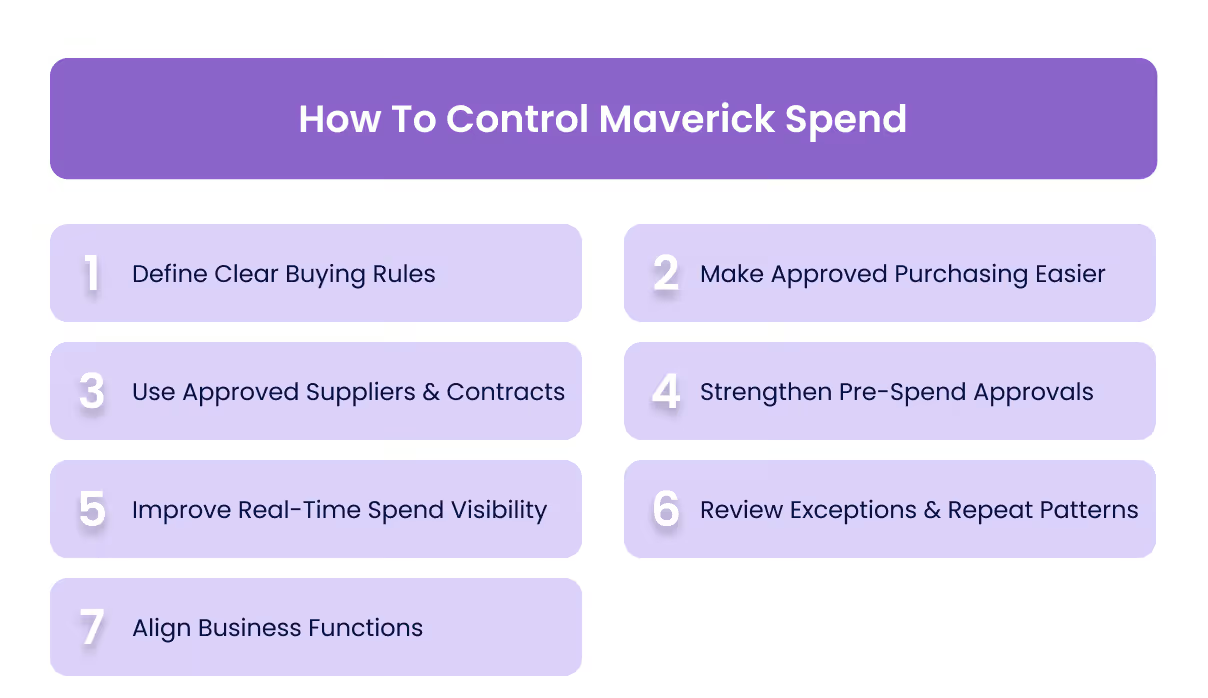
Controlling maverick spend works best when the business addresses both policy and process. If compliant buying is unclear, slow, or fragmented, employees will keep finding ways around it. The strongest control model is usually the one that makes approved purchasing easier than non-compliant purchasing.
1. Define Clear Buying Rules
Employees should know who can buy, which suppliers are approved, what thresholds apply, and when procurement or finance approval is required. If those rules are vague, exceptions start becoming normal.
2. Make Approved Purchasing Easier Than Workarounds
The official route has to be usable. Where guided buying and a clear intake path exist, businesses reduce the temptation to buy elsewhere because the compliant route becomes faster and simpler to follow.
3. Use Approved Supplier Lists And Contract Discipline
Maverick spend becomes easier to reduce when the business gives teams a clear route to preferred suppliers and negotiated terms. That protects pricing, consistency, and supplier governance.
4. Strengthen Pre-Spend Approvals
The control point should sit before the transaction is completed, not only after finance discovers it. Automated controls can flag or block purchases outside policy before money is committed.
5. Improve Real-Time Spend Visibility
The business needs a reliable view of where maverick spend is occurring by team, supplier, or category. Consolidated visibility is what turns rogue spend from a vague concern into a manageable control issue.
6. Review Exceptions And Repeat Patterns
One-off exceptions matter less than repeat behaviour. If the same teams, suppliers, or categories keep appearing, the business should treat that as a signal that the workflow itself needs fixing.
7. Align Procurement, Finance, And Operations
Maverick spend usually sits between functions. Procurement wants compliance, finance wants visibility and control, and operational teams want speed. Sustainable improvement happens when the process works for all three rather than forcing one side to absorb all the friction.
Related: Business Spend Management Tools Importance
How To Reduce Maverick Spend Without Slowing The Business Down
Reducing maverick spend does not mean making every purchase harder. In practice, businesses usually get better results when they remove friction from the approved process, tighten controls around higher-risk spend, and make policy compliance easier to follow in day-to-day work. That is how maverick spend becomes less attractive without turning procurement into a bottleneck.
The goal is not to eliminate every exception by force. The goal is to make compliant purchasing the easier, clearer, and faster path for most routine business needs. When that happens, off-process buying usually falls for structural reasons rather than because teams were simply told to behave differently.
- Reduce Approval Delays
If standard purchases take too long to clear, employees will keep looking for shortcuts. Faster approval routing removes one of the most common reasons maverick spend occurs in the first place. - Give Teams Clear Spend Boundaries
People are more likely to follow policy when they know what they can buy, within which limits, and when escalation is required. Clear boundaries reduce confusion and make exceptions easier to identify. - Improve Policy Communication
A policy cannot guide behaviour if teams do not understand it in practical terms. The rules need to be visible, simple, and tied to real buying situations rather than hidden in a document few people use. - Use Better Intake And Routing
Employees should not have to guess how to make a compliant purchase. A clearer intake route makes approved buying easier and reduces ad hoc sourcing or direct vendor engagement outside process. - Monitor High Risk Categories More Closely
Some categories tend to create more exceptions than others, especially where urgency, one-off purchases, or fragmented supplier use are common. Those areas usually benefit from tighter approval logic and more frequent review. - Treat Repeat Exceptions As Process Failures
If the same exception keeps happening, the issue is usually not just user behaviour. It often means the approved route is too slow, unclear, or misaligned with operational need.

Also Read: Automate Expense Management Approvals
Common Signs Of Maverick Spending In A Business
Maverick spending is often easier to recognise through its symptoms than through a formal audit. By the time finance or procurement notices a larger problem, the business has usually already been seeing smaller signals for some time. The issue is that those signals often look like routine operational noise until someone starts joining them up.
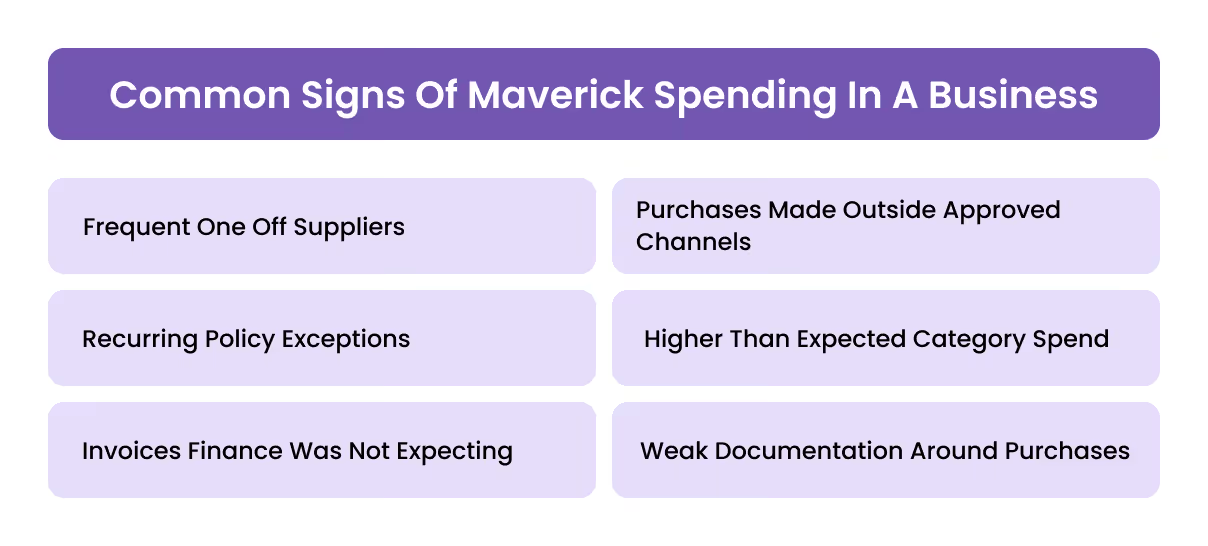
That is why businesses trying to control maverick spend should look for recurring patterns rather than isolated incidents. One off-policy purchase may be manageable. A repeated pattern usually means there is a structural control or workflow issue underneath it.
- Frequent One Off Suppliers
A growing number of small or unexpected suppliers can indicate that teams are buying outside preferred vendor frameworks. - Purchases Made Outside Approved Channels
If employees are using informal routes, direct card payments, or ad hoc sourcing instead of the standard process, that is often a clear warning sign. - Recurring Policy Exceptions
The same type of exception appearing repeatedly usually points to a weak control point or an approved route that is not working well enough. - Higher Than Expected Category Spend
If spend in certain categories rises faster than planned without a clear operational reason, off-process buying may be part of the explanation. - Invoices Finance Was Not Expecting
Surprise invoices often suggest the purchase happened before finance had proper visibility or approval context. - Weak Documentation Around Purchases
Missing receipts, unclear business purpose, incomplete approval trails, or inconsistent supplier records are all common indicators of maverick spend.
Related: Sample Business Expense Policy Guidelines Examples
How Alaan Helps Control Maverick Spend
Maverick spend becomes difficult to control when finance only sees transactions after they happen. The real control point is before and during the spend, not after it hits the books. That is where Alaan is relevant. It helps finance teams manage company spend through corporate cards, spend controls, approval workflows, receipt capture, AI verification, and accounting integrations, so off-process buying becomes harder to execute and easier to detect.
- Corporate Cards With Spend Limits And Vendor Controls
Alaan lets businesses issue corporate cards with spending limits and vendor restrictions. This means employees can only spend within defined boundaries and with approved merchants, reducing the chances of off-contract or non-approved purchases. - Pre-Spend Approval Workflows
Alaan supports custom approval workflows, so purchases can be reviewed before the transaction is completed. This shifts control upstream and reduces the risk of employees bypassing procurement rules. - Real-Time Visibility Into Spend Activity
Finance teams can see transactions as they happen across employees, teams, vendors, and categories. This makes it easier to spot unusual supplier usage, category spikes, or spend happening outside expected patterns. - Receipt Capture And Supporting Documentation
Employees can upload receipts and invoices through the mobile app, Chrome extension, or email, ensuring every transaction has proper supporting context. This reduces undocumented purchases and improves auditability. - AI Verification And Duplicate Detection
Alaan extracts receipt data, matches it to transactions, and flags inconsistencies or duplicates. This helps finance teams identify irregular spend faster and reduces manual checking effort. - Accounting Integration For Cleaner Reconciliation
Alaan integrates with Xero, QuickBooks, NetSuite, and Microsoft Dynamics, allowing transactions to sync in real time. This makes it easier to reconcile spend and track where maverick activity may have occurred.

In practice, this means maverick spend becomes both harder to execute and easier to identify, giving finance and procurement teams more control without slowing the business down.
Conclusion
Maverick spending is rarely a deliberate attempt to break policy. It is usually a signal that the approved process is too slow, unclear, or difficult to use. But even when it starts with good intent, it can lead to higher costs, weaker supplier discipline, and reduced visibility across the business.
The most effective way to reduce maverick spend is not stricter policing alone. It is a better process design. When approvals are faster, supplier rules are clearer, and spend is visible in real time, compliant purchasing becomes the easier path.
Alaan helps businesses move in that direction. With corporate cards, spend controls, approval workflows, real-time visibility, and cleaner documentation, finance teams can reduce off-process spending and maintain stronger control over how money is actually spent. Book a Demo Today!
FAQs
1. Is maverick spending always unauthorised spending?
Not always in a formal misconduct sense. A purchase can be well-intentioned and still count as maverick spend if it happens outside approved suppliers, contracts, or procurement workflows. The issue is process bypass, not necessarily bad intent.
2. Can maverick spending happen even when the supplier is approved?
Yes. A business can still create maverick spend by buying outside agreed contract terms, using the wrong buying channel, or skipping the required approval path. Approved supplier does not automatically mean compliant purchase.
3. What is the difference between maverick spend and tail spend?
Maverick spend refers to off-process purchasing, while tail spend refers to low-value, fragmented purchases across many suppliers. The two can overlap but are not the same.
4. What is the difference between maverick spending and emergency purchasing?
Emergency purchasing is usually driven by a genuine urgent business need. Maverick spending is broader and includes any off-process buying, even when there is no true emergency. A business should define when exceptions are acceptable and how they must be approved.
5. Which categories are most exposed to maverick spending?
It often shows up in categories where buying is frequent, urgent, fragmented, or easy to do directly, such as office supplies, software, marketing services, maintenance items, travel, and one-off project purchases.
6. Can small businesses have a maverick spend problem too?
Yes. In smaller businesses, it may not look like a procurement problem at first because the process is more informal. But repeated direct buying, supplier sprawl, and weak approval discipline can still create the same control and visibility issues.
Gain control over business expenses with Alaan corporate cards
Invygo earned AED 100,000 in cashback using Alaan cards
Personalise approval workflows to align with your business needs with Alaan's Spend Management platform
Discover the power of automated expense tracking and smarter spend control with Alaan
Turn data into actionable insights with Alaan's spend management tools
Stay Tax Compliant with UAE's #1 Corporate Card and Spend Management Platform
Customisable corporate card policy template
Know how much Corporate Tax you have to pay this fiscal year
Easily integrate Alaan with your ERP for accurate, real-time expense tracking
Close books faster with Alaan's AI-powered accounting automation
Reconcile your books in minutes instead of hours, every single month.
Keep petty cash organized with Alaan corporate cards and automated expense management

%2520(1).avif)