.avif)

How virtual corporate cards help UAE businesses manage expenses, tighten security, and stay VAT-compliant
- Virtual corporate cards are one of the safest options for businesses to gain greater control over company spending.
- Virtual card refers to the card format, while prepaid, debit, and credit describe how the card is funded.
- Most UAE providers support online onboarding, KYC verification, and CBUAE-compliant processes, making it easier for businesses to get started.
- The best virtual corporate card providers combine spend controls, expense automation, accounting integrations, and VAT-ready expense tracking.
- Choosing the right provider depends on your business needs, including team size, pricing, automation features, and the level of visibility your finance team requires.
The office company card usually has a busier social life than anyone on the team.
It gets passed from desk to desk, used for everything from software subscriptions to team lunches, and somehow always comes back with a missing receipt.
Virtual corporate cards put an end to that. You can issue separate cards for employees, vendors, or subscriptions, set spending limits, and track every transaction without sharing a single card.
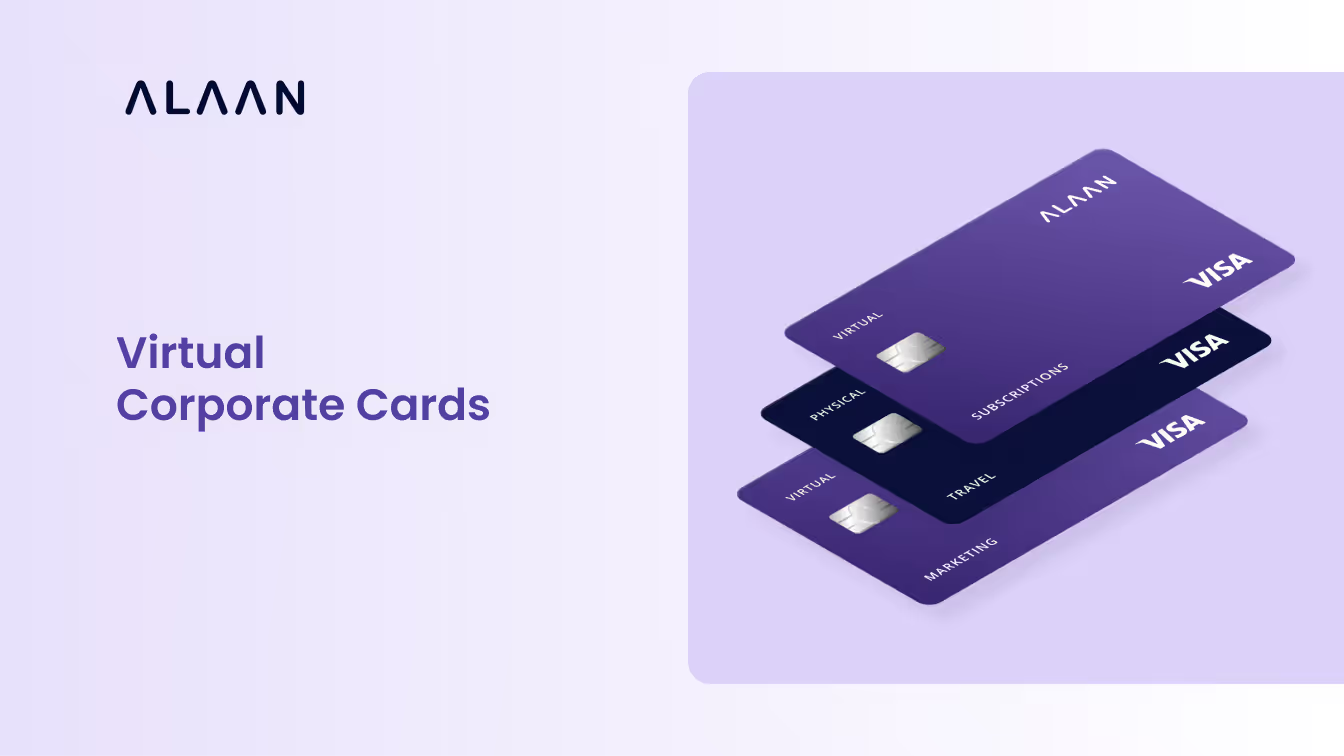
For example, you can create one card for your Meta ad campaigns, another for software subscriptions, and issue individual cards with fixed per diem limits for your sales team while traveling. In short, each card serves a specific function, making every transaction visible and under control.
This guide explains everything you need to know before choosing one for your business in the UAE.
What is a virtual corporate card?
Think of it as a company card without the plastic.
A virtual corporate card is a digital payment card that businesses can issue instantly to employees, teams, or even for specific expenses.
It works just like a physical corporate card for online payments, but gives finance teams much more control over how company money is spent.
For example, instead of giving your marketing team one shared company card for every subscription, you could create separate virtual cards for Google Ads, Meta Ads, Canva, and ChatGPT. If one subscription needs a bigger budget, you update its spending limit instead of replacing the card.
How do virtual corporate credit cards actually work?
The way virtual corporate credit cards work is surprisingly simple. Here's what usually happens:
- Your business signs up and completes KYC verification.
- Your finance team creates a virtual card in seconds.
- You decide who can use it and how much they can spend.
- Employees use the card for online business purchases.
- Every transaction appears instantly, making approvals and accounting much easier.
See how these hold up for everyday online and in-store transactions.
Virtual corporate cards vs. physical, prepaid, debit, and credit cards
A lot of businesses search for virtual corporate credit cards, but here's the thing. Not every virtual corporate card is a credit card.
Many providers in the UAE issue prepaid or debit-style virtual corporate cards. However, the biggest difference lies in how much control your finance team has over company spending.
Before we get into prepaid or debit-style cards, let's answer the question most businesses ask first: What's the difference between a virtual and a physical corporate card?
Virtual corporate cards vs. physical corporate cards: Know the difference.
Think about the last time someone needed the company card.
Maybe it was to pay for a new software subscription. Maybe someone was traveling for work. Or perhaps two employees needed the same card at the same time.
That's where physical cards start creating bottlenecks.
With a virtual corporate card, there's no waiting for a plastic card to arrive or passing one company card around the office. Finance teams can issue separate cards in minutes, set spending rules for each one, and see every transaction as it happens.
| Feature | Virtual Corporate Card | Physical Corporate Card |
|---|---|---|
| Issuance | Instant | Usually takes a few business days |
| Best for | Online payments, subscriptions, vendor payments | Travel and in-store purchases |
| Spend controls | Individual limits, merchant restrictions, expiry dates | Limited controls |
| Security | Freeze or replace instantly | Can be lost or shared |
| Visibility | Real-time transaction tracking | Depends on the provider |
For the fuller comparison against a standard physical corporate card, see our detailed breakdown.
Prepaid vs. Debit vs. Credit vs. Virtual Corporate Cards
Here's where things can actually get a little bit confusing.
"Virtual," "prepaid," "debit," and "credit" are often thrown around as if they mean the same thing. But they are far from being the same. A virtual card is simply a digital card, while prepaid, debit, and credit refer to how that card is funded.
Here's a quick breakdown of different card types.
| Card Type | How it Works | Best For |
|---|---|---|
| Prepaid Corporate Card | Spend funds loaded onto the card | Budget control and employee expenses |
| Debit Corporate Card | Linked directly to a business bank account | Everyday business spending |
| Credit Corporate Card | Spend against a credit line and repay later | Businesses that need short-term financing |
| Virtual Corporate Card | A digital version of a prepaid, debit, or credit corporate card | Online payments, subscriptions, vendor payments, and controlled employee spending |
Are virtual corporate cards safe?
Yes. In fact, they're often safer than physical cards for online business spending.
Virtual cards use tokenization, which replaces your actual card details with a unique digital token during transactions. According to Visa, token-based transactions reduce online fraud by about 30% compared with transactions using traditional card numbers.
Virtual corporate cards are extremely safe because they let you:
- Set spending limits for each card
- Restrict cards to specific merchants or categories
- Freeze or cancel a card instantly if it's no longer needed
- Create separate cards for employees, vendors, or subscriptions instead of sharing one company card
Getting a Virtual Corporate Card in the UAE
Getting a virtual corporate card in the UAE is easier than you imagine. Most providers let you apply online, complete the required verification, and start issuing cards once your account is approved.
1. Check your eligibility
To apply, you'll typically need:
- A valid UAE trade licence
- KYC verification
- Details of authorized signatories or company directors
2. Submit your business documents
Most providers ask for a few standard documents, including:
- Valid Trade License or Commercial License
- Emirates ID or passport of authorized signatories
- Company registration documents such as
- Memorandum of Association (MOA), where applicable
- Certificate of Incorporation
- Proof of the company's registered address or other KYC documents, if required
- VAT Registration Certificate (if VAT-registered)
- Share certificate or ownership documents (if ownership isn't clear from the trade license)
The exact requirements may vary depending on your business structure and the provider's onboarding process.
3. Complete verification and approval
Your provider will review your application to ensure it meets Know Your Customer (KYC) and Central Bank of the UAE (CBUAE) requirements.
Approval timelines vary by provider, but many fintech platforms offer a faster onboarding process than traditional banks. Once approved, you can fund your account if you're using a prepaid card.
4. Start managing business spending
After onboarding, you can create virtual cards for employees, vendors, or recurring subscriptions. Most providers also let you set spending limits, restrict where cards can be used, and track expenses in real time.
Pro tip: Instead of relying on one shared company card, each employee or expense can have their own virtual card.
Alaan makes this onboarding process pretty seamless. After a quick digital verification, businesses can issue virtual corporate cards, onboard employees, set spending controls, and start tracking expenses without the usual paperwork or delays.
Choosing the Right Virtual Corporate Card Provider in the UAE
Once you've decided that a virtual corporate card is the one you need. The next step is choosing a provider.
Selecting the right virtual corporate card begins with evaluating many parameters. One of these includes comparing foreign transaction fees, card issuance charges, subscription costs, and any hidden fees that could increase your overall spending.
While traditional banks and fintech platforms both offer corporate cards, they can differ significantly in terms of onboarding, spend controls, automation, and pricing.
Here's a quick comparison to help you evaluate your options.
| Feature | Traditional Banks | Modern Fintech Providers |
|---|---|---|
| Application process | Often involves branch visits, paperwork, and longer approval times | Typically fully online with faster onboarding |
| Card issuance | May require additional processing time | Virtual cards can often be issued instantly |
| Spend controls | Basic card limits | Granular controls, merchant restrictions, and approval workflows |
| Expense management | Usually managed separately | Automatic receipt capture, expense categorization, and VAT reconciliation with accurate, audit-ready records. |
| Accounting integrations | Limited or requires manual uploads | Integrates with popular accounting software and ERPs |
| Visibility | Transactions are reviewed after they're made | Real-time visibility into business spending |
| Pricing | May include annual fees and other banking charges | Varies by provider, so compare subscription plans, card fees, and transaction costs before choosing |
Comparing Virtual Corporate Card Providers in the UAE
The UAE offers a growing number of virtual corporate card providers. Let's compare some of the best ones out there.
| Provider | Best For | Virtual Cards | Expense Management | Accounting Integrations | Key Features |
|---|---|---|---|---|---|
| Alaan | UAE startups and growing businesses | Yes | Built-in | QuickBooks, Xero, Oracle NetSuite, SAP, Zoho Books, Microsoft Dynamics 365, Wafeq and more | AI-powered spend management, unlimited cards, real-time controls, VAT-ready workflows |
| Other Fintechs | SMEs looking for spend management | Yes | Limited | Limited | accounting automation and real-time expense tracking |
| Traditional Banks (e.g., HSBC, FAB) | Businesses that primarily need banking relationships or credit facilities | Some banks offer virtual cards | Provide basic card statements, no expense tracking | Few native integrations. Requires third-party tools | Established banking services and access to credit products |
Why Alaan stands out from the rest
A virtual corporate card makes payment easier. But it also lets you effortlessly manage your business spending.
If your finance team is struggling with multiple physical cards and the need to match their numbers, switching to a virtual card alone won't solve those problems. The right provider should help you eliminate the manual work behind every transaction.
If you're looking for a solution that combines virtual corporate cards with automated expense management at the best pricing structure in the market, Alaan Corporate Card is built for exactly that.
Here are some key features of Alaan SuperCard.
- Spend controls that actually work: Set spending limits, merchant restrictions, and approval workflows before money is spent, not after.
- Instant unlimited card creation: Issue separate virtual cards for employees, vendors, or subscriptions in minutes instead of sharing a single company card.
- Real-time visibility: See where company money is going in real time, rather than waiting for month-end statements.
- Automated expense management: Capture receipts, match expenses automatically, and reduce manual reconciliation.
- Accounting integrations: Sync expenses with your accounting software to save time and reduce errors.
- Transparent pricing: Clear pricing means fewer surprises when it's time to reconcile costs.
- Cashback and Rewards: Depending on the program and eligibility, Alaan also offers 2% cashback on all business spending.
Whether you're managing employee expenses, software subscriptions, or vendor payments, the right virtual corporate card like Alaan can help your finance team spend less time going through endless receipts and more time chasing growth.
Virtual cards make the most sense once you know how the wider product works, and our explainer on how corporate cards work covers the rest of the family, including how to pick a provider.
Frequently Asked Questions
1. Can small businesses use virtual corporate cards?
Yes. Virtual corporate cards are suitable for businesses of all sizes, from startups to large enterprises.
2. Can I create multiple virtual corporate cards for my team?
Most providers let you issue multiple virtual cards for employees, vendors, and recurring subscriptions.
3. Are virtual corporate cards accepted for online payments?
Yes. They can be used for most online business purchases, including software subscriptions and vendor payments.
4. Can I set spending limits on virtual corporate cards?
Yes. Most providers allow you to set spending limits, merchant restrictions, and approval controls for each card.
5. Do virtual corporate cards work with accounting software?
Many providers, such as Alaan, integrate with popular accounting platforms to automate expense tracking and reconciliation
Gain control over business expenses with Alaan corporate cards
Invygo earned AED 100,000 in cashback using Alaan cards
Personalise approval workflows to align with your business needs with Alaan's Spend Management platform
Discover the power of automated expense tracking and smarter spend control with Alaan
Turn data into actionable insights with Alaan's spend management tools
Stay Tax Compliant with UAE's #1 Corporate Card and Spend Management Platform
Customisable corporate card policy template
Know how much Corporate Tax you have to pay this fiscal year
Easily integrate Alaan with your ERP for accurate, real-time expense tracking
Close books faster with Alaan's AI-powered accounting automation
Reconcile your books in minutes instead of hours, every single month.
Keep petty cash organized with Alaan corporate cards and automated expense management