.avif)

How a structured vendor onboarding process prevents the payment, duplicate-record and reconciliation problems that weak supplier setup creates later.
- Set suppliers up properly before the first transaction: collect complete details, review documents, assign clear ownership and only activate after approval.
- Most onboarding delays trace back to incomplete requests, duplicate vendor records, unclear ownership and finance getting pulled in too late.
- A standard intake format, asking for documents early and defining who can request a vendor keeps setup clean without turning it into bureaucracy.
- Onboarding only sets the supplier up; Alaan keeps the spend that follows under control with approval workflows, receipt capture and integrations with Xero, QuickBooks, NetSuite and Microsoft Dynamics.
Most vendor problems do not begin when the invoice arrives. They begin much earlier, when a supplier is added with incomplete records, unclear ownership, or weak approval checks. That is when small setup gaps start turning into payment delays, duplicate vendor records, messy reconciliations, and unnecessary follow-up across finance and procurement.
The process itself is more structured than many teams treat it. Zoho defines vendor onboarding around collecting and verifying vendor details before approval, including contact information, tax details, and banking information. That framing is useful because it shows what vendor onboarding really is: not a data-entry task, but the point where a business decides whether a supplier is ready to enter its spend workflow properly.
This article explains vendor onboarding meaning, how the vendor onboarding process works, what a new vendor onboarding process should include, and how businesses can set up suppliers with better control from the start.
TL;DR / Key Takeaways
- Vendor onboarding is the process of reviewing, approving, and setting up a supplier before transactions begin, not just adding a name to a system.
- A strong vendor onboarding process depends on complete supplier details, proper document review, visible ownership, and controlled activation.
- Most onboarding delays come from incomplete requests, duplicate vendor creation, weak approval paths, and late finance involvement.
- Good vendor onboarding makes downstream execution easier by reducing payment friction, documentation gaps, and reconciliation issues.
- Alaan helps businesses keep supplier-related spend controlled after onboarding through approval workflows, spend visibility, documentation capture, and accounting integrations.
What Is Vendor Onboarding?
Vendor onboarding is the process of collecting, verifying, approving, and setting up a new supplier before the business starts transacting with them. In practical terms, it means the supplier is reviewed properly, their records are complete, and they are ready to be used without creating avoidable problems later.
That is why vendor onboarding meaning goes beyond “adding a supplier to the system”. A proper onboarding flow usually covers a few core areas:
- Business Details
The supplier’s legal name, company information, and primary contacts. - Tax And Registration Information
The identification and tax details needed to validate the vendor record. - Banking Details
The payment information required before invoices can be settled. - Supporting Documents
The records needed to verify the supplier and support internal review. - Approval Status
Confirmation that the right internal stakeholders have reviewed and cleared the vendor for use.
When those basics are incomplete, the problems usually appear downstream. Finance ends up chasing missing records, procurement loses time on follow-ups, and the business has less confidence in the supplier data it is using.
Also read: Understanding the procure-to-pay process
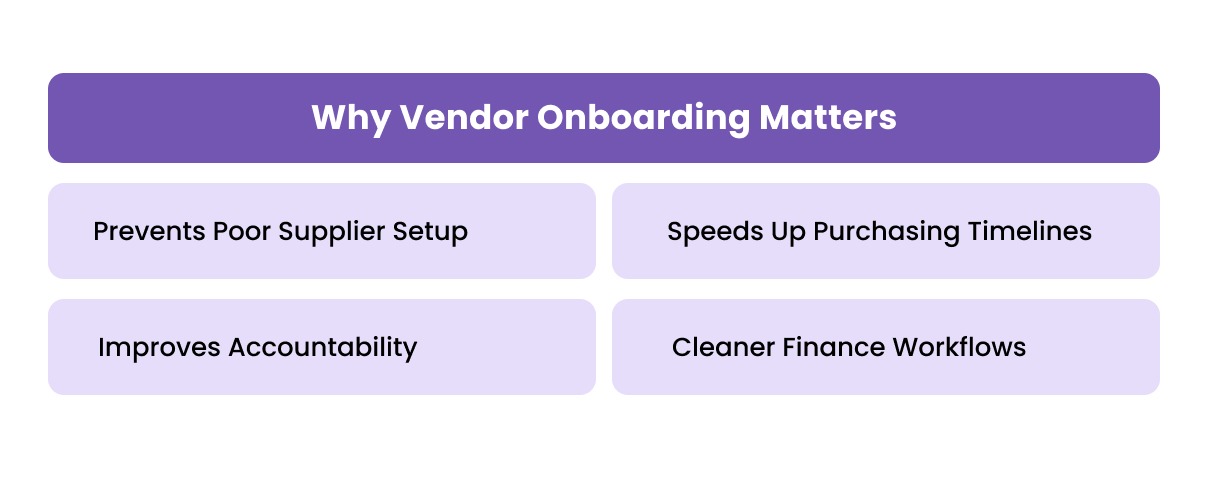
Why Vendor Onboarding Matters
Vendor onboarding matters because it is one of the first control points before money starts moving to a new supplier. If that step is weak, later controls become much harder to apply cleanly.
Prevents Poor Supplier Setup
A supplier record is only useful if it is accurate enough to support approvals, payments, and documentation. Weak setup creates avoidable friction later, especially when teams realise too late that the supplier’s details are incomplete or inconsistent. The UAE Ministry of Finance’s digital procurement supplier registration flow reflects the same idea: supplier details, contacts, and roles need to be properly managed before participation and activity can proceed.
Reduces Delays Once Purchasing Begins
Well-onboarded vendors are easier to work with once a purchase is approved. The business does not need to pause execution to chase bank details, confirm documents, or clarify who actually reviewed the supplier.
Improves Accountability
A structured vendor onboarding process makes it easier to see who requested the supplier, who reviewed the record, and who approved activation. That matters because supplier setup often crosses procurement, operations, and finance, and weak ownership is one of the main reasons onboarding stalls.
Supports Cleaner Downstream Finance Work
Clean vendor records support cleaner invoice handling, fewer payment issues, and better reconciliation. That link between onboarding quality and downstream finance accuracy is why accounts payable teams often feel the impact of poor vendor setup immediately.
Related: Procure-to-pay systems and process steps
Core Elements Of A Strong Vendor Onboarding Process
A strong vendor onboarding process should feel structured without becoming bureaucratic. The goal is to make supplier setup reliable, not slow for the sake of formality.
1. Vendor Information Collection
The process begins with collecting the basic information the business needs in order to identify and use the supplier properly.
This usually includes:
- Legal Entity Name
- Primary Contact Details
- Service Or Product Scope
- Tax Information
- Banking Details
- Registration Or Licencing Information
2. Document Review
Once the information is collected, the supporting documents need to be reviewed. The exact list varies by business and category, but it often includes registration records, banking proof, tax documents, and any contract or compliance paperwork required before activation.
3. Internal Validation
Not every new supplier request should move forward automatically. The business still needs to check whether the vendor matches a real need, whether a similar approved supplier already exists, and whether the submitted details are complete enough to support payment and control.
4. Approval Workflow
A new vendor onboarding process works better when approval steps are visible. Depending on the business, that may involve:
- Business Owner Review
- Procurement Or Operations Review
- Finance Review
- Final Approval To Activate
5. System Setup And Readiness
Once approved, the supplier needs to be set up properly in the business workflow. That includes creating the vendor record accurately, storing the right documents, linking the supplier to the right categories or teams, and confirming that the vendor is ready for transactions without further setup gaps.

Vendor Onboarding Process: Step By Step
A good vendor onboarding process should move in a clear sequence. It should not depend on scattered emails, informal approvals, or missing documents being fixed after the supplier is already active.
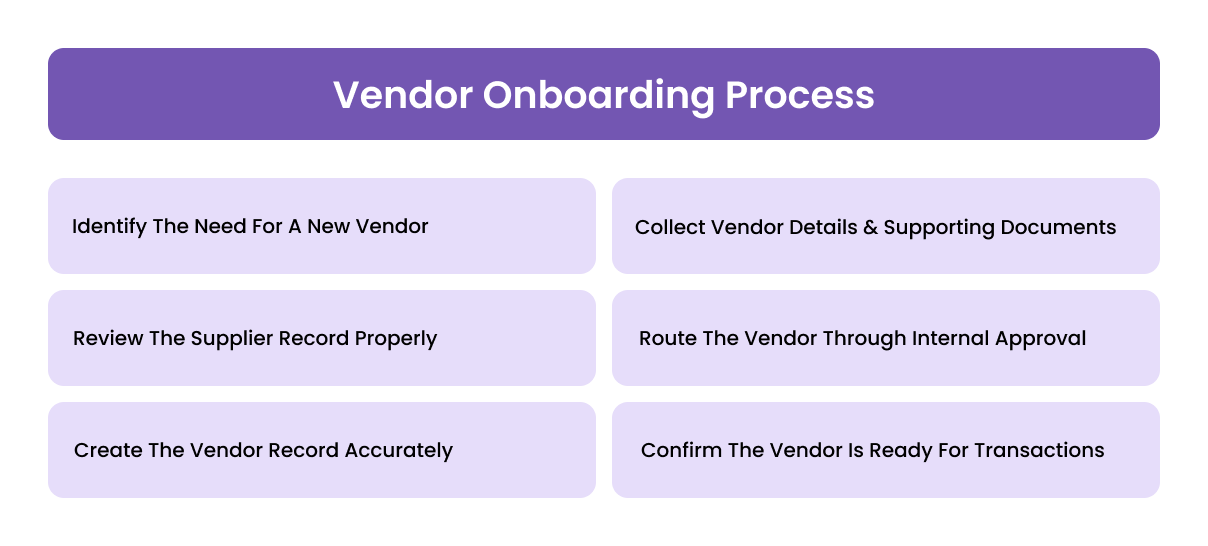
1. Identify The Need For A New Vendor
The process should start with a simple question: does the business actually need a new supplier?
In many cases, teams request a new vendor before checking whether an existing approved supplier can already meet the requirement. That creates duplicate relationships, fragmented spend, and unnecessary setup work. A better process starts by confirming the business need, the purchase category, and whether a new vendor is justified.
2. Collect Vendor Details And Supporting Documents
Once the need is confirmed, the supplier should provide the information required for review and setup. This usually includes:
- Legal Entity Name
- Primary Contact Information
- Tax Or Registration Details
- Banking Information
- Trade Licence Or Registration Documents
- Any Category-Specific Compliance Documents
This stage matters because weak input at the start usually creates delays later. If details are incomplete or inconsistent, finance and procurement end up chasing corrections when the transaction is already urgent.
3. Review The Supplier Record Properly
Before the vendor is approved, the record should be checked for completeness, relevance, and obvious risk issues.
That usually means reviewing:
- Whether The Vendor Matches A Real Business Need
- Whether The Business Already Has A Suitable Approved Supplier
- Whether Submitted Details Are Complete
- Whether The Documents Support The Setup
- Whether There Are Any Immediate Red Flags
This is where vendor onboarding stops being an admin task and becomes a control step.
4. Route The Vendor Through Internal Approval
A supplier should not become active simply because someone submitted a form. The right stakeholders still need to review and approve the setup.
Depending on the business, that may include:
- Business Owner Approval
- Procurement Or Operations Review
- Finance Validation
- Final Activation Approval
The exact path may vary, but the logic should stay consistent: review first, activate second.
5. Create The Vendor Record Accurately
Once approved, the supplier needs to be set up properly in the system or workflow. This is where data quality matters more than speed.
The setup should make sure:
- The Vendor Name Is Entered Consistently
- Duplicate Records Are Avoided
- Banking Details Are Stored Correctly
- The Vendor Is Linked To The Right Category Or Team
- Supporting Documents Are Stored In The Right Place
A bad setup at this stage often becomes a recurring issue later in approvals, payment handling, and reconciliation.
6. Confirm The Vendor Is Ready For Transactions
Before the first invoice, payment, or purchase request moves forward, the business should confirm that the supplier is actually ready to use.
That final check should cover:
- Approval Complete
- Documents Complete
- Payment Details Verified
- Record Created Properly
- No Further Setup Dependencies
This final step prevents the common problem of a vendor being “technically added” but not genuinely ready for execution.
Also read: Account reconciliation: importance and steps
New Vendor Onboarding Process: What Often Goes Wrong
A new vendor onboarding process does not usually fail because the idea is wrong. It fails because the workflow is loose.
1. Incomplete Documentation
The vendor is requested before the required details are collected. That leaves finance or procurement chasing tax records, bank details, or registration documents later, usually when the purchase has already become urgent.
2. Duplicate Vendor Creation
The same supplier gets added more than once under slightly different names, contacts, or business units. That weakens spend visibility and creates avoidable confusion in the finance workflow.
3. Weak Ownership
The request starts with one team, review sits with another, and activation depends on someone else entirely. Without clear ownership, onboarding stalls between handoffs.
4. Late Finance Involvement
Banking, tax, or payment-readiness issues are discovered too late because finance only sees the vendor after the business has already decided to transact.
5. Approval After Activation
This is one of the weakest patterns in supplier control. The vendor becomes usable first, and the formal review happens afterwards. At that point, the onboarding process is no longer acting as a control step.
Related: Control account reconciliation
How To Make Vendor Requests Less Messy
Many vendor onboarding issues start before onboarding itself. They start at the request stage, when teams ask for a supplier to be added without enough information or without understanding what the business requires.
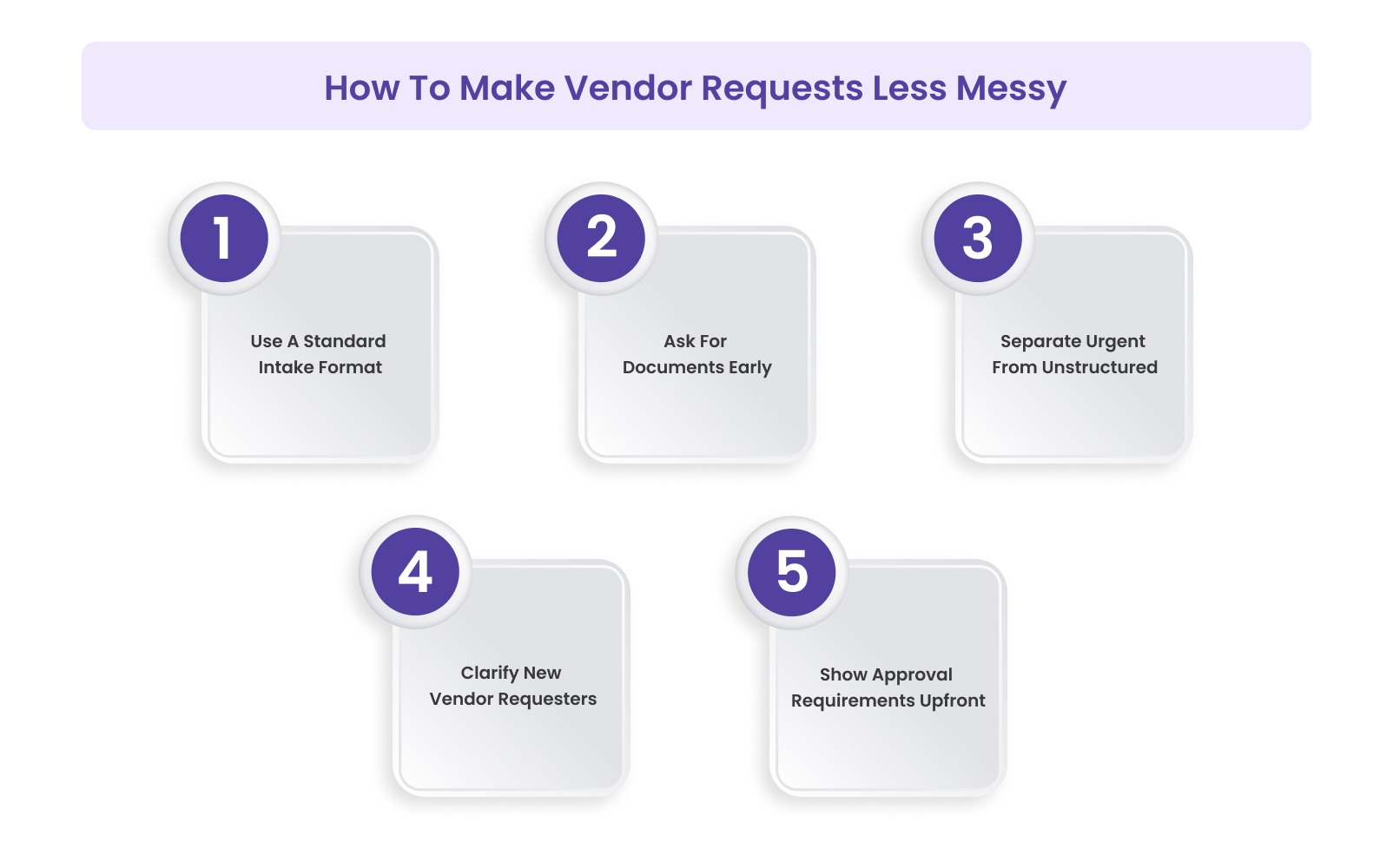
A cleaner request process reduces that friction immediately.
1. Use A Standard Intake Format
Every vendor request should follow the same structure. That makes it easier to review, compare, and route. The intake should ask for the business reason, supplier type, expected spend, key contacts, and required documents upfront.
2. Ask For Documents Early
Do not wait until the end of the process to discover that core documents are missing. The earlier the business asks for supplier records, the less likely onboarding is to stall later.
3. Separate Urgent Requests From Unstructured Requests
Not every “urgent” request is genuinely urgent. Some are simply incomplete. The onboarding process should distinguish between time-sensitive business need and poor request preparation.
4. Define Who Can Request A New Vendor
A business should be clear about who is allowed to initiate a vendor request. That reduces duplicate submissions and keeps accountability visible from the start.
5. Make Approval Requirements Visible Upfront
Teams should know in advance what review steps a new vendor will need. That includes which functions need to validate the setup and what documents must exist before activation.
What Good Vendor Onboarding Looks Like In Practice
Good vendor onboarding is controlled without being overcomplicated. It makes supplier setup easier to manage because the business knows what is required, who reviews it, and when the vendor is actually ready to use.
- Clear Intake Requirements
Teams know exactly what supplier information and documents need to be submitted. - Visible Review Ownership
It is clear who validates the request, who reviews the supplier, and who approves activation. - Consistent Documentation
Vendor records are complete enough to support approvals, payments, reconciliation, and later review. - Controlled Activation
Suppliers do not become active before the right checks are complete. - Cleaner Downstream Execution
Invoices, approvals, and payments move with fewer avoidable interruptions because the setup was done properly at the start.
Also read: AP automation and accounts payable systems
How Alaan Helps Keep Vendor Spend Controlled After Onboarding
Vendor onboarding sets up the supplier. The next challenge is execution. Once the vendor becomes active, the business still needs to control how money moves, who approves spend, and whether supporting documents stay tied to each transaction.
Alaan fits into that execution layer. The platform is positioned around corporate cards, spend management, approval workflows, receipt capture, and accounting integrations, helping businesses keep company spending visible and controlled rather than relying on scattered manual processes.
- Spend Controls On Corporate Cards
Approved vendor-related spending can still go off track if payment methods are loosely managed. Alaan’s corporate cards support controlled business spending through limits and policy-led usage, which helps teams keep purchases within clearer boundaries. - Approval Workflows Before Money Moves
A supplier being onboarded correctly does not remove the need for spend approval. Alaan supports approval workflows that help businesses review spending before it happens, so transactions do not rely on after-the-fact clean-up. - Real-Time Visibility Into Supplier Spend
Once a new vendor starts being used, finance teams need to see the activity clearly. Alaan gives businesses visibility into spend as it happens, which makes it easier to track supplier-related transactions across teams and categories. - Receipt And Invoice Capture
Supporting documents often become fragmented once purchasing starts. Alaan helps centralise receipts and invoices and uses AI-led extraction to reduce manual handling and improve documentation quality across transactions. - Accounting Integrations For Cleaner Reconciliation
Alaan integrates with accounting systems including Xero, QuickBooks, Oracle NetSuite, and Microsoft Dynamics, helping approved spend flow more cleanly into reconciliation and downstream finance workflows. - Clearer Audit Trail Across Transactions
When approvals, spend records, and supporting documents stay connected, the business has a clearer path from vendor activation to recorded expense. That makes review, audit preparation, and internal control much easier to manage.

Conclusion
Vendor onboarding is where supplier control starts. If a new vendor enters the business with incomplete records, unclear ownership, or weak approval checks, the downstream problems are rarely limited to setup. They usually appear later in payments, reconciliations, and spend visibility.
A stronger vendor onboarding process reduces that risk. It helps businesses collect the right information early, review suppliers properly, activate them with clearer accountability, and avoid unnecessary delays once transactions begin.
And once a vendor is onboarded, spend still needs control. That is where Alaan helps finance teams keep supplier-related spending visible, approved, and properly documented across the execution stage. Book a demo to see how Alaan helps businesses turn approved vendor relationships into controlled business spend.
FAQs
1. What Is Vendor Onboarding In Simple Terms?
Vendor onboarding is the process of reviewing and setting up a new supplier before the business starts buying from or paying them. It covers supplier information, documents, approvals, and activation.
2. What Documents Are Usually Needed For Vendor Onboarding?
That depends on the business and supplier category, but it often includes registration documents, tax details, banking information, contact details, and any compliance or contract records needed before activation.
3. Who Should Approve A New Vendor in a Company?
That usually depends on the business structure, but approval often involves the requesting team, procurement or operations, and finance. The goal is to make sure the vendor is commercially relevant, properly documented, and ready to transact.
4. How Long Should A Vendor Onboarding Process Take?
There is no single standard timeline. A simple supplier setup may move quickly, while a higher-risk or more document-heavy vendor may take longer. The main objective is not speed alone, but completing the right checks before activation.
5. What Is The Difference Between Vendor Onboarding And Vendor Management?
Vendor onboarding is the setup stage. It covers collecting information, reviewing the supplier, and activating them. Vendor management is broader and continues after onboarding, covering the ongoing relationship, performance, compliance, and spend activity.
6. Why Do Businesses Struggle With New Vendor Onboarding?
Most businesses struggle because the workflow is fragmented. Requests come in incomplete, documents are collected too late, approvals are unclear, and finance only gets involved once the transaction becomes urgent.
Gain control over business expenses with Alaan corporate cards
Invygo earned AED 100,000 in cashback using Alaan cards
Personalise approval workflows to align with your business needs with Alaan's Spend Management platform
Discover the power of automated expense tracking and smarter spend control with Alaan
Turn data into actionable insights with Alaan's spend management tools
Stay Tax Compliant with UAE's #1 Corporate Card and Spend Management Platform
Customisable corporate card policy template
Know how much Corporate Tax you have to pay this fiscal year
Easily integrate Alaan with your ERP for accurate, real-time expense tracking
Close books faster with Alaan's AI-powered accounting automation
Reconcile your books in minutes instead of hours, every single month.
Keep petty cash organized with Alaan corporate cards and automated expense management