.avif)


Profitability may appear stable, but small cost shifts can quickly squeeze margins. Rising supplier prices, higher fulfilment costs, or frequent discounting can reduce profits before they appear in financial statements.
Even in strong markets, finance teams operate within narrow profitability margins. Dubai‑listed companies posted net profits of just USD 8.1 billion (AED 29.75 billion) in a single quarter, showing how narrow margins can be. Margin percentage provides a clear view of how these cost changes affect profitability.
For finance leaders overseeing pricing and cost control, the margin percentage shows how procurement costs, pricing decisions, and operational spending influence profitability. Reliable margin reporting requires accurate cost capture, disciplined allocation, and up-to-date financial data.
In this blog, you’ll explore how finance teams calculate margin percentage using revenue and cost data and how modern finance workflows help teams maintain clear and reliable visibility into profitability.
TL;DR Key Takeaways:
- Margin Percentage Reveals True Profitability: Margin percentage shows how much revenue remains after direct costs, helping finance leaders assess whether pricing and procurement decisions support sustainable profit.
- Accurate Cost Capture Determines Margin Reliability: Margin reporting can become distorted when supplier invoices, landed costs, or shared service expenses are recorded late or classified inconsistently.
- Margin and Markup Serve Different Pricing Roles: Markup helps calculate selling prices from cost inputs, while margin confirms whether those prices meet profitability targets.
- Margin Targets Guide Pricing and Cost Decisions: Finance teams use margin thresholds to control discounting, renegotiate supplier costs, and define cost ceilings for procurement and operations.
- Real-Time Cost Visibility Improves Margin Analysis: Platforms like Alaan help finance teams capture operational spending in real time, improving the accuracy of margin reporting and financial decision-making.
How Finance Leaders Calculate Margin Percentage Using Revenue & COGS Data?
Finance teams rarely struggle with the margin formula.
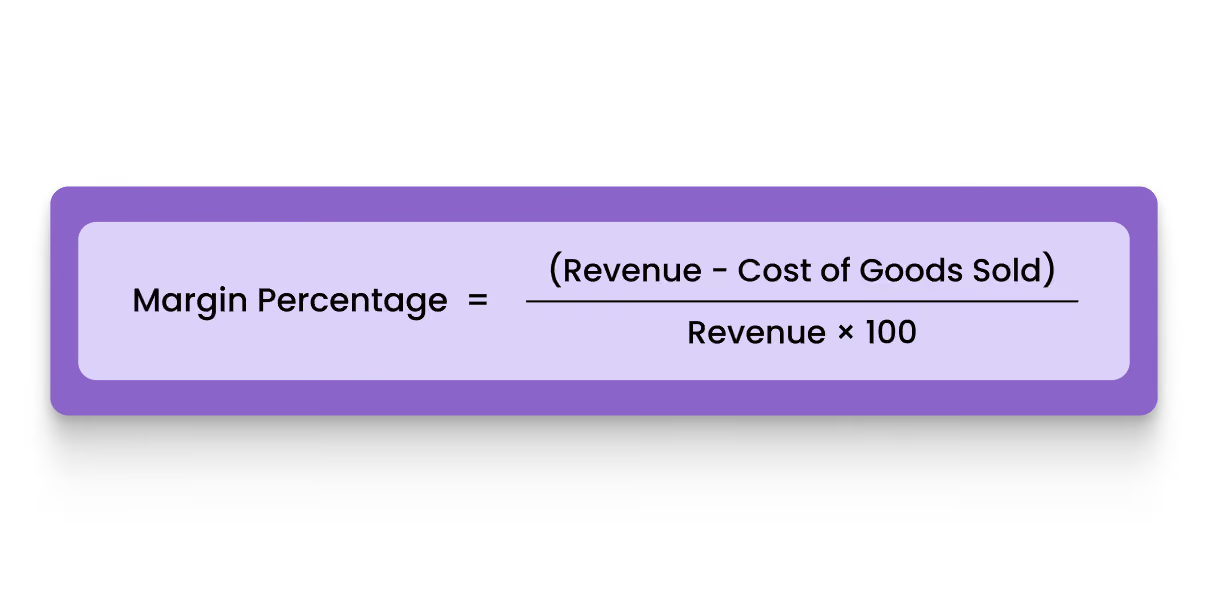
Margin Percentage = (Revenue − Cost of Goods Sold) ÷ Revenue × 100
The difficulty is making sure revenue and cost inputs reflect what actually happens across procurement, operations, and finance systems.
Across UAE organisations, margin reporting often relies on data coming from vendor invoices, project records, procurement platforms, and employee spending tools. When these inputs arrive late or get recorded in different systems, margin reports can temporarily overstate profitability.
Accurate margin reporting, therefore, depends on:
- Timely recording of operational expenses
- Consistent classification of direct costs
- Alignment between operational systems and accounting records
According to Deloitte research on finance and tax functions in the GCC, many organisations still struggle with fragmented data foundations and manual data reconciliation processes, which undermine the quality and reliability of financial reporting.
As a result, finance teams are increasingly prioritising improvements in how operational and financial data flows into core systems.
Where Margin Calculations Often Break Down
Even experienced finance teams encounter margin distortions. The issue rarely comes from the formula itself. Instead, it comes from how operational costs are recorded.
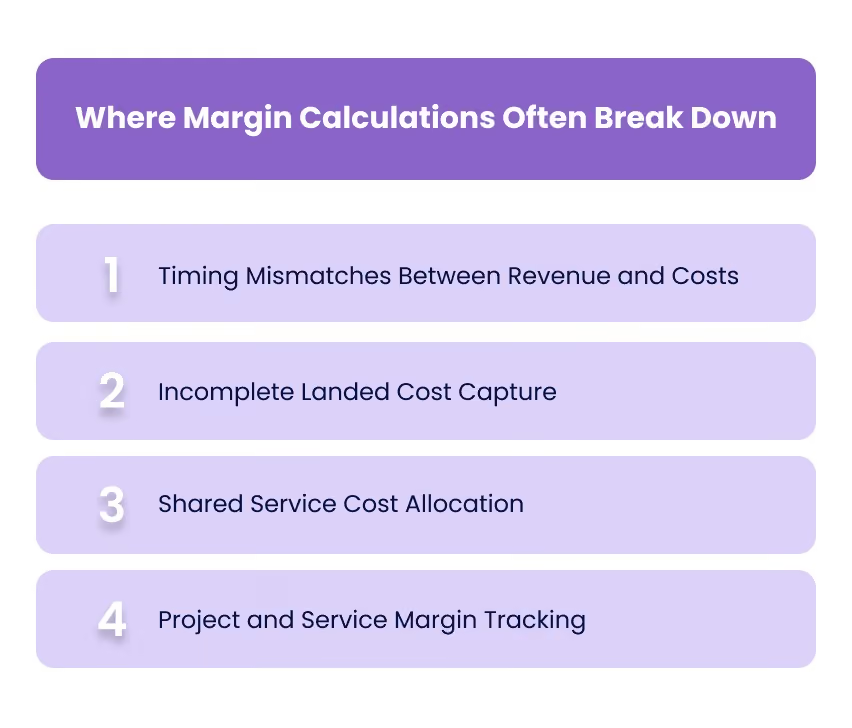
- Timing Mismatches Between Revenue and Costs
Revenue is often recognised earlier than the associated costs.
Example:
A Dubai contractor working on an AED 100 million commercial construction project may recognise revenue as the project progresses under percentage-of-completion accounting. If 40% of the work is completed, approximately AED 40 million of revenue may be recognised.
However:
- Milestone billing to the client may be only AED 25 million
- Subcontractor invoices for labour and materials may arrive weeks later
- Supplier invoices may be submitted after the month-end
This creates a temporary reporting gap where revenue appears before the full project costs are recorded.
Experienced finance teams monitor these timing gaps carefully so margin reporting reflects actual project economics.
- Incomplete Landed Cost Capture
For retail, e-commerce, and distribution companies, product costs go beyond the supplier purchase price.
Typical landed cost components include:
- Freight and international shipping charges
- Customs duties and import VAT
- Warehousing and fulfilment handling fees
- Supplier service charges
In the UAE, import VAT is typically 5% under Federal Tax Authority rules, and it becomes part of the inventory cost until businesses recover it through input VAT claims.
If teams record these costs separately as operating expenses instead of including them in cost of goods sold, reported product margins can appear artificially high.
Finance teams, therefore, track landed costs carefully when analysing product profitability.
Suggested Read: What Is Direct Cost? How It Differs from Other Expenses in Your Business
- Shared Service Cost Allocation
Many organisations centralise functions such as procurement, logistics, or customer support. These shared services support multiple business units, but their costs may not show up directly in product or project margins unless teams allocate them correctly.
Without clear allocation rules, a business unit may appear highly profitable while relying heavily on centrally funded services.
Finance teams typically allocate shared costs based on drivers such as:
- Revenue contribution
- Operational usage
- Transaction volumes
This helps ensure margin analysis reflects the full cost structure of each business unit.
- Project and Service Margin Tracking
Consulting firms, healthcare providers, and construction companies often see early project margins appear strong because labour costs or subcontractor invoices are recorded later in the engagement.
Finance teams, therefore, track margins continuously throughout project delivery. This approach allows finance leaders to spot margin erosion early and adjust project staffing, pricing, or procurement decisions before profitability declines.
At Alaan, we help finance teams capture operational spending the moment it happens. Corporate card transactions, receipts, and invoices are automatically recorded and categorised before syncing with accounting systems such as QuickBooks, NetSuite, or Xero.

Once margin percentages are calculated, finance teams use them alongside markup to make informed pricing decisions.
Margin vs Markup: How Both Are Used in Pricing Decisions
Finance teams in UAE businesses use margin and markup to set prices that ensure profitability while remaining competitive in the market.
Sales and procurement teams often use markup for quick pricing, while finance tracks margins to understand how much revenue remains after direct costs.
When these perspectives are not aligned, revenue may grow even as actual profitability declines.
Gain control over business expenses with Alaan corporate cards
Invygo earned AED 100,000 in cashback using Alaan cards
Personalise approval workflows to align with your business needs with Alaan's Spend Management platform
Discover the power of automated expense tracking and smarter spend control with Alaan
Turn data into actionable insights with Alaan's spend management tools
Stay Tax Compliant with UAE's #1 Corporate Card and Spend Management Platform
Customisable corporate card policy template
Know how much Corporate Tax you have to pay this fiscal year
Easily integrate Alaan with your ERP for accurate, real-time expense tracking
Close books faster with Alaan's AI-powered accounting automation
Reconcile your books in minutes instead of hours, every single month.
Keep petty cash organized with Alaan corporate cards and automated expense management