.avif)


Profitability may appear stable, but small cost shifts can quickly squeeze margins. Rising supplier prices, higher fulfilment costs, or frequent discounting can reduce profits before they appear in financial statements.
Even in strong markets, finance teams operate within narrow profitability margins. Dubai‑listed companies posted net profits of just USD 8.1 billion (AED 29.75 billion) in a single quarter, showing how narrow margins can be. Margin percentage provides a clear view of how these cost changes affect profitability.
For finance leaders overseeing pricing and cost control, the margin percentage shows how procurement costs, pricing decisions, and operational spending influence profitability. Reliable margin reporting requires accurate cost capture, disciplined allocation, and up-to-date financial data.
In this blog, you’ll explore how finance teams calculate margin percentage using revenue and cost data and how modern finance workflows help teams maintain clear and reliable visibility into profitability.
TL;DR Key Takeaways:
- Margin Percentage Reveals True Profitability: Margin percentage shows how much revenue remains after direct costs, helping finance leaders assess whether pricing and procurement decisions support sustainable profit.
- Accurate Cost Capture Determines Margin Reliability: Margin reporting can become distorted when supplier invoices, landed costs, or shared service expenses are recorded late or classified inconsistently.
- Margin and Markup Serve Different Pricing Roles: Markup helps calculate selling prices from cost inputs, while margin confirms whether those prices meet profitability targets.
- Margin Targets Guide Pricing and Cost Decisions: Finance teams use margin thresholds to control discounting, renegotiate supplier costs, and define cost ceilings for procurement and operations.
- Real-Time Cost Visibility Improves Margin Analysis: Platforms like Alaan help finance teams capture operational spending in real time, improving the accuracy of margin reporting and financial decision-making.
How Finance Leaders Calculate Margin Percentage Using Revenue & COGS Data?
Finance teams rarely struggle with the margin formula.
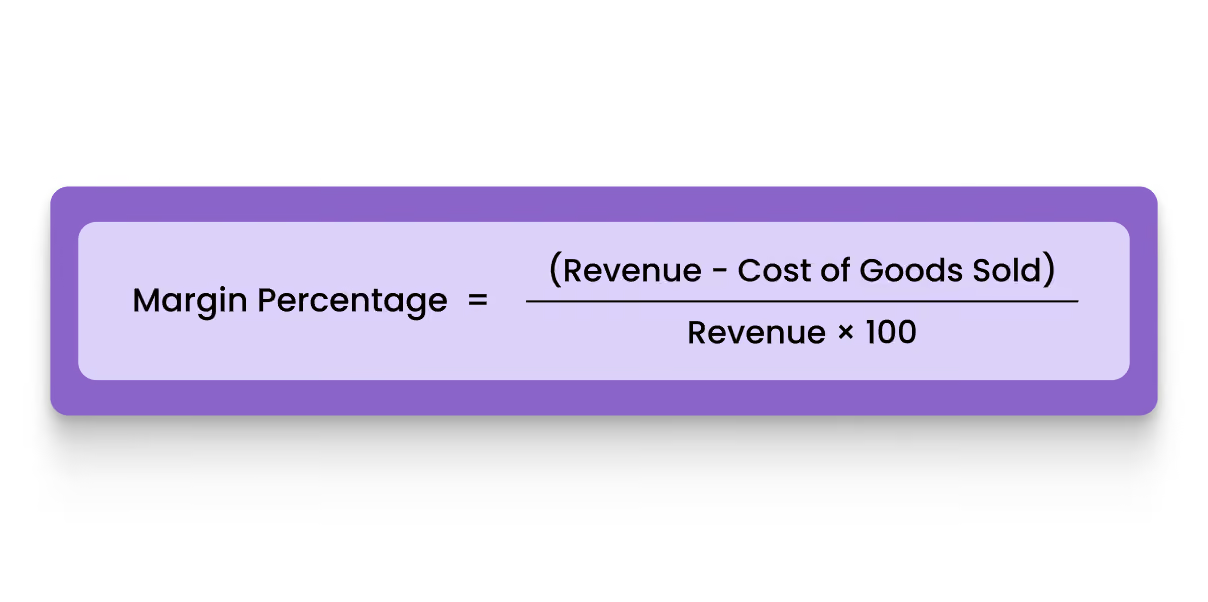
Margin Percentage = (Revenue − Cost of Goods Sold) ÷ Revenue × 100
The difficulty is making sure revenue and cost inputs reflect what actually happens across procurement, operations, and finance systems.
Across UAE organisations, margin reporting often relies on data coming from vendor invoices, project records, procurement platforms, and employee spending tools. When these inputs arrive late or get recorded in different systems, margin reports can temporarily overstate profitability.
Accurate margin reporting, therefore, depends on:
- Timely recording of operational expenses
- Consistent classification of direct costs
- Alignment between operational systems and accounting records
According to Deloitte research on finance and tax functions in the GCC, many organisations still struggle with fragmented data foundations and manual data reconciliation processes, which undermine the quality and reliability of financial reporting.
As a result, finance teams are increasingly prioritising improvements in how operational and financial data flows into core systems.
Where Margin Calculations Often Break Down
Even experienced finance teams encounter margin distortions. The issue rarely comes from the formula itself. Instead, it comes from how operational costs are recorded.
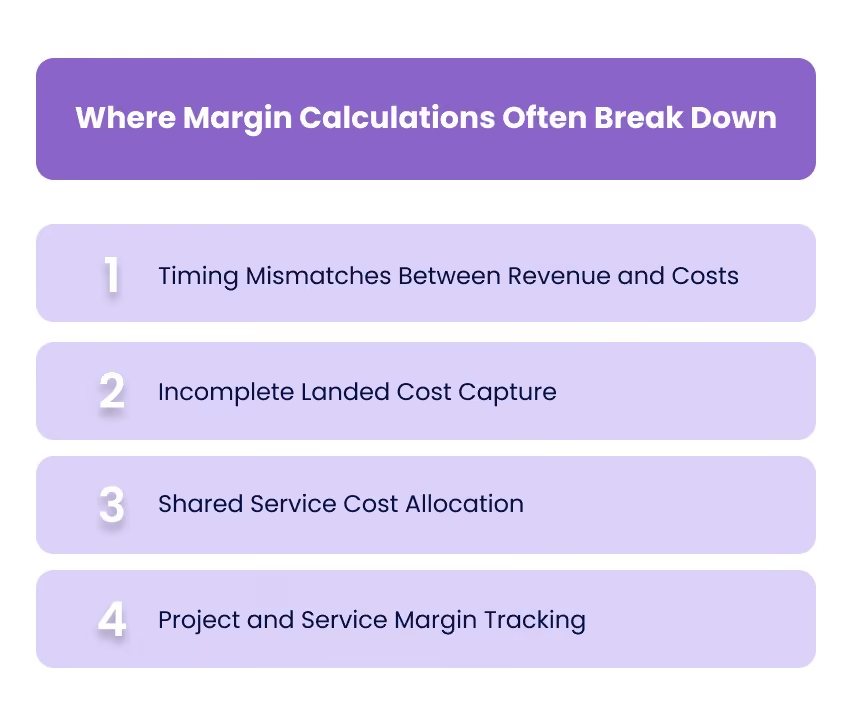
1. Timing Mismatches Between Revenue and Costs
Revenue is often recognised earlier than the associated costs.
Example:
A Dubai contractor working on an AED 100 million commercial construction project may recognise revenue as the project progresses under percentage-of-completion accounting. If 40% of the work is completed, approximately AED 40 million of revenue may be recognised.
However:
- Milestone billing to the client may be only AED 25 million
- Subcontractor invoices for labour and materials may arrive weeks later
- Supplier invoices may be submitted after the month-end
This creates a temporary reporting gap where revenue appears before the full project costs are recorded.
Experienced finance teams monitor these timing gaps carefully so margin reporting reflects actual project economics.
2. Incomplete Landed Cost Capture
For retail, e-commerce, and distribution companies, product costs go beyond the supplier purchase price.
Typical landed cost components include:
- Freight and international shipping charges
- Customs duties and import VAT
- Warehousing and fulfilment handling fees
- Supplier service charges
In the UAE, import VAT is typically 5% under Federal Tax Authority rules, and it becomes part of the inventory cost until businesses recover it through input VAT claims.
If teams record these costs separately as operating expenses instead of including them in cost of goods sold, reported product margins can appear artificially high.
Finance teams, therefore, track landed costs carefully when analysing product profitability.
Suggested Read: What Is Direct Cost? How It Differs from Other Expenses in Your Business
3. Shared Service Cost Allocation
Many organisations centralise functions such as procurement, logistics, or customer support. These shared services support multiple business units, but their costs may not show up directly in product or project margins unless teams allocate them correctly.
Without clear allocation rules, a business unit may appear highly profitable while relying heavily on centrally funded services.
Finance teams typically allocate shared costs based on drivers such as:
- Revenue contribution
- Operational usage
- Transaction volumes
This helps ensure margin analysis reflects the full cost structure of each business unit.
4. Project and Service Margin Tracking
Consulting firms, healthcare providers, and construction companies often see early project margins appear strong because labour costs or subcontractor invoices are recorded later in the engagement.
Finance teams, therefore, track margins continuously throughout project delivery. This approach allows finance leaders to spot margin erosion early and adjust project staffing, pricing, or procurement decisions before profitability declines.
At Alaan, we help finance teams capture operational spending the moment it happens. Corporate card transactions, receipts, and invoices are automatically recorded and categorised before syncing with accounting systems such as QuickBooks, NetSuite, or Xero.

Once margin percentages are calculated, finance teams use them alongside markup to make informed pricing decisions.
Margin vs Markup: How Both Are Used in Pricing Decisions
Finance teams in UAE businesses use margin and markup to set prices that ensure profitability while remaining competitive in the market.
Sales and procurement teams often use markup for quick pricing, while finance tracks margins to understand how much revenue remains after direct costs.
When these perspectives are not aligned, revenue may grow even as actual profitability declines.
Finance leaders, therefore, evaluate margin performance, while operational pricing decisions often start with markup calculations.
Real Pricing Scenarios Finance Teams Monitor
Margin discipline becomes critical when operating costs fluctuate.
1. When Procurement Costs Increase
Supplier prices, international freight charges, customs duties, and UAE import VAT can increase during the year.
If a retail or distribution company adjusts selling prices using a fixed markup rule, the margin may still fall below target because the selling price does not fully reflect the new cost structure.
Finance teams, therefore, evaluate price adjustments against margin thresholds rather than relying solely on markup percentages.
2. When Sales Discounts Expand
Sales teams may offer higher discounts to secure contracts or accelerate revenue growth. Without margin controls, discounting can gradually reduce profitability even when sales volumes rise.
Many companies implement minimum margin thresholds before discounts can be approved, ensuring commercial decisions remain aligned with profitability targets.
3. When High-Revenue Products Deliver Low Margins
Some products generate strong revenue but deliver weak margins after fulfilment costs, logistics fees, and payment processing charges are included.
This situation is common in the UAE e-commerce and retail sectors, where fulfilment, delivery, and payment gateway fees directly affect product profitability.
Finance teams regularly review product-level margins to identify when revenue growth hides declining profitability.
When Finance Teams Use Each Metric
Margin and markup serve different roles in financial decision-making.
Margin is typically used for
- Profitability reporting
- Budgeting and forecasting
- Analysing product and business unit performance
- Evaluating pricing strategy
Markup is typically used for
- Cost-based pricing calculations
- Setting initial selling prices
- Adjusting prices when supplier costs change
- Operational quoting in procurement-heavy industries
Understanding the difference between margin and markup also helps finance teams apply margin targets when setting selling prices and cost limits.
How Finance Teams Use Margin Targets to Set Selling Prices & Cost Limits?
Margin targets act as pricing guardrails, signalling when finance teams should raise prices, renegotiate supplier costs, or limit discounting. In UAE organisations, margins can shift quickly when supplier invoices arrive late or when freight, import VAT, and logistics costs increase.
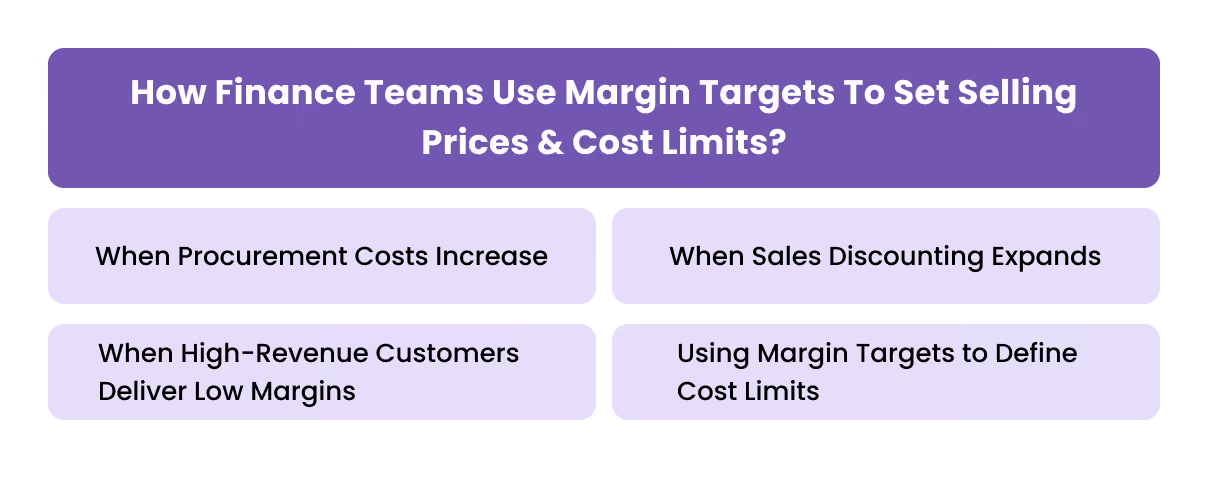
Finance teams, therefore, monitor margin thresholds closely to keep pricing and operational spending aligned with profitability targets.
Deloitte Middle East research shows that 51% of finance leaders in the GCC report that data recording, validation, and reconciliation still require significant manual effort, highlighting persistent challenges with fragmented financial data.
1. When Procurement Costs Increase
Supplier price changes are among the most common triggers of margin pressure.
Consider a UAE distributor importing consumer electronics. If freight costs increase or suppliers revise pricing, procurement costs may rise by 8 percent during the year.
Example scenario:
If procurement costs increase by 8%, the cost becomes AED 648. If the selling price stays at AED 1,000, the margin drops to 35.2%.
Finance teams then review several options:
- Increase selling prices
- Renegotiate supplier contracts
- Reduce operational costs elsewhere
- Temporarily accept lower margins to remain competitive
Margin thresholds help teams decide when price adjustments become necessary.
2. When Sales Discounting Expands
In sectors such as UAE logistics, distribution, and real estate services, sales teams may offer discounts to secure long-term contracts. Without margin controls, discounting can reduce profitability even when revenue grows. Many organisations, therefore, implement discount approval thresholds.
3. When High-Revenue Customers Deliver Low Margins
Large customers can generate strong revenue while contributing little to profitability.
This situation is common in UAE fulfilment and logistics operations, where high-volume clients require:
- Faster delivery timelines
- Customised fulfilment services
- Extended payment terms
These requirements increase the cost to serve and reduce margins. Finance teams, therefore, analyse customer-level margins, not just total revenue.
If profitability falls below acceptable thresholds, finance leaders may:
- Renegotiate pricing structures
- Adjust service scope
- Prioritise higher-margin customer segments
4. Using Margin Targets to Define Cost Limits
Margin thresholds also determine the maximum cost a product or service can absorb before profitability declines.
Example framework:
If supplier or production costs go above AED 650, finance teams must either increase selling prices or reduce operational costs to maintain the target margin.
These cost ceilings often guide:
- Procurement negotiations
- Supplier contract reviews
- Production and fulfilment budgets
Margin targets only work when finance teams can quickly see cost movements.
At Alaan, we help finance teams capture operational spending the moment it happens. Corporate card transactions, receipts, and supplier payments are automatically recorded and synchronised with accounting systems.

Once margin targets are set, finance teams must also track how margins perform across different business models.
Must Read: Procurement Automation Software Solution
How do UAE Finance Teams Track Margin by Business Model?
Margin analysis varies across industries because revenue models and cost structures are different. Finance teams, therefore, assess profitability using sector-specific margin frameworks rather than applying a single benchmark across all businesses.
Tracking margins across different business models also reveals the challenges finance teams face as organisations scale.
Why Margin Reporting Breaks in Scaling UAE Businesses?
As UAE businesses scale, margin reporting often becomes less reliable. Revenue may be recorded accurately, but the related costs may appear later or across different operational systems.
When procurement costs, fulfilment expenses, and supplier invoices are not captured alongside revenue, finance teams lose visibility into the true profitability of products, projects, or customer contracts. This makes pricing, budgeting, and procurement decisions harder to evaluate.
Margin reporting typically breaks down in scaling UAE businesses for several operational reasons.
1. Cost Data Spreads Across Multiple Systems
As companies expand, cost data often sits across multiple platforms. Procurement systems track supplier purchases, logistics platforms record fulfilment costs, and payment tools process vendor transactions.
When these systems are not connected to financial reporting workflows, some direct costs may not be included in margin calculations.
Typical issues include:
- Procurement costs are recorded separately from revenue systems
- Logistics, freight, or import-related costs stored in operational platforms
- Vendor payments processed outside the central accounting workflows
2. Supplier Costs Are Logged After Revenue
Many businesses recognise revenue when products are delivered or services are completed. However, supplier invoices often arrive later.
This is common in sectors such as logistics, construction, and project-based services, where subcontractors or suppliers submit invoices after the month-end deadline.
When cost data arrives after revenue is recorded, margins can temporarily appear stronger than they actually are until financial reconciliation takes place.
Also Read: What Are Supplier Payments? Process, Challenges & How to Optimise Them
3. Cost Allocation Lacks Consistency
As businesses expand into multiple product lines or services, shared operational costs become harder to allocate accurately.
Expenses such as logistics operations, warehouse management, or service delivery teams often support several revenue streams at once. Without consistent allocation rules, margin analysis becomes unreliable.
Finance teams commonly encounter:
- Fulfillment costs assigned to incorrect product categories
- Shared operational costs distributed unevenly across business units
- Procurement expenses categorised inconsistently across departments
These inconsistencies make it difficult to compare profitability across products, services, or projects.
4. Pricing Changes Move Faster Than Financial Tracking
In competitive sectors such as e-commerce, logistics, and SaaS, pricing often changes frequently. Discount campaigns, promotional pricing, and customer-specific agreements can quickly alter revenue per transaction.
If cost data is not updated alongside these changes, margin reports may no longer reflect the true profitability of sales. Finance teams, therefore, need systems that connect pricing decisions with real-time cost tracking.
5. Financial Visibility Drops as Transactions Grow
As organisations scale, transaction volumes increase significantly. More vendor payments, invoices, procurement orders, and employee expenses must be captured and categorised correctly.
Without structured approval workflows and automated expense tracking, finance teams often encounter:
- Incomplete expense documentation
- Delayed receipt collection
- Missing cost data for operational spending
These gaps reduce confidence in margin reports and slow financial decision-making.
Overcoming these issues depends on the operational steps finance leaders take to strengthen margin performance.
5 Operational Strategies Finance Leaders Use to Improve Profit Margins
Finance teams usually improve profitability by tightening cost visibility, enforcing margin thresholds, and controlling operational spending.
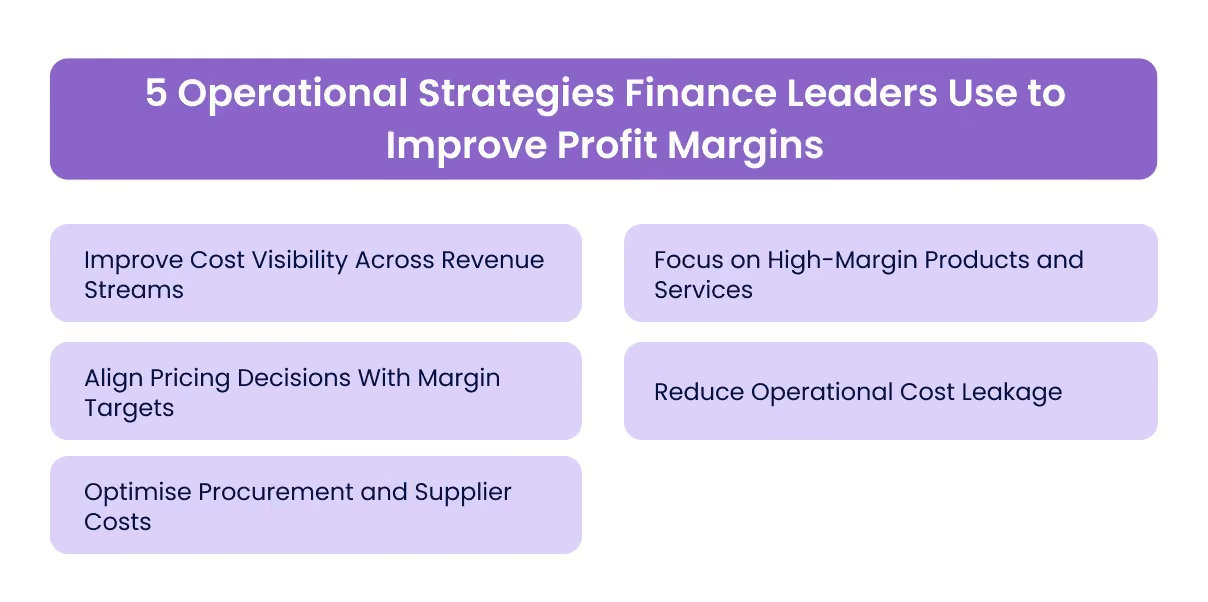
As supplier prices, freight costs, and fulfilment expenses change, finance leaders need structured processes that keep pricing decisions and operational costs aligned with profitability targets.
1. Improve Cost Visibility Across Revenue Streams
In many UAE businesses, procurement spending, fulfilment costs, and supplier invoices are managed on separate platforms. This makes it difficult for finance teams to connect direct costs to the revenue they support.
How to implement
- Track costs at the product, project, or revenue-stream level
- Link procurement, fulfilment, and vendor costs directly to the related revenue
- Standardise cost categories across finance, procurement, and operations
- Record supplier costs as close as possible to the time revenue is recognised
2. Align Pricing Decisions With Margin Targets
Pricing decisions should be evaluated against predefined margin thresholds, especially when supplier or fulfilment costs change. Finance teams, therefore, monitor margin levels continuously to ensure that discounts or price adjustments do not reduce profitability.
How to implement
- Define minimum margin thresholds for products or service categories
- Review pricing when procurement, freight, or fulfilment costs increase
- Monitor discount policies to ensure margins remain above target levels
- Analyse product-level profitability to identify pricing gaps
- Adjust pricing strategies when margins fall below acceptable thresholds
3. Optimise Procurement and Supplier Costs
Supplier spending often represents the largest cost component affecting margins. Even small changes in procurement pricing can significantly reduce profitability, especially in businesses that rely on imported goods or high fulfilment volumes.
How to implement
- Analyse procurement spending across key supplier categories
- Renegotiate vendor contracts based on purchase volumes or long-term agreements
- Compare supplier pricing to identify cost inefficiencies
- Define procurement cost limits aligned with margin targets
Must Read: Procurement Automation Software Solution
4. Focus on High-Margin Products and Services
Some products or customer segments generate strong revenue but produce weaker margins because service or fulfilment costs are higher.
Finance teams, therefore, review margins across product lines, sales channels, and customer segments to identify where profitability is strongest.
How to implement
- Analyse profitability across customer segments and sales channels
- Prioritise sales strategies around high-margin products or services
- Reduce operational focus on consistently low-margin offerings
- Adjust the product or service mix to improve overall profitability
5. Reduce Operational Cost Leakage
Small operational inefficiencies can slowly reduce margins. Duplicate vendor payments, unnecessary software subscriptions, and uncontrolled departmental spending often remain unnoticed until financial reviews identify them.
How to implement
- Review departmental spending regularly to identify unnecessary costs
- Detect duplicate vendor payments or overlapping service contracts
- Implement approval workflows to control unplanned operational spending
Using these strategies becomes more effective when finance teams have tools that ensure margin data is accurate and up-to-date.
How Alaan Helps Finance Teams Maintain Accurate Margin Data?
Accurate margin analysis depends on reliable cost data. In many UAE businesses, operational spending flows across multiple systems, including employee cards, procurement platforms, supplier invoices, and accounting software.
When these systems operate independently, costs are often captured late and classified inconsistently. As a result, expenses may appear weeks after transactions occur, and reported margins may no longer reflect actual operational performance.
At Alaan, we help finance teams structure operational spending before it reaches the accounting system. By capturing expense data earlier and organising it consistently, finance teams gain clearer visibility into the costs that influence product, project, or service margins.
What Alaan Covers Across the Operational Cost Lifecycle
Accurate margin reporting depends on consistently capturing, approving, and recording operational costs. At Alaan, we strengthen each stage of the spend lifecycle, enabling finance teams to maintain reliable cost data and analyse margins with confidence.
1. Corporate Cards With Built-In Spend Controls
Operational spending often starts with employee purchases, travel costs, or supplier payments. Alaan corporate cards allow finance teams to control these transactions as spending occurs.
Finance teams can:
- Set spend limits by employee, department, or project
- Restrict merchant categories to approved vendors
- Issue virtual or physical cards instantly
- Freeze or block cards in real time
This ensures spending stays within approved budgets and operational costs are captured accurately as they occur.
2. Centralised Invoice Capture and Early Validation
At Alaan, invoices are captured centrally through structured workflows, ensuring vendor costs are recorded consistently and remain visible to finance teams.
This allows finance teams to:
- Maintain structured records of supplier costs
- Detect duplicate invoices before payment
- Identify billing discrepancies early
Capturing vendor costs early improves the accuracy of cost data used in margin calculations.
3. Policy-Driven Approvals Workflows
Alaan routes expenses and supplier invoices through approval workflows aligned with company spending policies.
This ensures:
- Expenses remain within approved budgets
- Authorisation occurs before payments are processed
- Unusual transactions are flagged early for review
These controls help finance teams maintain tighter oversight of operational costs that directly affect product or project margins.
4. Consistent Expense Categorisation
When teams enter expenses manually or categorise them inconsistently, product or project margins can become distorted. Alaan automatically categorises transactions and links receipts to expense records.
This helps finance teams:
- Maintain consistent expense categories
- Reduce manual reconciliation work
- Allocate costs accurately across departments or revenue streams
Consistent categorisation improves the reliability of cost allocations used in margin calculations.
5. Accounting and ERP Integrations
Alaan integrates directly with major accounting and ERP platforms, including:
- NetSuite
- QuickBooks
- Xero
- Microsoft Dynamics
- Zoho Books
- Odoo
Approved transactions sync automatically with these systems, ensuring expenses are categorised correctly and reflected in financial reports. When accounting records contain complete and structured cost data, margin analysis becomes more reliable.
6. Real-Time Visibility Into Operational Spending
Alaan dashboards give finance leaders visibility into operational spending across departments and vendors.
Finance teams can track:
- Corporate card transactions across teams
- Vendor payments and procurement costs
- Department-level spending patterns
- Outstanding invoices and expense commitments
This real-time visibility helps finance teams detect rising costs earlier and understand how operational spending influences margin performance.
What Alaan Is (And Is Not)
Alaan is an expense management platform designed to strengthen operational spend control and improve cost visibility.
At Alaan, we help finance teams:
- Capture operational costs in real time
- Maintain consistent expense categorisation
- Enforce approval workflows for spending
- Improve the reliability of cost data used for margin reporting
Alaan does not replace your ERP or accounting system. Instead, we integrate with those systems to improve upstream spend control and ensure the financial data used in margin analysis remains complete and accurate.
Final Thoughts
Profitability depends on more than revenue growth. For finance leaders in the UAE, margin percentage reveals whether pricing, supplier costs, and operational spending are aligned with financial targets.
Achieving this requires accurate, real-time visibility into costs, allowing teams to identify margin pressure early and take timely action through pricing, procurement, or operational adjustments.
At Alaan, we help finance teams maintain that visibility by bringing corporate spending, approvals, and expense data into a single controlled workflow. This ensures operational costs are captured in real time, categorised consistently, and reflected accurately in financial systems, improving the reliability of margin reporting.
Book a free demo to see how Alaan helps UAE businesses strengthen spend visibility and support better financial decision-making.
FAQs
1. What is the difference between gross profit margin and net profit margin?
Gross profit margin shows how efficiently revenue covers direct costs such as inventory, production, and fulfilment. Net profit margin reflects the company’s overall profitability after operating expenses, financing costs, and taxes are taken into account.
2. What types of profit margins do finance leaders track in financial reporting?
Finance leaders typically track gross profit margin, operating profit margin, and net profit margin. Each shows profitability at a different level, from product costs to overall financial performance.
3. What are the margin benchmarks that finance leaders use to evaluate profitability?
Margin benchmarks vary by industry because cost structures differ significantly:
- Technology and SaaS: 60–80% gross margin
- E-commerce and retail: 20–40% gross margin
- Logistics and transportation: 15–30% gross margin
- Healthcare services: 30–50% gross margin
- Real estate and construction: 20–35% gross margin
4. Should finance teams focus more on gross margin or net margin?
Finance teams typically analyse both. Gross margin assesses the profitability of products or services, while net margin indicates whether the overall business, after operating costs, financing, and taxes, is generating sustainable profit.
5. How often should finance teams review margin performance?
Finance teams usually review margin performance monthly or quarterly, depending on transaction volume and industry dynamics. Regular monitoring helps identify cost increases, pricing gaps, or operational inefficiencies before they affect profitability.
Gain control over business expenses with Alaan corporate cards
Invygo earned AED 100,000 in cashback using Alaan cards
Personalise approval workflows to align with your business needs with Alaan's Spend Management platform
Discover the power of automated expense tracking and smarter spend control with Alaan
Turn data into actionable insights with Alaan's spend management tools
Stay Tax Compliant with UAE's #1 Corporate Card and Spend Management Platform
Customisable corporate card policy template
Know how much Corporate Tax you have to pay this fiscal year
Easily integrate Alaan with your ERP for accurate, real-time expense tracking
Close books faster with Alaan's AI-powered accounting automation
Reconcile your books in minutes instead of hours, every single month.
Keep petty cash organized with Alaan corporate cards and automated expense management