.avif)

Procurement spending can seem under control during the quarter, but the full picture often only emerges at quarter-end, when costs across software, logistics, agencies, and suppliers are consolidated across multiple teams and systems.
This complexity is growing in the UAE, where authorities are mandating e‑invoicing from mid‑2026. It's a move expected to cut processing costs by up to 66 % and highlight the financial benefits of improved procurement visibility.
For finance leaders, this makes procurement opportunity analysis essential. Unfolding fragmented vendor spending, underused contracts, and pricing inefficiencies helps organisations identify hidden costs and optimise supplier arrangements.
In this blog, you’ll learn how procurement opportunity analysis works, where inefficiencies typically appear, and how finance teams can prioritise supplier improvements while managing risk effectively.
TL;DR Key Takeaways:
- Procurement inefficiencies surface through financial signals: Margin pressure, pricing gaps, and liquidity strain often reveal hidden supplier cost issues before reporting cycles do.
- Leakages are identified through structured analysis: Category-level spend, supplier exposure, contract alignment, and cost variance highlight procurement inefficiencies.
- Opportunity analysis is triggered by deviation: Finance teams act when cost behaviour diverges from margin, pricing, or working capital expectations.
- Prioritisation depends on financial impact and execution risk: Teams focus on opportunities that improve margin, cash flow, or cost stability without introducing operational disruption.
- Real-time spend visibility enables earlier intervention: Platforms like Alaan help finance teams structure supplier data and act on procurement opportunities before decisions are locked.
Why Procurement Opportunities Stay Hidden Until Quarter-End?
Procurement opportunities often go unnoticed because teams only bring supplier spend together after reporting cycles. In UAE businesses, this delay becomes even more pronounced due to cross-border procurement and VAT-linked cash flows.
Companies pay import VAT (5%) upfront and recover it later through input VAT claims, which makes liquidity planning harder when procurement costs are not visible early on.
As a result, by the time they have full visibility, supplier pricing, contract terms, and purchasing volumes are already locked in, limiting their ability to renegotiate or optimise costs.
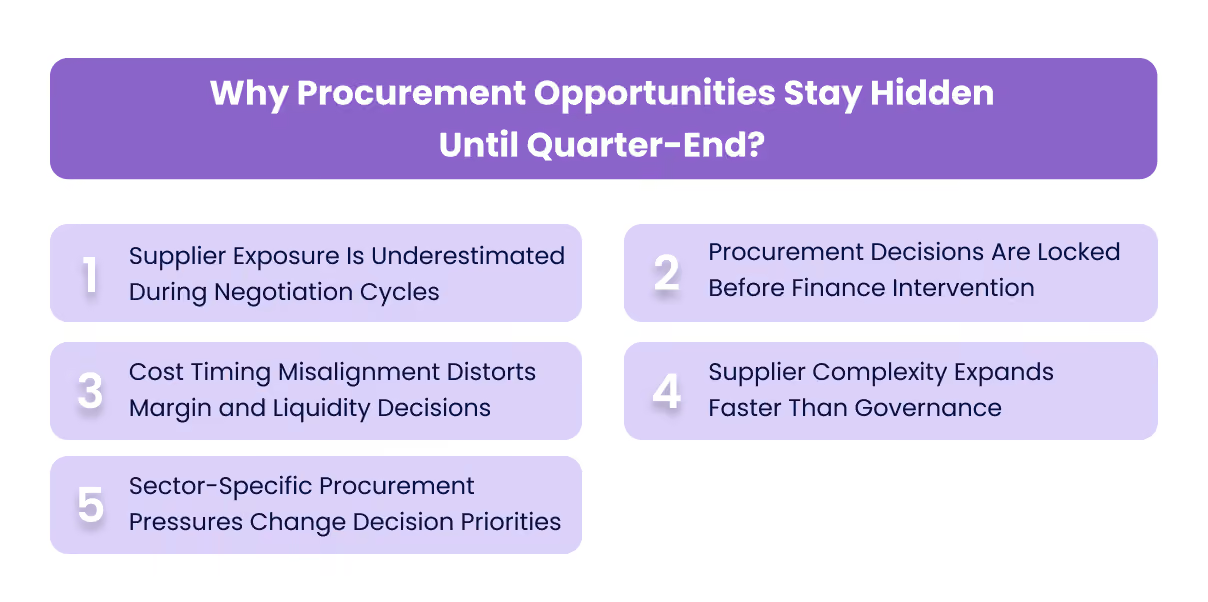
Here's why procurement opportunities go unnoticed until quarter-end:
1. Supplier Exposure Is Underestimated During Negotiation Cycles
When teams do not consolidate supplier spend before negotiation cycles, finance underestimates actual purchasing volume.
- Teams miss volume-based pricing thresholds even when total spend is high enough
- Contracts get priced below the discount tiers that the business could have achieved
- Teams assess supplier concentration at a department level instead of across the whole business
- Negotiations rely on partial data, which weakens leverage
Decision trigger: Finance teams usually step in when margins start to shrink without any clear pricing change, or when supplier spend increases without better commercial terms.
Decision impact: The business locks supplier contracts at pricing levels that are not optimal for the entire contract cycle.
Trade-off: Flexibility for individual departments vs stronger, consolidated pricing power at the enterprise level.
2. Procurement Decisions Are Locked Before Finance Intervention
When teams have procurement visibility only during reporting cycles, finance is no longer involved in decision-making.
- Teams select suppliers without checking the impact on margins
- They commit to purchase volumes without validating cost thresholds
- They finalise pricing decisions before seeing the full cost picture
- They identify budget deviations only after execution
Decision trigger: Finance usually steps in only when a budget variance exceeds acceptable limits or when profitability declines. By then, procurement commitments are already fixed.
Decision impact: Finance can explain why costs went over budget, but it cannot prevent those overruns.
Trade-off: Faster procurement execution vs tighter cost control and margin protection.
3. Cost Timing Misalignment Distorts Margin and Liquidity Decisions
In UAE operations, procurement costs, VAT treatment, and supplier payments do not line up with revenue timing.
- Teams record supplier invoices after recognising revenue, which distorts margin signals
- Import VAT creates immediate cash outflows, while recovery depends on input VAT claims
- Payment terms vary across international suppliers, making liquidity harder to plan
- Freight and landed costs are tracked separately, which delays full cost visibility
Decision trigger: Finance teams revisit pricing or working capital when liquidity pressure rises without a matching increase in revenue, or when they cannot link margin changes to known cost drivers.
Decision impact: Teams make pricing, margin, and cash-flow decisions based on incomplete cost data.
Trade-off: Accurate margin visibility is affected by timing gaps in cost capture. Liquidity stability is impacted by delayed VAT recovery and supplier payment cycles.
4. Supplier Complexity Expands Faster Than Governance
As organisations grow across the UAE and GCC, procurement becomes more complex, but control mechanisms do not always keep up.
- Multiple vendors operate in the same category across different business units
- Teams make procurement decisions in a decentralised way, which reduces visibility into total spend
- Smaller, recurring suppliers build up outside review thresholds
- Teams delay supplier rationalisation until periodic reviews
Decision trigger: Finance steps in when supplier fragmentation leads to inconsistent pricing, rising category costs, or difficulty enforcing procurement policies across departments.
Decision impact: Cost structures develop without central oversight, which weakens pricing discipline.
Trade-off: Decentralised procurement provides flexibility but reduces control over costs and supplier optimisation.
5. Sector-Specific Procurement Pressures Change Decision Priorities
Procurement challenges manifest differently depending on the business model, which directly affects how finance teams respond.
Retail and E-commerce:
- Margins come under pressure due to landed cost gaps, discounting, and fulfilment charges
Decision: Adjust pricing or absorb higher costs to maintain volume
Logistics and Distribution:
- Costs are driven by fuel, subcontractors, and contract pricing
Decision: Renegotiate contracts or improve utilisation
Construction and Infrastructure:
- Procurement depends on project phases, subcontractor timing, and milestone billing
Decision: Reforecast project cash flows or adjust procurement schedules
SaaS and Technology:
- Vendor spend is concentrated in subscriptions and infrastructure
Decision: Control how costs scale or support growth and product expansion
Decision trigger: Finance leaders step in when unit economics move away from expected margins or when costs grow faster than revenue.
At Alaan, we bring corporate cards, invoice capture, and approval workflows into a single system, enabling finance teams to act on procurement data while decisions are still reversible.
Understanding why these opportunities are missed also helps identify where procurement leakages typically occur.
Where Do Finance Teams Typically Identify Hidden Procurement Leakages?
Procurement leakages become visible when cost behaviour diverges from expected margin, pricing, or working capital outcomes. These leakages originate from how suppliers spend, contracts, and procurement decisions are structured across the organisation.
They are typically identified only after aggregation, at which point the underlying cost decisions have already affected financial performance.
Below are some of the most common areas where finance teams identify procurement leakages.
1. Category-Level Spend Consolidation
Leakages become easier to spot when total spend within a category does not lead to better pricing outcomes:
- Total spend crosses the thresholds needed to unlock better pricing
- Vendor spread prevents teams from consolidating purchasing volume
- Cost per unit stays the same even as total spend increases
Decision trigger: Step in when category-level spend goes up, but negotiated pricing or discount tiers do not improve.
2. Supplier Concentration and Exposure Analysis
Leakages occur when supplier exposure is not reflected in the agreed commercial terms:
- Total supplier spend is split across different business units
- Pricing negotiations do not reflect the full, enterprise-level exposure
- Teams assess supplier dependence at a local level instead of across the business
Decision trigger: Step in when total supplier exposure should support renegotiation, but pricing and terms remain unchanged.
3. Contracted Cost vs Actual Spend Alignment
Leakages appear when actual procurement activity does not match agreed contract terms:
- Actual spend goes beyond, or bypasses, negotiated contract pricing
- Teams continue procuring outside the agreed supplier contracts
- Committed cost levels no longer match how the business actually operates
Decision trigger: Step in when realised procurement costs move away from contracted pricing without a clear operational reason.
4. Aggregated Recurring Spend Review
Leakages build up when small, low-value transactions add up into a meaningful cost over time:
- Individual transactions stay below approval thresholds
- Total category spend rises beyond expected levels when combined
- Cost increases only become visible after financial consolidation
Decision trigger: Step in when recurring spend increases without a matching rise in output, utilisation, or revenue contribution.
5. Pricing Variance Across Comparable Cost Structures
Leakages become clear when similar inputs are priced differently across the organisation:
- Cost differences exist across business units without changes in scope or volume
- Supplier pricing is not standardised across the business
- Similar procurement categories show inconsistent cost structures
Decision trigger: Step in when cost differences cannot be explained by operational or contractual factors.
Suggested Read: How UAE Businesses Can Reduce Procurement Costs with These 20 Strategies
Once these leakage areas are identified, finance teams can begin analysing them to identify procurement opportunities.
How Finance Teams Run Procurement Opportunity Analysis in Practice?
Finance teams run procurement opportunity analysis to identify where cost structures diverge from expected pricing, margin, and working capital assumptions.
The objective is not visibility alone, but to determine where procurement decisions require intervention before they affect financial outcomes.
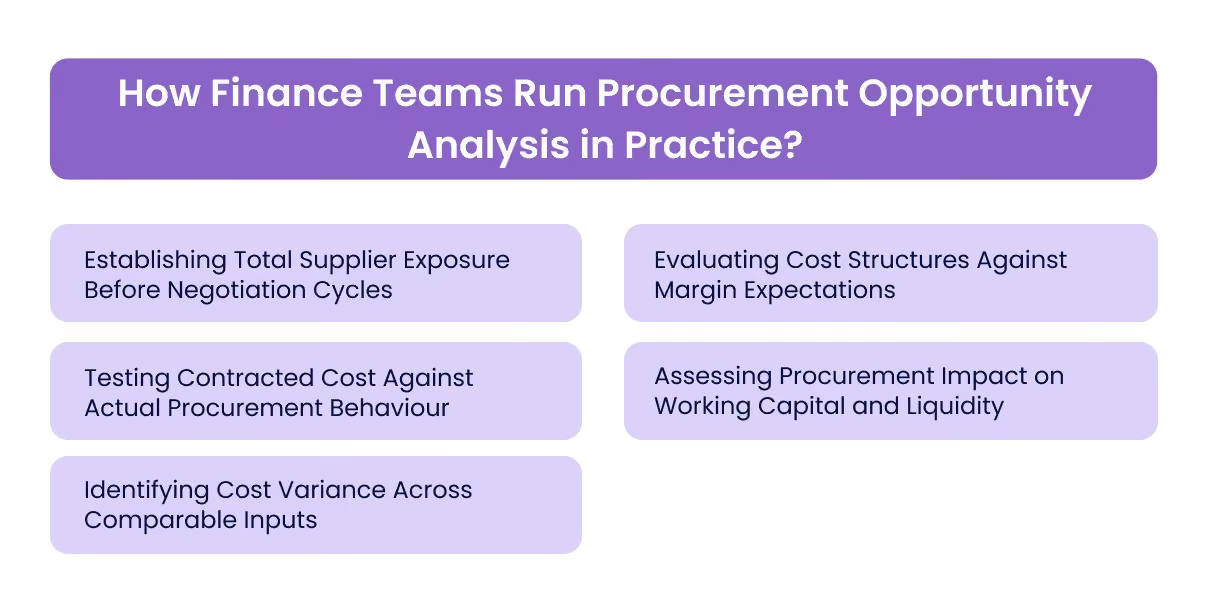
Here's how you can put procurement opportunity analysis into practice:
1. Establishing Total Supplier Exposure Before Negotiation Cycles
The analysis starts by checking whether supplier exposure reflects the business’s actual purchasing power:
- Teams review total spend across all procurement channels before negotiation cycles begin
- They compare category-level exposure with pricing tiers and discount thresholds
- They assess supplier concentration across the entire business, not just by department
Decision trigger: Act when total supplier exposure is strong enough to support renegotiation, but current pricing does not reflect that scale.
2. Evaluating Cost Structures Against Margin Expectations
Finance teams assess whether procurement costs align with margin targets and pricing assumptions:
- They compare cost inputs with expected unit economics
- They separate procurement-driven cost increases from changes in demand or pricing
- They analyse margin pressure in relation to supplier cost behaviour
Decision trigger: Act when margins decline without any clear change in pricing strategy or revenue mix.
3. Testing Contracted Cost Against Actual Procurement Behaviour
This analysis checks whether agreed contract terms actually translate into cost efficiency:
- Teams compare real procurement activity with contracted pricing structures
- They identify deviations from agreed terms at a transaction level
- They test contract assumptions against current operating patterns
Decision trigger: Act when actual procurement costs go beyond contracted benchmarks without a clear operational reason.
4. Assessing Procurement Impact on Working Capital and Liquidity
In UAE operations, procurement analysis also focuses on cash flow timing and VAT impact:
- Teams review supplier payment cycles alongside cash flow forecasts
- They assess VAT outflows against recovery timelines
- They align procurement commitments with overall liquidity planning
Decision trigger: Act when procurement-related cash outflows start to strain liquidity without matching revenue inflows.
Also Read: A Simple Guide to Cash Flow Statement of Construction Companies
5. Identifying Cost Variance Across Comparable Inputs
Finance teams check whether cost structures stay consistent across the business:
- They compare similar inputs across business units and contracts
- They assess pricing differences based on volume, scope, and supplier terms
- They test cost inconsistencies to understand the root cause
Decision trigger: Act when cost differences exist without any operational or contractual explanation.
Procurement opportunity analysis depends on having accurate and well-structured cost data before decisions are made.
At Alaan, we make sure procurement-related spend is captured, categorised, and approved at the point of transaction. This helps finance teams move away from after-the-fact analysis and make decisions at the point where they can still influence procurement outcomes.
Once opportunities are identified, finance teams often use cost-benefit analysis to prioritise which ones to act on first.
5 Steps to Prioritise Procurement Opportunities Using Cost-Benefit Analysis
Finance teams prioritise procurement opportunities by identifying where cost interventions materially improve margin, pricing flexibility, or working capital without introducing execution risk.
The focus is on determining which actions warrant intervention based on their financial impact and timing.
Here’s how finance teams priortise procurement opportunities using cost-benefit analysis:
1. Sizing Financial Impact Against Margin Sensitivity
Teams prioritise opportunities by looking at how changes in procurement costs affect margins:
- They assess cost reductions against unit economics and margin thresholds
- They separate procurement-driven cost increases from pricing or demand changes
- They focus on areas where margins are most sensitive to cost changes
Decision trigger: Prioritise when reducing procurement costs improves margins without needing changes in pricing or demand assumptions.
2. Assessing Implementation Friction Against Financial Impact
Finance teams check whether the effort involved is worth the financial benefit:
- They assess supplier changes for execution risk
- They evaluate internal resource requirements against expected savings
- They review process changes for their operational impact
Decision trigger: Prioritise when the financial upside clearly outweighs the effort, complexity, and disruption risk.
3. Prioritising Based on Cost Concentration and Scale
Teams focus on areas where procurement spend has the biggest financial impact:
- They assess high-spend categories for pricing optimisation
- They evaluate supplier exposure for renegotiation opportunities
- They prioritise improvements where scale increases the overall impact
Decision trigger: Prioritise when concentrated spending creates enough leverage to meaningfully reduce costs.
4. Evaluating Impact on Working Capital and Liquidity
In UAE operations, teams also assess how procurement decisions affect cash flow and VAT timing:
- They review supplier payment cycles against cash flow forecasts
- They assess VAT outflows (5% under FTA) alongside recovery timelines
- They align procurement commitments with liquidity constraints
Decision trigger: Prioritise procurement changes that improve cash flow timing or reduce liquidity pressure.
5. Assessing Long-Term Cost Stability
Finance teams also look at whether procurement decisions make costs more predictable over time.
- They assess pricing structures for consistency
- They evaluate supplier relationships for long-term scalability
- They review cost volatility alongside expected savings
Decision trigger: Prioritise when procurement changes improve cost stability without increasing exposure to pricing fluctuations.
Once procurement opportunities are prioritised based on cost and impact, the next step is understanding how this analysis directly shapes better supplier decisions.
How Opportunity Analysis Improves Supplier Decisions?
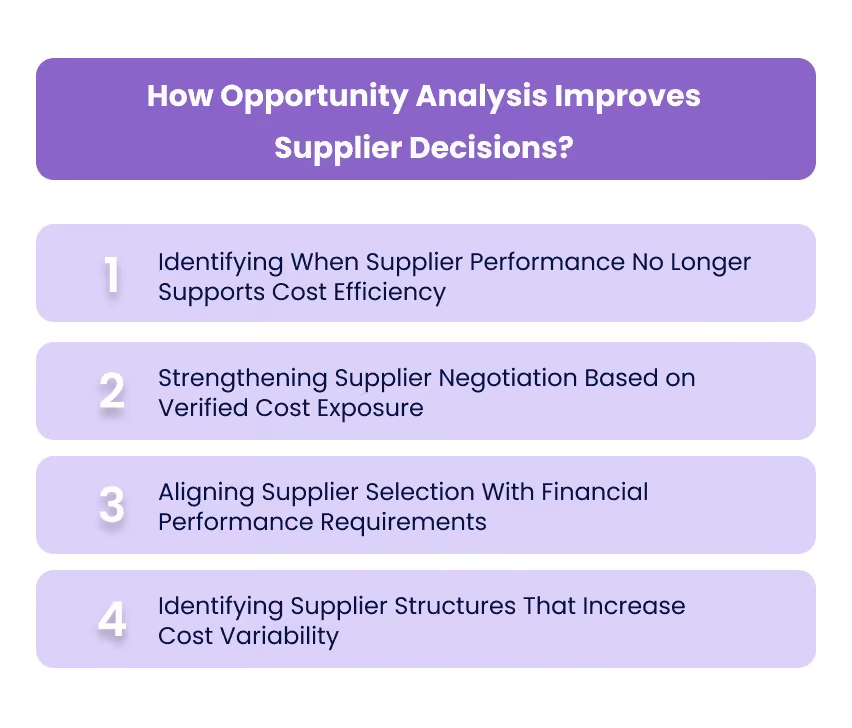
Supplier decisions directly influence how procurement costs affect pricing, margins, and working capital. Opportunity analysis supports better decision-making by highlighting where supplier terms, cost structures, and performance fall short of expected financial outcomes.
In UAE operations, this becomes more complex because of cross-border supplier arrangements, VAT-linked cost timing, and decentralised procurement across business units.
Here’s how opportunity analysis improves supplier decisions:
- Identifying When Supplier Performance No Longer Supports Cost Efficiency
Opportunity analysis helps teams spot when supplier performance no longer matches cost expectations:
- Procurement costs go up without any clear improvement in output or delivery reliability
- Supplier performance does not justify the current pricing structure
- Cost per unit moves away from expected benchmarks
Decision trigger: Step in when supplier costs increase or remain high, with no measurable improvement in performance or delivery outcomes.
- Strengthening Supplier Negotiation Based on Verified Cost Exposure
Opportunity analysis leads to stronger negotiations by linking supplier discussions to actual spend behaviour:
- Teams assess total supplier exposure before starting negotiation cycles
- They evaluate cost concentration against pricing tiers and discount thresholds
- They connect changes in spending patterns with the right timing for negotiations
Decision trigger: Step in when supplier spend supports renegotiation, but pricing or commercial terms have not changed.
- Aligning Supplier Selection With Financial Performance Requirements
Supplier selection improves when teams base decisions on financial outcomes instead of operational preferences:
- Teams test supplier cost structures against margin expectations
- They align procurement decisions with pricing and cost thresholds
- They choose vendors based on financial impact rather than local optimisation
Decision trigger: Step in when supplier choices lead to margin pressure or cost structures that do not match pricing assumptions.
Must Read: 10 Proven Vendor Management Strategies for UAE Companies
- Identifying Supplier Structures That Increase Cost Variability
Opportunity analysis also highlights when supplier setups lead to cost inconsistencies:
- Pricing varies for similar inputs without any clear contractual or volume-based reason
- Supplier terms differ across business units, which affects cost predictability
- Cost volatility increases without changes in demand
Decision trigger: Step in when cost differences cannot be explained by scope, volume, or supplier terms.
While improving supplier decisions is important, finance teams must also balance potential opportunities with the risks each supplier brings.
5 Ways to Balance Procurement Opportunities with Supplier Risk
Procurement opportunities are evaluated not only on their potential to reduce costs but also on how they affect supplier reliability, cost stability, and working capital exposure. The objective is to ensure that cost improvements do not introduce structural risk into pricing, operations, or liquidity.
Below are five ways to balance procurement opportunities with supplier risk.
- Testing Supplier Stability Against Cost Reduction Opportunities
Finance teams check whether cost savings come at the expense of supplier reliability or consistent performance:
- They assess supplier financial and operational stability against cost reduction targets
- They test whether suppliers can handle required volumes before making consolidation decisions
- They review dependency risk when the business relies on fewer suppliers
Decision trigger: Proceed only when cost reductions do not increase the risk of supplier instability or over-concentration.
- Evaluating Supplier Dependence Within High-Impact Categories
Teams review procurement changes based on how critical a supplier is to both cost structure and operations:
- They measure supplier dependence against category-level cost impact
- They check if alternative suppliers are available at the required scale
- They assess operational reliance in terms of how flexible procurement can remain
Decision trigger: Limit consolidation or supplier changes when relying on a single vendor increases operational or cost risk.
- Assessing Contract Structures Against Future Cost Flexibility
Teams evaluate supplier agreements to understand how they affect cost predictability and flexibility over time:
- They test contract commitments against expected changes in demand or pricing
- They assess pricing structures for long-term stability
- They review contract constraints and how they limit procurement flexibility
Decision trigger: Avoid changes when contract structures reduce the ability to adjust costs as market or operational conditions shift.
- Evaluating Transition Risk Against Immediate Cost Savings
Teams assess supplier changes by weighing execution risk against potential savings:
- They evaluate how complex the transition will be compared to the expected cost-benefit
- They assess execution risk, especially when procurement changes affect core workflows
- They measure short-term disruption against long-term cost improvement
Decision trigger: Delay or phase changes when execution risk is higher than the immediate financial benefit.
- Protecting Cost Stability in Operationally Critical Categories
Some procurement categories need stable cost structures because they directly affect pricing and operations:
- Teams assess cost volatility in relation to pricing consistency
- They prioritise supplier reliability where cost disruption could affect revenue delivery
- They evaluate procurement changes based on how they impact cost predictability
Decision trigger: Prioritise stability over savings when procurement changes introduce cost variability that affects pricing or margin consistency.
Effectively balancing opportunities and risks also depends on identifying the right timing for a procurement opportunity analysis.
When Should You Conduct an Opportunity Analysis?
Finance teams conduct opportunity analysis when procurement cost behaviour diverges from expected margin, pricing, or working capital assumptions.
This is done to identify and intervene before these deviations become embedded in financial performance.
Below are the key moments that trigger procurement opportunity analysis.
Gain control over business expenses with Alaan corporate cards
Invygo earned AED 100,000 in cashback using Alaan cards
Personalise approval workflows to align with your business needs with Alaan's Spend Management platform
Discover the power of automated expense tracking and smarter spend control with Alaan
Turn data into actionable insights with Alaan's spend management tools
Stay Tax Compliant with UAE's #1 Corporate Card and Spend Management Platform
Customisable corporate card policy template
Know how much Corporate Tax you have to pay this fiscal year
Easily integrate Alaan with your ERP for accurate, real-time expense tracking
Close books faster with Alaan's AI-powered accounting automation
Reconcile your books in minutes instead of hours, every single month.
Keep petty cash organized with Alaan corporate cards and automated expense management