.avif)

Purchase orders matter because supplier spend needs a reliable record before the invoice arrives. Without a formal PO, finance teams are often left reconstructing what was approved, what the supplier agreed to deliver, and whether the final invoice matches the original commitment.
That record will become even more important as UAE invoicing processes become more structured. The UAE Ministry of Finance states that electronic invoicing will commence with a pilot programme on 1 July 2026, with mandatory implementation phased from January 2027 based on revenue thresholds. For businesses with annual revenue of AED 50 million or more, the guideline lists 31 July 2026 as the last date to appoint an Accredited Service Provider and 1 January 2027 as the implementation date.
A purchase order gives procurement and finance teams a control point before payment. It confirms what is being bought, from whom, at what price, under which terms, and with whose approval, making invoice review and reconciliation far less dependent on emails or memory.
In this blog, we will explain what a purchase order is, what PO and LPO mean in business, how purchase orders work in procurement, and how they help finance teams control supplier spend before invoices arrive.
TL;DR / Key Takeaways
- A purchase order confirms what the business intends to buy, from which supplier, at what price, and under which terms.
- A PO creates a control point before spend becomes a supplier invoice or payment obligation.
- An LPO usually refers to a local purchase order and is commonly used for domestic supplier transactions in UAE business contexts.
- Purchase orders are different from requisitions and invoices because they sit between internal approval and supplier billing.
- Strong PO workflows reduce unauthorised purchases, invoice mismatches, supplier disputes, reconciliation delays, and weak audit trails.
What Is A Purchase Order
A purchase order is a formal document issued by a buyer to a supplier to confirm the details of a purchase. It specifies what is being ordered, in what quantity, at what price, and under which delivery and payment terms.
In simple terms, it is the point where a purchase request becomes a confirmed order. Once the supplier accepts the purchase order, it becomes a reference document for both parties and may carry contractual weight depending on the agreement.
In a business context, the term PO is widely used as shorthand for purchase order. When teams refer to raising a PO, they are referring to creating and approving this document before committing to a supplier.
From a finance perspective, a purchase order is not just administrative. It acts as a control mechanism. It ensures that spending is approved in advance, aligned with budgets, and documented clearly before any invoice is received.
Also Read: Automated Procurement Processes Workflows
What A Purchase Order Usually Includes
A purchase order is only useful if it captures the right level of detail. Incomplete or unclear POs often lead to disputes, delays, or mismatches during invoice processing.
Typical elements include:
- Buyer and supplier details
- Purchase order number
- Date of issue
- Description of goods or services
- Quantity ordered
- Unit price and total value
- Delivery date and location
- Payment terms
- Tax details where applicable
- Approval reference or authorisation
- Terms and conditions
Each of these elements serves a purpose. Together, they create a structured record that can be used to verify supplier invoices, track delivery, and support reconciliation.
Purchase Order Example
A simple example helps illustrate how a purchase order works in practice.
- Buyer: ABC Trading LLC
- Supplier: Dubai Office Supplies LLC
- PO Number: PO-2026-014
- Description: Office laptops
- Quantity: 10
- Unit Price: AED 3,200
- Total Value: AED 32,000
- Delivery Date: 15 May 2026
- Payment Terms: 30 days after invoice
- Approved By: Finance Manager
This document gives the supplier a clear instruction and gives the finance team a reference point. When the invoice arrives, it can be checked against this PO to confirm that the amount, quantity, and terms match the original approval.
How The Purchase Order Process Works
A purchase order is part of a broader procurement workflow. It connects internal requests, supplier commitments, and payment processing into a structured sequence.
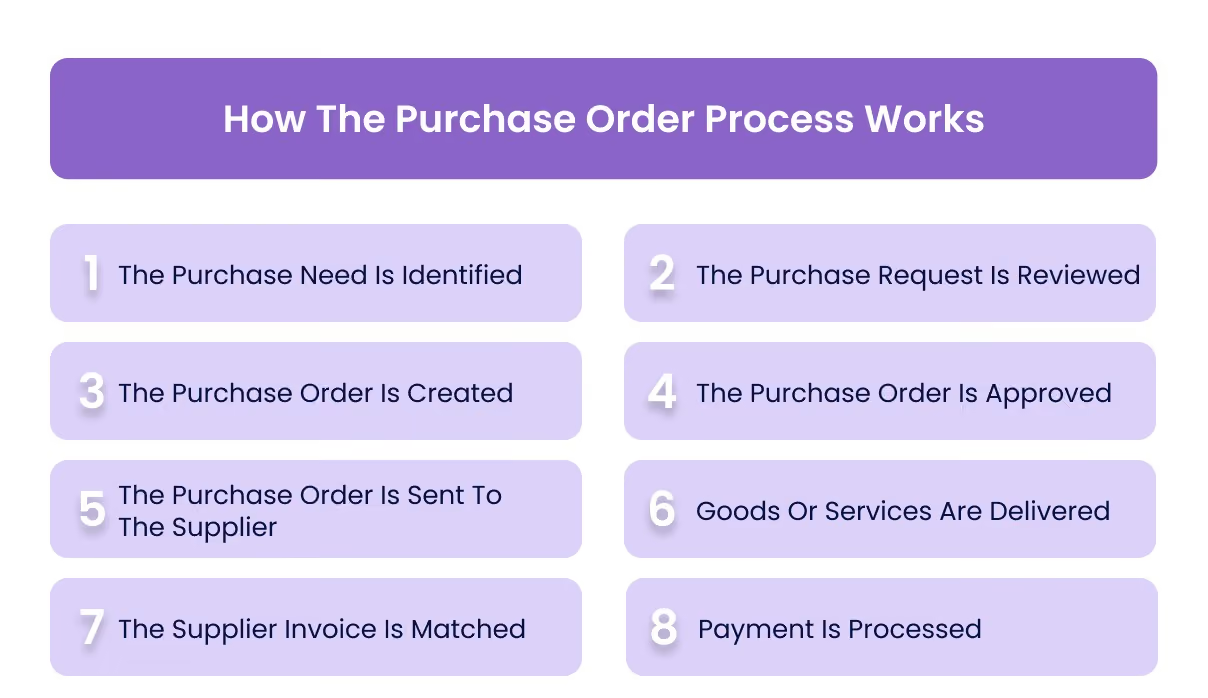
1. The Purchase Need Is Identified
A team or department identifies a requirement for goods or services.
2. The Purchase Request Is Reviewed
The request is checked against budget, supplier policies, and business needs before approval.
3. The Purchase Order Is Created
The PO is prepared with all relevant details, including pricing, quantity, and delivery terms.
4. The Purchase Order Is Approved
Approvers review the PO to ensure it aligns with budgets and policies before it is sent out.
5. The Purchase Order Is Sent To The Supplier
The supplier receives and confirms the order.
6. Goods Or Services Are Delivered
The business receives the goods or confirms that services have been completed.
7. The Supplier Invoice Is Matched
The invoice is compared with the PO and delivery details to ensure accuracy.
8. Payment Is Processed
Once verified, the payment is approved and made according to the agreed terms.
Related: Procure To Pay Systems Process Steps
What Is LPO In Purchasing
In many business contexts, especially in the UAE and GCC region, the term LPO is commonly used alongside PO. LPO stands for Local Purchase Order.
A local purchase order is essentially a purchase order used for transactions with local suppliers. It carries the same purpose and structure as a standard purchase order but is often used to distinguish domestic purchases from international or import-related procurement.
In practical terms, there is no fundamental difference in how a PO and an LPO function. Both confirm what is being purchased, from whom, at what price, and under which terms. The distinction is largely contextual and reflects how businesses categorise procurement activity.
You may see LPO used in:
- Local supplier purchases
- UAE-based procurement documentation
- Vendor communication and payment approvals
- Internal procurement systems where purchases are segmented
Understanding this terminology is important because many businesses use PO and LPO interchangeably, even though the underlying control function remains the same.
Local Purchase Order Vs Purchase Order
While the terms are closely related, it is useful to understand how they are typically used in practice.
The key takeaway is that an LPO is not a separate procurement concept. It is a variation in terminology that reflects the location of the supplier rather than a change in how the process works.
Purchase Order Vs Purchase Requisition
A purchase order is often confused with a purchase requisition, but they serve different purposes in the procurement process.
A purchase requisition is an internal document used to request approval for a purchase. It is created before any commitment is made to a supplier.
A purchase order, on the other hand, is issued after approval. It is sent to the supplier and confirms the purchase details.
The distinction is important:
- A requisition is internal and initiates the process
- A purchase order is external and formalises the transaction
This separation helps businesses maintain control by ensuring that purchases are reviewed and approved before they become commitments.
Also Read: Understanding Purchase Requisition Importance
Purchase Order Vs Invoice
Another common confusion is between purchase orders and invoices.
A purchase order is issued by the buyer before goods or services are delivered. It defines what is being ordered and under what terms.
An invoice is issued by the supplier after delivery. It requests payment based on the completed transaction.
The relationship between the two is critical for financial control. The UAE Ministry of Finance defines an electronic invoice as structured invoice data issued and exchanged electronically between supplier and buyer, and specifically notes that PDFs, Word documents, images, scanned copies, and emails are not eInvoices. This makes structured purchase and invoice data increasingly important for UAE finance operations.
When the invoice is received, it should be matched against the purchase order to confirm:
- The correct items were delivered
- The agreed price has been applied
- The quantity matches the order
- The payment terms are consistent
This matching process reduces errors, prevents overbilling, and improves reconciliation accuracy.
Related: Purchase Invoice Processing Steps
Purchase Order In Supply Chain
In a broader supply chain context, a purchase order acts as a central link between procurement, operations, and finance.
It connects multiple stages of the process:
- Supplier selection and engagement
- Order confirmation and delivery tracking
- Inventory or service fulfilment
- Invoice validation
- Payment processing
Because the PO captures key transaction details at the start, it provides a consistent reference throughout the lifecycle of the purchase.
This improves traceability. Finance teams can track how a purchase moves from request to approval, delivery, invoice, and payment. Operations teams can verify whether goods have been received as expected. Procurement teams can monitor supplier performance and pricing consistency.
Without a structured PO process, these connections become weaker, and businesses may face mismatches, delays, or gaps in accountability.
Why Purchase Orders Matter For Finance Teams
A purchase order is not just a procurement document. For finance teams, it is one of the earliest control points in the spending lifecycle. It allows costs to be reviewed and approved before they turn into financial obligations.
When used properly, purchase orders create a structured link between budgets, approvals, suppliers, and payments. This reduces the chances of unexpected expenses appearing later in the process.
Key benefits include:
- Budget Control Before Commitment
POs ensure that spending is reviewed against available budgets before orders are placed. - Clear Supplier Accountability
The supplier has a documented reference for what was agreed, reducing disputes later. - Accurate Invoice Matching
Finance teams can compare invoices against POs to verify price, quantity, and terms. - Stronger Approval Trails
Each purchase is backed by an approval record, improving internal control and audit readiness. - Reduced Unauthorised Spend
A structured PO process limits off-process purchases and maverick spending. - Cleaner Reconciliation
With a consistent reference point, matching transactions and closing books becomes more efficient.

Common Mistakes Businesses Make With Purchase Orders
Even when businesses use purchase orders, gaps in process or discipline can reduce their effectiveness. These mistakes often lead to mismatches, delays, or loss of control.
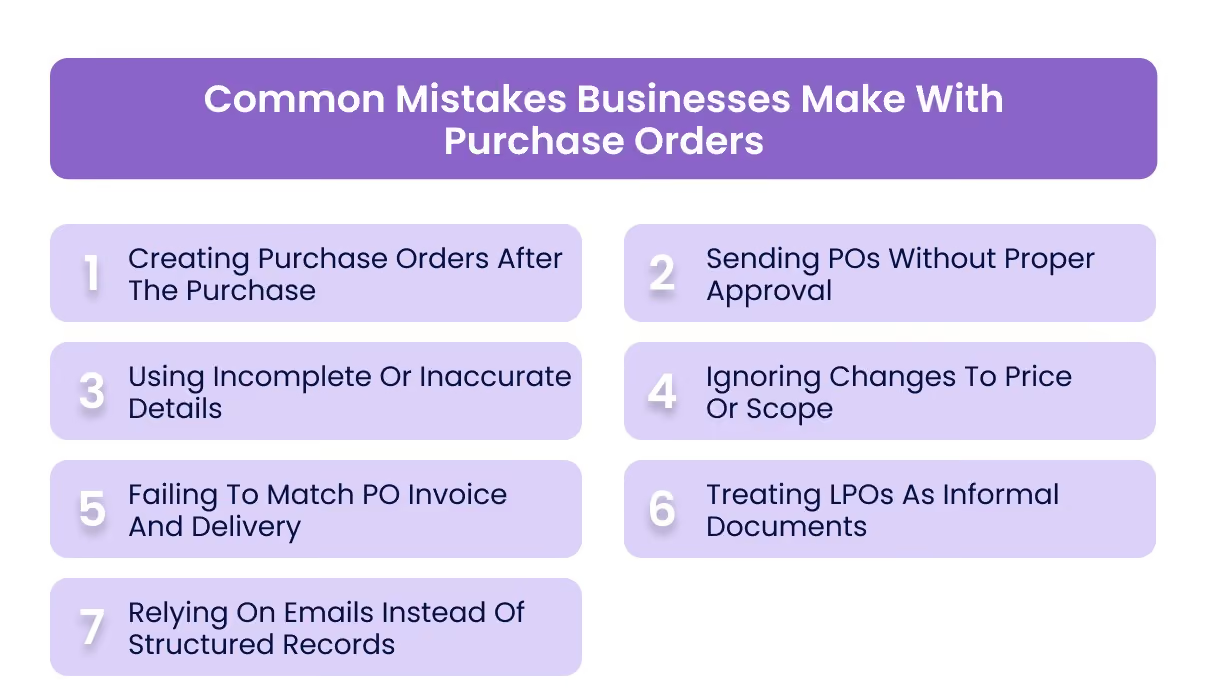
1. Creating Purchase Orders After The Purchase
Some businesses raise POs after goods or services have already been ordered. This removes the approval control and turns the PO into a formality rather than a control mechanism.
2. Sending POs Without Proper Approval
If purchase orders are issued without structured approval, they do not serve their purpose of enforcing budget discipline.
3. Using Incomplete Or Inaccurate Details
Missing pricing, unclear descriptions, or incorrect quantities can lead to disputes and invoice mismatches.
4. Ignoring Changes To Price Or Scope
If changes are agreed with the supplier but not updated in the PO, the invoice may not match the original document.
5. Failing To Match PO Invoice And Delivery
Skipping the matching process increases the risk of overpayment, duplicate billing, or incorrect charges.
6. Treating LPOs As Informal Documents
In some cases, local purchase orders are treated less formally. This can weaken controls and create inconsistencies in documentation.
7. Relying On Emails Instead Of Structured Records
Approvals and agreements handled over email without proper PO documentation can create gaps in audit trails and reporting.
Also Read: Corporate Card Reconciliation Guide
How Alaan Helps Businesses Control Purchase Related Spend
A purchase order helps control spend at the point of commitment, but financial control does not end there. Once a purchase moves forward, businesses still need visibility, documentation, and structured processes to manage expenses effectively.
At Alaan, we focus on this execution layer, helping finance teams maintain control after the purchase order stage.
- Corporate Cards With Spend Controls
Businesses can issue cards with defined limits and merchant restrictions, ensuring spending aligns with approved categories. - Structured Approval Workflows Before Spend Happens
Expenses can be routed through approval processes, reinforcing control before money is spent. - Real Time Visibility Into Spend
Finance teams can track expenses across teams, suppliers, and categories as they happen. - Centralised Receipt And Invoice Capture
All supporting documents are linked to transactions, improving traceability and reducing missing data. - Seamless Accounting Integration
Integrations with systems like Xero, QuickBooks, NetSuite, and Microsoft Dynamics ensure accurate and consistent financial records. - Cleaner Reconciliation And Audit Readiness
Structured data and documentation make it easier to reconcile transactions and maintain audit trails.

By combining purchase order discipline with strong spend visibility and controls, businesses can maintain consistency across the entire procurement and payment process.
Related: Track And Manage Business Expenses
Conclusion
A purchase order is a foundational document in procurement. It confirms what a business intends to buy, from whom, and under what terms, creating a clear link between approval, supplier commitment, and payment.
The distinction between PO and LPO is largely contextual, with LPO referring to local supplier purchases. Regardless of terminology, the underlying purpose remains the same: to formalise transactions and improve control.
For finance teams, the real value of a purchase order lies in how it supports structured workflows. When used correctly, POs reduce unauthorised spending, improve invoice accuracy, and simplify reconciliation.
However, their effectiveness depends on consistency. Without proper approvals, accurate documentation, and visibility into spending, even well-designed PO processes can break down.
If you want to strengthen how your business manages procurement and expenses, you can explore how Alaan helps finance teams maintain control, improve visibility, and keep financial data accurate from purchase to reconciliation. Book a demo to see how structured spend management supports better financial outcomes.
Frequently Asked Questions
1. Can A Purchase Order Be Changed After It Is Sent
Yes, but changes should be documented through an amended purchase order or a formal approval record. This is important when quantity, price, delivery date, supplier details, or scope changes after the original PO is issued. Without an updated record, the supplier invoice may not match the approved purchase.
2. Can A Supplier Reject A Purchase Order
Yes. A purchase order becomes meaningful only when the supplier accepts the terms. A supplier may reject it if pricing, availability, delivery timelines, payment terms, or product specifications do not match what they can provide.
3. Is A Purchase Order Legally Binding In The UAE
A purchase order can become legally binding when it is accepted by the supplier and contains clear commercial terms. The exact enforceability depends on the contract terms, supplier acceptance, and supporting communication. For high-value purchases, businesses should ensure PO terms are reviewed properly.
4. Who Should Approve A Purchase Order In A Business
Approval should usually come from the budget owner, department head, procurement team, or finance team, depending on the value and category of the purchase. Higher-value or strategic purchases often need multi-level approval before the PO is sent to the supplier.
5. What Happens If An Invoice Does Not Match The Purchase Order
The invoice should be placed on hold until the mismatch is reviewed. Common issues include price differences, quantity mismatches, missing delivery confirmation, incorrect VAT details, or additional charges not included in the PO.
6. Do Small Businesses Need Purchase Orders For Every Purchase
Not always. Low-value routine purchases may not need a full PO process. However, purchase orders are useful for supplier purchases that involve larger amounts, recurring commitments, delivery terms, credit terms, or invoice matching.
Gain control over business expenses with Alaan corporate cards
Invygo earned AED 100,000 in cashback using Alaan cards
Personalise approval workflows to align with your business needs with Alaan's Spend Management platform
Discover the power of automated expense tracking and smarter spend control with Alaan
Turn data into actionable insights with Alaan's spend management tools
Stay Tax Compliant with UAE's #1 Corporate Card and Spend Management Platform
Customisable corporate card policy template
Know how much Corporate Tax you have to pay this fiscal year
Easily integrate Alaan with your ERP for accurate, real-time expense tracking
Close books faster with Alaan's AI-powered accounting automation
Reconcile your books in minutes instead of hours, every single month.
Keep petty cash organized with Alaan corporate cards and automated expense management