.avif)

A step-by-step guide to purchase invoice processing, from receipt to ledger, built for accuracy, speed, and UAE e-invoicing compliance.
- Under the UAE Electronic Invoicing Guidelines arriving in February 2026, invoices must be structured, machine-readable, and digitally validated, so accurate processing is now a compliance matter.
- Errors or delays at the invoice stage flow straight into cash flow, vendor payments, and reporting, which makes accounts payable a real control point rather than routine paperwork.
- A structured workflow runs from invoice receipt through data capture, matching, approval, payment, and ledger recording, keeping every invoice validated before any money moves.
- Three-way matching checks the invoice against the purchase order and goods received note, catching overbilling and duplicate payments before they happen.
- Manual, fragmented workflows stop coping as volume grows, which is where a connected system like Alaan brings invoice capture, approvals, payments, and accounting into one place, as logistics firm Quiqup did when it pushed invoice data into Xero and sped up VAT validation.
Purchase invoices are often treated as routine paperwork: processed manually, approved over email, and recorded after the fact. However, this is exactly where financial accuracy begins to break down. When invoices are delayed, incomplete, or incorrectly recorded, the impact shows up across cash flow, vendor payments, and reporting.
This challenge is becoming more significant in the UAE. Under the UAE Electronic Invoicing Guidelines (Feb 2026), invoices are no longer just documents; they must be structured, machine-readable, and digitally validated through accredited systems. This shift connects invoice processing directly to compliance and real-time financial reporting.
As a result, what was once a back-office task is now a critical financial workflow.
This blog breaks down purchase invoice processing step by step, along with the workflow and best practices needed to manage invoices accurately, quickly, and with control.
Key Takeaways:
- Invoice processing is becoming regulated and data-driven: Under the UAE Electronic Invoicing Guidelines (2026), invoices must be structured, machine-readable, and digitally validated, making accurate processing critical for compliance.
- Cost and control start at the invoice level: Errors or delays in invoice processing directly impact cash flow, vendor payments, and financial reporting, making it a key control point in accounts payable.
- The workflow ensures accuracy before payment: A structured process, from invoice receipt to ledger recording, ensures invoices are validated, approved, and recorded correctly before any payment is made.
- 3-way matching prevents financial leakage: Matching invoices with purchase orders (POs) and goods received notes (GRNs) verifies quantities, prices, and terms, helping prevent overpayments and discrepancies.
- Manual processes do not scale with volume: As invoice volumes increase, fragmented systems and manual workflows lead to delays and errors, making real-time visibility and integrated systems like Alaan essential for maintaining accuracy and control.
What Is Purchase Invoice Processing?
Purchase invoice processing is the structured workflow of receiving, verifying, approving, and paying supplier invoices within the accounts payable function. It ensures that every invoice is accurate, matches what was ordered and received, and is properly recorded in the financial system.
It sits within the broader procure-to-pay (P2P) cycle, which connects purchasing, receiving goods or services, invoicing, and final payment. This ensures financial and operational alignment.
When done correctly, purchase invoice processing leads to accurate payments, reliable accounting records, and audit-ready documentation. This is all while reducing errors, duplicate payments, and compliance risks.
Purchase Invoice Processing Workflow
Purchase invoice processing follows a structured workflow designed to ensure that every invoice is validated, approved, and recorded correctly before payment is made. This sequence reduces errors, prevents duplicate or incorrect payments, and maintains financial control across the accounts payable function.
A typical workflow moves from invoice receipt to final recording in the ledger, ensuring each step is completed before the next begins.
- Invoice receipt:
The process begins when the supplier sends an invoice, via email, portal, or paper, which is received by the accounts payable team for processing. - Data capture and recording:
Invoice details are extracted and entered into the accounting system, including vendor information, amounts, and tax data, to create a structured record. - Invoice matching (PO/GRN):
The invoice is matched against supporting documents, such as the purchase order (PO) and the goods received note (GRN), to verify that the items billed match the items ordered and received. - Approval workflow:
Once validated, the invoice is routed to the appropriate stakeholders for approval, ensuring the expense is authorised and aligned with internal policies. - Payment processing:
Approved invoices are scheduled and paid according to agreed terms, using methods such as bank transfers, cheques, or digital payments. - Recording in the ledger:
Finally, the transaction is recorded in the general ledger, updating accounts payable balances and ensuring audit-ready financial records.
Also Read: A 2026 Guide to Cross-Border Payment Services in the UAE
With the overall workflow in place, it’s useful to break down each stage into actionable steps to see how invoice processing works in practice.
Step-by-Step Purchase Invoice Processing
A structured step-by-step approach ensures that every invoice is captured, validated, approved, and recorded correctly before payment, reducing errors and improving financial control.
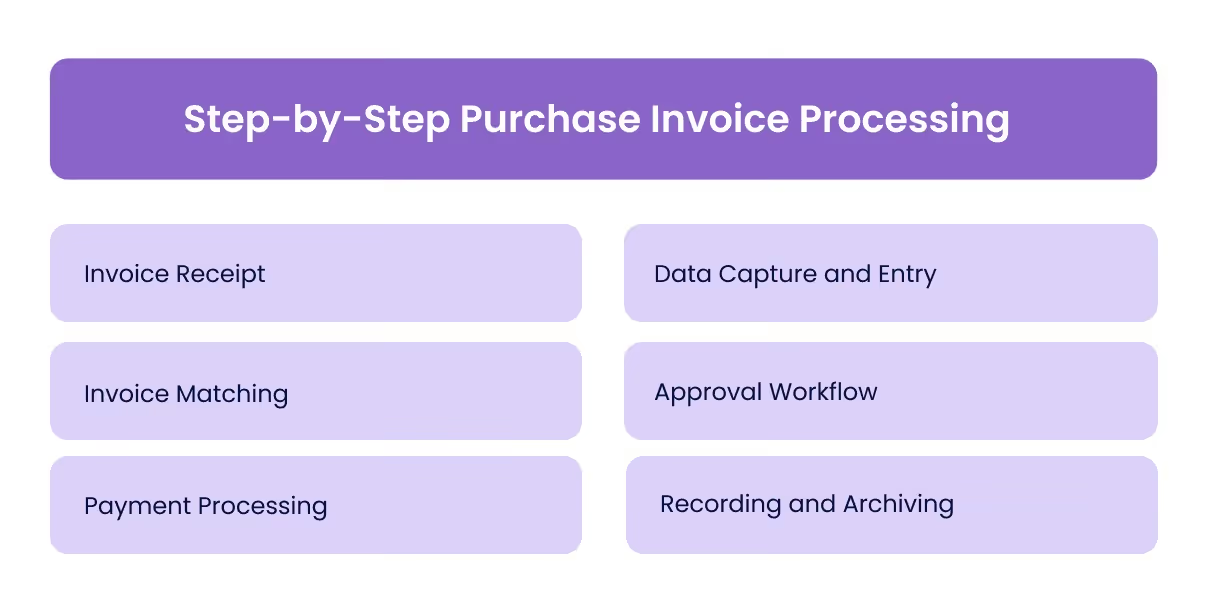
Most accounts payable workflows follow this sequence to maintain accuracy and audit readiness.
Step 1: Invoice Receipt
This is the starting point at which the business receives the supplier invoice via email, paper, or digital systems. The invoice represents a request for payment after goods or services are delivered.
How:
- Collect invoices from all channels (email, portals, physical copies)
- Check for basic details: vendor name, invoice number, date, amount
- Ensure the invoice relates to a valid purchase or service
- Standardise intake (central inbox or system) to avoid missed invoices
Step 2: Data Capture and Entry
Invoice data is extracted and recorded in the accounting or ERP system to create a structured financial record.
How:
- Extract key fields: vendor, amount, tax, due date
- Assign correct GL codes and cost centres
- Enter or upload data into the accounting system
- Store a digital copy for tracking and audit purposes
Also Read: UAE Corporate Tax Penalties: Risks, Impact & Prevention
Step 3: Invoice Matching
The invoice is validated by matching it against supporting documents such as the purchase order (PO) and the goods received note (GRN), commonly known as 3-way matching.
How:
- Compare invoice details with PO (price, quantity, terms)
- Verify goods/services received via GRN
- Check for discrepancies (overbilling, duplicate invoices)
- Flag and resolve mismatches before proceeding
Note: Matching invoices with purchase orders and receipts ensures accuracy before approval and prevents incorrect payments.
Step 4: Approval Workflow
Once validated, the invoice is routed to authorised stakeholders for approval, ensuring the expense is legitimate and policy-compliant.
How:
- Route invoices based on rules (amount, department, vendor)
- Notify approvers for review
- Approve, reject, or request clarification
- Maintain an approval trail for compliance
Step 5: Payment Processing
Approved invoices are scheduled and paid in accordance with agreed payment terms, ensuring timely settlement and strong vendor relationships.
How:
- Schedule payments based on due dates or discounts
- Choose payment method (bank transfer, cards, digital payments)
- Authorise and release payment
- Notify vendors once payment is completed
Step 6: Recording and Archiving
The final step involves recording the transaction in the general ledger and storing all related documents for audit and reporting purposes.
How:
- Post the payment and liability settlement in the ledger
- Update accounts payable balances
- Store invoices, approvals, and payment records
- Ensure documents are easily retrievable for audits
Also Read: Step-by-Step Automated Invoice Processing and its Benefits
Even with a defined process, gaps often appear in execution, especially as invoice volumes increase and workflows become more complex.
Common Challenges in Purchase Invoice Processing
Even with a defined workflow, purchase invoice processing rarely runs as smoothly as it looks on paper. The real friction shows up in execution, when invoices move across systems, people, and formats.
What makes these challenges tricky is that they’re not always obvious. They don’t just slow processing; they quietly affect cash flow visibility, vendor trust, and financial accuracy over time.
Below are some less obvious but high-impact challenges finance teams face, along with practical ways to address them:
Addressing these challenges effectively comes down to refining how each step is executed; this is where best practices make a measurable difference.
Best Practices for Efficient Invoice Processing
Efficient invoice processing is less about adding steps and more about removing friction between them. The goal is to make invoices move seamlessly, from receipt to payment, without delays, rework, or data gaps.
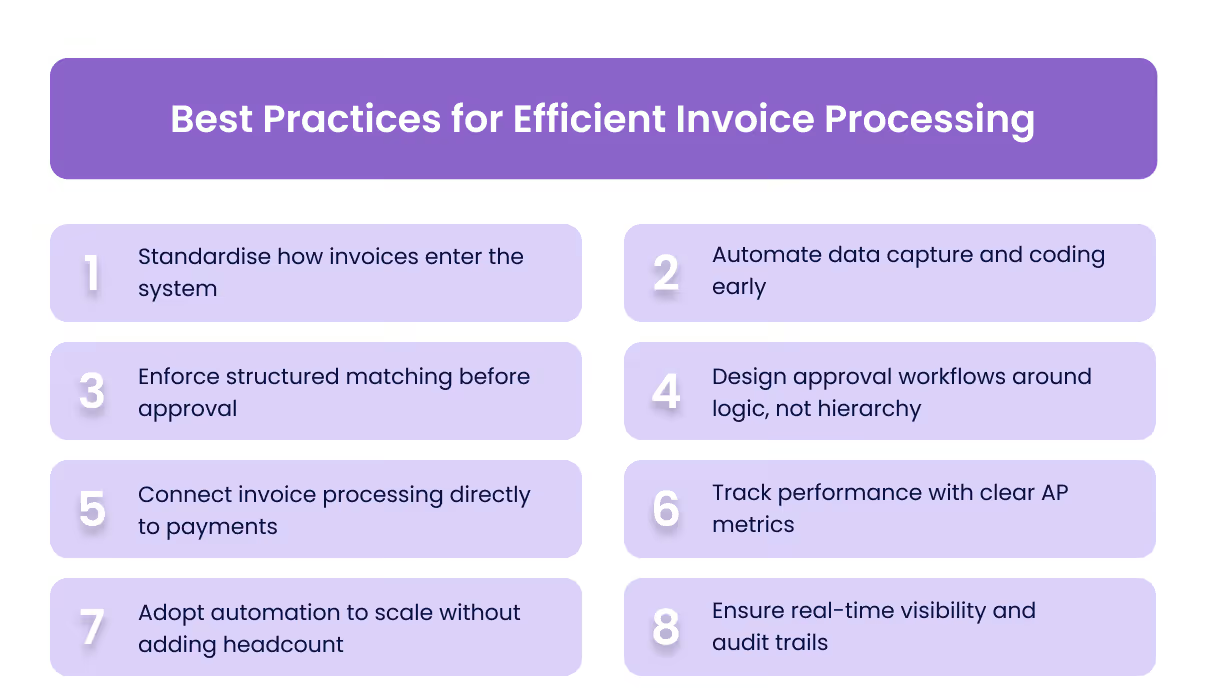
Here are the most effective practices finance teams rely on:
- Standardise how invoices enter the system: Use a single intake channel (email or platform) so no invoice is missed, duplicated, or delayed due to scattered sources.
- Automate data capture and coding early: AI/OCR-based systems extract invoice data and assign GL codes automatically, reducing manual errors and speeding up processing.
- Enforce structured matching before approval: Consistent 2-way or 3-way matching ensures invoices align with POs and receipts, preventing overpayments and discrepancies.
- Design approval workflows around logic, not hierarchy: Route invoices based on amount, department, or vendor to avoid bottlenecks and speed up decision-making.
- Connect invoice processing directly to payments: Integrating approvals with payment execution eliminates duplicate work and reduces reconciliation gaps.
- Track performance with clear AP metrics: Monitoring cycle time, error rates, and approval delays helps identify bottlenecks and continuously improve efficiency.
- Adopt automation to scale without adding headcount: Automated AP workflows reduce manual effort, improve accuracy, and allow teams to handle higher invoice volumes efficiently.
- Ensure real-time visibility and audit trails: Every invoice should be trackable at any stage, with a clear history of actions for compliance and reporting.

Consistently putting these best practices into action is where most teams face challenges; this is where the right systems and workflows start to make a measurable difference.
How Alaan Helps Finance Teams Manage Purchase Invoices
Managing purchase invoices efficiently is less about adding more checks and more about bringing visibility, control, and structure into one place. This is where fragmented tools typically fall short.
Alaan approaches invoice management by connecting expenses, invoices, approvals, and payments into a single workflow, so finance teams don’t have to stitch together data across systems. Instead of invoices moving through emails, spreadsheets, and banking portals separately, everything, from invoice capture to payment and accounting, happens within a unified system.
This ensures invoices are not just processed, but tracked, validated, and recorded with full context from day one.
Key Capabilities That Support Invoice Management:
- Centralised invoice and spend visibility:
All invoices, card payments, and expenses are tracked in one place, giving finance teams a complete, real-time view of company spend. - Automated invoice data capture (AI-powered):
Invoice details, such as vendor, amount, VAT, and tax information, are automatically extracted, reducing manual entry and improving accuracy. - Smart corporate cards with built-in controls:
Unlimited physical and virtual cards can be issued with custom limits and vendor restrictions, ensuring controlled spend at the source. - Structured approval workflows:
Invoices and payments follow predefined approval flows based on amount, department, or policy, eliminating bottlenecks and ensuring accountability. - SuperPay for supplier invoice payments:
Supplier invoices can be managed, approved, and paid, including cross-border transfers, in one workflow, with transparent FX rates and no hidden fees. - Real-time tracking of payments and status:
Every invoice and payment is traceable, with clear visibility into status, ownership, and movement of funds. - Seamless accounting automation:
Invoice and expense data sync directly with accounting systems, reducing reconciliation effort and ensuring books are always up to date. - AI-powered insights and anomaly detection:
Automated analytics highlight unusual spending patterns, duplicates, or inconsistencies, helping maintain clean and reliable data.
How This Works in Practice
For example, logistics company Quiqup faced challenges with manual expense tracking, delayed visibility, and difficulty validating VAT invoices across systems.
After implementing Alaan, the team centralised all spending, streamlined invoice reviews, and pushed invoice data directly into their accounting system (Xero). This significantly reduced processing time and improved accuracy in VAT validation and reporting.
As a result, invoice workflows became faster and more structured, with better control over approvals, payments, and financial data.
If invoice workflows feel more reactive than reliable, it might be time to see what a structured approach looks like. Request a tailored demo with Alaan.
Conclusion
Purchase invoice processing is no longer just about paying vendors—it’s about maintaining control over how money moves through the business. When invoices are handled with structure and consistency, finance teams gain better visibility into cash flow, reduce errors, and strengthen vendor relationships.
As regulatory requirements evolve and invoice volumes grow, relying on manual or disconnected processes becomes harder to sustain. The focus shifts from simply processing invoices to managing them with accuracy, speed, and accountability at every step.
This is where platforms like Alaan fit in, by bringing invoice capture, approvals, payments, and accounting into a single, structured workflow. This is when finance teams can move from fragmented processes to complete visibility and control.
If you’re looking to simplify and strengthen your invoice workflows, you can schedule a personalised demo with Alaan to see how it works in practice.
FAQs
1. What is the difference between purchase invoice processing and accounts payable?
Purchase invoice processing is a part of accounts payable. It focuses on handling supplier invoices from receipt to payment, while accounts payable covers the broader function of managing all short-term liabilities, including vendor balances and payments.
2. Why is 3-way matching critical in purchase invoice processing?
3-way matching ensures that the invoice, purchase order (PO), and goods received note (GRN) all align. This helps prevent overbilling, duplicate payments, and fraud, and ensures that businesses only pay for what was actually ordered and received.
3. What are the most common risks in invoice processing?
Key risks include duplicate payments, incorrect data entry, delayed approvals, missing invoices, and a lack of visibility across systems. These issues can lead to cash flow mismanagement, compliance risks, and strained vendor relationships.
4. How does poor invoice processing impact financial reporting?
Inaccurate or delayed invoice processing can lead to misstated expenses, incorrect accruals, and incomplete liabilities in financial statements. This affects decision-making and audit outcomes.
5. How can businesses scale invoice processing without increasing headcount?
By automating invoice capture, approval workflows, and payment processes, businesses can handle higher invoice volumes with the same team, improving speed, accuracy, and control without adding operational overhead.
Gain control over business expenses with Alaan corporate cards
Invygo earned AED 100,000 in cashback using Alaan cards
Personalise approval workflows to align with your business needs with Alaan's Spend Management platform
Discover the power of automated expense tracking and smarter spend control with Alaan
Turn data into actionable insights with Alaan's spend management tools
Stay Tax Compliant with UAE's #1 Corporate Card and Spend Management Platform
Customisable corporate card policy template
Know how much Corporate Tax you have to pay this fiscal year
Easily integrate Alaan with your ERP for accurate, real-time expense tracking
Close books faster with Alaan's AI-powered accounting automation
Reconcile your books in minutes instead of hours, every single month.
Keep petty cash organized with Alaan corporate cards and automated expense management