.avif)


A guide to how UAE startups can control cash flow by tracking burn rate, runway, and spending commitments before liquidity pressure becomes urgent.
- Startups spend ahead of steady revenue, so weak cash visibility can shrink runway even while the business is still growing.
- Startup cash flow is really about burn rate, runway, and timing, so founders should track how fast cash is leaving and how long what remains will last.
- Cash usually leaks through small recurring costs, unchecked SaaS spend, hiring before revenue is stable, and delayed invoicing and collections.
- Most startups aim for six to twelve months of runway, and planning fundraising early beats scrambling once cash is nearly gone.
- Alaan gives startups corporate cards with limits and vendor restrictions, approval workflows before spend happens, real-time visibility into team spending, and syncing into Xero, QuickBooks, NetSuite, and Microsoft Dynamics.
The UAE startup environment is expanding quickly. The UAE Ministry of Economy and Tourism states that SMEs account for 94% of all businesses in the UAE, with 25,000 SMEs founded by Emirati youth in 2024 alone.
That growth creates opportunity, but it also makes cash discipline critical. Startups often spend ahead of stable revenue, whether on hiring, software, marketing, product development, or vendor commitments. If cash visibility is weak, a growing startup can still run into liquidity pressure.
Cash flow for a startup business is therefore not just about tracking money in and out. It is about understanding burn rate, runway, collection timing, and spending commitments early enough to make better decisions before cash pressure becomes urgent.
In this blog, we will break down how startup cash flow works, the key metrics founders should track, and how to improve cash flow management in a way that extends runway and supports better decision-making.
TL;DR / Key Takeaways
- Startup cash flow is mainly about runway, timing, and control, not just profitability.
- Burn rate, cash runway, collection timing, fixed costs, and forecast variance give founders a clearer view of financial risk.
- Startups often lose cash through small recurring costs, uncontrolled SaaS spend, premature hiring, delayed collections, and weak approval discipline.
- Improving startup cash flow requires live budgeting, consistent burn-rate reviews, milestone-based spending, and stronger visibility into team expenses.
- Early financial discipline helps startups act before cash pressure becomes urgent and gives founders more flexibility around growth and fundraising.
What Cash Flow Means For A Startup Business
Cash flow for a startup refers to how money moves in and out of the business over time. While this definition is the same for any company, its meaning changes significantly in a startup context.
Startups typically do not have stable or predictable inflows. Revenue may be delayed, inconsistent, or still developing. At the same time, costs such as salaries, tools, marketing, and operations are often fixed or growing. This creates a gap between cash coming in and cash going out.
Because of this, startup cash flow is best understood alongside two additional ideas: how fast the business is using cash and how long the available cash will last. Without this perspective, the numbers alone do not provide enough insight into financial health.
Also Read: Business Budget For Startups UAE
Why Startup Cash Flow Feels Different From Mature Businesses
Cash flow in a mature business is usually tied to stable operations. Revenue is predictable, margins are clearer, and costs are aligned with established demand. In contrast, startups operate in a phase where uncertainty is high and decisions are forward-looking.
Startups often spend before revenue becomes consistent. They invest in product development, hiring, marketing, and infrastructure to reach a scale where the business model becomes sustainable. This means that negative cash flow in early stages is not unusual.
The key difference is that startups must actively manage how long they can operate under these conditions. Cash is not just a measure of performance. It is a constraint that defines how much time the business has to achieve its next milestone.
The Startup Cash Flow Metrics That Matter Most
Understanding startup cash flow requires focusing on a few core metrics that reflect both current position and future sustainability.
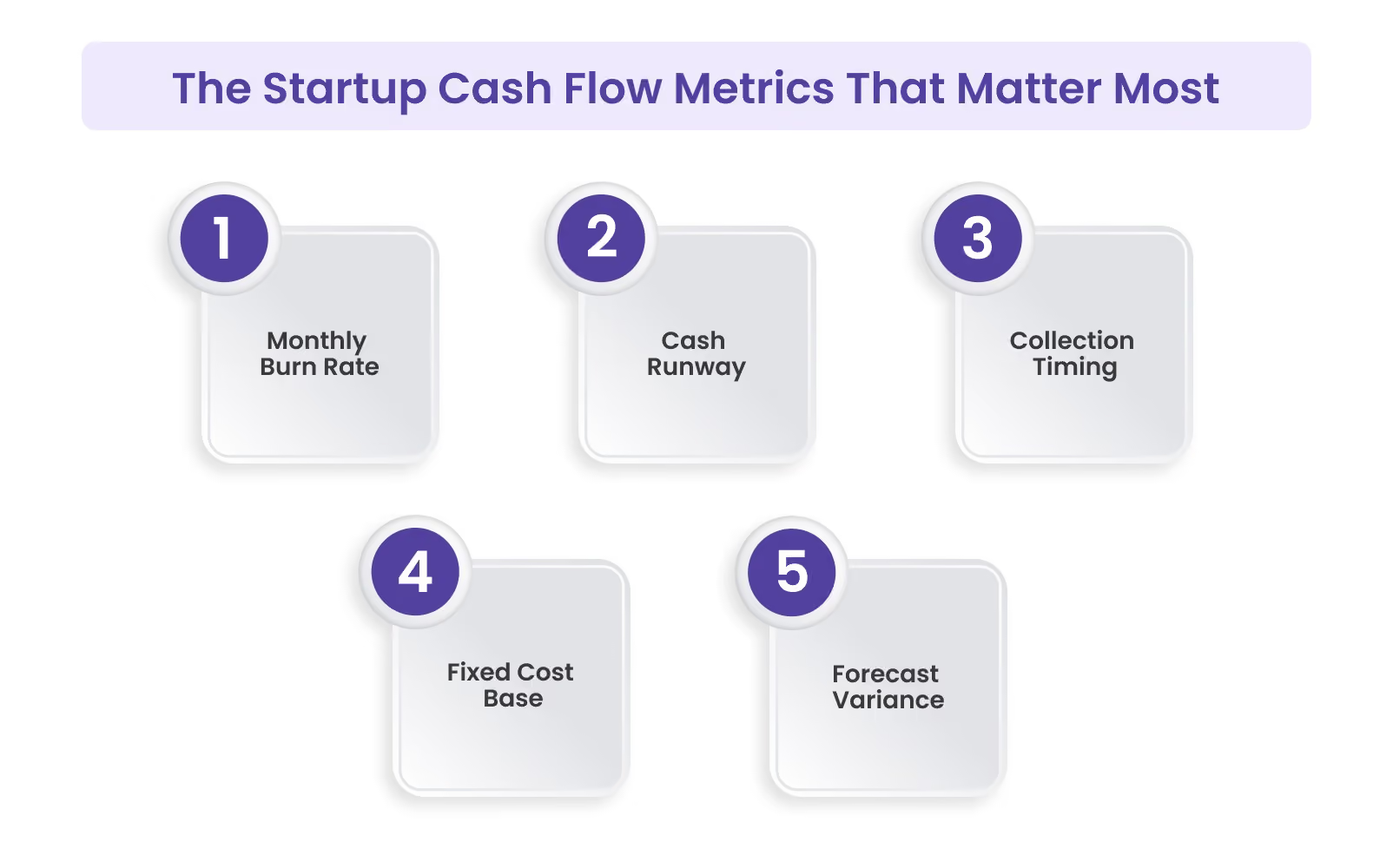
1. Monthly Burn Rate
Burn rate measures how quickly a startup is spending its available cash. It is typically calculated as the difference between monthly cash outflows and inflows.
A higher burn rate reduces the time available before additional funding or revenue is needed.
2. Cash Runway
Runway represents how long the startup can continue operating at its current burn rate. It is calculated by dividing available cash by monthly burn.
This metric is critical because it defines the time window available for growth, fundraising, or operational adjustments.
3. Collection Timing
For startups generating revenue, the timing of collections plays a major role. Delayed payments from customers can create cash gaps even when sales are strong.
Improving collection cycles can have a direct impact on liquidity without increasing revenue.
4. Fixed Cost Base
Fixed costs such as salaries, rent, and subscriptions form the baseline of cash outflows. These costs continue regardless of revenue fluctuations.
Keeping the fixed cost base under control helps maintain flexibility.
5. Forecast Variance
Forecast variance measures how actual cash movement compares to planned expectations. Large differences indicate that assumptions may not reflect reality.
Regularly reviewing this variance helps improve planning accuracy over time.
Related: Cash Flow Forecasting: Best Practices and Key Methods
Where Startups Usually Lose Cash Faster Than Expected
Cash flow issues in startups are often not caused by one large decision. They are usually the result of multiple smaller factors that accumulate over time.
1. Uncontrolled SaaS And Tool Spend
Subscriptions for software tools can grow quickly as teams expand. Without clear oversight, these costs often go unnoticed until they become significant.
2. Hiring Ahead Of Revenue Stability
Expanding the team before revenue is predictable increases fixed costs. While hiring is necessary for growth, timing plays a critical role in maintaining cash balance.
3. Weak Approval Discipline
When spending decisions are not clearly defined or reviewed, teams may incur costs that are not aligned with priorities. This creates unnecessary cash outflows.
4. Delayed Invoicing And Collections
Startups sometimes focus heavily on growth while neglecting billing discipline. Delays in invoicing or follow-ups slow down cash inflow.
5. Limited Visibility Into Team Expenses
As teams grow, expenses become more distributed. Without real-time visibility, it becomes difficult to track where cash is being used.

How To Improve Cash Flow Of A Startup Business
Improving cash flow in a startup is not about cutting costs aggressively or chasing revenue blindly. It is about creating control over how cash moves through the business. The goal is to extend runway while still supporting growth.

1. Build A Live Budget Instead Of A Static Plan
Many startups create a budget once and revisit it only when issues arise. A more effective approach is to treat the budget as a live tool that reflects current conditions.
Updating the budget regularly helps align spending with actual performance and prevents surprises.
2. Review Burn Rate Consistently
Burn rate should be reviewed monthly at a minimum. This allows founders and finance teams to identify changes early and adjust spending before pressure builds.
Consistent tracking also helps in planning fundraising timelines more accurately.
3. Separate Essential Spend From Growth Spend
Not all expenses have the same priority. Essential spend keeps the business running, while growth spend is aimed at expansion.
Separating these categories makes it easier to adjust spending without disrupting core operations.
4. Tighten Payment And Collection Cycles
Improving how quickly cash comes in and controlling when it goes out can significantly improve cash flow without changing the overall business model.
Clear invoicing practices and structured payment terms help reduce delays.
5. Introduce Approval Logic For Team Spending
As teams grow, spending decisions become more distributed. Introducing approval workflows ensures that expenses are aligned with business priorities.
This reduces unnecessary or unplanned outflows.
Related:
- Cash Flow Optimisation Strategies Techniques
- How To Solve Cash Flow Issues In Business Practical Strategies In UAE Businesses
How To Improve Your Cash Flow Management Before It Becomes Urgent
The most effective startups do not wait for cash pressure to become critical. They monitor early signals and act before problems escalate.
1. Spot Runway Compression Early
Runway should not be viewed as a fixed number. It changes as burn rate and revenue evolve.
Tracking runway trends helps identify when the available time is shrinking faster than expected.
2. Track Variance Between Plan And Reality
Comparing actual cash movement with forecasts highlights where assumptions are inaccurate.
Addressing these gaps early improves planning reliability.
3. Reduce Waste Before Cutting Critical Spend
When cash pressure builds, the first step should be to identify inefficiencies rather than cutting essential activities.
This helps preserve growth potential while improving cash position.
4. Align Spending With Milestones
Spending decisions should be tied to clear milestones, such as product development stages or revenue targets.
This ensures that cash is used strategically rather than reactively.
5. Revisit Fundraising Timing Proactively
Waiting until cash is nearly depleted limits options. Planning fundraising activities in advance provides flexibility and reduces pressure. MAGNiTT reported that MENA startups raised USD 1.5 billion in H1 2025, approximately AED 5.51 billion, across 310 deals, but fundraising still takes time, which makes runway planning a cash-flow discipline rather than a last-minute financing task.
What Founders Often Get Wrong About Startup Cash Flow
Even experienced founders can misinterpret cash flow in the early stages. These misunderstandings often lead to avoidable risks.
1. Confusing Revenue Growth With Cash Strength
Revenue growth does not always translate into immediate cash. Delayed collections or high costs can create gaps despite increasing sales.
2. Underestimating Small Recurring Costs
Individually small expenses can accumulate into significant outflows over time. Without visibility, these costs are often overlooked.
3. Treating Financial Discipline As A Later Stage Need
Some startups delay implementing financial controls, assuming they are only necessary at scale.
In reality, early discipline helps prevent larger issues later.
4. Relying On Funding To Offset Weak Cash Control
External funding can provide temporary relief, but it does not solve underlying inefficiencies in how cash is managed.
5. Looking At Cash Balance Without Considering Commitments
Available cash must be viewed alongside upcoming obligations. Ignoring future commitments can lead to incorrect assumptions about liquidity.
How Finance Teams And Founders Should Review Startup Cash Flow Together
Effective cash flow management requires alignment between founders and finance teams. Decisions around spending, hiring, and growth should be based on a shared understanding of cash position.
Regular reviews should focus on:
- Burn Rate Trends to understand how spending is evolving
- Runway Outlook to assess how much time remains under current conditions
- Major Spending Decisions to evaluate their impact on cash position
- Collection And Payment Timing to identify delays or inefficiencies
- Forecast Accuracy to improve planning reliability
These discussions help ensure that financial decisions are proactive rather than reactive.
Also Read:
How Alaan Helps Startups Stay Closer To Cash Reality
Startup cash flow problems are rarely caused by one large decision. They usually come from a series of small, distributed spending decisions that are not fully visible or controlled. As teams grow, subscriptions increase, reimbursements become frequent, and vendor payments multiply, it becomes harder to understand where cash is actually going.
At Alaan, we help startups bring structure to this execution layer so that cash movement is not only tracked, but actively controlled.
- Corporate Cards With Spend Controls For Teams
Startups can issue cards with defined limits and vendor restrictions, ensuring that team spending stays within approved boundaries. - Approval Workflows Before Spend Happens
Expenses can be routed through structured approval flows, so decisions are reviewed before cash is committed. - Real Time Visibility Into Startup Spend
Founders and finance teams can track spending as it happens across teams, categories, and vendors, rather than waiting for month-end reports. - Centralised Receipt And Expense Documentation
All receipts and invoices are linked to transactions, improving accuracy and reducing gaps in financial records. - Cleaner Accounting And Faster Reporting
Integrations with systems like Xero, QuickBooks, NetSuite, and Microsoft Dynamics ensure that financial data flows directly into accounting, improving visibility into cash position.

This level of control helps startups extend runway, reduce unnecessary spending, and make decisions based on real-time financial insight rather than delayed information.
Conclusion
Cash flow for a startup business is not just a financial metric. It defines how long the business can operate and how much flexibility it has to grow, adjust, or raise capital.
Startups that manage cash effectively focus on visibility, discipline, and timing. They understand how quickly cash is being used, where it is being spent, and how long it will last under current conditions.
By combining structured budgeting, consistent monitoring, and clear approval processes, startups can improve cash flow management without slowing down growth.
If you want to strengthen how your startup tracks and controls spending, you can explore how Alaan helps finance teams maintain visibility, enforce approvals, and keep cash flow aligned with business priorities. Book a Demo Today!
Frequently Asked Questions
1. What Is Good Cash Flow For A Startup
Good cash flow for a startup depends on its stage. Early-stage startups may operate with negative cash flow, but they should have a clear understanding of burn rate and sufficient runway.
2. How Much Runway Should A Startup Have
Most startups aim for at least 6 to 12 months of runway, though this can vary depending on growth plans and funding conditions.
3. Can A Startup Grow With Negative Cash Flow
Yes, many startups grow while operating with negative cash flow, especially in early stages. The key is to manage burn rate and ensure that funding supports growth.
4. How Often Should A Startup Review Cash Flow
Startups should review cash flow at least monthly, and more frequently if cash position is tight or changing quickly.
5. What Is The Difference Between Burn Rate And Cash Flow
Burn rate measures how quickly a startup is spending its cash, while cash flow tracks the overall movement of cash in and out of the business.
6. Why Do Startups Run Out Of Cash Even With Growing Revenue
This often happens due to delayed collections, high fixed costs, rapid hiring, or poor visibility into expenses, all of which affect cash availability despite revenue growth.
Gain control over business expenses with Alaan corporate cards
Invygo earned AED 100,000 in cashback using Alaan cards
Personalise approval workflows to align with your business needs with Alaan's Spend Management platform
Discover the power of automated expense tracking and smarter spend control with Alaan
Turn data into actionable insights with Alaan's spend management tools
Stay Tax Compliant with UAE's #1 Corporate Card and Spend Management Platform
Customisable corporate card policy template
Know how much Corporate Tax you have to pay this fiscal year
Easily integrate Alaan with your ERP for accurate, real-time expense tracking
Close books faster with Alaan's AI-powered accounting automation
Reconcile your books in minutes instead of hours, every single month.
Keep petty cash organized with Alaan corporate cards and automated expense management