.avif)

A rundown of the seven e-procurement methods and how to apply the right one to each type of spend so control holds from sourcing through payment.
- The most useful move is to match each purchase to the right method rather than pushing everything through one generic digital process.
- There are seven methods, e-informing, e-sourcing, e-tendering, e-auctioning, e-ordering, e-invoicing, and contract management, and each one handles a different part of the buying cycle.
- Control can break at supplier selection, approval routing, purchase orders, invoice validation, or payment, so a weak stage usually creates extra manual work further down the line.
- McKinsey estimates technology could make procurement 25% to 40% more efficient, but only when the process is structured enough for automation to improve decisions instead of just speeding up weak workflows.
- Alaan works on the execution layer after approval, with corporate cards carrying spend and vendor controls, approval workflows, invoices and receipts linked to transactions, accounting syncs, and SuperPay for checking FX rates and fees before payment goes out.
The shift towards digital procurement is accelerating. Global Market Insights estimates that the procurement software market will grow from USD 8.1 billion (~ 29.7 billion) in 2025 to USD 17.8 billion (~ AED 65.4 billion) by 2034, driven by digital procurement processes, cost optimisation, AI, analytics, and stronger supply chain visibility.
For UAE businesses, this matters because procurement control is rarely lost at only one point. It can break during supplier selection, approval routing, purchase order creation, invoice validation, or payment preparation.
The methods of e-procurement help bring structure to these stages. Instead of treating procurement as one generic process, businesses can use different digital methods for sourcing, tendering, ordering, invoicing, and contract management based on the risk and value of the purchase.
In this blog, we will look at the main methods of e-procurement, how they fit into the wider procure-to-pay process, and why the right method matters for businesses that want stronger control over supplier spend.
TLDR / Key Takeaways
- An HR policy in the UAE should align with private-sector employment requirements while also defining how the company applies those rules internally.
- Legal compliance is only the baseline; businesses still need clear procedures for leave, attendance, payroll, discipline, grievances, and exits.
- A practical HR manual should separate high-level policy from day-to-day procedures so managers apply rules consistently.
- Employee-related spending, including reimbursements, travel, entertainment, and corporate card use, should be governed within HR and finance policy.
- Strong HR policies reduce disputes, approval confusion, payroll issues, and inconsistent treatment across teams.
What E Procurement Means In Practice
E-procurement refers to the use of digital systems to manage how a business purchases goods and services. Depending on the setup, that may include supplier sourcing, requisitions, purchase orders, contract records, invoice handling, and payment-related workflows. In other words, it is the digital structure around procurement activity rather than a single action or one software screen.
For a growing business, the value is not in digitising paperwork for its own sake. The value comes from reducing inconsistency across the buying process. When procurement runs through disconnected emails, spreadsheets, and manual approvals, the business may not spot exceptions until late in the cycle. By then, the request has already moved ahead, the invoice is already in hand, or the cost has already hit the books.
A more structured e-procurement setup helps tighten three things that matter commercially:
- Request Quality through clearer intake and better supplier information
- Approval Discipline through defined review paths before spend is committed
- Invoice Control through stronger matching, documentation, and validation
Also Read: Procurement Automation Software Solution
Why Procurement Methods Matter
The term e-procurement is broad because procurement itself is broad. The method used to compare suppliers is not the same as the method used to issue purchase orders. The method used for structured bidding is not the same as the method used to validate invoices. Treating all of that as one generic digital procurement process makes it harder to see where control is actually gained or lost.
That is why procurement methods need to be broken out properly. Each one solves a different operational problem. Some help the business evaluate suppliers more systematically. Some formalise how buying decisions are approved. Others help ensure that what was agreed commercially is reflected accurately in the order, the invoice, and the supporting documents.
For finance and operations leaders, that distinction matters because procurement does not stop at vendor selection. Its impact continues into approval quality, spend visibility, reconciliation effort, and audit readiness. A business with the wrong procurement method in the wrong place may move quickly, but it usually pays for that speed later.
Related:
The Main Methods of E-Procurement
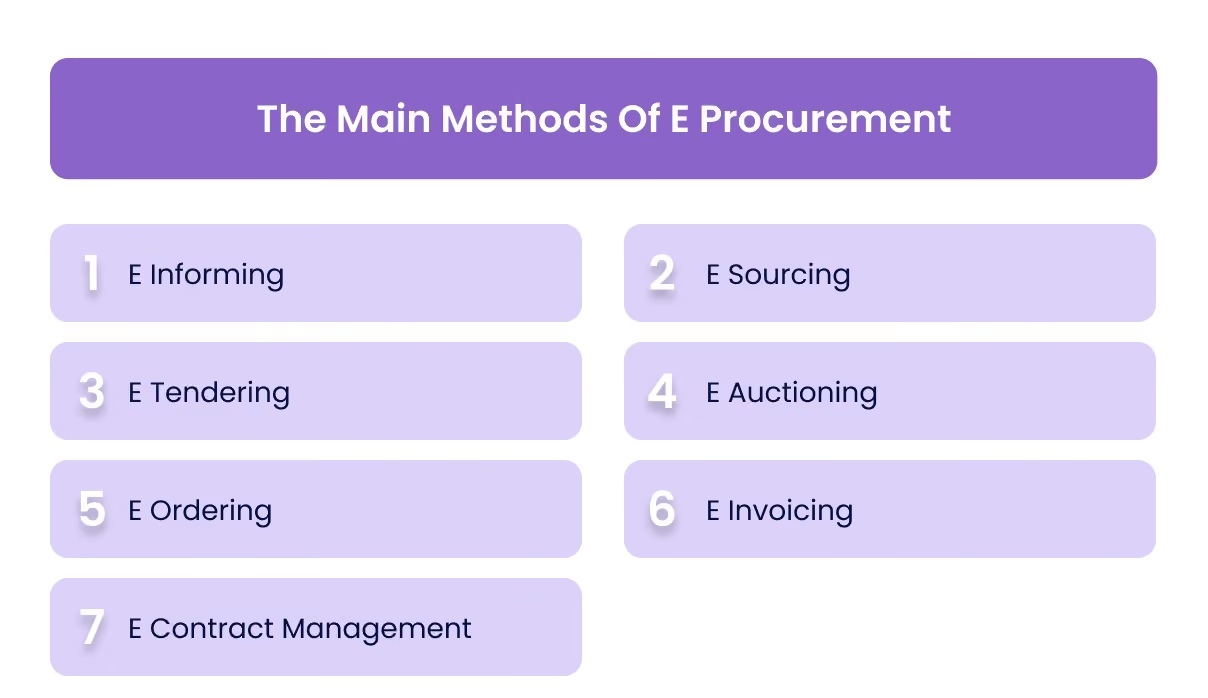
Most e-procurement environments are built around a familiar set of methods. The labels may vary slightly, but the commercial purpose is broadly consistent.
1. E Informing
E-informing focuses on making procurement-related information accessible in one place. That includes supplier lists, product catalogs, policy guidance, pricing references, and internal buying rules. It helps reduce poor requests that start with incomplete or inconsistent information.
2. E Sourcing
E-sourcing is used to identify and compare suppliers through a more structured digital process. It gives the business a clearer basis for supplier evaluation and helps make vendor selection more defensible when cost, quality, or service continuity matter.
3. E Tendering
E tendering is used when procurement needs to follow a more formal and structured process, usually for higher-value purchases or where multiple suppliers must be evaluated under consistent conditions. The business issues a defined requirement, suppliers submit bids in a standardised format, and the evaluation is carried out against clearly documented criteria.
This method introduces discipline into supplier selection. It ensures that all vendors are working with the same information and that decisions can be reviewed later if needed. That matters in situations where procurement outcomes affect cost structure, service continuity, or long-term supplier relationships.
For finance teams, the advantage is not just transparency. It is traceability. There is a clear record of how suppliers were shortlisted, how bids were compared, and why a particular vendor was selected.
4. E Auctioning
E-auctioning introduces competitive pricing through structured bidding environments. In most cases, this takes the form of a reverse auction, where suppliers compete by offering progressively lower prices within a defined timeframe.
This method is most effective when the requirement is clearly defined, and supplier offerings are comparable. In those situations, price becomes the primary differentiator, and competitive bidding can drive measurable savings.
However, it is not suitable for every category. Where service quality, reliability, or long-term partnership matter more than price alone, auction-based procurement can lead to suboptimal outcomes. Businesses need to apply this method selectively rather than treating it as a universal approach.
5. E Ordering
E ordering is where procurement decisions move from planning into execution. Approved requests are converted into purchase orders, suppliers are formally engaged, and the transaction becomes commercially binding.
This stage often determines whether procurement discipline holds or breaks down. If purchase orders are created outside defined workflows, or if teams bypass approved suppliers, the earlier effort spent on sourcing and negotiation starts to lose value.
A well-structured ordering process ensures that:
- purchases are linked to approved requests
- suppliers align with agreed terms
- documentation is consistent before invoices are raised
When this structure is weak, issues tend to surface later during invoice validation or reconciliation.
Also Read: Implementing Automated Purchase Orders The Right Way
6. E Invoicing
E-invoicing focuses on how supplier invoices are captured, verified, and processed within a digital workflow. Instead of handling invoices manually, businesses use structured systems to match invoices against purchase orders and supporting documents.
This is one of the most critical stages for finance teams. Even when procurement decisions are sound, poor invoice handling can create delays, discrepancies, and compliance risks. In the UAE context, this becomes even more important due to VAT requirements and the need for accurate, complete invoice records.
A strong e-invoicing method improves:
- accuracy of supplier billing
- speed of approval cycles
- reliability of financial records
It also reduces the amount of manual intervention required during the month-end close.
Related: Invoice Automation Benefits
7. E Contract Management
E contract management ensures that supplier agreements remain active, accessible, and enforceable throughout the procurement lifecycle. It involves storing contracts digitally, tracking renewal timelines, and ensuring that agreed-upon terms are reflected in actual purchasing activity.
Without this method, businesses often lose track of negotiated pricing, contract conditions, or expiry dates. Over time, this leads to contract leakage, where spend does not align with the terms originally agreed with suppliers.
For finance leaders, contract visibility is directly linked to cost control. If contract terms are not connected to ordering and invoicing, it becomes difficult to confirm whether supplier spend is aligned with negotiated agreements.
How The E-Procurement Process Works
The different methods come together as part of a broader workflow that moves from request to payment. While the exact structure varies by organisation, the underlying flow is broadly consistent.
- Requirement Identification
A team identifies a need for goods or services based on operational requirements. - Request Creation
A formal request is raised with relevant details such as supplier options, estimated cost, and purpose. - Approval Review
The request is reviewed based on budget, policy, and approval authority before any commitment is made. - Supplier Selection
The appropriate procurement method is used to evaluate and finalise the supplier. - Purchase Order Issuance
A purchase order is created to formalise the transaction with the selected supplier. - Goods Or Service Confirmation
The business confirms that the delivered goods or services match the original request. - Invoice Validation
The supplier invoice is reviewed against the purchase order and supporting documents. - Payment Preparation
Once validated, the invoice moves into the payment process. - Recording And Reconciliation
The transaction is recorded in the accounting system and reconciled with supporting data.
Each stage depends on the previous one being structured correctly. When one stage is weak, the impact carries forward, usually increasing the amount of manual effort required later.
Also Read:
What The E Procurement Business Model Looks Like In Practice
An e-procurement business model is not defined by software alone. It is defined by how responsibilities, approvals, suppliers, and financial controls are structured around procurement activity.
In most UAE businesses, procurement is not fully centralised. Different teams raise requests, managers approve spending, procurement may support supplier selection, and finance ultimately validates and records transactions. The effectiveness of e-procurement depends on how well these roles are connected within a single workflow.
A practical model usually includes:
- Decentralised Request Creation, where business teams initiate procurement based on operational needs
- Defined Approval Authority based on budgets, roles, and spend thresholds
- Approved Supplier Frameworks to reduce uncontrolled vendor usage
- Structured Ordering and Documentation to formalise commitments before invoices are raised
- Finance-Led Validation to ensure invoices align with approved purchases
When these elements are aligned, procurement decisions remain controlled from the point of request through to payment and accounting. When they are not, the business ends up relying on post-facto checks rather than structured execution.
Also Read: Procure To Pay Systems Process Steps
Which Methods Fit Different Types Of Spend
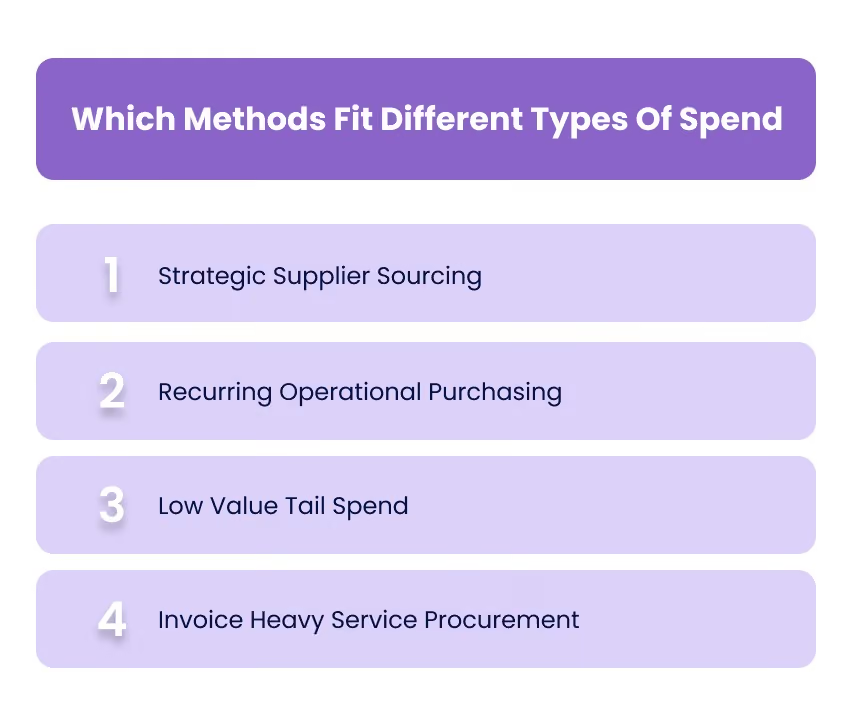
Not every procurement method should be applied uniformly. The level of structure required depends on the type of spend, the risk involved, and the commercial impact of the decision.
1. Strategic Supplier Sourcing
High-value or business-critical purchases require more structured methods. E-sourcing and e-tendering are typically used to evaluate suppliers in detail, while contract management ensures that negotiated terms are tracked and enforced over time.
This approach is common in categories where supplier performance directly affects revenue, operations, or long-term cost structure.
2. Recurring Operational Purchasing
Routine purchases, such as office supplies or standard services, benefit from simpler workflows. E-informing and e-ordering help ensure that teams use approved suppliers and follow consistent purchase processes without unnecessary complexity.
The goal here is efficiency without losing control.
3. Low Value Tail Spend
Smaller, ad-hoc purchases do not justify heavy procurement processes. Instead, businesses rely on lighter approval structures, predefined limits, and faster ordering methods. The focus shifts from optimisation to control and visibility.
Even in these cases, basic structure is important to prevent uncontrolled spend from accumulating over time.
4. Invoice Heavy Service Procurement
Service-based procurement, where invoices are frequent and varied, places more emphasis on e-invoicing and documentation. Validation becomes more complex because there may not always be a straightforward link between deliverables and billing.
Strong invoice handling and approval workflows are critical in these scenarios to avoid discrepancies and delays.
Related: Guide To Manage Overall Business Spending
Common Mistakes That Undermine E-Procurement
McKinsey estimates that technology could make procurement functions 25% to 40% more efficient, but only when processes are structured enough for automation to improve decisions rather than simply speed up weak workflows. Let’s look at some of the most common mistakes in e-procurement that organisations often overlook:
1. Treating E-Procurement as a Software Implementation
Many businesses assume that adopting a procurement platform will automatically improve control. In reality, if approval logic, supplier governance, and documentation standards remain weak, the underlying issues continue. The process may become faster, but it does not become more reliable.
2. Digitising Requests Without Strengthening Approvals
Capturing requests in a system does not guarantee proper review. When approval authority is unclear or inconsistently applied, teams may still bypass controls under time pressure. This weakens the purpose of e-procurement, which is to enforce discipline before commitments are made.
3. Disconnecting Supplier Selection From Actual Purchasing
Supplier evaluation may be structured, but purchasing decisions often drift away from approved vendors. This creates contract leakage, where negotiated terms are not reflected in actual spend. Over time, this reduces the financial benefit of procurement efforts.
4. Allowing Invoices To Re-enter The Process Manually
Even when earlier stages are digitised, invoice handling often remains manual. This breaks the connection between the original request and the final transaction. As a result, finance teams deal with mismatches, duplicate payments, and delayed approvals.
5. Focusing On Speed Instead Of Control
Faster procurement cycles are useful, but they should not come at the cost of visibility and compliance. Businesses that optimise only for speed often face higher reconciliation effort and weaker audit readiness.
How Alaan Supports Procurement Execution After Approval
Procurement decisions do not end when a supplier is selected. The real challenge begins when those decisions need to be executed in a controlled and visible way. If approvals, documentation, and payments remain fragmented, the value created upstream starts to erode.
At Alaan, we focus on this execution layer. Once a procurement decision is approved, the priority shifts to ensuring that spend follows the intended path, remains visible to finance teams, and is supported by complete documentation.
- Corporate Cards With Spend Controls And Vendor Restrictions
We enable businesses to issue corporate cards with defined limits and vendor-level controls. This ensures that procurement-related spend stays within approved boundaries. - Structured Approval Workflows Before Spend Happens
Purchases can be routed through configurable approval flows, so decisions are reviewed before money leaves the business. - Real Time Visibility Into Procurement Spend
Finance teams can track spend by supplier, category, and team as it happens, making it easier to identify unexpected patterns early. - Centralised Invoice And Receipt Capture
Invoices and receipts are linked directly to transactions, reducing fragmented documentation and improving verification. - Cleaner Reconciliation And Accounting Sync
With integrations into systems like Xero, QuickBooks, NetSuite, and Microsoft Dynamics, procurement spend flows into accounting with minimal manual effort. - Controlled Payment Execution With Full Cost Visibility (SuperPay)
Once invoices are validated and approved, the final step is executing the payment accurately. SuperPay allows finance teams to review FX rates, transfer fees, and final settlement amounts before funds are released. This ensures that procurement decisions remain controlled through to the final payment stage, with no disconnect between approved spend and actual cash outflow. - Better Audit Readiness Across Supplier Transactions
Every transaction carries a clear trail of approvals, documentation, and categorisation, improving control and reducing audit friction.

Procurement control should not stop at supplier selection. It needs to continue through ordering, invoicing, and payment, where financial risk is highest.
Also Read: Modern Expense Management Guide
Conclusion
E-procurement becomes valuable when it improves how procurement decisions are executed, not just how they are made. Different methods exist for a reason, and applying them correctly helps businesses maintain control across sourcing, approvals, ordering, and invoice validation.
For finance leaders, the goal is not to digitise procurement in isolation. It is to ensure that structured workflows, clear approval authority, supplier discipline, and accurate documentation remain intact throughout the process. When those elements are in place, procurement supports both operational efficiency and financial control.
If you want to see how procurement spend can remain controlled from approval to reconciliation, you can explore how Alaan supports this execution layer. Book a demo to understand how approvals, spend visibility, and documentation can work together in a single workflow.
Frequently Asked Questions
1. What Is The Difference Between E Procurement And Procure To Pay
E-procurement focuses on the digital methods used to manage procurement activities such as sourcing, ordering, and invoicing. Procure-to-pay is the broader process that includes procurement as well as payment and accounting workflows.
2. Which E-Procurement Method Is Most Important
There is no single most important method. The relevance depends on the type of spend. For example, sourcing methods are critical for supplier selection, while invoicing methods are more important for finance validation and reconciliation.
3. Does E-Procurement Always Require Purchase Orders
Not all purchases require formal purchase orders, especially low-value transactions. However, for higher-value or recurring spend, purchase orders help ensure that approvals, supplier terms, and documentation are properly aligned.
4. How Does E-Procurement Improve Invoice Accuracy
By linking invoices to approved requests and purchase orders, e-procurement reduces mismatches, duplicate entries, and manual errors. This leads to more reliable financial records and faster validation.
5. Can Small Businesses Use E-Procurement Effectively
Yes. Smaller businesses often benefit from simpler versions of e-procurement, focusing on structured approvals, supplier control, and basic invoice validation rather than complex sourcing processes.
6. What Should Businesses Track To Measure E-Procurement Effectiveness
Key indicators include approval cycle time, percentage of spend with approved suppliers, invoice match rates, and the level of manual intervention required during reconciliation.
Gain control over business expenses with Alaan corporate cards
Invygo earned AED 100,000 in cashback using Alaan cards
Personalise approval workflows to align with your business needs with Alaan's Spend Management platform
Discover the power of automated expense tracking and smarter spend control with Alaan
Turn data into actionable insights with Alaan's spend management tools
Stay Tax Compliant with UAE's #1 Corporate Card and Spend Management Platform
Customisable corporate card policy template
Know how much Corporate Tax you have to pay this fiscal year
Easily integrate Alaan with your ERP for accurate, real-time expense tracking
Close books faster with Alaan's AI-powered accounting automation
Reconcile your books in minutes instead of hours, every single month.
Keep petty cash organized with Alaan corporate cards and automated expense management