.avif)


An explainer on what positive and negative net cash flow really mean, and why the number only makes sense once you understand where the cash movement came from.
- JP Morgan Chase Institute found the median small business holds just 27 days of cash buffer, and the bottom quarter holds fewer than 13.
- A positive net cash flow is not automatically healthy, since it can come from borrowing, asset sales, or paying suppliers late, while a negative one can simply reflect planned investment.
- The figure only means something when you read it next to operating cash flow, working capital movement, and financing activity rather than on its own.
- Alaan helps finance teams see the drivers behind the number with corporate cards, spend controls, approval workflows, and integrations for Xero, QuickBooks, NetSuite, and Microsoft Dynamics.
Net cash flow looks simple because it gives one answer: did cash increase or decrease during the period? The risk is that this answer can be read too quickly. A positive number can come from strong collections, new borrowing, asset sales, or delayed supplier payments. Each tells a different story.
Liquidity pressure is usually about timing before it becomes a crisis. JP Morgan Chase Institute’s small business research found that the median small business held only 27 cash buffer days, while the bottom quartile held fewer than 13 days. That shows how quickly cash movement can become operationally important when inflows slow or outflows rise.
For UAE finance teams, net cash flow should not be treated as a standalone performance metric. It should be read with operating cash flow, receivables, payables, inventory, financing activity, and major one-off transactions to understand what actually changed the cash position.
In this blog, we will break down what net cash flow means, how to calculate it, how it differs from profit and operating cash flow, and how to interpret it in a way that supports better financial decisions.
TL;DR / Key Takeaways
- Net cash flow measures whether the business gained or lost cash during a specific period.
- A positive net cash flow is not always a sign of strong operations because it may come from borrowing, asset sales, or delayed payments.
- A negative net cash flow is not always a weak signal if it comes from planned investments or growth activity.
- Net cash flow should be read alongside operating cash flow, working capital movement, financing activity, and large one-off transactions.
- Better visibility into collections, supplier payments, approvals, and spend categories helps finance teams understand what actually changed the cash position.
What Net Cash Flow Means In Practice
Net cash flow represents the difference between total cash inflows and total cash outflows over a defined period. It answers a simple question: Did the business end the period with more cash or less cash than it started with?
A positive net cash flow means that cash inflows exceeded outflows. A negative net cash flow means the opposite. While this seems straightforward, the metric becomes meaningful only when the underlying sources of those inflows and outflows are understood.
For example, an increase in cash could come from strong customer collections, delayed supplier payments, or new borrowing. Each scenario has a different implication for the business.
The Net Cash Flow Formula
Net cash flow is calculated using a simple formula, but the simplicity of the calculation often hides the complexity of interpretation.
1. Basic Net Cash Flow Formula
Net Cash Flow = Total Cash Inflows − Total Cash Outflows
This includes all sources of cash movement within the period, regardless of whether they come from operations, investments, or financing activities.
2. Simple Example
If a business receives 500,000 in cash from customers and other sources, and spends 420,000 on expenses, supplier payments, and investments, the net cash flow for that period is 80,000.
This indicates an increase in the company’s cash position, but it does not yet explain the quality or sustainability of that increase.
Where Net Cash Flow Comes From In Financial Reporting
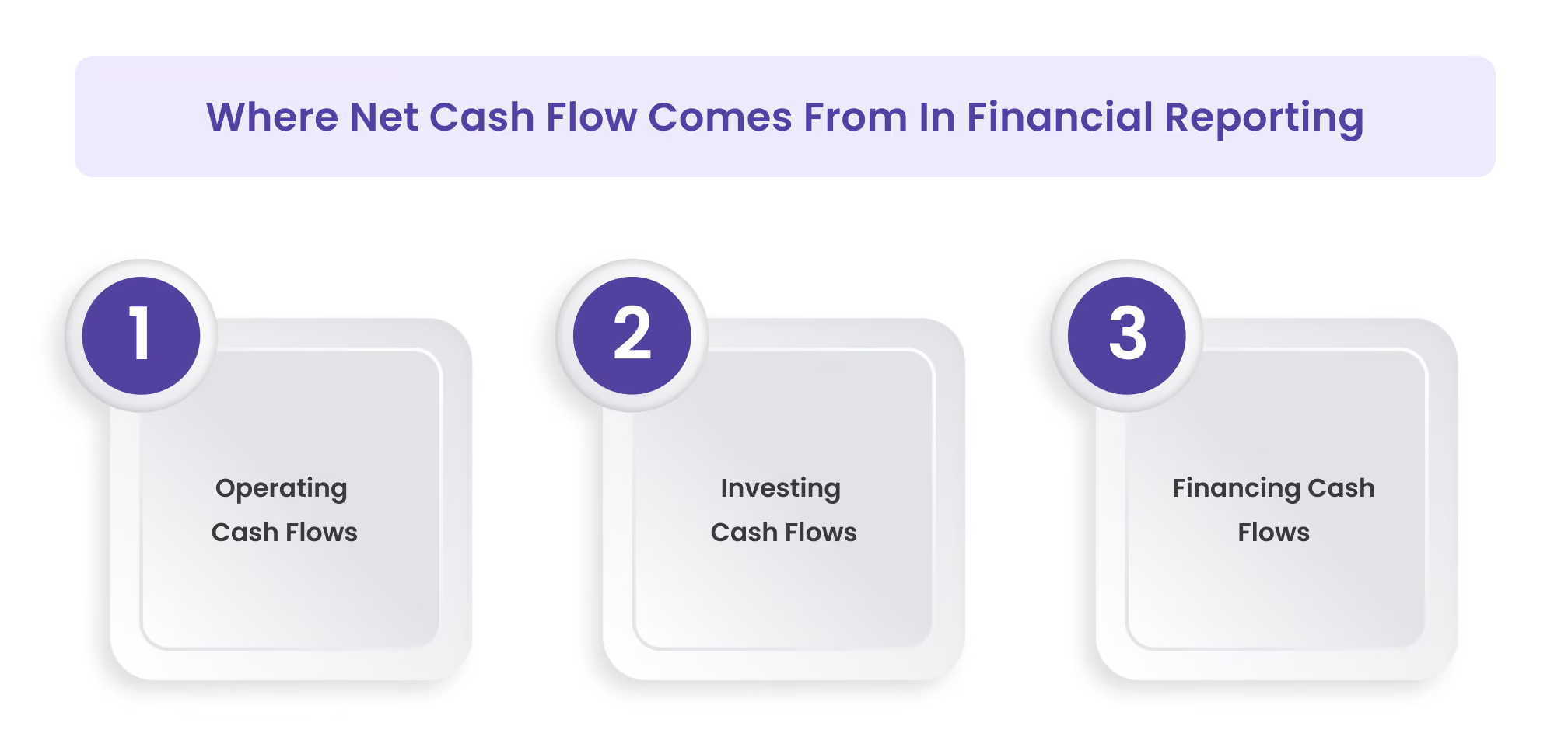
To understand net cash flow properly, it is important to look at how it is structured within financial reporting. Cash movement is not a single stream. It is divided into different categories based on the nature of the activity.
1. Operating Cash Flows
Operating cash flows come from the core business activities, such as collecting revenue from customers and paying suppliers, salaries, and operating expenses.
This is the most important component because it reflects whether the business model itself is generating cash.
Also Read: Cash Flow Operating Activities Guide
2. Investing Cash Flows
Investing cash flows relate to long-term assets, such as purchasing equipment, investing in systems, or selling assets.
These flows are often irregular and can cause significant changes in net cash flow within a period.
3. Financing Cash Flows
Financing cash flows include activities such as taking loans, repaying debt, or receiving investment capital.
These flows can increase or decrease cash without reflecting operational performance.
Why Net Cash Flow Is Not The Same As Profit
Profit is an accounting measure, while net cash flow reflects actual cash movement. The two can differ significantly due to timing and non-cash adjustments.
Revenue may be recorded before cash is received, and expenses may be recognised before payment is made. Additionally, accounting entries such as depreciation affect profit but do not involve any cash movement.
IFRS IAS 7 explains this difference directly through the indirect method, where profit or loss is adjusted for non-cash items, deferrals, accruals, and items linked to investing or financing cash flows.
This is why a profitable business can still experience cash shortages. The issue is not profitability, but the timing of cash inflows and outflows.
Why Net Cash Flow Is Not The Same As Operating Cash Flow
Net cash flow includes all categories of cash movement, while operating cash flow focuses only on the core business.
A business may show positive net cash flow because of financing activities such as loans, even if its operations are not generating sufficient cash. Conversely, a business may show negative net cash flow due to large investments, even if operations are strong.
Separating these components helps finance teams understand whether cash performance is driven by sustainable activity or temporary factors.

What Positive And Negative Net Cash Flow Really Mean
The interpretation of net cash flow depends on the source of the movement, not just the direction.
1. Positive Net Cash Flow From Strong Operations
When positive cash flow is driven by consistent collections and controlled expenses, it indicates a healthy and sustainable business model.
2. Positive Net Cash Flow Driven By Financing
Cash inflow from loans or investment can increase net cash flow, but it does not reflect operational strength. It may indicate reliance on external funding.
3. Negative Net Cash Flow From Working Capital Pressure
Delayed collections, early supplier payments, or excess inventory can create negative cash flow even when the business is profitable.
4. Negative Net Cash Flow During Growth Or Investment
Large investments in assets or expansion can reduce cash in the short term but support long-term growth. This is not necessarily a negative signal.
What Usually Changes Net Cash Flow Most
Net cash flow does not move randomly. It is typically influenced by a small number of operational and financial factors that determine how quickly cash enters and leaves the business.
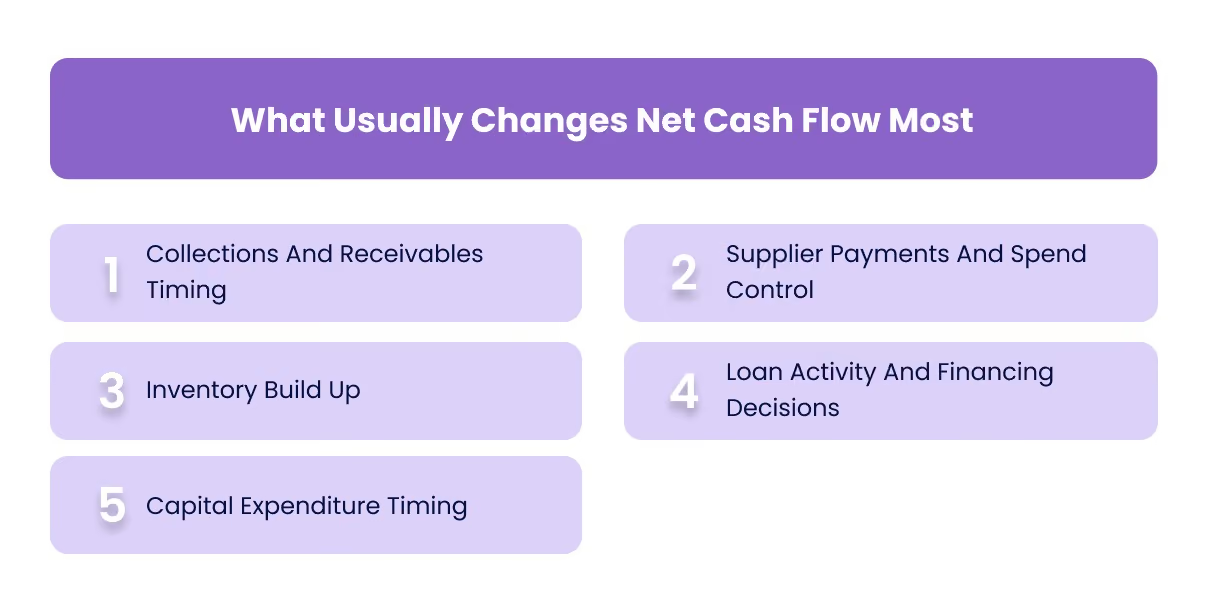
Understanding these drivers makes it easier to identify why cash is increasing or decreasing in a given period.
1. Collections And Receivables Timing
The speed at which customers pay has a direct impact on cash flow. Delayed collections can create pressure even when revenue is strong, while faster collections improve liquidity without increasing sales.
Even small changes in collection cycles can significantly affect net cash flow over time.
2. Supplier Payments And Spend Control
How and when a business pays its suppliers affects outgoing cash. Early payments reduce available cash, while delayed payments can temporarily improve cash position but may affect supplier relationships.
Structured approval processes help ensure that payments are aligned with agreed terms rather than driven by urgency or inconsistency.
3. Inventory Build Up
Holding inventory ties up cash until it is sold and converted into revenue. Over-ordering or slow-moving stock increases cash outflows without immediate inflows.
This is why inventory decisions are closely linked to cash flow management.
4. Loan Activity And Financing Decisions
Borrowing increases cash inflow, while repayments reduce it. These movements can significantly influence net cash flow in a given period, even though they do not reflect operational performance.
5. Capital Expenditure Timing
Purchases of equipment, systems, or other long-term assets often involve large one-time outflows. These can create temporary dips in net cash flow even when the business is stable.
Also Read:
Common Mistakes When Reading Net Cash Flow
Net cash flow is often misunderstood because it is interpreted without enough context. This leads to incorrect conclusions about business performance.
1. Looking At One Period In Isolation
A single period does not provide enough information to understand trends. Seasonal patterns, one-time events, or timing differences can distort the picture.
Comparing multiple periods gives a clearer view of whether cash flow is improving or deteriorating.
2. Treating Profit And Cash As The Same
Assuming that profit automatically translates into cash is one of the most common mistakes. Differences in timing, receivables, and payables can create a gap between the two.
3. Ignoring The Source Of Cash Movement
Positive net cash flow can come from operations, borrowing, or asset sales. Without identifying the source, it is difficult to assess sustainability.
4. Overlooking Working Capital Effects
Changes in receivables, payables, and inventory can significantly affect cash flow. These changes are often temporary but can still create short-term pressure.
5. Focusing Only On The Headline Number
The headline figure does not explain the underlying drivers. Breaking down cash flow into operating, investing, and financing components provides a more accurate view.
How Finance Teams Should Use Net Cash Flow In Practice
Net cash flow becomes useful when it is used alongside other financial indicators rather than in isolation. It should act as a signal that prompts deeper analysis rather than a standalone measure of performance.
Finance teams typically use net cash flow to:
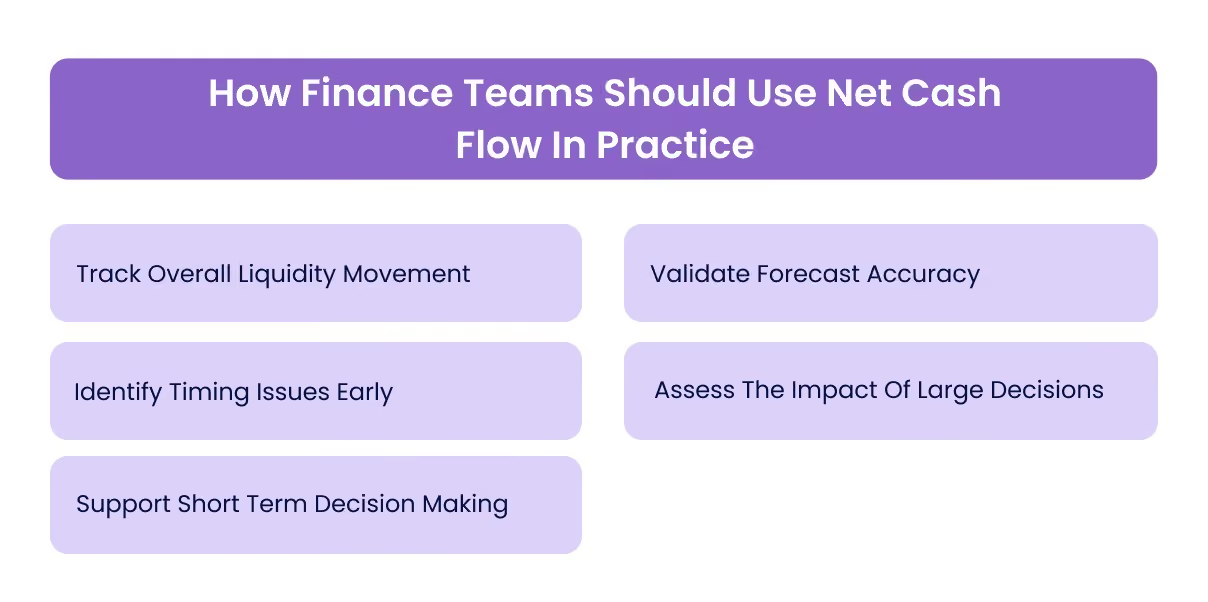
- Track Overall Liquidity Movement
It provides a quick view of whether the business is building or consuming cash over time. - Validate Forecast Accuracy
Comparing actual cash movement with forecasts helps identify gaps in planning assumptions. - Identify Timing Issues Early
Variations in collections, payments, or inventory cycles can be detected through changes in net cash flow. - Assess The Impact Of Large Decisions
Investments, financing decisions, or operational changes can be evaluated based on how they affect cash position. - Support Short Term Decision Making
Net cash flow helps determine whether the business can support planned expenses, investments, or expansion.
In practice, the most useful approach is to combine net cash flow with visibility into spend, approvals, and receivables. This allows finance teams to understand not just what changed, but why it changed.
Related:
How Alaan Helps Finance Teams Stay Closer To Cash Reality
Net cash flow is only as useful as the visibility behind it. Finance teams may see that cash has increased or decreased, but without clear insight into spend, approvals, and documentation, it becomes difficult to identify the exact drivers of that movement.
At Alaan, we focus on improving this execution layer so that cash movement is not only tracked, but also understood and controlled in real time.
- Corporate Cards With Built In Spend Controls
Businesses can issue cards with defined limits and merchant restrictions, ensuring that spending stays within approved boundaries and does not create unexpected cash outflows. - Structured Approval Workflows Before Spend Happens
Expenses can be routed through approval flows before transactions are completed, reducing the risk of unplanned or unnecessary spending. - Real Time Visibility Into Business Spend
Finance teams can monitor spending as it happens, making it easier to connect cash outflows to specific teams, suppliers, or categories. - Centralised Receipt And Invoice Capture
All supporting documents are linked to transactions, improving accuracy and reducing gaps in financial records. - Seamless Accounting Integration
Integrations with systems like Xero, QuickBooks, NetSuite, and Microsoft Dynamics ensure that transaction data flows directly into accounting, improving the reliability of cash reporting.

This level of visibility helps finance teams move beyond the headline net cash flow number and understand the underlying drivers of cash movement more effectively.
Conclusion
Net cash flow provides a clear view of whether cash is increasing or decreasing, but its real value lies in understanding the reasons behind that movement.
For finance leaders, the goal is not just to track net cash flow, but to interpret it correctly. This means separating operational performance from financing effects, recognising the impact of working capital, and identifying the underlying drivers of change.
When supported by structured processes, accurate data, and real-time visibility, net cash flow becomes a powerful tool for decision-making rather than just a reporting figure.
If you want to improve how your business tracks and controls cash movement, you can explore how Alaan helps finance teams maintain visibility, enforce approvals, and keep financial data accurate from transaction to reconciliation. Book a Demo Today!
Frequently Asked Questions
1. What Is A Good Net Cash Flow For A Business
A good net cash flow depends on the business model and stage of growth. Consistently positive cash flow from operations is generally a strong indicator of financial health.
2. Can A Profitable Business Have Negative Net Cash Flow
Yes, this can happen due to timing differences, delayed collections, high inventory levels, or significant investments during the period.
3. Is Net Cash Flow The Same As Free Cash Flow
No, free cash flow typically refers to cash generated after capital expenditures, while net cash flow includes all inflows and outflows across operating, investing, and financing activities.
4. How Often Should Net Cash Flow Be Reviewed
Net cash flow is usually reviewed monthly, but businesses with tighter cash cycles may monitor it more frequently.
5. Why Can Net Cash Flow Improve While Operations Weaken
This can happen if the business raises external funding, delays payments, or sells assets, even if operational performance declines.
6. What Is The Difference Between Net Cash Flow And Net Income
Net income is an accounting measure that includes non-cash items, while net cash flow reflects actual cash movement within the business.
Gain control over business expenses with Alaan corporate cards
Invygo earned AED 100,000 in cashback using Alaan cards
Personalise approval workflows to align with your business needs with Alaan's Spend Management platform
Discover the power of automated expense tracking and smarter spend control with Alaan
Turn data into actionable insights with Alaan's spend management tools
Stay Tax Compliant with UAE's #1 Corporate Card and Spend Management Platform
Customisable corporate card policy template
Know how much Corporate Tax you have to pay this fiscal year
Easily integrate Alaan with your ERP for accurate, real-time expense tracking
Close books faster with Alaan's AI-powered accounting automation
Reconcile your books in minutes instead of hours, every single month.
Keep petty cash organized with Alaan corporate cards and automated expense management