.avif)

A practical guide to treating procurement as a business control discipline, covering how the process works, where it breaks down, and how tighter approvals and cleaner records improve supplier quality and spend control.
- Run procurement as a control discipline that moves from identifying the need through supplier review, approval, fulfilment, invoice matching, and a look back at supplier performance.
- Most procurement failures start in fragmented workflows like email approvals and scattered supplier records, not in the policy document itself.
- Better control comes down to earlier approvals, cleaner documentation, and closer alignment between procurement and finance.
- Alaan supports this with corporate cards that carry spend limits and vendor restrictions, approval workflows before purchases are committed, real-time visibility into supplier spend, and accounting integrations for cleaner reconciliation.
Procurement management is often reduced to buying goods and services at the right price. In practice, it does much more than that. It determines how the business identifies needs, selects suppliers, approves purchases, verifies delivery, matches invoices, and keeps control over external spend from start to finish.
That matters because procurement risk rarely sits in price alone. It usually sits in weak approvals, poor specification, fragmented supplier records, delayed invoice visibility, and purchases that move outside the main workflow. The UAE’s digital public procurement direction also reinforces the point that procurement quality increasingly depends on structured workflows, visibility, documentation, and control rather than purchasing activity alone.
In this article, we explain what procurement management actually covers, how the process works in practice, where it usually breaks down, and how better controls improve supplier quality, spend visibility, and efficiency.
TL;DR / Key Takeaways
- A stronger procurement process improves supplier selection, approval discipline, documentation, and spend visibility.
- Good procurement management runs from need identification through supplier review, approval, fulfilment, invoice matching, and follow-up.
- Most procurement failures start in fragmented workflows, not in the policy document itself.
- Better procurement control depends on earlier approvals, cleaner records, and stronger alignment between procurement and finance.
- Alaan helps businesses strengthen procurement-related spend control through approvals, real-time visibility, and cleaner reconciliation workflows.
Related: Business Spend Management Tools Importance
Why Procurement Management Matters In Business
Procurement management matters because external spend is rarely neutral. Every supplier decision affects cost, quality, timing, documentation, and operational continuity. If the process is weak, the business may still complete the purchase, but it often pays for that weakness later through poor supplier performance, delayed approvals, invoice confusion, or avoidable spend leakage.
It also matters because procurement now sits much closer to finance control than many businesses assume. A purchase is not only a sourcing decision. It is also a commitment of company funds, a documentation event, and often the starting point for later reconciliation and reporting. That is why procurement management works best when it is treated as a business control function rather than a transactional admin task.
Why Businesses Need Strong Procurement Management
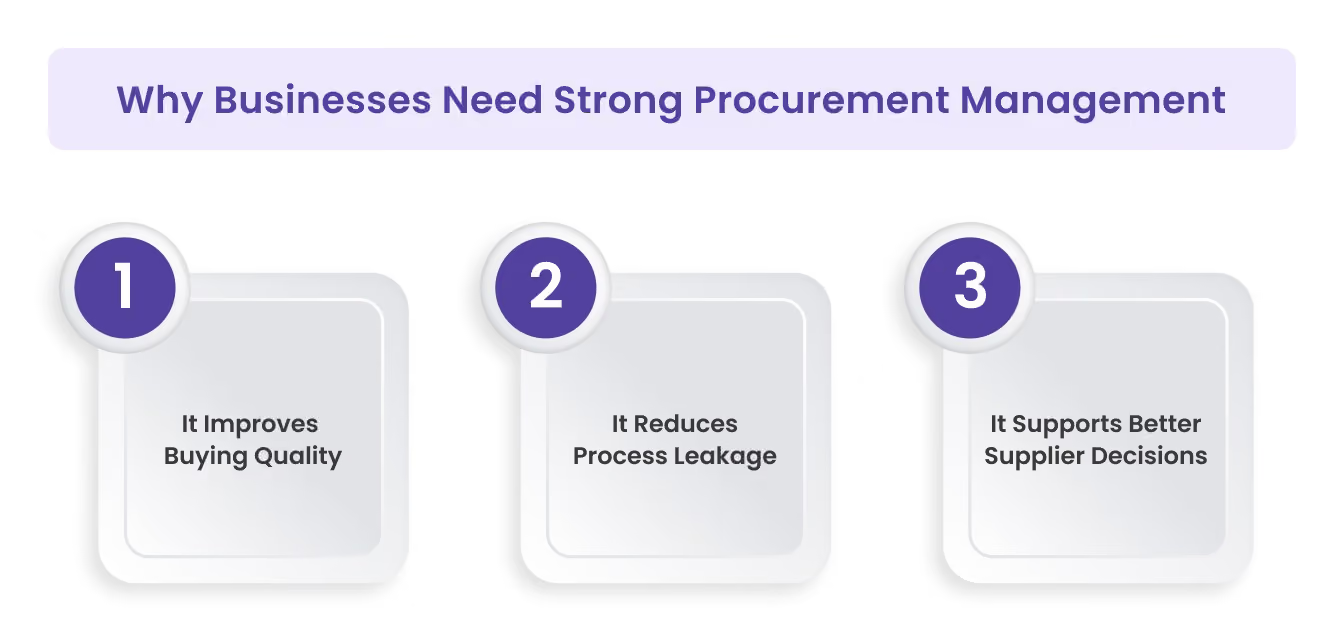
- It Improves Buying Quality
Procurement management helps the business buy more deliberately by connecting supplier choice, requirement quality, and approval logic instead of treating each purchase as an isolated event. - It Reduces Process Leakage
A stronger process makes it harder for spend to move informally through exceptions, rushed approvals, or poor documentation. - It Supports Better Supplier Decisions
Procurement management creates more structure around who the business buys from, how suppliers are evaluated, and whether performance is reviewed over time.
Why The Topic Has Shifted
- Procurement Is More Distributed
Buying activity now often moves across multiple teams, tools, and approval paths, which makes visibility and control more important than before. - Documentation Expectations Are Higher
Procurement quality is increasingly judged not only by purchase outcome, but also by whether the approval trail, supplier data, and invoice flow are clear enough to support oversight. - Digital Workflow Quality Matters More
Procurement becomes harder to govern when supplier data, approvals, and finance records sit across disconnected systems rather than one controlled process.
Also Read: Procurement Automation Software Solution
What Procurement Management Actually Means
Procurement management is the structured process a business uses to acquire goods and services while controlling supplier selection, purchase approvals, price, quality, documentation, fulfilment, and follow-up. It is broader than purchasing because it covers the system around how buying happens, not just the act of placing an order.
This broader definition matters because many procurement problems begin before or after the purchase itself. The issue may start with a weak requirement, continue through poor supplier evaluation, and become visible only later when invoices do not match, delivery falls short, or finance cannot trace what was approved. Procurement management is what holds those parts together so the purchase remains controlled from request to review.
What Procurement Management Includes
- Requirement Identification
The business defines what is needed, why it is needed, and whether the request is commercially justified. - Supplier Sourcing And Evaluation
Procurement reviews possible suppliers, compares fit, and selects an option that supports cost, quality, timing, and control expectations. - Approval Workflows
Purchases move through a defined review structure so that commercial commitments are not made informally. - Ordering, Verification, And Follow-Up
The process covers ordering, receiving, checking, invoice coordination, and later supplier review where needed.
Procurement Management Vs Purchasing
Purchasing is one part of the wider process. It focuses more narrowly on ordering and transacting. Procurement management covers the broader control structure around that buying activity, including supplier decisions, approvals, documentation, and post-purchase review.
That distinction matters because a business can be good at purchasing quickly and still be weak at procurement management overall. Speed does not automatically mean control, and a fast purchase process without discipline can still create poor supplier choices, weak records, or avoidable cost problems later.
Related: Procure To Pay Systems Process Steps
How The Procurement Management Process Works
A good procurement management process follows a clear sequence. That does not mean it needs to be overly bureaucratic. It means the business should know how a request moves from identified need to approved purchase, verified delivery, and recorded spend without losing control along the way.
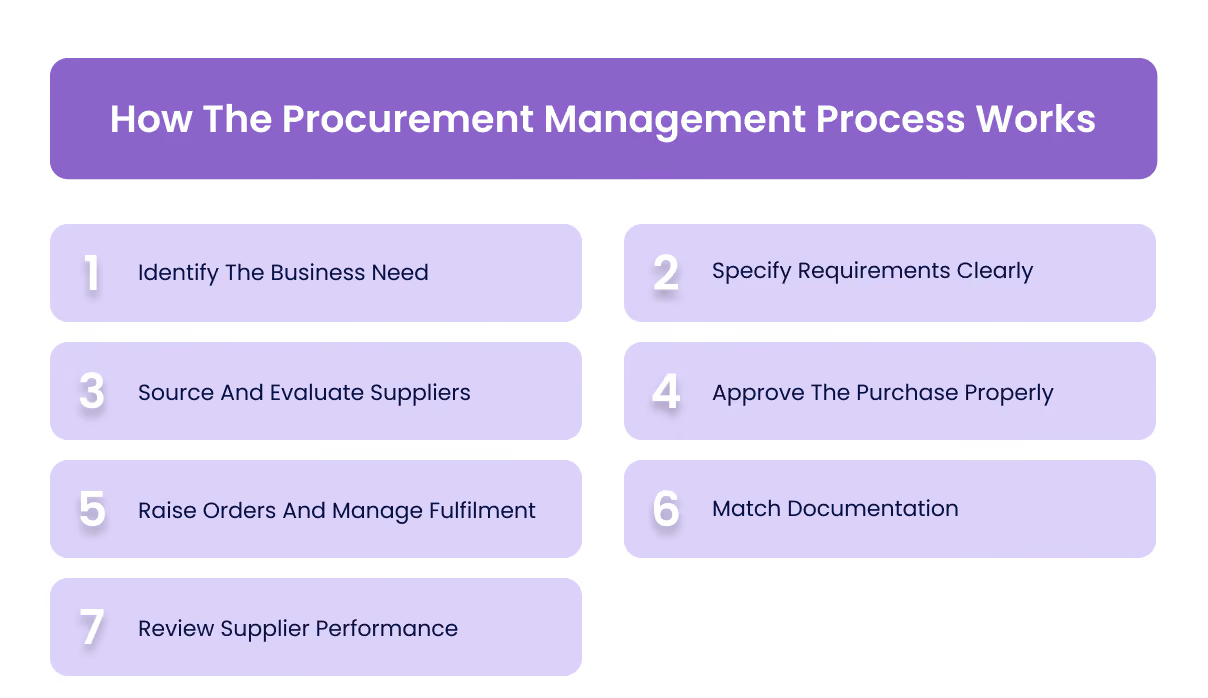
When that sequence is weak, procurement usually becomes reactive. Teams buy too quickly, suppliers are not evaluated properly, documentation arrives late, and finance sees only part of the commercial picture. A clearer process helps the business avoid that drift.
1. Identify The Business Need
Procurement starts when the business defines what is required and whether the request is necessary. This is where the commercial logic of the purchase should be challenged early, before supplier engagement or approval work begins.
A weak start here often creates downstream problems. If the need is vague, the supplier brief becomes weaker, comparisons become harder, and the final purchase is more likely to drift away from what the business actually needed.
2. Specify Requirements Clearly
The request then needs enough clarity to support sourcing and approval. That usually means defining quantity, service scope, timing, technical requirements, delivery expectations, and any commercial or compliance constraints that matter to the purchase.
Clearer specification improves both supplier choice and budget control. It reduces the chance of buying the wrong thing, approving an incomplete request, or comparing supplier options on inconsistent terms.
3. Source And Evaluate Suppliers
Once the requirement is clear, the business can review supplier options more intelligently. That means looking beyond availability alone and considering price, reliability, fit, documentation quality, service level, and supplier suitability for the category in question.
This is where procurement management becomes more strategic than administrative. A stronger supplier decision improves the quality of the purchase before the order is even placed.
4. Approve The Purchase Properly
Approval is where the business checks whether the request makes sense commercially, financially, and operationally. If approvals are weak or too informal, procurement risk enters the process early because the purchase can become a commitment before the right people have reviewed it.
A defined approval path also gives finance and management a clearer record of what was requested, what was approved, and under what conditions the purchase moved forward.
5. Raise Orders And Manage Fulfilment
After approval, the purchase moves into execution. That includes raising the order, confirming terms, receiving the goods or services, and checking whether delivery matched what the business expected.
This stage is important because procurement control does not end once the supplier is chosen. The business still needs to verify that the supplier fulfilled the order correctly and that the commercial terms remained aligned with what was approved.
6. Match Documentation And Coordinate Payment
The purchase then needs to connect cleanly to the documentation and payment process. That means invoices, receipts, confirmations, and related records should be available and traceable enough for finance to review and process them accurately.
This stage is where procurement and finance alignment becomes most visible. If the documentation is weak, even a reasonable purchase can turn into reconciliation friction later.
7. Review Supplier Performance And Spend Outcomes
Procurement management should not end at payment. The business also needs to look back at whether the supplier performed well, whether the spend delivered the intended value, and whether the supplier should continue to be used on similar purchases in future.
That review step is what turns procurement from a one-off buying process into a more disciplined operating cycle.
Also Read: Implementing Automated Purchase Order Right Way
The Business Benefits Of Strong Procurement Management
Strong procurement management improves more than purchasing efficiency. It helps the business make better supplier decisions, reduce uncontrolled spend, strengthen internal oversight, and create a cleaner link between commercial activity and finance records.
That is why procurement management creates value beyond cost negotiation alone. A stronger process improves how the business commits money, how it documents that commitment, and how confidently it can explain procurement outcomes later.
The Most Important Benefits
- Better Cost Control
Procurement management helps reduce avoidable spend leakage by making purchases more structured and easier to challenge before money is committed. - Stronger Supplier Quality
Better evaluation and review improve the chance of working with suppliers that are reliable, well-documented, and commercially suitable. - Fewer Process Delays
Clearer workflows reduce friction between request, approval, ordering, and payment. - Better Compliance And Auditability
A stronger trail of approvals, supplier records, and supporting documents makes procurement easier to review and defend. - Clearer Spend Visibility
Procurement management improves understanding of where money is going, what is already committed, and how supplier spend is distributed across the business.
What Good Procurement Management Looks Like In Practice
Good procurement management is usually visible in the everyday workflow, not just in the policy document. The business knows who can request a purchase, who approves it, how suppliers are evaluated, where records are stored, and how the final spend connects back to the original request. That clarity reduces friction because teams do not have to recreate the process every time a purchase needs to move.
It also makes procurement easier to govern at scale. As the number of suppliers, requests, and teams increases, the business needs procurement to stay consistent without becoming unnecessarily slow. A strong process gives the organisation that balance by making control more routine rather than more manual.
The Practical Markers
- Clear Approval Paths
Teams know how purchases move from request to decision, and exceptions do not become the informal norm. - Defined Supplier Standards
The business has a clearer basis for deciding who it buys from and what makes a supplier acceptable. - Better Documentation Quality
Requests, approvals, invoices, and related records are easier to trace and verify. - Fewer Emergency Purchases
A stronger process reduces reactive buying and improves procurement planning. - Better Alignment Between Procurement And Finance
Procurement decisions connect more cleanly to invoice handling, spend visibility, and reconciliation. - Consistent Categorisation Of Spend
The business can see procurement activity more clearly because purchases are recorded in a usable way. - Ongoing Supplier Review
Procurement does not end once a supplier is used. The business continues to assess whether the relationship is performing as expected.
Also Read: Procurement Automation Software Solution
The Most Common Procurement Management Problems
Most procurement management problems do not come from a total lack of process. They come from inconsistency. The business may have a policy, preferred suppliers, and approval expectations, but the actual day-to-day execution often drifts when teams are under time pressure or when supplier and finance records are fragmented.
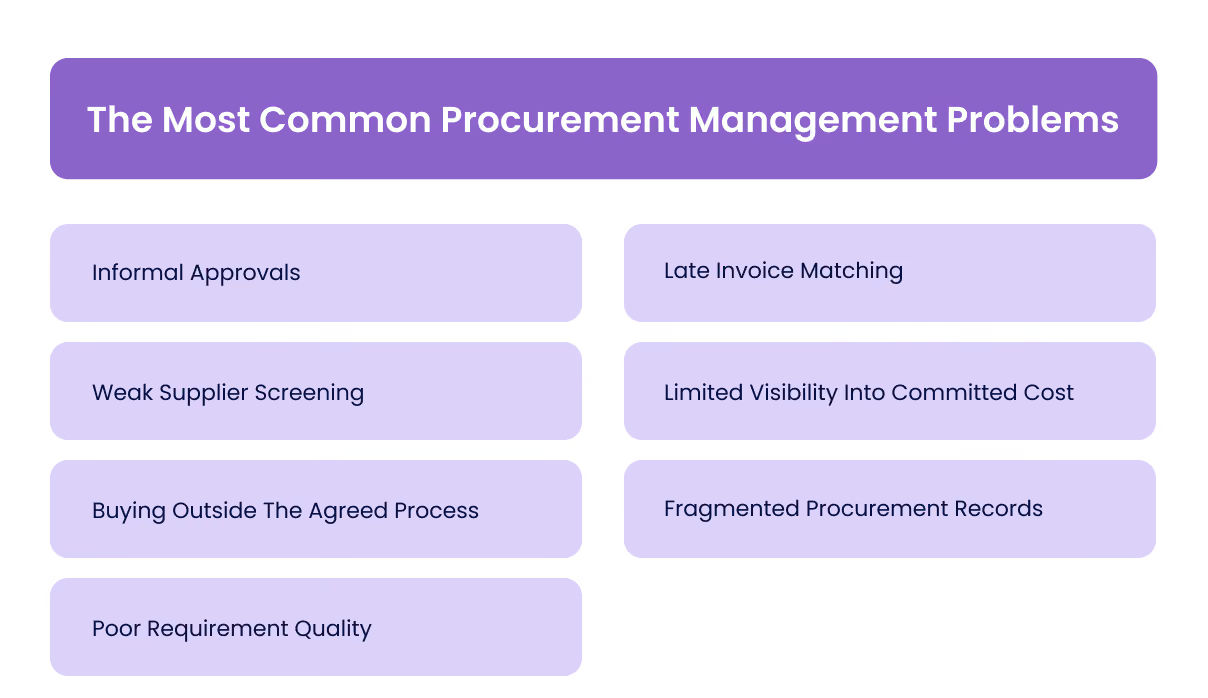
That is why procurement issues often look operational on the surface but control-related underneath. A delayed approval, a vague supplier comparison, or a missing invoice record may seem small on its own, but these issues tend to compound over time and weaken procurement discipline across the business.
The Usual Failure Points
- Informal Approvals
Purchases move ahead through email, chat, or verbal sign-off rather than a defined workflow. - Weak Supplier Screening
Suppliers are chosen too quickly without enough review of suitability, documentation, or performance risk. - Buying Outside The Agreed Process
Teams raise purchases directly or use suppliers without following the expected procurement path. - Poor Requirement Quality
If the purchase request is unclear, supplier comparison becomes weaker and later issues become more likely. - Late Invoice Matching
Procurement and finance lose alignment when supporting documents arrive too late or do not map cleanly to the purchase. - Limited Visibility Into Committed Cost
The business sees what has already been paid more clearly than what is already committed. - Fragmented Procurement Records
Supplier information, approvals, orders, and invoices sit across too many tools to support a reliable control view.
Related: Accounts Payable Automation Invoice Management Software
Why Procurement Management Often Breaks In The Workflow
Procurement management often fails outside the formal procurement framework. The policy may be reasonable, but the workflow around it is fragmented. Approvals may happen in email, supplier information may live in one system, purchase records in another, and invoices somewhere else entirely. When that happens, procurement becomes harder to oversee, even if the process looks strong on paper.
This fragmentation also affects financial visibility. A business may know that a purchase was approved, but still struggle to see the full supporting trail, match the invoice properly, or understand what supplier commitments are already in motion. That is where procurement management starts losing its usefulness as a control system.
Where Visibility Usually Gets Lost
- Email Or Chat Approvals
Approval trails become harder to verify and easier to bypass when they are spread across informal channels. - Team-Level Purchasing
Individual departments or functions may buy directly, which weakens central visibility and supplier consistency. - Incomplete Supplier Records
The business may not have one reliable place to see supplier details, supporting documents, and review history. - Missing Receipts Or Support Documents
Procurement and finance alignment weakens when supporting documentation does not arrive in a complete or timely way. - Delayed Invoice Visibility
Costs become harder to track and challenge when invoices appear late relative to the original purchase activity. - Weak Spend Categorisation
If procurement spend is not classified clearly, it becomes harder to review supplier exposure and buying patterns properly.
Also Read: Understanding Recording Business Expenses Efficiency Strategies
How Better Spend Control Supports Procurement Management
Procurement management gets harder when approvals, supplier activity, and supporting records are scattered across emails, chats, invoices, and disconnected tools. That is where Alaan is relevant. It helps finance teams manage procurement-related spend through corporate cards, spend controls, approval workflows, receipt capture, AI verification, and accounting integrations, so purchases become easier to control before they turn into reconciliation problems.
- Corporate Cards With Spend Limits And Vendor Controls
Alaan lets businesses issue corporate cards with spending limits and vendor restrictions. That helps control procurement-related purchases at the point of spend and reduces ad hoc buying outside approved boundaries. - Approval Workflows Before Purchases Are Finalised
Alaan supports custom approval workflows, so procurement-related expenses can be reviewed before money is committed. This helps businesses apply clearer approval discipline instead of relying on informal sign-off. - Real-Time Visibility Into Supplier Spend
Finance teams can see transactions as they happen across employees, teams, vendors, and categories. That makes it easier to track supplier spend, spot unusual purchasing patterns, and identify exceptions earlier. - Receipt Capture And Supporting Documentation
Employees can upload receipts and invoices through the mobile app, Chrome extension, or email, so procurement-related transactions carry cleaner supporting records from the start. - AI Verification And Duplicate Detection
Alaan extracts receipt data, matches it to transactions, and flags inconsistencies or duplicates. That reduces manual checking and helps finance review procurement-related spend more efficiently. - Accounting Integration For Cleaner Reconciliation
Alaan integrates with Xero, QuickBooks, NetSuite, and Microsoft Dynamics, allowing expense data to sync in real time. That makes procurement-related spend easier to reconcile and reduces manual re-entry later.
In practice, that gives businesses a cleaner control layer around procurement spend, with better visibility before the transaction disappears into month-end clean-up.
Conclusion
Procurement management works best when it is treated as a business control discipline rather than only a buying process. The stronger businesses are usually not the ones with the most complicated procurement rules. They are the ones with clearer approvals, better supplier discipline, cleaner documentation, and stronger visibility into how external spend actually moves.
That is why procurement quality depends on more than negotiating a price well. It depends on workflow quality from request through approval, purchase, verification, and reconciliation.
Alaan helps businesses strengthen that operating layer with corporate cards, spend limits, approval workflows, real-time visibility, cleaner documentation, and faster reconciliation. That makes procurement-related spend easier to control, easier to review, and easier to connect back to finance. Book a Demo Today!
FAQs
1. What is the difference between procurement management and procure-to-pay?
Procurement management is broader. It covers need definition, supplier selection, approvals, buying discipline, and follow-up. Procure-to-pay is more transactional and usually focuses on the operational flow from purchase request through invoice processing and payment.
2. Does a smaller business really need formal procurement management?
Yes, but it does not need an overly heavy version of it. Even in a smaller company, supplier choice, approvals, and documentation affect cost control and visibility. The process can stay lean, but it still needs clear ownership and rules.
3. When does procurement become a finance issue?
Almost immediately. Once a purchase is approved, it becomes a commitment of company funds, not just a sourcing decision. That is why procurement quality affects invoice matching, spend reporting, cash timing, and reconciliation later on.
4. What is the biggest warning sign of weak procurement control?
Repeated off-process purchasing. One isolated exception may not matter much, but if teams keep buying through informal routes, using unreviewed suppliers, or sending invoices after the fact, the control model is already weaker than it looks.
5. Should procurement decisions always prioritise the lowest price?
No. Price matters, but not on its own. A weaker supplier can create more costs later through delays, poor documentation, service issues, or operational disruption. Good procurement management weighs price alongside reliability, fit, and control.
6. How often should supplier performance be reviewed?
That depends on the spend size and supplier criticality. High-value or operationally important suppliers usually need more regular review, while lower-risk suppliers can be reviewed less often. The key is to avoid treating supplier approval as a one-time event that never gets revisited.
Gain control over business expenses with Alaan corporate cards
Invygo earned AED 100,000 in cashback using Alaan cards
Personalise approval workflows to align with your business needs with Alaan's Spend Management platform
Discover the power of automated expense tracking and smarter spend control with Alaan
Turn data into actionable insights with Alaan's spend management tools
Stay Tax Compliant with UAE's #1 Corporate Card and Spend Management Platform
Customisable corporate card policy template
Know how much Corporate Tax you have to pay this fiscal year
Easily integrate Alaan with your ERP for accurate, real-time expense tracking
Close books faster with Alaan's AI-powered accounting automation
Reconcile your books in minutes instead of hours, every single month.
Keep petty cash organized with Alaan corporate cards and automated expense management