.avif)

A Dubai retailer posts their best Ramadan yet: AED 1.2 million in sales, a packed store, and a stockroom emptied by week three. Six weeks later, they can't pay their supplier.
The numbers looked right, but the balance sheet told a different story. That gap between doing well and being financially healthy is exactly what a simple retail balance sheet is built to catch, and why understanding one is no longer just the accountant's problem.
In a market where wholesale and retail trade contribute over 16% of the UAE’s non-oil GDP, retail decisions are becoming more financial than instinctive. That is why understanding a simple retail balance sheet is no longer just an accountant’s job.
Whether you run a supermarket, fashion store, electronics shop, or ecommerce business, this guide will help you understand inventory, liabilities, cash flow, and retail financial health in a way that actually makes operational sense.
Key Takeaways:
- UAE Retail Growth: Wholesale and retail trade contributes over 16% of the UAE’s non-oil GDP, making stronger financial visibility and operational control increasingly important for modern retailers.
- Inventory Pressure: In retail businesses, inventory is often the largest current asset, meaning excess stock, slow-moving SKUs, or poor inventory planning can quietly block working capital and weaken liquidity.
- Financial Visibility: A simple retail balance sheet helps businesses track supplier dues, VAT obligations, POS settlements, and operational spending beyond just sales performance or profitability figures.
- Retail Warning Signs: Metrics like inventory turnover, DIO, and supplier dependency help retailers identify pressure building before it affects cash flow.
- Automation & Reporting: UAE retailers increasingly rely on connected finance systems like Alaan to automate reconciliation, improve VAT-ready reporting, centralise branch-level spending, and reduce manual accounting workflows.
What Is a Retail Balance Sheet?
A retail balance sheet is a financial statement that shows what a retail business owns, what it owes, and what remains with the owner at a specific point in time. Think of it as the financial reality of your store written on paper. It helps retailers understand whether the business is financially stable, overstocked, running on debt, or generating healthy working capital.
Unlike service businesses, retail businesses operate around inventory movement. Every unsold product sitting on a shelf, every supplier payment pending, and every dirham collected through POS systems eventually appears on the balance sheet.
That is why retailers rely heavily on this statement to track stock value, cash flow pressure, vendor obligations, and operational health.
A retail balance sheet is built on a simple accounting equation:

In simple terms:
- Assets are everything the retail business owns, such as cash, inventory, store equipment, and receivables.
- Liabilities are obligations the business needs to pay, including supplier dues, rent, taxes, or loans.
- Owner’s Equity is the remaining value left after liabilities are deducted from assets.
For retail businesses, this document is more than an accounting requirement. It becomes a decision-making tool.
A supermarket preparing for festive demand, a fashion store managing seasonal inventory, or an ecommerce brand handling supplier credit all depend on balance sheet visibility to avoid cash flow stress and make smarter purchasing decisions.
Also Read: What is Inventory Accounting? Types, Valuation And Journal Entries
To understand what your retail business is really telling you financially, you first need to break down the core components behind the balance sheet.
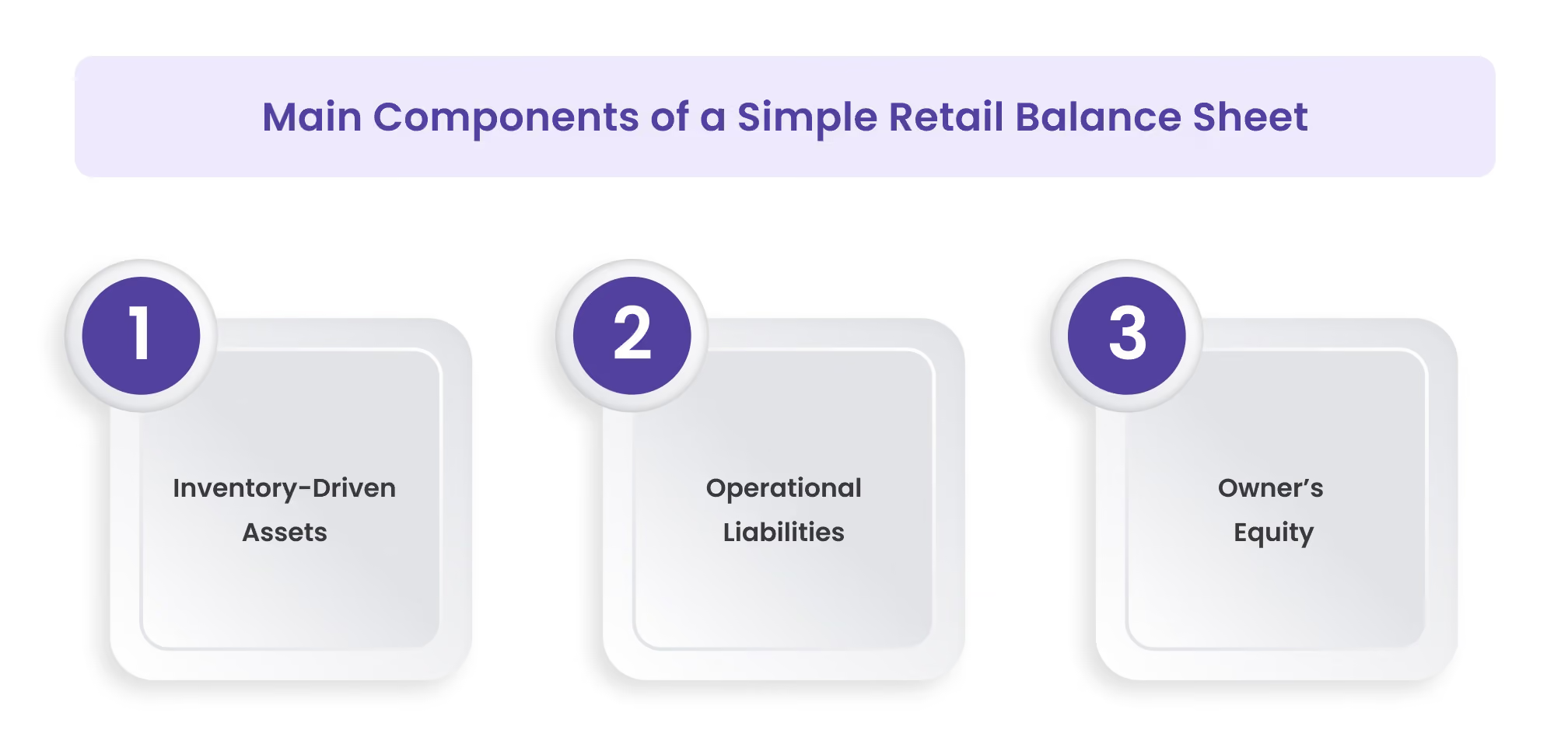
Main Components of a Simple Retail Balance Sheet
For UAE retailers, these three components are never static. Inventory shifts daily, supplier dues reset monthly, and equity either grows or quietly erodes depending on how well the first two are managed.
Here's what that actually looks like on paper.
1. Inventory-Driven Assets
For most retail businesses, assets are not just numbers sitting inside accounting software. They represent products already purchased, stocked, displayed, or awaiting shipment to warehouses for upcoming demand cycles.
Retail assets commonly include:
- Inventory across stores and warehouses
- Cash and bank balances
- POS and card settlements
- Advance supplier payments
- Delivery vehicles and store equipment
- Ecommerce fulfilment stock
What makes retail different is the weight inventory carries financially. In many UAE retail businesses, inventory becomes the largest current asset because they purchase stock in advance to meet seasonal demand, promotions, Ramadan sales, or shopping festivals.
This also creates operational risk. Overstocking, slow-moving SKUs, or inaccurate inventory tracking can block liquidity even during strong sales periods.
2. Operational Liabilities
Retail liabilities are usually tied directly to daily business activity rather than long-term corporate financing structures.
These liabilities commonly include:
- Supplier payables
- VAT obligations
- Warehouse and store lease payments
- Employee salaries
- Logistics and delivery costs
- Short-term inventory financing
For UAE retailers, supplier credit cycles play a major role in cash flow planning. Businesses often purchase inventory months before demand peaks, especially during Ramadan, year-end sales, or tourism-heavy periods. This means liabilities can rise quickly even before revenue catches up.
VAT also becomes a much more active component in retail balance sheets because retailers handle large transaction volumes across both physical and ecommerce channels.
3. Owner’s Equity
In retail, equity is not passive; it is the financial buffer between a bad season and a business crisis. A store with strong equity can absorb a slow February after a record December, hold excess stock without panicking, or wait out a supplier dispute without caving on credit terms.
A store running on thin equity has no such room; every demand spike, every delayed payment, every unsold SKU hits harder and faster. That difference rarely shows up in sales reports. It shows up here.
Also Read: Chart of Accounts: A Practical Guide for UAE Businesses
Once these components start working together inside an actual retail business, the balance sheet becomes far easier to read operationally rather than just financially.
Simple Retail Balance Sheet Example
Imagine a Dubai-based electronics retailer preparing for the Dubai Shopping Festival. The business has already stocked additional gaming consoles, mobile accessories, and smart devices ahead of the seasonal sales rush.
Sales are strong, but a large amount of money is still tied up in warehouse inventory and supplier payments that will become due over the next few weeks.
This is how the retailer’s balance sheet may look at the end of the quarter:
Gain control over business expenses with Alaan corporate cards
Invygo earned AED 100,000 in cashback using Alaan cards
Personalise approval workflows to align with your business needs with Alaan's Spend Management platform
Discover the power of automated expense tracking and smarter spend control with Alaan
Turn data into actionable insights with Alaan's spend management tools
Stay Tax Compliant with UAE's #1 Corporate Card and Spend Management Platform
Customisable corporate card policy template
Know how much Corporate Tax you have to pay this fiscal year
Easily integrate Alaan with your ERP for accurate, real-time expense tracking
Close books faster with Alaan's AI-powered accounting automation
Reconcile your books in minutes instead of hours, every single month.
Keep petty cash organized with Alaan corporate cards and automated expense management