.avif)

A GRN, or Goods Received Note, is the buyer's record confirming what a supplier actually delivered, and it works as a control point between delivery and payment across procurement and finance.
- Invoices often move toward payment before anyone confirms what actually arrived, which is the exact gap a GRN is meant to close.
- A Goods Received Note is the buyer's record that goods were delivered, checked, and either accepted or flagged for a problem before an invoice becomes payable.
- Its biggest payoff is three way matching, where the purchase order, the GRN, and the supplier invoice are lined up so mismatches get caught before payment.
- Weak GRN discipline invites payment leakage, inventory errors, and supplier disputes, so finance leaders should treat it as payment governance rather than a warehouse form.
- Alaan handles the execution side after receipt, keeping approvals, documentation, reconciliation, and visibility into supplier spend structured as the business scales.
In any well-run procurement process, ordering goods is only one part of the control cycle. The more important question comes later: did the business actually receive what it approved, in the right quantity, in the right condition, and at the right commercial terms?
That is where a GRN becomes important. GRN stands for Goods Received Note. It is the internal document used to confirm that goods delivered by a supplier have been received and checked by the buyer. In practice, it sits between delivery and payment, helping procurement, warehouse, and finance teams verify what arrived before a supplier invoice moves ahead.
For founders, finance leaders, procurement teams, and accounts payable teams, a GRN is not just an operational record. It is a control point. It helps prevent payment errors, improves inventory accuracy, strengthens invoice verification, and creates a clearer audit trail across the procure-to-pay cycle.
In this article, you will learn what GRN means, the full form of GRN, where it fits in procurement, and why it matters in accounting and payment control.
TL;DR / Key Takeaways
- GRN is not just a warehouse document. It is a control point that connects receiving, procurement, and finance before supplier payment is approved.
- Its real value shows up in three way matching, where it helps verify that what was ordered, received, and invoiced actually aligns.
- Weak GRN discipline increases the risk of payment leakage, inventory errors, and supplier disputes.
- For finance leaders, GRN should be treated as part of payment governance, not just goods handling.
- Alaan helps finance teams maintain control after receipt verification through approvals, spend visibility, documentation, and reconciliation support.
What GRN Means In Procurement
In procurement, a GRN is the document created when goods are physically received and checked against the original purchase order. It confirms that the delivery happened, records what was actually received, and captures any differences between the order and the delivery.
That makes GRN more than a delivery acknowledgment. It is a verification document.
GRN Full Form
GRN stands for Goods Received Note.
It is the term most commonly used by procurement, warehouse, and finance teams to refer to the internal record created when goods arrive from a supplier and are accepted into the business.
What GRN Confirms
A GRN usually confirms three things at once:
- Goods Were Delivered
- Goods Were Checked
- Goods Were Accepted Or Flagged For Exception
This is why GRN matters in controlled purchasing environments. It creates a documented checkpoint before an invoice is treated as payable.
Why GRN Matters Beyond The Warehouse
Although the receiving or stores team usually creates the GRN, its value extends far beyond the delivery point.
Different teams rely on it for different reasons:
- Procurement Uses It To Resolve Delivery Mismatches
- Inventory Teams Use It To Update Stock Records
- Accounts Payable Uses It To Validate Supplier Invoices
- Finance Teams Use It To Preserve Control And Auditability
In other words, GRN is a shared control document across procurement and finance, not just a warehouse form.
Also Read: Understanding Procure To Payment Process
Why A Goods Received Note Matters In Procurement Operations
A GRN matters because it introduces discipline at the exact point where many procurement problems begin: the handoff between physical delivery and financial processing.

Without that checkpoint, a business becomes more exposed to supplier disputes, inventory inaccuracies, and invoice approvals that move faster than the underlying verification.
1. It Confirms That Goods Were Actually Received
A purchase order only confirms what the business intended to buy. It does not confirm that the supplier delivered the goods.
The GRN closes that gap by recording actual receipt.
This distinction matters in businesses handling physical inventory, recurring supplier deliveries, or multi-branch operations where payment should never rely on expected delivery alone.
2. It Verifies Quantity And Condition
Deliveries do not always arrive exactly as ordered. There may be shortages, damaged units, wrong items, or partial fulfillment.
A GRN gives the business a structured place to record those issues before they turn into accounting or supplier-payment problems.
3. It Prevents Invoice Errors From Flowing Straight To Payment
One of the biggest risks in procurement is allowing supplier invoices to move into approval before the underlying delivery has been checked.
GRN helps stop that. Instead of letting the invoice become the trigger for payment, it makes goods verification part of the approval process.
4. It Improves Coordination Between Procurement And Finance
Procurement may know what was ordered. The warehouse may know what arrived. Finance may know what the supplier invoiced.
A GRN helps connect those three views into one shared record, which reduces confusion and improves handoffs across teams.
Related: Procure To Pay Systems Process Steps
Where GRN Sits In The Procure To Pay Process
GRN makes the most sense when viewed as part of the full procure-to-pay workflow. It comes after ordering and delivery, but before invoice approval and payment release.
1. A Purchase Order Is Raised
The process begins when the business issues a purchase order to the supplier. This defines what is being bought, in what quantity, and under what commercial terms.
2. Goods Are Delivered
The supplier sends the goods to the business location, warehouse, or receiving point.
At this stage, delivery alone is not enough. The business still needs to verify what actually arrived.
3. The Receiving Team Checks The Delivery
The receiving or warehouse team checks the delivered goods against the purchase order and inspects condition, quantity, and acceptance quality.
This is where shortages, damaged items, or mismatches should be identified.
4. The GRN Is Created
Once the goods are checked, the Goods Received Note is created.
If everything matches, the GRN confirms acceptance. If there are issues, those exceptions should be recorded before the invoice moves ahead.
5. The Invoice Is Matched Before Payment
After the GRN is available, the supplier invoice can be reviewed and matched against both the purchase order and the GRN.
This is one of the most important controls in the procure-to-pay process because it reduces the risk of paying for goods that were not properly received.
Also Read: Implementing Automated Purchase Order The Right Way
What Information A GRN Usually Contains
A GRN is only useful if it captures enough detail to support verification, dispute handling, and downstream finance processing.
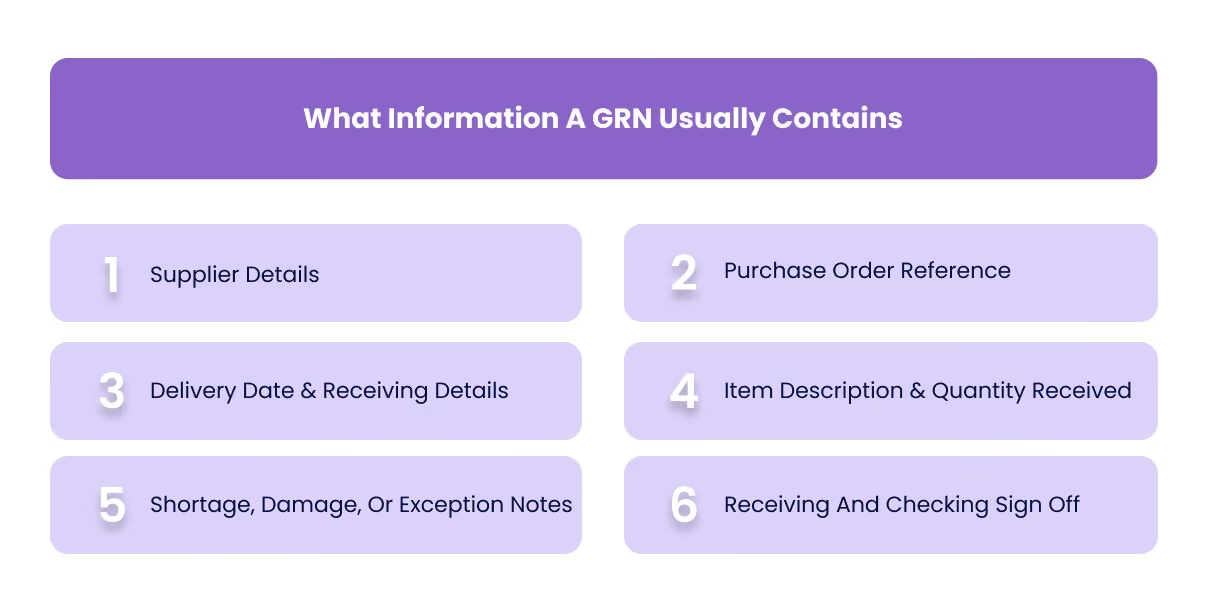
While the exact format may differ across businesses and systems, a strong GRN usually includes the following information.
1. Supplier Details
The supplier name and related details should appear clearly so the receipt can be tied back to the correct vendor and invoice trail.
2. Purchase Order Reference
The purchase order number links the delivery back to the original approved order.
Without this reference, invoice matching becomes slower and exceptions become harder to investigate.
3. Delivery Date And Receiving Details
The GRN should record when the goods were received and where the delivery was accepted.
This helps with traceability, delivery performance review, and internal documentation.
4. Item Description And Quantity Received
The document should capture what items arrived and in what quantity.
This is one of the most important fields because it drives inventory updates and supplier-invoice validation.
5. Shortage, Damage, Or Exception Notes
If anything is missing, damaged, or inconsistent with the order, the GRN should record it immediately.
This improves supplier dispute handling and prevents clean invoice approval against incomplete delivery.
6. Receiving And Checking Sign Off
A GRN should also show who received and verified the goods.
That creates accountability and strengthens the audit trail.
Related: Effective Business Spending Policies
Who Usually Creates The GRN And Who Uses It
GRN ownership usually starts with the receiving side of the business, but its usefulness depends on how well the information flows across procurement and finance.
1. The Receiving Or Warehouse Team Usually Creates The GRN
This team is physically closest to the delivery and is responsible for verifying what arrived.
That makes it the natural point of GRN creation.
2. Procurement Uses It To Resolve Delivery Issues
If the delivery does not match the purchase order, procurement needs the GRN to challenge the supplier, request correction, or negotiate replacement.
3. Accounts Payable Uses It Before Releasing Payment
AP relies on the GRN to confirm that the supplier invoice reflects goods genuinely received and accepted.
This is what makes GRN important in finance operations, not just warehouse administration.
4. Finance Uses It To Preserve Control And Auditability
Finance teams use GRN records to strengthen documentation, improve matching accuracy, and reduce the risk of payment leakage.
That becomes increasingly important as purchasing volumes rise and manual controls become harder to maintain.
Why GRN Matters In Accounting And Accounts Payable
GRN is not only a procurement document. It also has direct relevance in accounting and accounts payable because it affects when liabilities should be recognised, how inventory is updated, and whether supplier invoices should move ahead for payment.
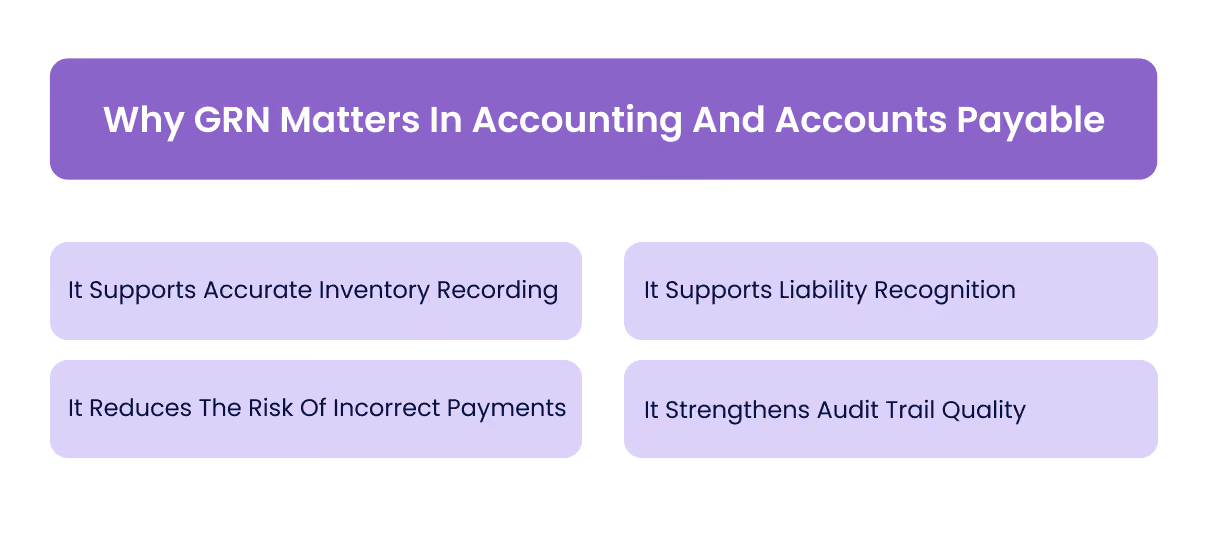
1. It Supports Accurate Inventory Recording
When goods are received and verified, the GRN provides the basis for updating stock records.
Without it, inventory data becomes less reliable, especially in businesses managing multiple suppliers, locations, or product categories.
2. It Supports Liability Recognition
A supplier invoice should not automatically become a payable simply because it was submitted.
The business first needs confirmation that the goods were actually received. The GRN provides that confirmation and helps ensure liabilities are recognised against real deliveries rather than expected ones.
3. It Reduces The Risk Of Incorrect Payments
If invoice approval happens without a GRN, the business may pay for goods that were damaged, short delivered, or never properly accepted.
That creates avoidable leakage in accounts payable.
4. It Strengthens Audit Trail Quality
GRN creates a documented link between the purchase order, the physical receipt of goods, and the supplier invoice.
This improves traceability and makes both internal reviews and external audits much easier to support.
Also Read: AP Automation Accounts Payable System
How GRN Supports Three Way Matching In Procurement
GRN becomes even more valuable when it is used as part of a three way matching process. This is one of the most important controls in procurement and accounts payable because it ensures the business is not paying based on a supplier invoice alone.
1. The Purchase Order Confirms What Was Approved
The purchase order records what the business intended to buy, including item details, quantity, and agreed commercial terms.
This is the first control point because it reflects authorised procurement intent.
2. The GRN Confirms What Was Actually Received
The GRN records what physically arrived and what the business accepted after verification.
This is the operational control point that connects procurement activity to actual receipt.
3. The Supplier Invoice Confirms What Is Being Charged
The invoice reflects what the supplier expects to be paid for.
On its own, that is not enough for payment approval. It needs to be checked against both the purchase order and the GRN.
4. Matching All Three Reduces Payment Risk
When the purchase order, GRN, and supplier invoice all align, the business can move ahead with much more confidence.
If they do not align, the mismatch can be investigated before payment is released.
That helps reduce:
- Overpayment Risk
- Duplicate Billing Risk
- Payment For Unreceived Goods
- Disputes Over Quantity Or Condition

Common GRN Mistakes That Create Procurement And Payment Risk
GRN processes often break down not because the document is unimportant, but because it is handled inconsistently. Once that happens, the control value starts to weaken across procurement, inventory, and finance.
1. Issuing A GRN Before Physical Verification
A GRN should only be created after the goods have actually been checked.
If it is raised before verification, the business loses the main purpose of the document, which is to confirm receipt and identify issues before payment moves ahead.
2. Ignoring Shortages, Damage, Or Delivery Mismatches
A delivery may arrive with fewer units than ordered, damaged items, or the wrong products entirely.
If those issues are not recorded in the GRN at the point of receipt, they become harder to dispute later and may still flow through to invoice approval.
3. Allowing Invoice Approval Without A Matched GRN
One of the biggest control failures is letting accounts payable process an invoice without confirming that the corresponding goods were received and accepted.
This turns the invoice into the primary approval trigger, which increases payment leakage risk.
4. Using Manual Or Fragmented GRN Records
Paper-based records, spreadsheet tracking, or disconnected workflows make GRNs harder to trace later.
That weakens visibility, slows reconciliation, and creates more friction during audits or supplier disputes.
5. Keeping GRN Data Siloed Between Teams
GRN is most effective when receiving, procurement, and finance all work from the same underlying record.
If one team records the delivery but another team cannot access or rely on that information easily, mismatches and delays become more common.
6. Treating GRN As A Warehouse Form Instead Of A Control Document
This is often the root cause behind the other mistakes.
When GRN is treated as a routine operational form rather than a finance-relevant control point, businesses are more likely to underinvest in process quality, visibility, and matching discipline.
Related: Automate Expense Management Approvals
Why Finance Leaders Should Treat GRN As A Control Document
For finance leaders, GRN should not be viewed as a back-office receiving note with limited relevance to payment control. It is one of the most practical checkpoints in the broader procurement and payables workflow.
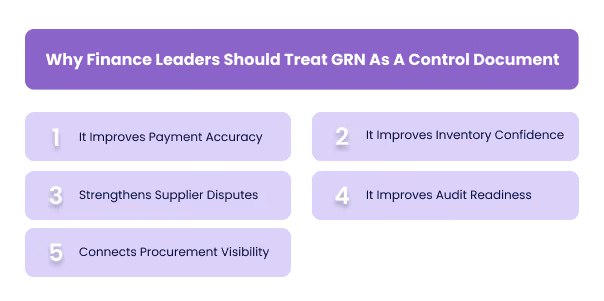
A strong GRN process improves control in several ways.
1. It Improves Payment Accuracy
Supplier invoices are less likely to move through with mismatched quantities, unverified deliveries, or unsupported claims when GRN is part of the approval process.
2. It Improves Inventory Confidence
Stock records become more reliable when incoming goods are documented and verified consistently.
This matters not only for warehouse planning, but also for working capital visibility and purchasing accuracy.
3. It Strengthens Supplier Dispute Handling
When disagreements arise over what was delivered, the GRN gives the business a structured internal record to support follow-up.
That helps procurement resolve issues faster and with less ambiguity.
4. It Improves Audit Readiness
A clean GRN trail creates stronger documentation between approved orders, physical receipt, invoice matching, and payment release.
That makes transaction review easier and reduces dependency on fragmented follow-up later.
5. It Connects Procurement Activity To Finance Visibility
The more purchasing volume a business handles, the more important it becomes for finance to see not just what was invoiced, but what was actually received and accepted.
GRN helps create that connection.
Also Read: Understanding Spend Visibility Business Benefits
How Alaan Helps Finance Teams Keep Procurement And Payment Workflows Controlled
Alaan does not replace the GRN itself. The receiving process still needs to confirm what arrived, in what quantity, and in what condition. But once procurement decisions are made and invoices begin moving toward payment, finance teams still need strong execution control. That is where Alaan fits.
Alaan helps businesses keep procurement-related spending structured, visible, and easier to enforce across approvals, payments, and documentation.
1. Approval Workflows Before Money Moves
Alaan enables businesses to route spend through structured approval flows before payment happens.
That helps ensure supplier invoices and related purchasing decisions do not bypass internal review.
2. Real Time Visibility Across Business Spend
Finance teams can track spend as it happens across suppliers, teams, and categories.
This makes it easier to spot unusual purchasing patterns, unexpected spikes, or invoice flow that does not align with expected procurement activity.
3. Centralised Invoice And Receipt Documentation
Supporting records can be captured and linked more cleanly to transactions, reducing fragmented documentation and making supplier-related spend easier to review.
4. Accounting Sync And Reconciliation Support
With accounting integrations and cleaner transaction capture, finance teams can reduce manual gaps between payment activity and financial records.
That makes downstream reconciliation easier to manage.
5. Stronger Audit Readiness Across Supplier Payments
When approvals, spend data, and supporting records are easier to trace, procurement-related payments become easier to validate during reviews or audits.
In practice, this means GRN remains the receipt-side control point, while Alaan helps finance teams keep the payment and documentation side of the workflow controlled after that.
Related: Procurement Automation Software Solution
Conclusion
GRN stands for Goods Received Note, but in practice, it is much more than a receiving document. It is a control point between procurement and payment that helps businesses confirm delivery, verify quantities and condition, support inventory accuracy, and prevent invoice errors from moving straight into accounts payable.
For finance leaders, founders, and procurement teams, the value of GRN lies in what it protects. It helps ensure that approved purchases are actually received, that liabilities are recorded against real deliveries, and that supplier payments move forward with stronger verification behind them.
And once procurement decisions and delivery checks are in place, execution becomes the next control layer. That is where Alaan helps finance teams keep approvals, spend visibility, documentation, and supplier payments structured as the business scales. Book A Demo Today
FAQs
1. Is GRN Required For Every Supplier Delivery?
Not always in the same format, but businesses that want stronger procurement control usually need some formal receipt record for delivered goods. The more inventory-heavy or process-driven the business is, the more important a structured GRN process becomes.
2. Can A Business Process An Invoice Without A GRN?
It can, but that creates a weaker control environment. Without a GRN, accounts payable may approve invoices without clear evidence that the goods were actually received and accepted.
3. Is GRN Used Only By Warehouse Teams?
No. Warehouse or receiving teams usually create the GRN, but procurement, accounts payable, and finance all rely on it later for verification, dispute handling, and payment review.
4. What Is The Difference Between A Delivery Note And A GRN?
A delivery note usually comes from the supplier and shows what was sent. A GRN is created by the buyer to confirm what was actually received and accepted after checking the delivery.
5. Does GRN Matter For Service Purchases Too?
GRN is primarily used for physical goods, but the same control principle applies to services. Businesses still need a clear internal confirmation that the service was delivered as expected before approving payment.
6. Why Does GRN Matter More As A Business Scales?
As purchasing volume increases, manual follow-ups become harder and invoice errors become more expensive. A structured GRN process helps maintain control across growing supplier activity, larger inventory movement, and more complex accounts payable workflows.
Gain control over business expenses with Alaan corporate cards
Invygo earned AED 100,000 in cashback using Alaan cards
Personalise approval workflows to align with your business needs with Alaan's Spend Management platform
Discover the power of automated expense tracking and smarter spend control with Alaan
Turn data into actionable insights with Alaan's spend management tools
Stay Tax Compliant with UAE's #1 Corporate Card and Spend Management Platform
Customisable corporate card policy template
Know how much Corporate Tax you have to pay this fiscal year
Easily integrate Alaan with your ERP for accurate, real-time expense tracking
Close books faster with Alaan's AI-powered accounting automation
Reconcile your books in minutes instead of hours, every single month.
Keep petty cash organized with Alaan corporate cards and automated expense management